Links

Links

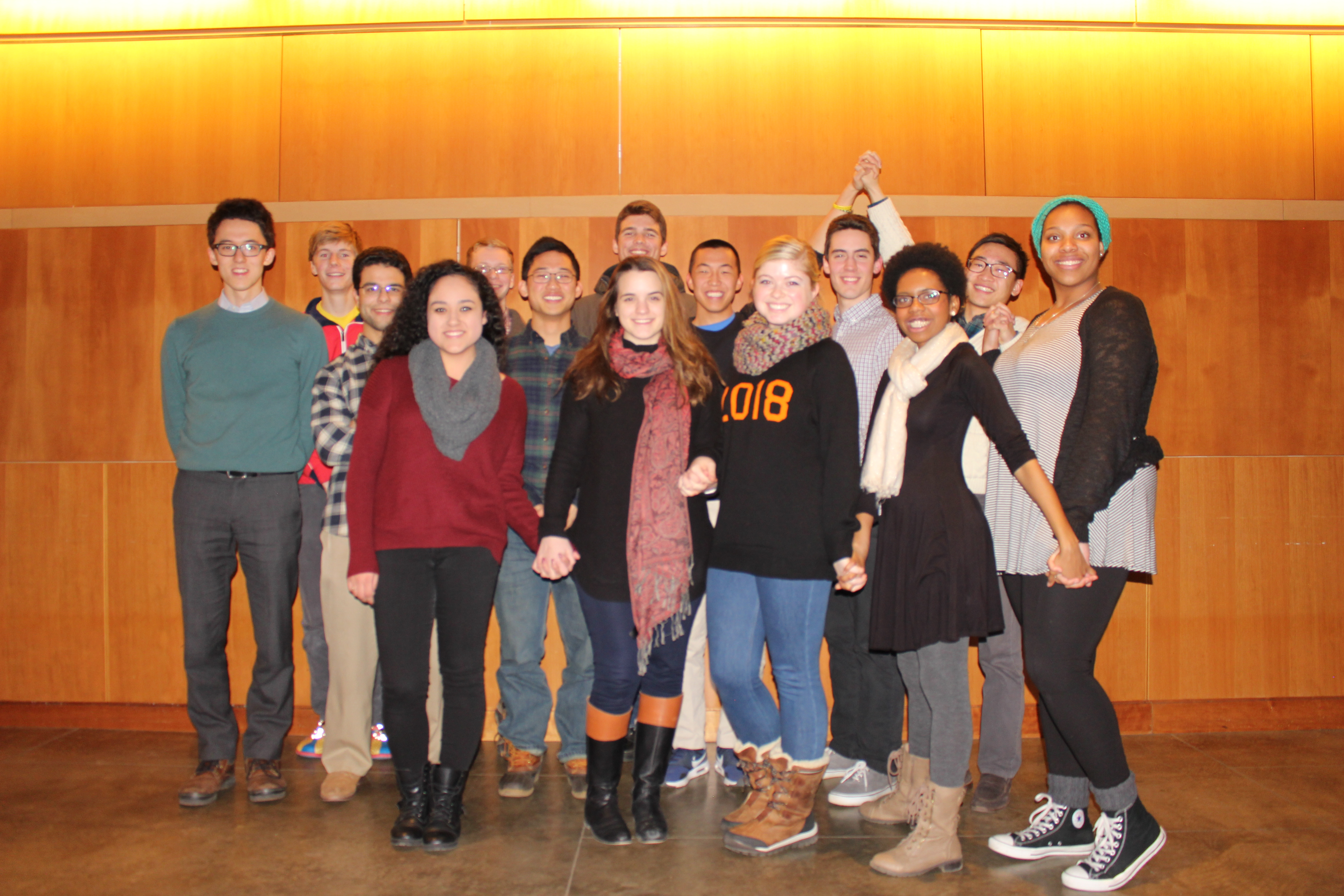
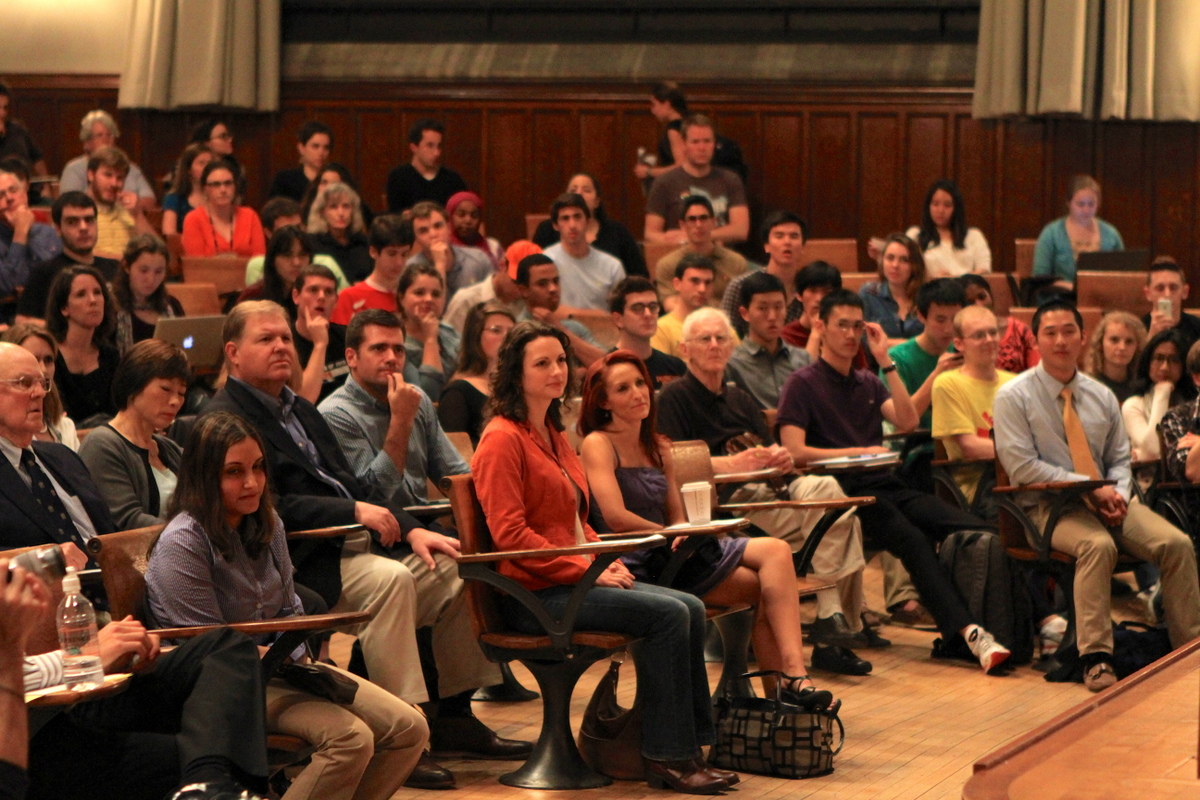
The Anscombe Society would like to welcome the Love and Fidelity Network's 2nd annual conference, Sexuality, Integrity, and the University, to Princeton University for this weekend!

This unique event will bring together more than 200 participants from dozens of colleges and universities across the country, demonstrating the continued, accelerating growth of this movement that began only 4 years ago here at Princeton.

You can find out more about the conference, including the schedule of events, here.  Lecture and panel times are also posted on the calendar tab of this website.

Even though our emotions are generally not things we can consciously dictate, we consider ourselves fairly accurate judges of which emotions we're actually experiencing. As it turns out, we may not even be as good at that as we thought. It appears that in certain circumstances, we tend to wrongly attribute, or assign, certain emotions to our bodily state, when in fact that bodily state is reflecting another emotion entirely. One such example is the infamous "Suspension Bridge" experiment, published in 1974.

The experiment had a rather unusual setup. It took place on two different footbridges which spanned a river at different points. One was a suspension bridge over a canyon, made of boards and cables, which wobbled easily and had low handrails. This bridge was meant to create a feeling of anxiety and unease in the participants. The control condition was the second bridge, which was much lower, wider, and sturdier.

As male passersby walked off the bridge, they were asked by a female interviewer (described in the paper as "attractive") to fill out a questionnaire. When the men had finished, the interviewer then gave them her number so that if they wanted, they could call her to talk more about the experiment. The number of phone calls that the interviewer subsequently received was supposed to indicate the level of attraction experienced by the participants.

The results were that the men who were interviewed on the suspension bridge were at least twice as likely to follow up and call the interviewer as compared to the control group (the "safe" bridge). The researchers hypothesized that the more dangerous bridge created a state of fright and physiological arousal in the passersby. This arousal consisted of increased heart rate and blood pressure, elevated levels of adrenaline, and so on, which is not unlike the state caused by physical attraction. Thus, after the passersby had encountered the female interviewer, they were likely to attribute the cause of their aroused state to the attractiveness of the interviewer, rather than the thrill of crossing the suspension bridge.

The study was far from perfect, as the researchers admitted, but the results lent credence to the idea that we are not always the best judges of our own emotions. At this point it is not well understood what, if anything, we can do to make the process of identifying our emotions less fallible. One prediction you might want to keep in mind: feeling nervous about a first date with someone could actually make you feel more attracted to that person.


To read the original article, go to: http://www.fpce.uc.pt/niips/novoplano/ps1/documentos/dutton&aron1974.pdf

The Princeton Senate is kicking off the year with its first debate tomorrow, Friday, November 13, with the topic of the Center for Abstinence and Chastity.  The debate promises to be lively, and anyone can take the floor to speak.  It'll start at 8:30 PM in the Whig Hall Senate Chamber.

Please consider attending to show your support for the Center, especially by voting at the end of the debate!  It's vital to show that the Center has support from the student body and that we see the Center as an important issue.

Hope to see you all there!  For more information, check out the Facebook event: http://www.facebook.com/event.php?eid=218893135920


Months before I arrived on campus as a freshman I was apprehensive about attending the mandatory “Sex on a Saturday Night”. People and paper had warned me of its less-than-subtle message that hooking-up is a prevalent and accepted part of campus culture. As the lights dimmed I steeled myself for the performance. When the lights came back on I sat in my seat, surprised. I had prepared myself for acknowledgment and acceptance of hooking up but instead had been given a large dose of crude humor and, as far as I could see, no demonstration of such a trend on campus. One of the characters constantly talked about his weekly sexual conquests, but in the end it turned out his escapades were largely fabricated. 
 
Several freshman students were disgusted with the play, complaining that it showed no positive sexual relationships, and they felt that in every scenario abstinence was portrayed as the right choice. Of course, the play is continually under revision and what I saw this year is not an accurate portrayal of past or future performances.  While I still do not think the event should be mandatory, I do appreciate the adjustments that have been made which help mitigate the idea that hooking up is a given on campus.
 
Another event created for freshman is the strongly recommended “(Safer) Sex Jeopardy” study break. Past participants tell stories of sado-masochism, dental dams, and in depth discussions of condoms. I decided to investigate. 
 
The study break started out with an introduction from the SHAs (Sexual Health Adviser) reminding us that they were there for us whatever our sexuality might be, whether abstinent or promiscuous. They were not there to judge or pressure. In fact the presenters seemed to stress that students who weren’t having sex could still come to them for support. If we felt uncomfortable or offended at any point during the game we were encouraged to leave if we so desired. On the large white question board there were four categories, “Protection,” “Sexual Health and Wellness,” “Orientation and Identity,” and “Relationships.” One of the questions that came up was, “How many students have had no sexual partner for one school year?” About forty three percent. The presenters admitted, however, that people have different ideas of what constitutes a sexual partner. Some may say only penetration counts as sex, while others may include oral and anal (oh, let’s not forget digital sex, and I’m not talking about electronics), and perhaps there are even some who consider people they’ve kissed as sexual partners. I’m strongly inclined to doubt that many think in terms of the last option, as the word sexual pertains to actual types of sex. The study was used as an example that the pervasive rumors of the campus hook-up culture are not true. 
 
Unfortunately, regardless of the numbers the SHAs gave or could have given, statistics do not necessarily match up with perception. It is easy for the truth to become distorted, whether from people lying (like the character in “SoSN”), media (now be honest, how many of us have seen college shown on TV as an “anything goes” place for freedom and experimentation without severe consequences?), or just the general impression students receive from the existence of University events such as “Sex Jeopardy.” If sex isn’t prevalent on campus, then why should we attend an event geared towards making that activity safer? Unless it happens so frequently that the University expects us to be doing it, and thus continually worries about infections and pregnancies. As if an indicator of the University’s concern, most of the questions in “Sex Jeopardy” involved birth control and maintaining and checking your sexual health. The SHAs did point out that the only foolproof way to not become infected or pregnant was abstinence. And then moments later informed us that the University Health Services will give someone up to ten condoms a day.
 
Overall, “Sex Jeopardy” has made some changes, seeming to pluck most of its questions from a high school health class (makes you wonder what high schools think teenagers are doing), and leaving sado-masochism and dental dams out of the discussion. The only question that really stood out was the “Final Jeopardy” one on sex toys. None of the students seemed too interested in the fact that the best way to clean them is simply throw them in the dishwasher. I just don’t know if I can look at dishwashers the same way ever again.
 
As jeopardy drew to a close and we stood up to leave, the SHAs tossed out helpful reminders as a sort of bonus about flavored condoms, reminding us to “BE SAFE.” It’s enlightening to know what they presume we will be doing our freshman year. Despite the “since you can’t fight sex, make it safe” attitude I feel no pressure to adhere to such expectations.

Links

I thought I would summarize and comment on a few interesting points made in a recent lecture by esteemed Augustine scholar Gilbert Meilander:

Before I begin, it seems prudent to preface my remarks with a rejection of the common dismissal of Augustine as “insufficiently life-affirming”- a repressed individual whose archaic views on sexuality ought to be dismissed without further inspection. Augustine’s views on sexuality is not that it is inherently problematic, and it is crucial to acknowledge that his distancing himself from the Manicheans indicates his disavowal of the rejection of the corrupt body in favor of the soul.  (Further arguments for this position are made clear in Books  11 and 14 of the City of God- Augustine’s views that God will return in a body, and that sins of the flesh can be committed even by those who lack bodies, at least, seem to indicate that we should be wary of reducing Augustine to this position.)


The focus of Meilander’s argument was an analogy made between food and sex. It will be first valuable to spell out the exact analogy. For Augustine, the natural order is that food serves the good of health. That is to say, eating is a necessity, albeit a sweet one. The good of an activity is distinguished from its attendant pleasure, and as such Augustine suggests it is wrong to seek the pleasure instead of the good. Analogously, Augustine views the good of sex (what he sees as solely procreation, a view that may be problematic) as separate from its pleasure. A disordering of one’s loves, then, occurs when the pleasure of sex (or of eating) is pursued for its own right. 

Meilander’s critique of Augustine is that he fails to see another good in eating, and also, in sex. He argues that in eating, there is another good- the good of enjoying meals in the company of others. Meilander argues that it is okay to eat out of hunger, or go to a meal just for company, and that each of these two purposes, satisfying hunger and pursuing community , need not  be served each time one has food. When applied to sex, Meilander notices a different good that Augustine misses: union between husband and wife. He analogizes that as there are two distinct goods of sex, each one need not be served in every sex act. 


While Meilander’s modification of these additional goods is convincing, there are some important distinctions that ought to be made. With regards to eating, pursuing community is not derivable from the very putting of food in one’s mouth. This ambiguity with regards to the word “eat” thereby leads to a disanalogy. While one may go to a meal just for company, one may not achieve the good of company by the simple fact of ingesting food. As such, when addressing the domain of sex, we see a difference: both sexually intimate union and procreation can occur through sex and only through sex (bracketing conversations that may arise as related to in vitro fertilization, which do not appear on Augustine’s radar, and as such ought to be put aside for the current conversation).  This difference appears to change the status of the position Meilander has in mind. The two purposes (community and nourishment) are separable with regards to eating, while the two purposes (union and procreati

on) are not separable with regards to sex. 

Links

Princeton is beginning to offer gender neutral housing (GNH) in Spelman dorms next year as a pilot-program, before assessing whether it should be offered across Princeton's campus. Spelman suites are unique in that they consist of individual singles adjoined on a common hallway with a shared bathroom and kitchen. This is unlike most doubles and suites in upperclassmen housing, which consist of bedrooms shared between roommates. The decision to pilot the program in Spelman seems due to this difference, rather than in spite of it. There is a tacit recognition that shared bedrooms between members of the opposite sex would be less than ideal on Princeton's campus. The pilot program's plotted expansion should not be based on studies of its outcome in Spelman, as this would be unrepresentative of what GNH would look like if it were to spread to other buildings on campus.


GNH raises other concerns, a few of which are raised in the Daily Princetonian Editorial Board's dissent:

http://www.dailyprincetonian.com/2009/10/26/24265/


Recent Comments

    Follow us on Twitter! Find us on Facebook! Find us on YouTube!
    Close