What Kind of Law Will You Practice?

Tues­day night, Career Ser­vices hosted “What Kind of Law Will You Prac­tice?” a panel fea­tur­ing seven Prince­ton alumni with legal degrees. Around thirty under­grad­u­ates attended, and the alumni shared their expe­ri­ences in law school and beyond.

The major­ity of the event was given over to the alumni to describe their career tra­jec­to­ries and offer advice. Among the panel, there were sev­eral uncon­ven­tional paths to law school, includ­ing Chris Colvin ’88, who was an MAE major at Prince­ton and Jason Eaddy ’98, who worked in com­puter sci­ence before obtain­ing a law degree through night school.  “It took my par­ents a good five, six years to under­stand what I do for a liv­ing,” Eaddy said, who now con­sults with lawyers on technology-related cases.

The panel also included two alumni who work in crim­i­nal law. Fac­ing a ques­tion from the audi­ence about the pos­si­bil­ity of becom­ing jaded as a pub­lic defender, Arthur Hop­kirk ’81 and Isabel McGinty *82 offered words of encour­age­ment. Both agreed that work­ing as a pub­lic defender was a very tough field. “There’s no let-up…in crim­i­nal law, it is people’s lives,” McGinty said. Hop­kirk said it can be dif­fi­cult to find ful­fill­ment in pub­lic defense if you want to win cases, since even the best lose 80 – 90% of their cases. Instead, “you have to really take inter­nal sat­is­fac­tion,” Hop­kirk said.

Two pan­elists who talked about the real­ity of debt incurred over law school were Christina Ked­die ’03 and Ani Mason ’00. Ked­die was drawn to law school as “the extended Rob­bie George expe­ri­ence.” She now works as a labor and employ­ment lawyer, say­ing that non­profit work may not pay enough to effec­tively man­age the debt. In con­trast, Mason was able to obtain schol­ar­ships because she was inter­ested in human rights.

Mason also said net­work­ing through the Alumni Careers Net­work was instru­men­tal in build­ing her career. At any point in her career, she was try­ing to develop rela­tion­ships with peo­ple in the field. Colvin, who founded two net­work­ing com­pa­nies, sup­ported this view. “Net­work now, and net­work for your entire careers,” Colvin said.

Though the panel dis­trib­uted a lot of infor­ma­tion on the dif­fi­cul­ties of law school and a legal career, Zachary Gold­stein ’05 was opti­mistic for the atten­dees’ future: “You go to Prince­ton. It’s up to you.”

For those look­ing for more infor­ma­tion about law school, Lyon Zab­sky is Career Ser­vices’ pre-law advi­sor. She was present at the event and can answer more detailed ques­tions about law school applications.

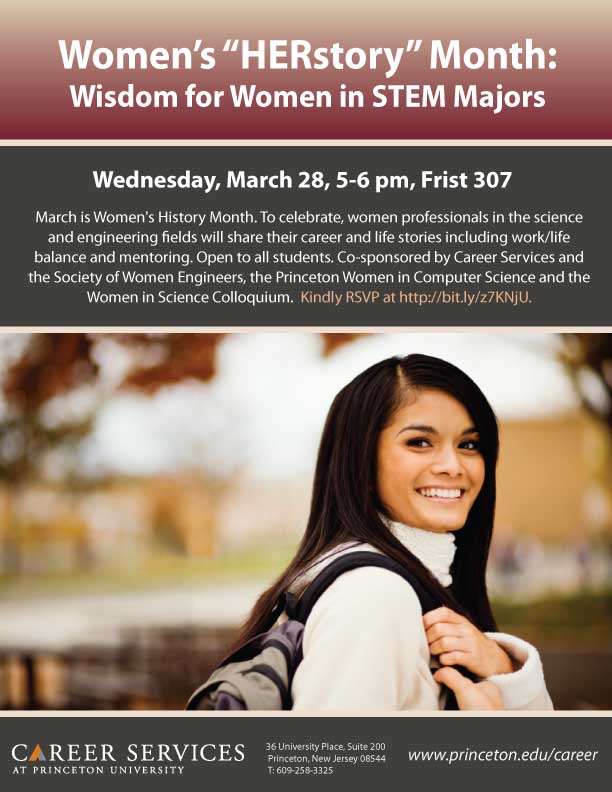
Women’s History Month — Alumni Advice for STEM Majors

Three Prince­ton alum­nae gath­ered Wednes­day at Career Ser­vices Wis­dom for Women in STEM Majors. Akira Bell John­son ’95, Cheryl Rowe-Rendleman ’81 and Joanna Nice ’06 have all had sub­stan­tial careers in the sci­ences since leav­ing Prince­ton, and they offered advice and per­spec­tives on being a woman in the sciences.

One of the most repeated pieces of advice was to find a men­tor. All the women spoke about being hum­bled dur­ing their under­grad­u­ate years, and John­son put it suc­cinctly when she said, “It doesn’t pay to try to fig­ure some­thing out for a long time.” In any sit­u­a­tion, it’s impor­tant to rec­og­nize when you need help, because that pro­duces bet­ter results. “It’s okay to ask ques­tions,” said Nice. “Part of your job is to ask questions.”

The women also empha­sized the impor­tance of a sup­port sys­tem while bal­anc­ing work and fam­ily. A few grad stu­dents asked the panel mem­bers, all of whom had chil­dren, how they approached the work-home ques­tion. Rowe-Rendleman had her first child while in grad­u­ate school, and said, “He sat on my lap while I was writ­ing my dis­ser­ta­tion.” Though the women it said it’s impos­si­ble to be per­fect, John­son said that hav­ing a “net­work of sup­port around your fam­ily” helps immensely.

For those not think­ing that far into the future, the panel also shared their per­spec­tives on what to do in col­lege. “It’s never too early to start intern­ing,” said John­son. Even non-science pur­suits can be valu­able, added Nice. Nice did crew while at Prince­ton and said she learned about “hard work and dis­ci­pline and tenac­ity and team­work” from her team­mates. As far as pick­ing a major, the women agreed that it’s impor­tant to do some­thing you’re pas­sion­ate about that allows you to shine.

For their final words, the panel encour­aged tak­ing risks. And “if the guys are talk­ing, talk louder,” said Rowe-Rendleman, later clar­i­fy­ing, “Or, talk differently.”

The Magic of Movies Meets the Reality of Hard Work: Careers in Film and Television

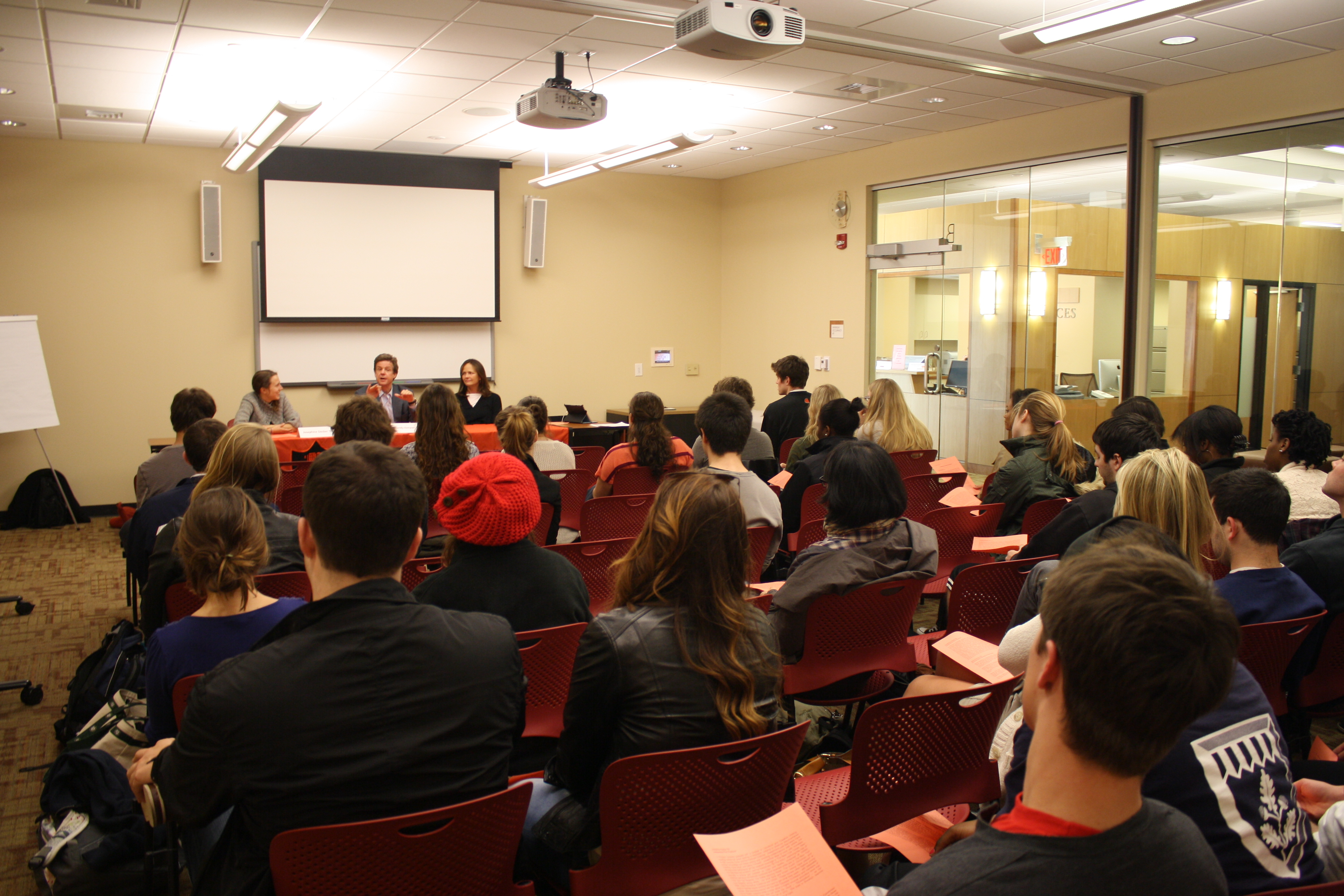
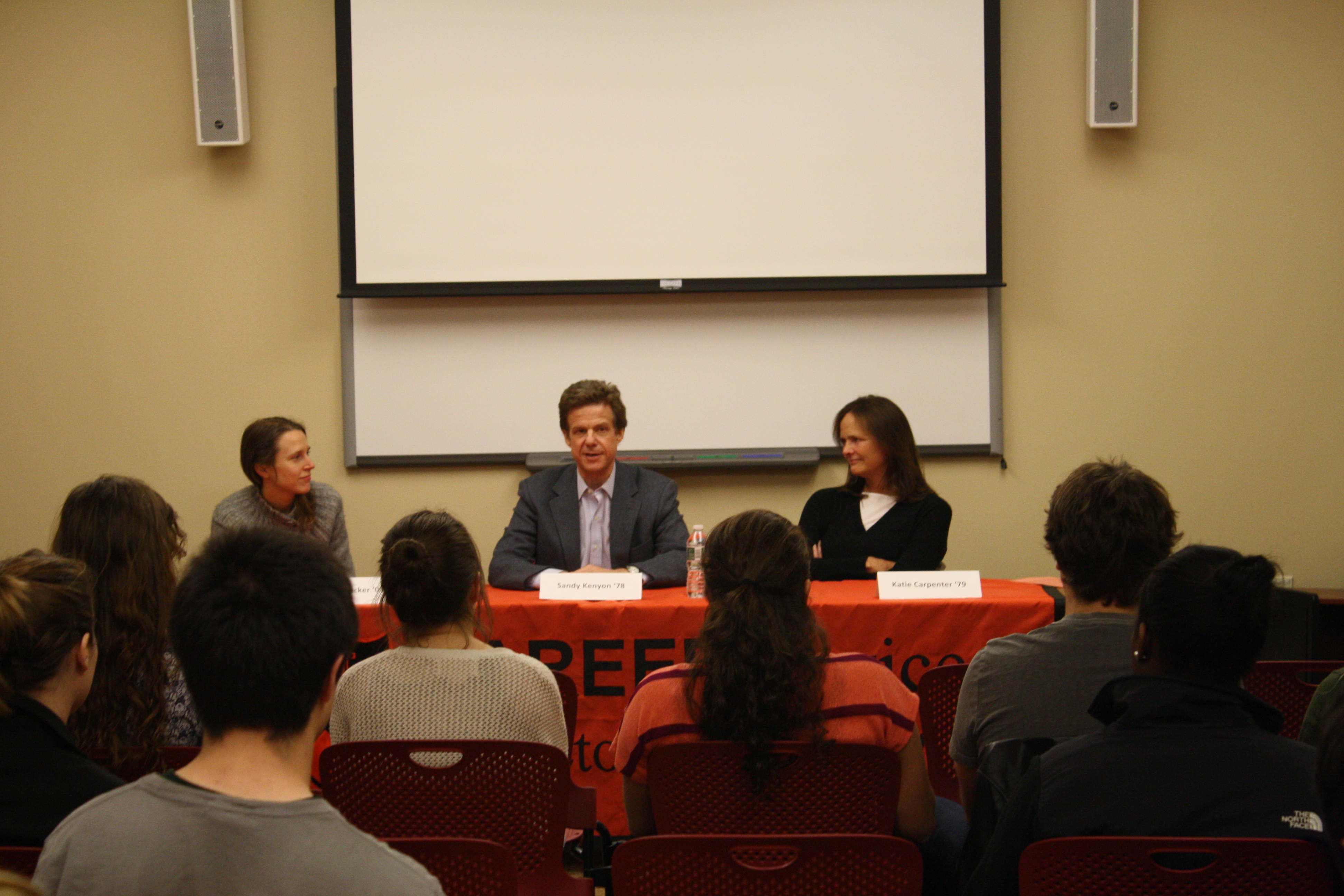
Stu­dents want­ing to learn about careers in media received some tough love at Career Ser­vices’ Careers in Film and Tele­vi­sion event. The panel fea­tured three Prince­ton alumni, who spoke about the tra­jec­tory of their careers and then took the time to answer ques­tions and offer advice to the stu­dents gathered.

Kather­ine Car­pen­ter ’79 was the first to address the group. A doc­u­men­tary film­maker, Car­pen­ter showed a clip of “Bones of Turkana,” the National Geo­graphic spe­cial she co-produced. She then spoke about her work with the Dis­cov­ery Chan­nel, which she joined in its early days. “It was just really fun to work in the early days of cable where every­one was just mak­ing it up as they [went] along,” Car­pen­ter said. Fun seemed to be the dri­ving force of Carpenter’s career; she had got­ten involved in media after notic­ing that press teams on the cam­paign trail always had a good time, and from those begin­nings she became an award-winning pro­ducer with an Emmy to her credit. (Not bad for a com­par­a­tive lit­er­a­ture major who didn’t give tele­vi­sion a sec­ond thought in col­lege!) Though she always fol­lowed what she thought would be enjoy­able, Car­pen­ter had some words of wis­dom for the crowd: “Write the scripts, change the toi­let paper, you need to be will­ing to do every­thing.” Her expe­ri­ence had been that skills in writ­ing and Excel were espe­cially use­ful in the field.

In con­trast to Car­pen­ter, Sandy Kenyon ’78 started look­ing at media careers when he was six­teen years old. While at Prince­ton, he joined a fel­low student’s radio pro­gram, “Focus on You,” and became so involved that school­work was an extracur­ric­u­lar in com­par­i­son. Kenyon said the indus­try prizes endurance and offered his per­sonal opin­ion and this anal­ogy: a finance firm, Kenyon said, will put you through four days of excru­ci­at­ing inter­views before giv­ing you a hefty pay­check, but the film indus­try will put you through five to seven years of 80-hour weeks before pay­ing you a pit­tance. A career in film and tele­vi­sion, said Kenyon, is for peo­ple who “love it deep enough and wide enough and long enough.” Kenyon also warned about the pos­si­bil­ity of burn­ing out or becom­ing unmar­ketable after ten years, though he said he’s been lucky. Early expe­ri­ence doing film reviews in his career led him to his cur­rent job, doing con­cise movie reviews for ABC that air in New York City’s taxicabs.

A more recent grad­u­ate, Josephine Decker ’03 was able to talk about film and tele­vi­sion as it relates to her job as an inde­pen­dent film pro­ducer. Like Car­pen­ter and Kenyon, Decker said that hard work and ini­tia­tive was key. After work­ing as a pro­duc­tion assis­tant, she has moved onto other projects where she has more cre­ative con­trol. How­ever, these projects require a wider knowl­edge of film­mak­ing and han­dling items such as pub­lic­ity. When asked if she would rec­om­mend film school, Decker responded that what’s impor­tant is choos­ing a path that will address a filmmaker’s spe­cific strengths and weaknesses.

In all, the pan­elists agreed that fol­low­ing one’s pas­sions would yield a dif­fi­cult but reward­ing path. Film and tele­vi­sion careers may not be for every­one, but for those that don’t mind hard work, they are attainable.

For more infor­ma­tion about careers in the arts, visit Abbey Racelis, career coun­selor for arts, non­profit and pub­lic sec­tor (and mod­er­a­tor for this panel). And if you want to improve your social media lit­er­acy (a valu­able skill accord­ing to the panel), make sure to RSVP to “Do You Pass the Social Media Recruit­ment Test?” on April 16.

Princeton Alumni are a Great Resource

Last Fri­day, Danny Steiner ’10 spoke about Careers in Hol­ly­wood. It is great to meet alumni who can pro­vide insight into the oppor­tu­ni­ties avail­able to stu­dents. Career Ser­vices offers sev­eral options for con­nect­ing with alumni in your field. Here are your choices:

  1. Net­work­ing events. Career Ser­vices hosts sev­eral events specif­i­cally designed for stu­dents to net­work with alumni. Last Friday’s Careers in Social Entre­pre­neur­ship, for exam­ple, was part panel and part net­work­ing. Every fall they host an “Alumni Con­nec­tions” event and net­work­ing recep­tions are held at regional alumni clubs every sum­mer. Stu­dents have the oppor­tu­nity to inter­act with sev­eral alumni at all of these events–not just one given speaker. These events are great ways to meet many peo­ple in your cho­sen field.
  2. Solo speak­ers. I’ve yet to go to a Career Ser­vices “Careers-in” event where the speaker didn’t spend a few extra min­utes after­wards to talk to indi­vid­ual atten­dees. While it’s not the spe­cific pur­pose of an event like Careers in Hol­ly­wood, ask­ing ques­tions of the speaker is a way to show inter­est in his field. Worst-case sce­nario, you learn more about a career that inter­ests you; best case–you get a busi­ness card with an email address.
  3. Find­ing alumni on your own. The Alumni Careers Net­work is a great place to start. It’s a search­able data­base of nearly 5000 Prince­ton alumni who have vol­un­teered to help stu­dents that’s run by Tiger­Net, another great resource. With the ACN, you can search by degree, employer, or job title. Some alumni make them­selves avail­able just to give gen­eral infor­ma­tion, but oth­ers offer assis­tance on find­ing jobs or intern­ships. All you have to do is send that first email.

While Career Ser­vices pro­vides many ways to get to know alumni, all of them have one thing in common–the stu­dent has to take the ini­tia­tive. For more tips on exactly what to say and where to look, visit the Career Ser­vices’ page on devel­op­ing con­tacts here.