Internships 101: A No-Brainer Guide

Don’t call 411. If you’re decid­ing if you should pur­sue an intern­ship this sum­mer, there’s a sim­ple answer.

Go for it.

bigstock_Attractive_young_business_prof_15703601To those unac­quainted, intern­ships are the star power of a job world that’s way tougher than Nin­tendo 64. They’re excel­lent ways to explore pos­si­ble career fields as well as build expe­ri­ence and work­place skills. It’s best to have one to two intern­ships under your belt by the time you grad­u­ate. Often, recruiters will even pre­fer can­di­dates that have expe­ri­ence in two internships.

Here’s the no-brainer list. Make sure you know the fol­low­ing before mov­ing on to the next level:
 
Level Zero: THE QUESTIONS PHASE. Every young child goes through this phase. So does every intern­ship seeker, so before pro­ceed­ing, con­sider the following:

  • What careers pique my interest?
  • Am I inter­ested in a par­tic­u­lar type of orga­ni­za­tion, i.e. gov­ern­ment or nonprofit?
  • What do I want to do on the job? Usu­ally you’ll do one or more of the following—research, con­duct office activ­i­ties, assist plan­ning, write, work in a lab, and prob­lem solve.
  • Where do I want to be?
  • Are dol­lars impor­tant to me? (i.e. Do I want to get paid?)

Level One: THE BASICS. You’re ready to go. Now for some updates.

  • Read Career Ser­vices’ weekly CareerNews e-mail every Mon­day for a list of oppor­tu­ni­ties and dead­lines as well as work­shops and events to help you build the job search skills you need.
  • Update your resume and draft a cover let­ter. If you need a “cheat sheet” check out the Career Plan­ning Guide.
  • Prac­tice your inter­view­ing skills, and not just to the mir­ror– although that works, too. Attend work­shops or sched­ule a mock inter­view to iden­tify your strengths and weaknesses.

Level Two: THE SEARCH. Wel­come to the stage of the fur­rowed brows, Nicholas Cage-style. This, actu­ally, is the fun part.

bigstock_Portrait_Of_A_Female_Executive_1576130Your bright, shiny new intern­ship is just around the cor­ner. Don’t for­get to fol­low up with employ­ers 10–14 days after apply­ing. It is not too late to con­tinue apply­ing in April. There are still plenty of intern­ship post­ings com­ing in to Career Ser­vices; some are just wait­ing for some­one (like you, per­haps) to fill them!


Question of the Week # 7: What are some unexpected career paths for liberal arts majors?

Ques­tion of the Week #7: What are some unex­pected career paths for lib­eral arts majors? – Emanuel Cas­taneda ‘16

As you may know, Emanuel, career paths are not always per­fectly lin­ear. For instance, you may not know where you will be career-wise five years down the road.  In From Bull­fight­ing to Finance, Car­men Bermudez gives a great por­trait of her career path and shows that where one starts out may not be nec­es­sar­ily where one ends up! With a lib­eral arts degree, the path to one’s “ulti­mate” career usu­ally involves many twists and turns. This is pri­mar­ily because lib­eral arts majors are extremely well rounded and suited for posi­tions in a vari­ety of indus­tries. Here at Prince­ton, lib­eral arts majors aren’t only well versed in their spe­cific major, but they have devel­oped ana­lyt­i­cal, writ­ing, prob­lem solv­ing, research, and com­mu­ni­ca­tion skills—all traits that are extremely valu­able in today’s job mar­ket! Don’t believe me? Check out this great Daily Finance arti­cle What Good Is a Lib­eral Arts Degree in the Job Mar­ket?.  Author Vanessa Richard­son out­lines some great tech­niques for lib­eral arts majors as they explore their career options. Here are some high­lights from her article:

  • Believe in your degree
  • Sharpen your skills
  • Mar­ket your skills
  • Give your skills a boost
  • Draft a port­fo­lio and cover let­ter that shows off your degree
  • Deter­mine whether you need more education

Another resource that can help you explore some “unex­pected career paths” is the Links by Indus­try page on the Career Ser­vices’ web­site.  Career Ser­vices’ posts links to a host of indus­tries that might not be typ­i­cal for lib­eral arts majors. Some that really caught my atten­tion were the fol­low­ing: TV, Film, Enter­tain­ment, Reli­gion, Sports-related, Man­u­fac­tur­ing, Fash­ion, and Phar­ma­ceu­ti­cals & BioTech. The Career Ser­vices Annual Report is also a great place to learn about the post-graduation career plans of grad­u­at­ing Prince­ton seniors.  Stu­dents reported accept­ing posi­tions in fields such as Retail Trade, Health Care & Social Assis­tance, Infor­ma­tion, Edu­ca­tional Ser­vices, Con­struc­tion, Pub­lic Admin­is­tra­tion, and many more! Also included in the 2012 Sum­mer Expe­ri­ence Report that offers a look at the types of sum­mer oppor­tu­ni­ties Prince­ton stu­dents have pur­sued. Take a look at these pub­li­ca­tions to get a bet­ter feel for the types of indus­tries hir­ing Prince­ton stu­dents and graduates.

All career paths can in some ways be deemed “unex­pected.” Unless you have very solid­i­fied career goals such as going to med­ical school to become a physi­cian or law school to become a lawyer, there really is no set equa­tion that can pre­dict where you end up. My advice to you is to really use your lib­eral arts edu­ca­tion to become a well-rounded stu­dent and per­son. Take classes that both chal­lenge and inter­est you. Try to amass and refine your skills so that you can be mar­ketable in the job mar­ket later on. In “Strengthen Those Soft Skills” on the Savvy­In­tern site, author Dave Ellis points out that employ­ers are seek­ing can­di­dates with the soft skills gleaned through a lib­eral arts cur­ric­ula. Seek out oppor­tu­ni­ties such as extracur­ric­u­lar activ­i­ties, intern­ships, and even vol­un­teer work where you can fur­ther develop these skills, make con­nec­tions and turn inter­ests into pas­sions. Some­times the best career infor­ma­tion may come from out of the box think­ing or uncon­ven­tional expe­ri­ences. (For exam­ple, take a look at this great arti­cle about how one woman’s vol­un­teer expe­ri­ence turned into a career oppor­tu­nity).  Don’t limit your options—explore them while you are in school so you will plenty of future oppor­tu­ni­ties to choose from.

Make sure to set up an appoint­ment with a career coun­selor today to speak one-on-one to some­one who can help you get started explor­ing your inter­ests. There are also lots of pro­grams and resources for fresh­men such as you to get the ball rolling. Check out Career Ser­vices’ info­graphic “Fresh­men Year: 12 Steps to Begin Your Career Devel­op­ment,” for spe­cific steps you can take now. (In fact, you should con­sider apply­ing for a Princetern­ship as a great way for you to get an inside look at dif­fer­ent career paths and receive invalu­able advice from alumni. Appli­ca­tions are now live on Tiger­Tracks!)

Hope this helps, Emanuel.

Welcome to Fall 2012!

Wel­come to fall 2012! Leaves are chang­ing, the school­work has only just started to pile up, and the din­ing halls have already rolled out the pump­kin pie. More­over, ‘tis the sea­son to plan ahead. Con­sider this:

Imag­ine you’re a pro­fes­sor open­ing up your email. You start day­dream­ing about how you have more papers to grade than dol­lars of U.S. debt. Sud­denly, you click on an email from one of your stu­dents: “Urgent: Rec­om­men­da­tion Let­ter due Tomorrow.”

Talk about night­mare and a half. So, why not start think­ing about jobs, intern­ships, and grad­u­ate school now? “I wish I did” will be “Thank mercy, I already did!” Here’s five steps to get you off to a pro­duc­tive start.

Step 1: Find your big pic­ture direc­tion, find your groove. What makes you tick? What are your strengths? Are there spe­cific issues that you want to see resolved by the time you’re 40? What can you do to achieve this? Do some self-searching here or here. Find your big pic­ture direc­tion through pro­grams like Break­out Trips, Princetern­ships, or study abroad!

Step 2: Research jobs, intern­ships, and fel­low­ships now. That’s it, click on Tiger­Tracks, go to UCAN, and attend info ses­sions and career fairs. Eas­ier said than done? Here’s a secret: Google Cal­en­dar. I can­not stress this enough. Pen­cil in impor­tant dates, and you’ll get pop-ups to remind you the day before some­thing is due, or ten min­utes before an info session.

Step 3: Refine your resume. If you’re writ­ing your resume go to Career Service’s page here. If you’re refin­ing it, Wet­Feet gives you the insider tips here. And if you’re tired of spend­ing your Sat­ur­day nights alone, sleep­less, and toil­ing over your “Expe­ri­ence” sec­tion, save your lone­li­ness for your love life and sign up to meet with a career coun­selor here. An extra pair of eyes will help you get a lot done in a short amount of time. More impor­tantly, your social life will thank you.

Step 4: Fill in the miss­ing pieces. You’re pres­i­dent of every stu­dent group on cam­pus. But have you engaged in ser­vice? If not go here. You’ve taken Chi­nese for three years, but have you trav­eled abroad? If not, check this and this out. You’ve had a steady sum­mer job—but have you held a job that will pro­vide you with a pro­fes­sional rec­om­men­da­tion? Go here. You’re doing great in your major, but have you applied for awards that will show your cred­i­bil­ity? Just think: your mar­ketabil­ity is like a Monet jig­saw puzzle—you might look great with the pieces you have, but a com­plete pic­ture will look even bet­ter to employ­ers and appli­ca­tion boards.

Step 5: Relax! You’re almost there. And then check out some inter­view tips while you’re at it. To stay “chill” in the inter­view, get some prac­tice. Career Ser­vices offers mock inter­views. Come with your resume and a descrip­tion of the jobs you may be inter­ested in.

TigerTracks Myths Debunked

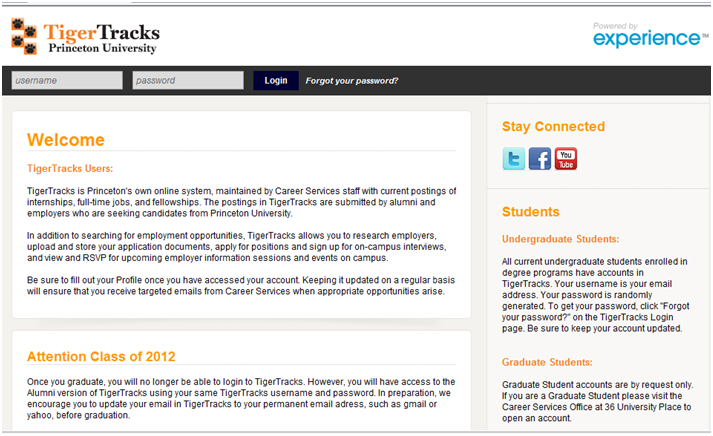
Think you know every­thing there is to know about Tiger­Tracks? I thought I did—that is, until I took the time to chat with Julie Shurts, Career Ser­vices’ Asso­ciate Direc­tor of Recruit­ment & Employer Rela­tions. Julie shared that Princeton’s Tiger­Tracks sys­tem is pow­ered by Expe­ri­ence, a lead­ing provider of cam­pus career man­age­ment sys­tems used by over 300 career cen­ters at top schools through­out the United States. Prince­ton has used Expe­ri­ence since the late 1990s and each year this ven­dor has made enhance­ments to the sys­tem to make it more user-friendly for stu­dents and admin­is­tra­tors alike.

Dur­ing the course of our inter­view, Julie debunked some of the top myths about Tiger­Tracks. Here’s what she had to say:

• Myth: Tiger­Tracks has lim­ited job and intern­ship post­ings.
Fact: Tiger­Tracks post­ings have been increas­ing every year. The num­ber of over­all job and intern­ship post­ing has increased by 29 per­cent since last year alone (as of April 2012). Another key fact is that over 52 per­cent of the Class of 2011 found their full-time jobs by using TigerTracks!

• Myth: Tiger­Tracks is only for spe­cific indus­tries.
Fact: Tiger­Tracks is not par­tic­u­lar to any spe­cific employ­ment indus­try. There are more than 40 dif­fer­ent employ­ment indus­tries rep­re­sented in Tiger­Tracks! The range of indus­tries with post­ings in Tiger­Tracks includes Arts & Enter­tain­ment, Com­mu­ni­ca­tions, Con­sult­ing, Engi­neer­ing, Finance/Banking, Law/Legal Ser­vices, Retail/Merchandising, and Tech­nol­ogy, among others.

• Myth: There are no non­profit job list­ings on Tiger­Tracks.
Fact:  The non­profit sec­tor has had the great­est num­ber of over­all post­ings of all the indus­tries rep­re­sented in Tiger­Tracks for the past two years! Of the 4,000+ post­ings in 2011–2012, 30 per­cent are in the non­profit sector.

• Myth: The same jobs are always posted on Tiger­Tracks.
Fact: The num­ber of over­all job and intern­ship post­ings changes every day as new posi­tions are added and cur­rent posi­tions close. Tim­ing is impor­tant, as dif­fer­ent employ­ers and indus­tries tend to have dif­fer­ent recruit­ing periods.

• Myth: Tiger­Tracks is not cus­tomiz­able.
Fact: There are many ways you can per­son­al­ize your Tiger­Tracks pro­file. One way is by indi­cat­ing your indus­try and job func­tions pref­er­ences. . Indus­try pref­er­ences relate to the type of com­pany or orga­ni­za­tion that  inter­ests you, and Job Func­tion relates to exactly what type of work you are inter­ested in doing. Career Ser­vices fre­quently sends tar­geted email through the sys­tem based on these pref­er­ences, updat­ing you on job and intern­ship oppor­tu­ni­ties based on your pref­er­ences. If your pref­er­ences change, be sure to update them so that you con­tinue to receive per­ti­nent announce­ments. Your con­cen­tra­tion is also impor­tant to list in Tiger­Tracks, as tar­geted email mes­sages are also fre­quently sent based on concentration.

• Myth: Tiger­Tracks searches are dif­fi­cult!
Fact: If you per­form a job or intern­ship search in Tiger­Tracks and you do not get many results, review your search cri­te­ria and make sure you have selected all of the rel­e­vant options. For exam­ple, if you are look­ing for non­profit sec­tor posi­tions, instead of click­ing only “Non­profit” from the list of Indus­tries, con­sider select­ing mul­ti­ple options, such as all of the non­profit sub­cat­e­gories, Non­profit Orga­ni­za­tion, Foundation/Think Tank, Social/Human Ser­vices, International/NGO, Edu­ca­tion, etc.

• Myth: Tiger­Tracks does not allow you to save searches.
Fact: You can save any search you cre­ate. To do this, just click the “You’re Your Search” option on the Search Results page and give your search a name. Your saved search will appear on your home page when you log in. When you cre­ate a saved search, you can also opt to receive an email announce­ment when a new oppor­tu­nity that matches your search enters the sys­tem. You can save upto 50 searches!

• Myth: Posi­tions on Tiger­Tracks are not only for Prince­ton stu­dents.
Fact: Tiger­Tracks con­tains posi­tions that are posted through Career Ser­vices as well as posi­tions directly posted through the ven­dor, Expe­ri­ence. Posi­tions posted through Career Ser­vices are from employ­ers who are look­ing for Prince­ton can­di­dates only.  These posi­tions are labeled with an orange shield icon. Posi­tions posted through Expe­ri­ence are open to non-Princeton stu­dents, too.
 
• Myth: Tiger­Tracks is only for juniors and seniors.
Fact: Tiger­Tracks is for all stu­dents and every year in school! All cur­rently enrolled under­grad­u­ate stu­dents enrolled in degree pro­grams are auto­mat­i­cally given a Tiger­Tracks account at the start of Fresh­men year. Your user­name is your Prince­ton email address. Your pass­word is ran­domly generated. To obtain your pass­word, click “For­got your pass­word?” on the Tiger­Tracks login page.  Cur­rently enrolled grad­u­ate stu­dents can set up an account by vis­it­ing the Career Ser­vices office. The office is open week­days between 8:45 am and 5 pm (Sept. – May) and 8:30 am – 4:30 pm (June – August).

I hope debunk­ing some of these Tiger­Tracks myths inspires you to log on today and start your career search! Click here to check it out!

Final note, if you have any ques­tions about Tiger­Tracks, stop by dur­ing daily walk-in hours from 3–5 pm and a career coun­selor will be happy to assist you.

UCAN

Look­ing for a job or sum­mer intern­ship? Check out UCAN, or Uni­ver­sity Career Action Net­work, an inter­col­le­giate job/internship data­base and my per­sonal favorite career tool. Main­tained by a 22-university syn­di­cate, UCAN’s expan­sive net­work is a gold­mine for even the pick­i­est job searcher.

Per­haps “you-can” sounds unfa­mil­iar to you. If you’ve ever browsed Tiger­Tracks or another sim­i­lar job/internship search site, you’re prob­a­bly famil­iar with the process. Just reg­is­ter with your Prince­ton email address, punch in basic pro­file infor­ma­tion, and you’re good to go. You can also add basic aca­d­e­mic infor­ma­tion, upload your resume, and cre­ate a Onestop Tal­ent Search pro­file. This last fea­ture enters your infor­ma­tion and resume into a search engine for employ­ers that helps them find and recruit their can­di­date of best fit. That’s right, employ­ers search for YOU.

If you’ve ever researched jobs and intern­ships, you prob­a­bly know that effec­tive search tools make all the dif­fer­ence. One of my favorite fea­tures of the UCAN web­site is the sheer mul­ti­tude of ways to approach the job search. On the intern­ship home­page, you can browse oppor­tu­ni­ties by job title, employer, key­word, employer name, descrip­tion, major, and loca­tion, either sep­a­rately or all at once.

Another of UCAN’s perks is its search employer fea­ture. Say you want to search jour­nal­ism oppor­tu­ni­ties in New York City. Just go to the employer tab at the top, plug in the infor­ma­tion, and a list of employ­ers and their cor­re­spond­ing web­sites appears on your page. Tip: if a com­pany does not have an intern­ship posted on UCAN, check out their web­site. Usu­ally under “career,” “con­tact us,” or (of course) “intern­ships” you’ll find details on the posi­tion you’re look­ing for. UCAN also con­tains a list of con­tacts from com­pa­nies listed by indus­try, if you’re look­ing for career advice from some­one in the business.

If you’re moti­vated or just plain curi­ous about your career future, UCAN is the per­fect place to start or refine your search. Just go to Princeton’s Career Ser­vices web­site, click on UCAN on the right-hand side­bar, and check it out for yourself!