Recently in Prints, Drawings, Paintings Category

Expositor of Imposture and Folly

| No Comments
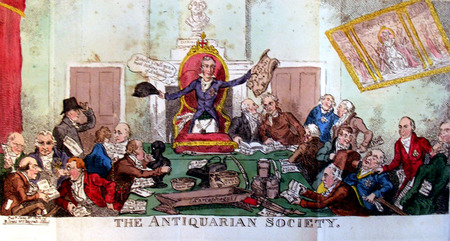
antiquarian society.jpg

George Cruikshank (1792-1878), "The Antiquarian Society" in Scourge, or, Monthly Expositor of Imposture and Folly (June 1812): 431. Graphic Arts GA Cruik 1811.2.

One of George Cruikshank's early jobs was creating the frontispiece caricatures for William N. Jones's satirical journal The Scourge; first subtitled: Monthly Expositor of Imposture and Folly and then, Literary, Theatrical, and Miscellaneous Magazine, and finally, Monthly Expositor of Literary, Dramatic, Medical, Political, Mercantile and Religious Imposture and Folly (1811-1816).

These large hand-colored foldouts were often attacks on the royal family and leading politicians, although this 1812 satire looks at book collectors. An accompanying article notes that antiquarians "collect materials without any regard to their utility, and without attempting to facilitate the study of antiquities, by arranging them in classes, and by pointing out their dependence on each other, or their connection with collateral branches of investigation." It goes on.

Brandeis wrote a nice piece about Scourge in their blog: http://brandeisdigitallibrary.blogspot.com/2011/03/scourge-or-monthly-expositor-of.html

Balloon in the Pantheon

| No Comments
ballooning4.jpg

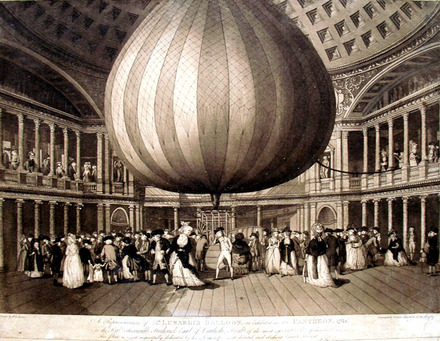
Valentine Green (1739-1813) after a design by Frederick George Byron (1764-1792), A Representation of Mr. Lunardi’s Balloon, as Exhibited in the Pantheon, 1784. Aquatint. GC014 Aeronautical Illustrations Collection.

The Balloon Stone (Lunardi Monument) at Standon Green End reads: “Let posterity know, and knowing be astonished, that on the 15th day of September 1784 Vincent Lunardi of Lucca in Tuscany, the first aerial traveller in Britain, mounting from the artillery ground in London and traversing the regions of the air for two hours and fifteen minutes, in this spot revisited the earth.” Lunardi flew twenty-four miles with a dog, a cat, and a pigeon. The cat got airsick. His balloon was then exhibited in the Pantheon.

This print is one of 400 in the Aeronautical illustration collection, collected by Harold Fowler McCormick and given to Princeton University by Alexander Stillman of Chicago, a relative of the McCormick family. Here are a few others.

ballooning5.jpg

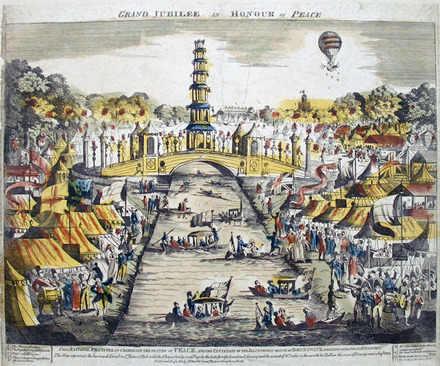
Grand Jubilee in Honour of Peace, 1814. Published by John Pitts (1765-1844), Engraving with printed color. GC014 Aeronautical Illustrations Collection. This Jubilee on Augt. 1, 1814 was to Celebrate the return of Peace and the centenary of the reign of the illustrious House of Brunswick and to commemorate the glorious battle of the nile.

ballooning6.jpg

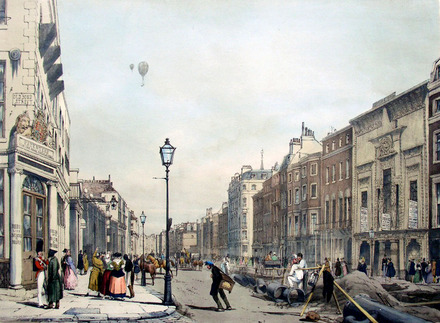
Thomas Shotter Boys (1803-1874), Piccadilly Looking Towards the City published in London As It Is, 1842. Lithograph. GC014 Aeronautical Illustrations Collection

ballooning7.jpg

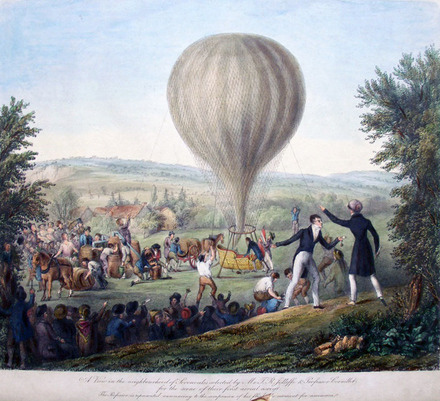
Paul Gauci (active 1834-1866), A View in the Neighbourhood of Sevenoaks Selected by Mr. T. R. Jolliffe and Professor Cornillot for the Scene of Their First Aerial Ascent, no date (after 1825). Lithograph. GC014 Aeronautical Illustrations Collection

ballooning1.jpg

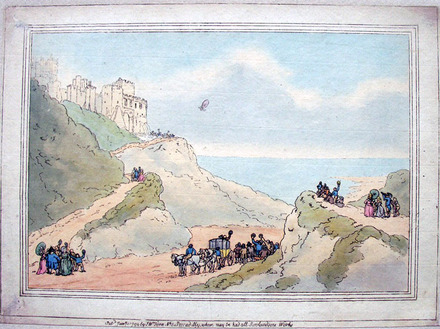
Thomas Rowlandson (1756 or 1757-1827), The Departure of the Balloon from Dover, 1794. Etching. GC014 Aeronautical Illustrations Collection

S.J. Woolf: Drawn from Life

| No Comments
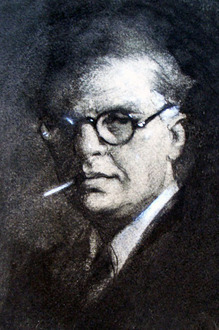
woolf15.jpgSamuel Johnson Woolf (1880-1948), Self-portrait, 1938. Charcoal and white chalk on paper. Graphic Arts collection 2006-02518

In December of 1949, The New York Times ran an article announcing a new exhibition at the Princeton University Library entitled “Drawn From Life: Original Portraits by S.J. Woolf.” Woolf had died of Lou Gehrig’s disease the year before and the show was undoubtedly organized by Elmer Adler (1884-1962), who also exhibited Woolf’s portraits in 1930 at his Pynson Printer’s gallery, located in the New York Times building.

“It represents three decades of Woolf’s activities in catching the celebrities of this generation in the mirror contrived by his pencil and his pen,” writes H. I. Brock. “The subjects are men and women famous in many walks of life…. And it is not less interesting because most of the portraits … were made originally for the [New York] Times .”

Brock’s only complaint was that Woolf’s most famous portrait, that of George Bernard Shaw, was not included. Days later, in a letter to the editor, Howard C. Rice, Jr. of Princeton’s Department of Rare Books & Special Collections reported that Mr. and Mrs. Bruce Colen of Holicong, PA had read the story and loaned the drawing, which they owned, to the University exhibition.

After the close of the exhibition, all the charcoal drawings were returned to Woolf’s widow. Now, over sixty years later, thanks to the generous gift of Sue Kessler Feld and Stuart P. Feld, Class of 1957, we again have a substantial collection of Woolf’s portraits. Here is a small selection.

woolf13.jpg
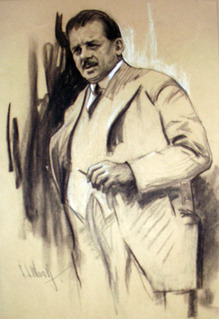
Aristide Briand (1862-1932). Served eleven terms as Prime Minister of France. Drawing published on the front page of The New York Times, May 25, 1930.

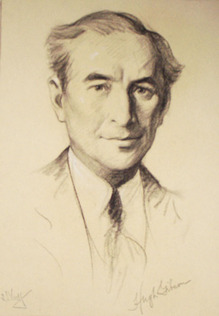
woolf1.jpgSamuel John Gurney Hoare, 1st Viscount Templewood (1880-1959). British Foreign Minister; authored the Hoare-Laval Pact with French Prime Minister Pierre Laval. Published in Newsweek Aug. 31, 1935
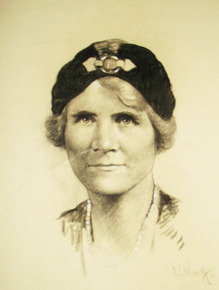
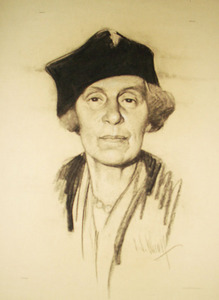
woolf5.jpg Helen Rogers (Mrs. Ogden Mills) Reid, (1882-1970). President of The New York Herald Tribune; Herald Tribune Corporation; and Chairman of the Board. Published in Newsweek Nov. 23, 1935.

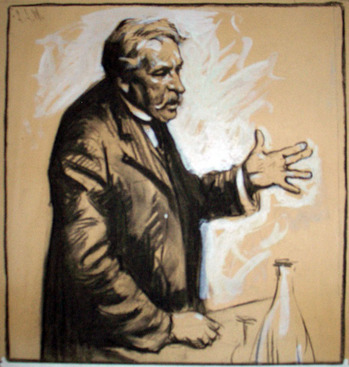
woolf10.jpgEdouard Herriot (1872-1957). French politician, served three times as Prime Minister and President of the Chamber of Deputies. Published in NY Herald Tribune, Feb. 17, 1929.
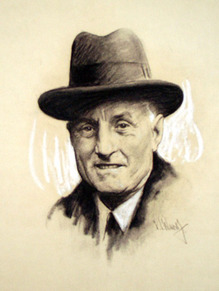
woolf3.jpgHugh Gibson (1880-1948). American diplomat, active in Poland 1919-1924. Published in NYT Magazine, June 21, 1931.


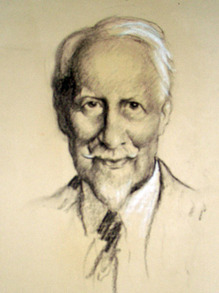
woolf8.jpgDr. Graeme M. Hammond (1858-1944). Neurologist and professor of nervous diseases at NYU Medical School. Published in NYT Magazine Mar. 13, 1938.
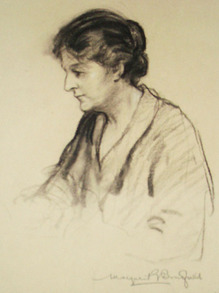
woolf9.jpg Margaret Grace Bondfield (1863-1935). English Labor politician, the first woman Cabinet Minister and one of the first three female Labor MPs. Published in NYT Magazine July 28, 1929.
woolf6.jpgLeonor Fresnel Loree (1858-1940). President of the Delaware & Hudson Railroad, among others. Chairmain of the Rutgers Board of Trustees Committee on New Jersey College for Women (now Douglass College). Published in Newsweek Sept. 14, 1935.
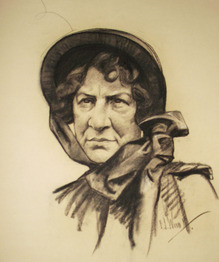
woolf12.jpgEvangeline Cory Booth (1865-1950). Founder of the British Salvation Army and later General of the United States Salvation Army. Raised over $12,000 for relief work after SF earthquake. Published in Newsweek Nov. 10, 1934.

woolf7.jpg Maude Royden (1876-1956). England’s most famous woman preacher and suffragist; first woman to receive a Doctor of Divinity. Published in Newsweek, Jan. 23, 1937.
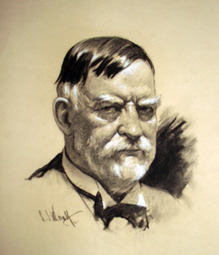
woolf4.jpg J. Ramsay MacDonald (1866-1937). British politician who was the first Labor Prime Minister. Published in NY Herald Tribune Magazine, Sept. 1, 1929.
Frankenstein Outdone

| No Comments
making a man.jpg
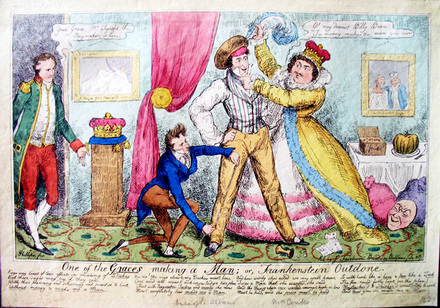
John Phillips (active 1825-1831), One of the Graces Making a Man; or Frankenstein Outdone, 1827. Hand colored etching. Graphic Arts GA British prints

On June 16, 1827, the actress Harriot Mellon (1777-1837) married William Beauclerk, 9th Duke of St. Albans (1801-1849). At age fifty, it was Harriot’s second marriage and William’s first. He was twenty-six. Harriot’s first marriage was to Thomas Coutts, a banker in his eighties.

There are two series of Mellon caricatures, the first making fun of her marriage to an old man (assuming it was for his money) and the second making fun of her marriage to a young man (portraying her as an over-powering matriarch). Harriot is usually given a mustache and seen taking control.

Here, the Duke is being measured for a new pair of trousers while his wife puts a feather in his cap. At her feet is a comic mask from the theater and bags of money (from her first husband). On the wall, we see the portrait of King Charles II and his mistress, the actress Eleanor (Nell) Gwynne.

Below the title:
Kings may boast of their efforts in making of Dukes
But those sages may try if they can,
With their planning and scheming and practice to boot,
Without money to make me a Man.

No, no! the wise elves to my Duchess must bow,
One and all must acknowledge her plan,
That with Staymakers, Tailors, and money, she now
Most completely has made me a Man.

And how wisely she’s acted we very well know;
‘Twas a Man that she wanted, she said
And the thing when once wanted, amongst high or low
Must be had, and the price must be paid

So with heart like a hero, & face like a Turk
She (her mind fully bent on the plan)
Mustacheo’d & whisker’d went boldly to work
And thus you see made me a Man.

Auguste Brouet

| 4 Comments
bronet3.jpg
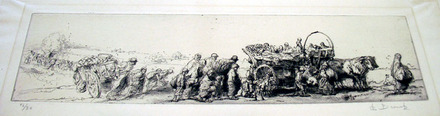
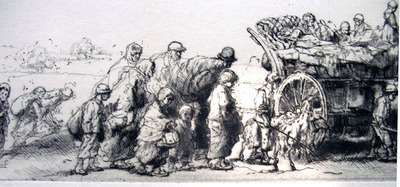
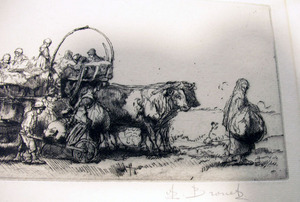
Auguste Brouet (1872-1941), Untitled [Refugees], ca. 1918. Drypoint. Edition 14/30. Graphic Arts GC077 French Prints Collection
bronet4.jpg
bronet2.jpg

This beautiful drypoint was discovered inside a collection of French World War I prints and posters. The artist can be identified by his signature, Auguste Brouet (1872-1941), a printmaker who was born and lived all his life in Paris. As of yet, no title can be found for this image of refugees traveling along a country road.

Writing in The International Studio (1920), Marcel Valotaire described the career of this little known artist: “At the age of sixteen he made his first attempt at etching, using as his sole implement a nail, and as his plate a scrap of zinc gutter-pipe with a ground— if one may so call it—of floor polish. The proof obtained from a single biting of this little plate, Les petits Joueurs de Dis, is quite remarkable, and arrests attention because it immediately reminds one of Rembrandt, although at that time the youthful debutant was completely unaware of the great Dutch master’s existence as an etcher, and certainly had never seen one of his etchings. Thus from this early beginning as an aquafortist, Brouet has remained himself, and his manner and style are borrowed from no one, but are peculiarly his own.”

Happy Thanksgiving.

A Midsummer Night's Dream

| No Comments
midsummer1.jpg
midsummer2.jpg
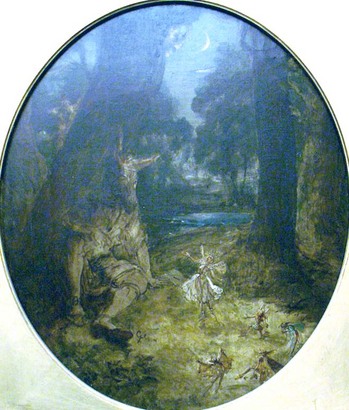
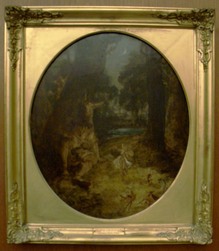
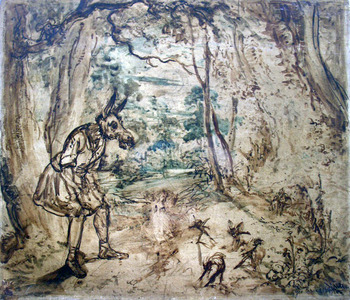
George Cruikshank (1792-1878), A Midsummer Night’s Dream, no date [ca. 1845]. Oil on board. C022 Cruikshank Collection

George Cruikshank (1792-1878) is perhaps best known for his illustrations of Charles Dickens’ novels, Sketches by Boz (1836) and Oliver Twist (1838) in particular. During the 1840s, Cruikshank’s relationship with Dickens went sour and he moved to other projects of his own creation. These include George Cruikshank’s Omnibus (1841) and George Cruikshank’s Table Book (1845), as well as his Comic Almanack (1835-53).

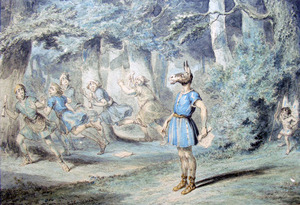
During this period, we believe he was also working out the illustrations to Shakespeare’s A Midsummer Night’s Dream. Princeton holds several sketches and a finished oil painting of Act III, scene I between Bottom and Titania. Please note that we have digitally removed some of the varnish to make the image easier to see.

midsummer3.jpg

George Cruikshank (1792-1878), A Midsummer Night’s Dream: Bottom the Weaver and Titania, no date. Watercolor with heavy varnishing. GC022 Cruikshank Collection.

midsummer4.jpg

George Cruikshank (1792-1878), A Midsummer Night’s Dream, Act III, Sc. I: O monstrous! O strange! We are haunted. Pray, masters! Fly, masters! Help!, no date [ca. 1845]. Watercolor on paper. GC022 Cruikshank Collection

Out of this wood do not desire to go:
Thou shalt remain here, whether thou wilt or no.
I am a spirit of no common rate;
The summer still doth tend upon my state;
And I do love thee: therefore, go with me;
I’ll give thee fairies to attend on thee,
And they shall fetch thee jewels from the deep,
And sing while thou on pressed flowers dost sleep;
And I will purge thy mortal grossness so
That thou shalt like an airy spirit go.
Peaseblossom! Cobweb! Moth! and Mustardseed!

Severo Sarduy, novelist, critic, poet, and painter

| No Comments
sarduy extra.jpg
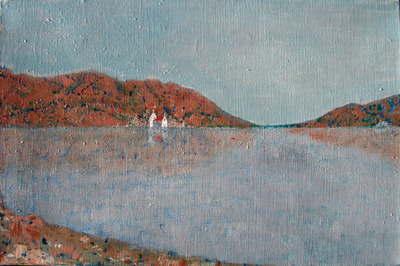
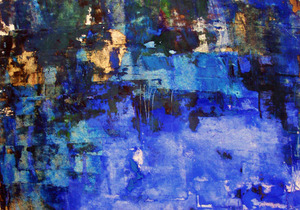
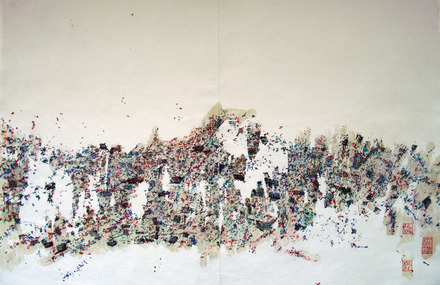
Severo Sarduy (1937-1993), Landscape, 1980. Acrylic on cloth. 27 x 41 cm.

Thanks to the assistance of the Executive Committee for the Program in Latin American Studies, Graphic Arts recently acquired thirty-four painting and drawings by the novelist, critic, poet, and visual artist Severo Sarduy (1937-1993). Artifacts from his studio accompany the paintings, along with several works by his friends Roland Barthes, Jorge Camacho, and José Luis Cuevas.

sarduyport.jpg
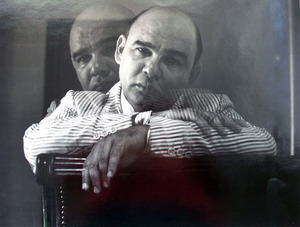
Kamel Ouidi, Portrait of Severo Sarduy, ca. 1980. Gelatin silver print.

sarduy extra2.jpg
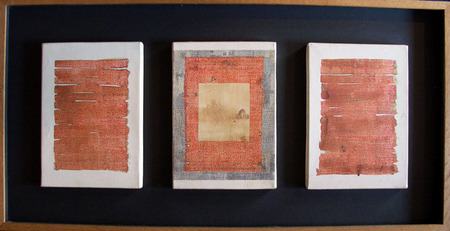
Severo Sarduy (1937-1993), Triptych (I, II, III), 1990. Coffee and acrylic on linen. 27 x 19 cm.

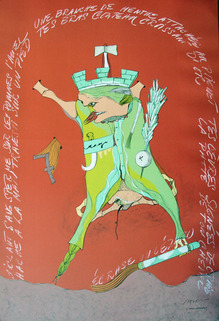
sarduy extra3.jpg Jorge Camacho (1934-2011), Placard Sarduy, 1976. Text by Sarduy. Lithograph. Edition of 500. 87.4 x 59.4 cm.
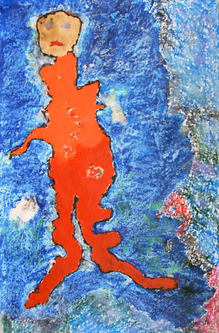
sarduy extra4.jpg Severo Sarduy (1937-1993), Untitled, no date. Mixed media on paper. 53.5 x 35.5 cm.

Born in Camagüey Cuba, Sarduy was sent to Paris in 1960 to study art at the École du Louvre and never returned. Even after becoming a French citizen, however, he wrote, "I am a Cuban through and through, who just happens to live in Paris." His second novel De donde son los cantantes (From Cuba with a Song) involves three narratives intertwined with the history of Cuba.

In Paris, Sarduy became close friends with Roland Barthes, Philippe Sollers, and other writers connected with journal Tel Quel. His third novel, Cobra (1972), translated by Sollers won the Prix Medicis for a work of foreign literature in translation. In addition to his own writing, Sarduy edited, published and promoted the work of many other Spanish and Latin American authors first at Editions Seuil and then Editions Gallimard.

In Sarduy's 1993 obituary in The Independent, James Kirkup wrote, "Sarduy was a genius with words, one of the great contemporary stylists writing in Spanish. ... Sarduy will be remembered chiefly for his brilliant, unpredictable, iconoclastic and often grimly funny novels, works of a totally liberated imagination composed by a master of disciplined Spanish style. He encompassed the sublime and the ridiculous, mingling oral traditions with literary mannerisms adopted from his baroque masters ...."

sarduy extra5.jpg
Severo Sarduy (1937-1993), Untitled, 1967. Acrylic on paper. 14 x 20 cm.

Sarduy continued to draw and paint throughout his life. A retrospective of his art was held in 1998 at the Museo Nacional Centro de Arte Reina Sofia and many of the painting now at Princeton were first seen by the public at this exhibition.

"I write only in order to make myself well," Sarduy once said. "I write in an attempt to become normal, to be like everybody else, even though it's obvious I am not. I am a neurotic creature, a prey to phobias, burdened with obsessions and anxieties. And instead of going to a psychoanalyst or committing suicide or abandoning myself to drink and drugs, I write. That's my therapy."

sarduy extra6.jpg
Severo Sarduy (1937-1993), Untitled, 1991. Acrylic on paper. 32 x 47.5 cm.

More information on Sarduy and this new collection will be published in an upcoming issue of the Princeton University Library Chronicle, including an essay by his colleague François Wahl. Until then, here is an interview with Sarduy completed shortly before his death:


Miss Brewster, age 24

| No Comments
brewster.jpg

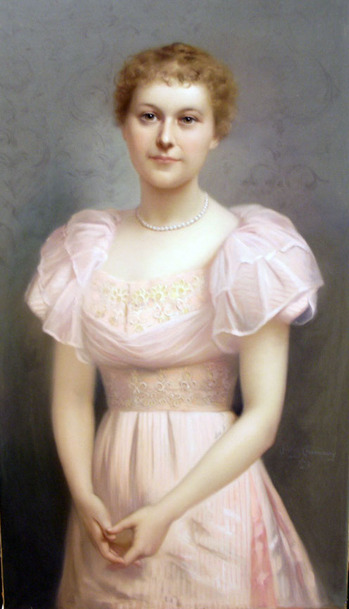
Unknown artist, Beulah Brewster, age 24, 1896. Pastel on canvas. 100 x 57 cm. GC059 American drawings and paintings.

This is a portrait of the young woman who would become Mrs. Beulah Rollins, wife of Philip Ashton Rollins (1869-1950), the founder of the Friends of the Princeton University Library and of the Western Americana collections. Here’s a biographical note from our finding aid to the Rollins collection: “Rollins was born in Somersworth, New Hampshire and spent a good deal of time during his youth out West, where he developed a fascination with a culture and lifestyle that would last his entire life. He attended Princeton University and graduated in 1889. He and his wife, Beulah “Pack” Rollins, settled in New York City, where he practiced law. Despite their East Coast home, Mr. and Mrs. Rollins spent much of their time traveling through the western United States.”

Red Wine and Cocaine

| No Comments
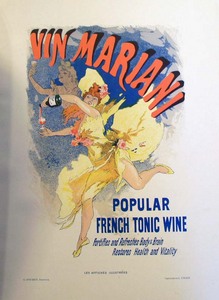
vin maria.jpg

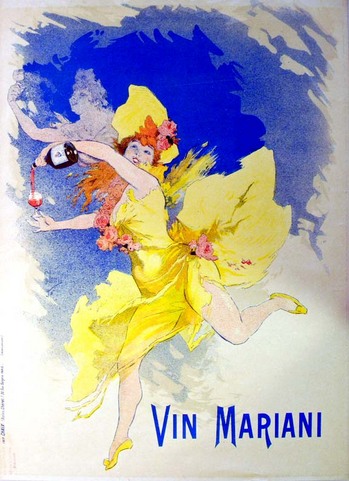
Jules Chéret (1836-1932), Vin Mariani, [1895]. Color lithograph. Graphic Arts GC077 French prints

vin maria2.jpg

In 1894, Angelo Mariani (1821-1873) commissioned a poster (left) from the leading French lithographer Jules Chéret (1836-1932) to advertise a medicinal tonic made from Bordeaux wine soaked with coca leaves. Mariani claimed the drink would supply extra energy, vitality, and general good health.

Newspaper advertising stressed the “wonderful properties of Coca are now very generally known. …Besides its action as a general tonic, [Vin Mariani] has been found of especial use in Diseases of the Stomach and of the Respiratory and Vocal Organs. …It is especially adapted, on account of its nice taste, for Children.”

To read more about Mariani’s wine, see his publication Coca and Its Therapeutic Application (New York: J. N. Jaros, 1890). Firestone Library (F) RS165.C5 M375 1890.

After the poster was released, a second print (see above) was prepared for a January 6, 1895 supplement to the weekly Le Courrier français: littérature, beaux-arts, théâtres, médecine, finance (Paris: Jules Roques, 1884-1908). This variant image came with a poem by Hughes Delorme:

Regardez bondir en plein ciel
La superbe danseuse rousse
Tenant de l’index et du pouce
Le nectar providentiel:

Rieuse de s’être grisée,
elle verse toujours, encor…
La fraiche clarté du décor
Fait resplendir sa chair rosée;

Sa chair que l’on pairait cher; et
Qui ne frissonne, hélas! qu’en rêve;
Charme furif; vision brève
Que pour nous évoqua Chéret.

Pour avoir sa grâce robuste,
—O ballerines d’Opéra
Sur qui la fatigue opéra
Le morne écroulement du buste,—

Il vous faut, le travail fini
Les gazes une fois rangées,
Avaler quatre ou cinq gorgées
du bon Vin de Mariani.

See plates 1119-1124 in Jules Chéret (1836-1932), La Belle Époque de Jules Chéret: de l’affiche au décor (Paris: Les Arts décoratifs/BNF, 2010). Firestone Library (F) Oversize ND553.C582 B374 2010q.

Proof after Paul Revere

| 1 Comment
revere1.jpg

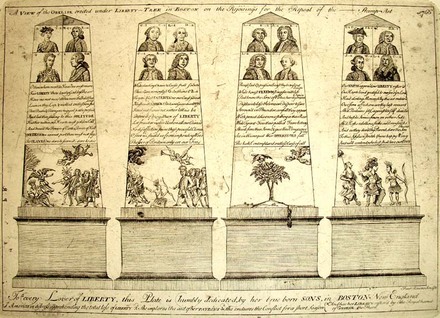
Richard Bishop (1897-1975) after Paul Revere (1735-1818), A View of the Obelisk Erected under Liberty-Tree in Boston on the Rejoicings for the Repeal of the Stamp Act, 1766 (printing plate); 1943 (restrike). Etching. Graphic Arts GA 2008-00310

This schematic etching illustrates all four sides of a 1766 obelisk erected in Boston to celebrate the repeal of the Stamp Act. Silversmith Paul Revere (1735-1818) helped to design the obelisk and the original etching. Our sheet was pulled in 1943 by Pennsylvania printmaker Richard E. Bishop off Revere’s copper plate.

The text at the bottom reads: “To every Lover of Liberty, this Plate is humbly dedicated, by her true born Sons, in Boston New England.” Followed by a poetic description of the iconography on each side of the obelisk: “1. America in distress apprehending the total loss of Liberty. 2. She implores the aid of her Patrons. 3. She endures the Conflict for a short Season, and 4. And has her Liberty restor[e]d by the Royal hand of George the Third.”

Through a series of owners, the plate was finally purchased by Lessing J. Rosenwald (1891-1979) for $5,500 in the early twentieth century. Before donating it, along with a group of prints, to the National Gallery of Art, Washington D.C., Rosenwald engaged the master printer Richard Bishop to pull a series of modern proofs (a common practice at the time). Nineteen prints were given to the major university collections in the area and fortunately, one was offered to my predecessor Elmer Adler for the Graphic Arts Collection at Princeton University.

faithfull.jpg

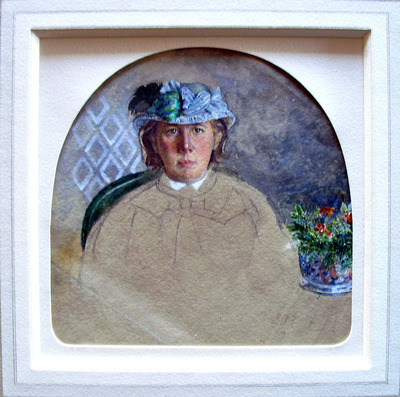
Unknown artist, Portrait of Emily Faithfull, ca. 1860-70. Watercolor with pencil. Graphic Arts GAX 2011- in process.

At the age of twenty-three, Emily Faithfull (1835-1895) fell in with a group of women led by Barbara Leigh Smith, who called themselves the “Langham Place Circle.” These ladies worked together to promote women’s suffrage and other social reforms, such as a campaign to have university examinations opened to women. In 1859, Faithfull and the others formed the Society for Promoting the Employment of Women.

In their search for skilled professions suitable for women, Faithfull and Bessie Parkes looked into the printing trade, specifically the position of the compositor. The two women bought a small press and took a few lessons to see if they were capable of performing this job, which of course they were.

On March 25, 1860, Faithfull used her own money to establish the Victoria Press with female compositors and proof-readers, and some men to do the heavy lifting. The Society for Promoting the Employment of Women apprenticed five girls to the Press at premiums of £10 each; others were apprenticed by relatives and friends.

Serious objections came from the London Printer’s Union, an all male organization, which claimed that women lacked the intelligence to be compositors (“The job requires the application of a mechanical mind and the female mind is not mechanical”).

At the same time, Faithfull had many supporters. Prominent authors including Alfred Tennyson, William Makepeace Thackeray, Thomas Carlyle, Matthew Arnold, and Anthony Trollope offered material to be printed and published by these women. The result was The Victoria Regia, A Volume of Original Contributions in Poetry & Prose (1861 (Ex) 3955.379).

On July 23, 1860, Emily Faithfull sent a letter to the editor of The Times (London). “So great is the success of this office,” wrote Faithfull, “that I have more work at this moment than my 12 women compositors can undertake, and I shall therefore be glad to receive six or eight girls immediately. They must be under 16 years of age, and apply personally at my office next week.”

The Victoria Press was a commercial success, operating for over twenty years, and leading to Faithfull’s appointment as “Printer and Publisher in Ordinary to Her Majesty.”

Will H. Bradley

| No Comments
chapbook.jpg

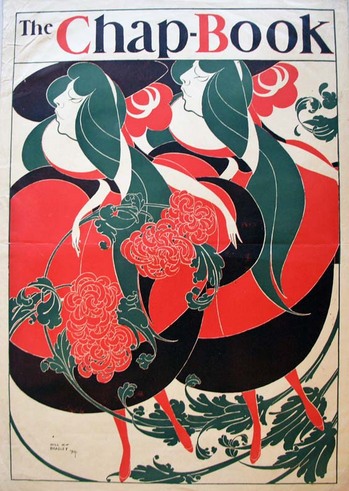
Twenty-three-year-old editor Herbert Stuart Stone understood the power of advertising. In 1894, he commissioned artist Will Bradley (1868-1962) to create seven posters to advertise his new literary magazine The Chap Book. The first poster, often referred to as The Twins, is seen above. Originally based in Cambridge, Massachusetts, Stone and Kimball relocated their publishing house and the magazine to Chicago, Illinois after six months. Thanks in big part to Bradley’s eye-catching designs, Stone’s semi-monthly magazine lasted until 1898, when it merged with The Dial.

There are two variation in The Twins; one on white paper and one on yellow. Each are signed in the bottom left, WILL H | BRADLEY ‘94. The press complained that if you squinted, Bradley’s design looked like an oddly-shaped red turkey.

Will H. Bradley, Poster for The Chap-Book, May 1894. Lithograph. Graphic arts poster collection.

Louis-Léopold Boilly

| No Comments

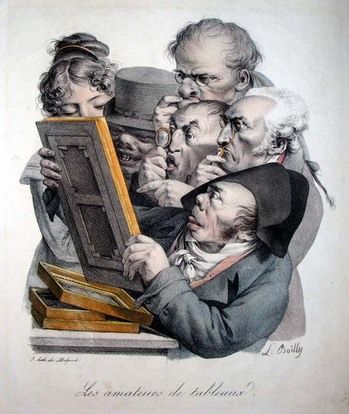
I never posted the details for the image at the top of this blog, printed by François-Séraphin Delpech (1778-1825) after a painting by Louis-Léopold Boilly (1761-1845), Les amateurs de tableaux (The Art Connoisseurs), 1823-1828. Lithograph. Graphic Arts GC077 French prints

boilly.jpg

This is one of ninety-six lithographs created and published under the series Recueil de grimaces (A Collection of Grimaces) between 1823 and 1828. A copy of this print, along with several other Boilly caricatures, is included in the current exhibition at the Metropolitan Museum of Art, Infinite Jest: Caricature and Satire from Leonardo to Levine. One of the Grimaces is also on the cover of the excellent catalogue written by our colleagues Constance McPhee and Nadine Orenstein.

Boilly’s Grimaces were created and sold in separate sheets rather than bound or in portfolio and so, they are usually not recorded in databases such as OCLC. While these prints were extremely popular and sold well, complete sets are very rare and to my knowledge, the Bibliotheque Nationale de France is the only institution with all ninety-six.

For an image of Delpech’s print shop, see the earlier post: http://blogs.princeton.edu/graphicarts/2007/11/theprintshopoff_delpech.html

The first international retrospective of Boilly’s work opens at the Palais des Beaux-Arts in November to commemorate the 250th anniversary of the artist’s birth. For more information, see www.pba-lille.fr/spip.php?article2135

For more information about the artist, see Louis Boilly (1761-1845), Grimaces, Léopold Boilly, 1994. Marquand Library (SA), ND553.B4 D445 1994q.

Louis Boilly (1761-1845), L.-L. Boilly, peintre, dessinateur, et lithographe; sa vie et son œuvre, 1761-1845, 1898. Marquand Lib.ND553.B4 H24.

Louis Boilly (1761-1845), Louis Boilly, 1761-1845, 1984. Marquand Library (SA) ND553.B4 L68.

Eventails

| No Comments
eventails.jpg
George Barbier, “Eventails,” from his Le bonheur du jour, ou les grâces à la mode, ca.1924. The Charles Rahn Fry, Class of 1965, Pochoir Collection, Graphic Arts Collection.

In 1997, John Bidwell (former curator of graphic arts) arranged the acquisition of the Charles Rahn Fry Collection, holding significant work by artists who specialized in the pochoir technique, preeminently Robert Bonfils, Georges Lepape, and George Barbier.

Bidwell wrote, “The definitive commentary on the elegant excesses of the postwar period is George Barbier’s Le bonheur du jour, ou les grâces à la mode (ca. 1924), a hymn to modern luxury, glorifying the pursuit of pleasure amidst splendid surroundings stocked with precious trifles. The Fry copy includes a proof of the “Eventails” plate with a completely different color scheme, apparently rejected by Barbier because he wanted richer tones and greater contrast in this group portrait of theatergoers, sporting an assortment of delicately tinted ostrich-feather fans, clearly intended more for plumage than for comfort.”

For a longer description of the collection, see http://libweb5.princeton.edu/visualmaterials/pulc/pulcv59n_1.pdf

Ornemens de peinture et de sculpture

| No Comments
ornemens.jpg

The French designer, architect, and engraver Jean Bérain, the elder (1640-1711) has been credited with being one of the creators of the Louis XIV style. His drawings of the wall and ceiling ornaments of Galerie d’Apollon in the Louvre and those for doors and wall paneling of Louis XIV’s apartment in the Tuileries were published under the title Ornemens de peinture et de sculpture (ca. 1710). The large folio volume included an engraved title page and twenty-eight engraved plates. An incomplete, unbound set is in graphic arts.

These designs have been alternately ascribed to Bérain, the elder, and to his son, Jean Bérain, the younger (1674-1726). What is clear is that the Bérains engraved eleven of the plates themselves and had the rest done by a series of French printmakers. François Chauveau (1613-1676) engraved thirteen, Jean Lemoyne (sometimes spelled Le Moine, 1638-1715) engraved four, and Gérard Jean-Baptiste Scotin (1671-1716) is responsible for the title page.

ornemens2.jpg

Botanicals of Mary Lind White

| No Comments
white8.jpg
white11.jpg
white12.jpg
(above) Mary Lind White (1810?-1883) and her husband James White (1809-1883).
(left) Mary Lind, later photograph of a painting of the artist age 6.

In 1968, Princeton acquired a collection of nearly 600 botanical watercolors by the British artist Mary Lind (Mrs. James) White made in 1876 during a trip through the United States to China. Her great granddaughter, Lady Berwick of Attingham Park, Shrewsbury, facilitated the acquisition with our curator of Western Americana Alfred Bush.

white5.jpg
white2.jpg

In a letter to Bush, Lady Berwick writes, “I am delighted to hear that you are pleased with the collection of botanical studies of Californian flora by my great grandmother Mrs. White (née Lind). I wish I could tell you more about her life and travels—all I know is that her husband Mr. James White had a business as a China merchant (teas, etc.) and he took his wife on journeys to China and America, though as they had a family of three or four daughters and five sons, it must have been difficult for her to get away.

Mr. White was [a] member of Parliament (Liberal) for Brighton for many years. Their home was at 8 Thurloe Square, London S.W. Both Mr. & Mrs. White died in 1883, I think. I wish I had a diary or other correspondence in order to give you more facts about Mrs. White—all I have is an album with a few larger flower paintings handsomely bound and inscribed Shanghae [sic] Flowers presented to James White by his wife on his Birthday April 10, 1868. Mr. White was in the U.S. again in the 1870s.”

white6.jpg
white4.jpg
white3.jpg
white1.jpg

James White was indeed part of the English Liberal party in the House of Commons between 1857 and 1874. Many of Mary White’s watercolors are dated August 1876 and the box includes a handwritten list of every plant dated 1879, presumably written after she had returned home.

white7.jpg
white9.jpg


Mary Lind White (1810?-1883), Botanical sketches of California flora, 1876. Watercolors. Graphic Arts 2011- in process

The Zenith of French Glory

| No Comments
zenith.jpg

James Gillray (1756 -1815), The Zenith of French Glory; -the Pinnacle of Liberty, 12 February 1793. Etching. Graphic Arts GA201-01475

The British caricaturist James Gillray drew this printed to commemorate the beheading of Louis XVI (note the crown on the guillotine’s blade). Beneath the title is written “Religion, Justice, Loyalty, & all the Bugbears of Unenlightened Minds, Farewell!” A sansculotte (sans-culottes, without the knee-length pants that were fashionable) is perched on a lamp post fiddling, one foot on the hanged body of the bishop. His cap says “Ca ira” (It will be fine), the song of the working class radicals of the French revolution.

The Public Got Justice!

| No Comments
burning.jpg
François le Villain (active 1819-1822), Le public a obtenu justice! Les scélérats n’en feront plus … … des albums! (The public got justice! The villains will do more … … albums!), [1828]. Lithograph. Nicolas-Toussaint Charlet (1792-1845) and Hippolyte Bellange (1800-1866) on a pyre of lithographic albums. Graphic Arts French Prints GC077

François Le Villain is commenting on the trouble caused by the images in the portfolios of lithographs that printsellers were turning out in huge numbers during the early nineteenth century. He points to Nicolas-Toussaint Charlet (1792-1845) and Hippolyte Bellangé (1800-1866) in particular, who were among the most prolific of the illustrators. Both used subject matter of military exploits under the First Empire, which made their work popular with the opposition under the Restoration and influential in the propagation of a mythic view of the Napoleonic era. The two are shown being burned at the stake by a fire of their own work.

Charlet and Bellangé both studied in the studio of Antoine-Jean Gros. They each went on to have careers as commercial illustrators, using the popular new process of lithography for their plates. Between 1823 and 1835, Bellangé alone published fifteen albums of lithographs devoted to the patriotic military subjects. During the same period, Charlet published a number of albums with the firm of Gihaut, who also published this print.

Theodore Frelinghuysen, Class of 1804

| No Comments
painting2.jpg
Attributed to James Reid Lambdin (1807-1889), Theodore Frelinghuysen, 1787-1862, ca. 1844. Oil on canvas. Graphic Arts collection, PP 183. Gift of Frederick T. Frelinghuysen.
In his Memoir of Theodore Frelinghuysen, Talbot Chambers wrote, “Our country has produced some greater men, but certainly no better one than Theodore Frelinghuysen.” After graduating from the College of New Jersey (now Princeton University) in 1804, Frelinghuysen served as Mayor of Newark, Attorney General of New Jersey and then, in 1828, was elected as an Anti-Jacksonian to the United States Senate. When the presidential ticket of Clay and Frelinghuysen was defeated by Polk and Dallas, he accepted the Chancellorship of New York University, and then, Presidency of Rutgers’s College.

During his six-year term as Senator, Frelinghuysen lobbied hard for the rights of Native Americans and against the Removal Act of 1830, which relocated eastern Indian tribes to land west of the Mississippi. He gave a six hour speech during the congressional debate on the bill, saying “Some matters, by universal consent, are taken as granted, without any explicit recognition. Under the influence of this rule of common fairness, how can we ever dispute the sovereign right of the Cherokees to remain east of the Mississippi, when it was in relation to that very location that we promised our patronage, aid, and good neighborhood?” Unfortunately, the bill was passed anyway.

painting5.jpg

This portrait has been attributed to the artist James Reid Lambdin (1807-1889), who painted many of our American presidents. According to Donald Egbert in Princeton Portraits, “This is presumably the portrait known to have been presented in 1866 by Frederick T. Frelinghuysen, [1817-1875]. The attribution to Lambdin, who established himself in Philadelphia in 1838, was tentatively made by William Sawitzky on the basis of a photograph … it seems probable that the portrait was painted about [1844].”

First Tree of Languages

| No Comments
arbre.jpg

Felix Gallet, Arbre généalogique des langues mortes et vivantes, gravé par Geusler de Genève (Paris, ca. 1800). Graphic Arts GAX 2011- in process

Purported to be the first tree of languages, Felix Gallet's engraved broadside predates that of August Schleicher, who is generally credited with inventing the form. Winfred Lehmann in Historical Linguistics (1992) states: "The suggestion that the relationship between subgroups of a language is similar to that between branches of a tree was propounded by August Schleicher, who was strongly influenced by views on evolution."

The tree here shows two distinct groups, the first emerging from "La Langue Primitive," from which we see languages such as Greenlandic, Guianan, Turkish, Mexican, Persian, Hebrew and Tahitian. The second group derives from "Le Celte," which in turn generates the bulk of European languages. The interaction between the two groups is fascinating and shows what must be an early attempt to integrate some of the discoveries of the New World into the existing linguistic framework.

A more recent language mapping can be found at: http://llmap.org/about-llmap.html

Recent Comments

  • allen scheuch: Absolutely STUNNING! Those colors, those designs made my day! Thanks, read more
  • Olivier: Hello Diane, If you are still looking for an examplare read more
  • Stella Jackson-Smith: I have a framed picture by A.Brouet, signed with the read more
  • John Podeschi: I remember Dale fondly from my days at Yale (1971-1980). read more
  • Joyce Barth: I have some or all of this same poem. I read more
  • John Baky: I was sad to hear this news. I had known read more
  • Linda Felcone: I had the pleasure of taking The Art of the read more
  • John Fleming: I saw Dale Roylance only infrequently since his retirement, but read more
  • Isabel Ribeiro: Thank you for your reply. I would indeed love to read more
  • Isabel Ribeiro: Gorgeous! Is there any way to access the rest of read more