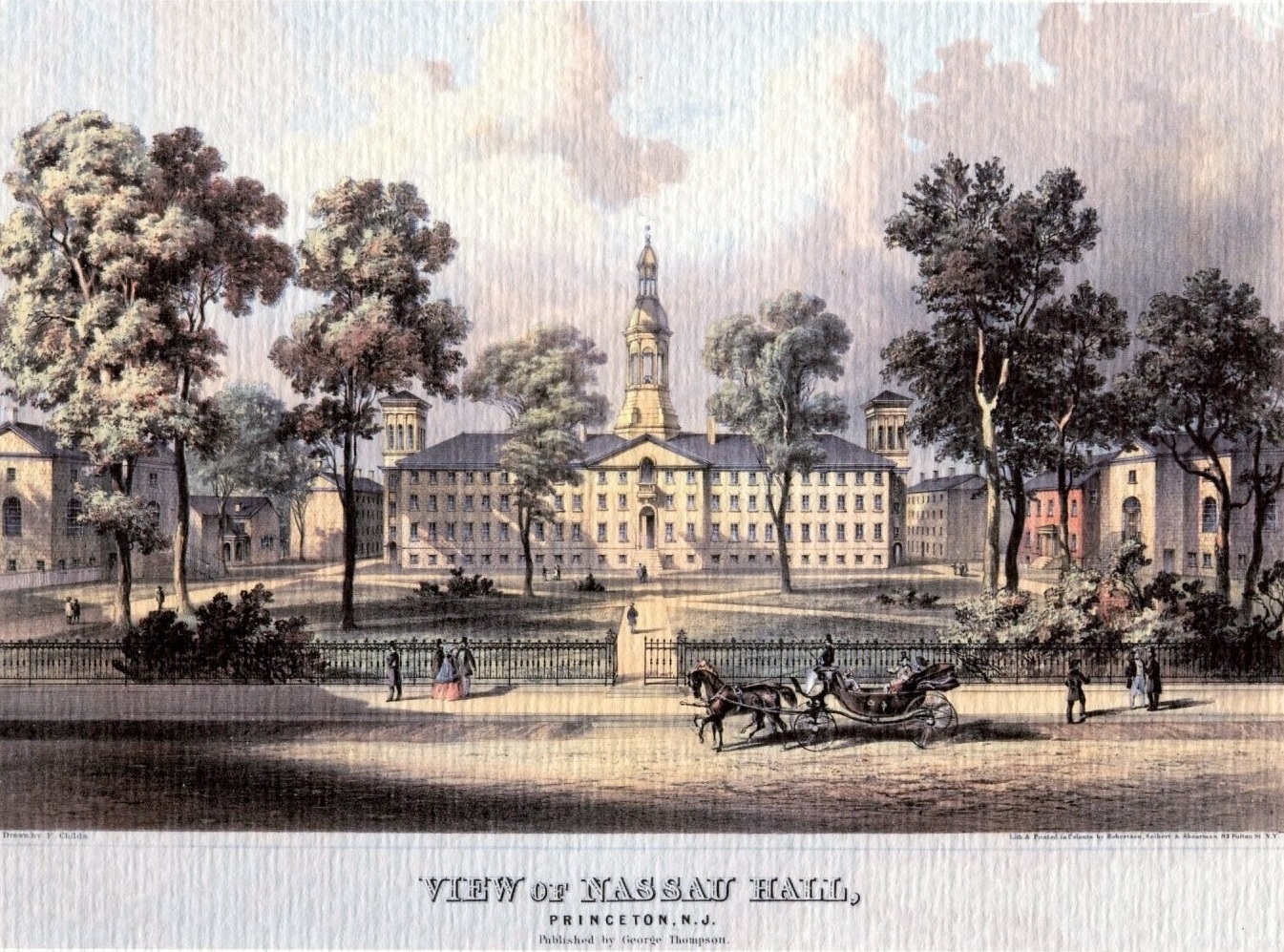
The Mudd Manuscript Library recently acquired an extremely interesting collection from a little-noted event in political history.
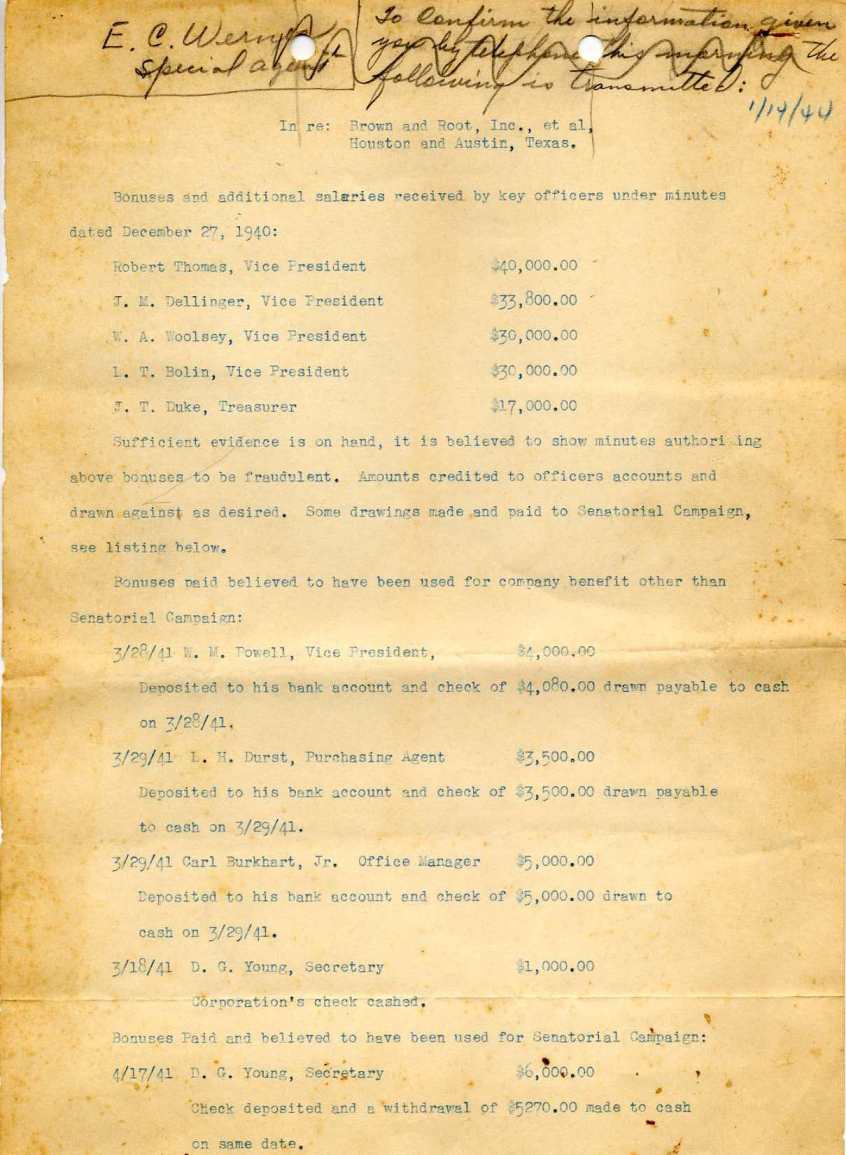
Between 1942 and 1944, Elmer Charles Werner led an Internal Revenue Service investigation of Brown & Root’s* covert financial support of then U.S. Representative Lyndon B. Johnson’s failed 1941 U.S. Senate campaign. According to Werner’s records, this investigation was impeded and eventually terminated by a complicated series of requests from Johnson to Roosevelt’s White House to senior IRS officials.
This collection includes Werner’s diaries from 1942-1945 (the period during which Johnson was investigated); Werner’s notes and newspaper clippings regarding the case; a chronology of the facts of the case prepared by Werner; and Werner’s manuscript narrative regarding his experiences which he entitled “How High Can an Income Tax Fix Go?”
Many years before their transmittal to Mudd, these records were central sources for a chapter in Robert A. Caro’s book The Years of Lyndon Johnson: The Path to Power (1981). There, Caro explains how Johnson’s connections to the Roosevelt White House prevented the IRS investigation from exploring the full scope of Brown & Root’s secret contributions to the Johnson campaign.
As Caro explains, in February of 1944, just as the investigation was gaining steam but before the agents had an opportunity to question key Johnson campaign staff, the IRS Chief of Intelligence instructed the agents to halt the investigation. In the end, Brown & Root received only a slap on the wrist in relation to their probable transgressions.
On June 28, Werner submitted his final report on Case S.I.-19267-F, showing tax deficiencies of $1,099,994 and a penalty of $549,972. But even this was to be scaled down. After a series of further conferences between IRS officials and [Alvin] Wirtz [Johnson’s close colleague and attorney for the defense], Brown & Root were ultimately required to pay a total of only $372,000. There were of course no fraud indictments, no trial, no publicity. (Caro 753)
The rest of the chapter is equally intriguing, as Caro explains the exact nature of Brown & Root’s financial maneuvers and Johnson’s interactions with the Roosevelt White House. However, Caro did not at the time have access to the 1944 and 1945 diaries kept by Werner, which are now part of Mudd’s collections. These diaries may provide more fruitful information for a future researcher.
More information about this collection, MC253, can be found on the Princeton University Finding Aids Website.
*During its many years in business, Brown & Root has also been known as Kellogg, Brown & Root and KBR. Brown & Root is a former subsidiary of Halliburton.