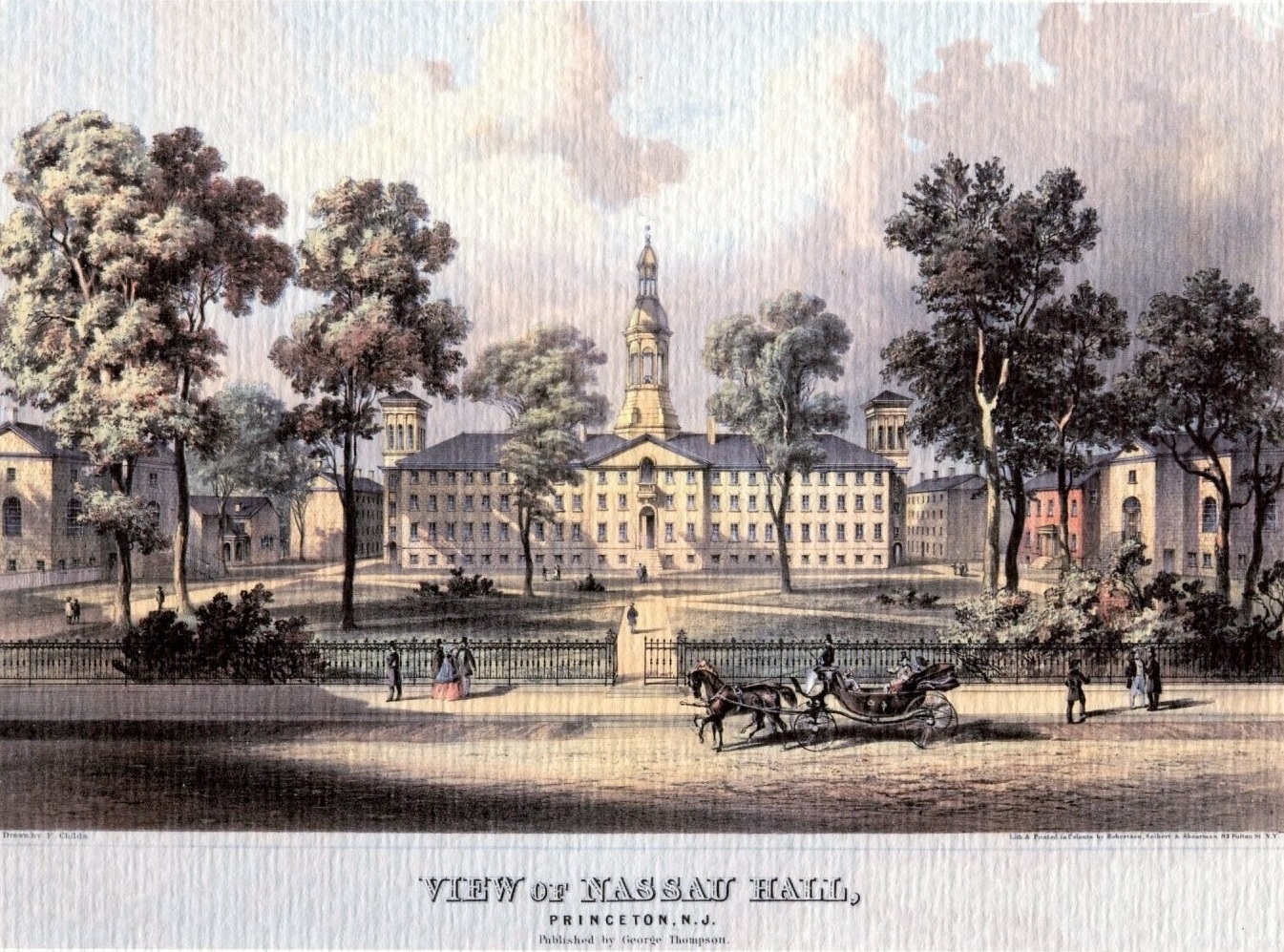
Princeton: America’s Campus” Lecture with Barksdale Maynard

The author of “Prince­ton: America’s Cam­pus” will host a dis­cus­sion with The New Jer­sey His­tor­i­cal Com­mis­sion later this month. The book, by Barks­dale May­nard, Prince­ton Class of 1988, fea­tures many pho­tographs from the His­tor­i­cal Pho­to­graph Col­lec­tion housed here at the Uni­ver­sity Archives at Mudd Man­u­script Library.

His most recent book “Prince­ton: America’s Cam­pus” is the sec­ond book May­nard wrote on a Prince­ton topic and his third on architecture.

Founded in 1746, Prince­ton is America’s fourth-oldest uni­ver­sity and one of the most beau­ti­ful places in the coun­try. Its secrets are revealed in Barks­dale Maynard’s new, land­mark pub­li­ca­tion, Prince­ton: America’s Cam­pus, the first book ever to deal exclu­sively with the archi­tec­tural his­tory of the uni­ver­sity. The author of five prize-winning books, includ­ing the acclaimed Woodrow Wil­son: Prince­ton to the Pres­i­dency, Barks­dale May­nard has uncov­ered sur­pris­ing new infor­ma­tion about Princeton’s centuries-old cam­pus along with hun­dreds of his­toric pho­tographs never repro­duced before. (From the book jacket.)

The dis­cus­sion will be hosted at Drumthwacket, the for­mer estate of the promi­nent Prince­ton Uni­ver­sity alum­nus and bene­fac­tor Moses Tay­lor Pyne, Class of 1877–and now the offi­cial res­i­dence of the Governor–for the the launch of the His­tor­i­cal Commission’s series “New in New Jersey.”

Drumthwacket • Sun­day, Sep­tem­ber 30, 2012 – 2:00 — 4:00 p.m.

Make your reser­va­tions now! Reg­is­ter Here.

Your True Friend and Enemy”: Princeton and the Civil War

Civil War exhi­bi­tion reveals sec­tional fis­sures within col­lege and town.

“Your True Friend and Enemy”: Prince­ton and the Civil War, a new exhi­bi­tion at Prince­ton University’s See­ley G. Mudd Man­u­script Library, exam­ines life at the col­lege and within the town of Prince­ton against the back­drop of the War Between the States. Through the eyes of stu­dents, fac­ulty, and townspeople—including women and African Americans—the exhi­bi­tion pro­vides a local view of this water­shed event in Amer­i­can his­tory. It opens on Sep­tem­ber 17, 2012, the 150th anniver­sary of the Bat­tle of Anti­etam, after which Pres­i­dent Abra­ham Lin­coln issued the pre­lim­i­nary Eman­ci­pa­tion Proclamation.

Each case fea­tures some­thing related to Abra­ham Lin­coln,” said Dan Linke, the head of the Mudd Man­u­script Library and one of the four exhi­bi­tion cura­tors. “We have stu­dent accounts of his pre-inaugural speech in Tren­ton and then his funeral train, as well as an alum­nus soldier’s diary not­ing the assas­si­na­tion. Per­haps the most sig­nif­i­cant item is the three-page hand­writ­ten let­ter sent by Lin­coln to the col­lege pres­i­dent accept­ing an hon­orary degree. It is one of the University’s trea­sured pos­ses­sions and what a for­mer dean called ‘among the title deeds to our Americanism.’”

Let­ters and doc­u­ments drawn from the Uni­ver­sity Archives at the Mudd Man­u­script Library and from other units of the Depart­ment of Rare Books and Spe­cial Col­lec­tions, as well as the His­tor­i­cal Soci­ety of Prince­ton, demon­strate how sec­tional dif­fer­ences affected stu­dent life and how the bonds of friend­ship tran­scended the national con­flict. The exhi­bi­tion also illu­mi­nates how Prince­to­ni­ans and the uni­ver­sity have com­mem­o­rated the war and pre­served the mem­ory of fallen stu­dent and alumni soldiers.

Mudd Library staff mem­bers Christie Lutz, Brenda Tin­dal, and Kris­ten Turner also curated the exhi­bi­tion. “This exhibit shows how both local communities—the Col­lege of New Jer­sey and Princeton—grappled with the impact of the Civil War and responded to the cri­sis in a vari­ety of ways.” said Turner. “The story is more nuanced and com­pli­cated than you may remem­ber from your his­tory books.”

“Your True Friend and Enemy”: Prince­ton and the Civil War is free and open to the pub­lic in the Wiess Lounge at the Mudd Man­u­script Library, 65 Olden Street, until June 1, 2013. The exhi­bi­tion is open from 9 a.m. to 4:45 p.m. Mon­day through Fri­day. An open house will be held at Mudd Library from 10 a.m. until noon on Sat­ur­day, Octo­ber 20, 2012. A behind-the-scenes tour will start at 10:30 a.m.

For more infor­ma­tion, call 609–258-6345 or email .


The Birth of the Civil Liberties Bureau and The National Civil Liberties Bureau,1917–1919

by: Pro­fes­sor Samuel Walker
School of Crim­i­nal Justice
Uni­ver­sity of Nebraska at Omaha

This is the first part in a series that was intro­duced ear­lier.

The fight for civil lib­er­ties dur­ing World War I orig­i­nated with the Civil Lib­er­ties Bureau (CLB), formed as a com­mit­tee of the Amer­i­can Union Against Mil­i­tarism (AUAM) imme­di­ately after the United States declared war on April 6, 1917. Led by Crys­tal East­man and Roger Bald­win, the Bureau lob­bied Con­gress and the Wil­son admin­is­tra­tion regard­ing pro­vi­sions for con­sci­en­tious objec­tors in the Selec­tive Ser­vice Act and pro­vided advice to young men fac­ing the draft. Lead­ers of the par­ent AUAM, how­ever, soon thought these activ­i­ties would alien­ate the admin­is­tra­tion of Pres­i­dent Woodrow Wil­son and as a result the Bureau became a sep­a­rate orga­ni­za­tion, the National Civil Lib­er­ties Bureau in the fall of 1917. In 1918 Mil­i­tary Intel­li­gence began inves­ti­gat­ing the NCLB for vio­la­tions of the Espi­onage Act, and finally on August 30, 1918 the Jus­tice Depart­ment raided the NCLB office and seized its records. (See the doc­u­ments in the topic, The National Civil Lib­er­ties Bureau and the Woodrow Wil­son Admin­is­tra­tion.) Pros­e­cu­tion appeared pos­si­ble, but never occurred. In Jan­u­ary 1920 the NCLB was recon­sti­tuted as the Amer­i­can Civil Lib­er­ties Union (ACLU). (See the doc­u­ments in the topic, The Found­ing of the ACLU.)

Reel7/Vol.69/p.345–351


The AUAM pam­phlet, Con­cern­ing Con­scrip­tion, circa May-June 1917, presents its views regard­ing selec­tive ser­vice and con­sci­en­tious objec­tion to par­tic­i­pa­tion in war, while Con­gress was debat­ing the selec­tive ser­vice bill. The prin­ci­pal issues involved the cri­te­ria for eli­gi­bil­ity as a con­sci­en­tious objector.

Reel3/Vol.16/p.3

The AUAM hand­bill, circa May-June 1917, while Con­gress was still debat­ing the selec­tive ser­vice bill. It attacks the idea of a draft and argues for a com­pletely vol­un­tary sys­tem for mil­i­tary service.


Reel7/Vol.16/p.4

Reel7/Vol.16/p.5

These three April 1917 let­ters between the AUAM and Sec­re­tary of War New­ton D. Baker reflect the close and cor­dial rela­tions between mem­bers of the Wil­son admin­is­tra­tion and the civil lib­er­tar­i­ans in the early months of the war. These indi­vid­u­als knew each other from their pre-war pro­gres­sive reform activ­i­ties. Baker, for exam­ple, had been a reform mayor of Cleve­land, Ohio. The AUAM mem­o­ran­dum here sets forth its views on what cat­e­gories of peo­ple should be eli­gi­ble for con­sci­en­tious objec­tor sta­tus. The cor­dial rela­tions ended in the spring of 1918 when Mil­i­tary Intel­li­gence and some Jus­tice Depart­ment offi­cials con­cluded that the NCLB was vio­lat­ing the Espi­onage Act.


This May 15–17, 1917 cor­re­spon­dence with Frank Walsh, a Kansas City, Mis­souri, attor­ney dis­cusses a pos­si­ble legal chal­lenge to the con­sti­tu­tion­al­ity of the draft. Walsh was a promi­nent Pro­gres­sive Era reformer and advo­cate of the labor move­ment. Some anti­war and paci­fist lead­ers regarded the draft as a vio­la­tion of the Thir­teenth Amend­ment. The Supreme Court even­tu­ally rejected this argument.


The AUAM pam­phlet, Con­sti­tu­tional Rights in War-Time (May 1917) rep­re­sents the organization’s first for­mal state­ment of the range of civil lib­er­ties issues at the out­set of the war.


Con­tinue read­ing

The National Civil Liberties Bureau and the Woodrow Wilson Administration

by: Pro­fes­sor Samuel Walker
School of Crim­i­nal Justice
Uni­ver­sity of Nebraska at Omaha

This is part of a series that was intro­duced ear­lier.

Roger Bald­win and Crys­tal East­man began their work with the Civil Lib­er­ties Bureau con­fi­dent that they had good rela­tions with offi­cials in the Woodrow Wil­son admin­is­tra­tion. Many of these peo­ple knew each other from their pre-war work on Pro­gres­sive Era reform. Begin­ning in early 1918, how­ever, Mil­i­tary Intel­li­gence and the Jus­tice Depart­ment began to regard the Bureau’s work as a vio­la­tion of the Espi­onage Act, on the grounds that it encour­aged draft age young men to either not reg­is­ter for the draft or refuse to par­tic­i­pate if drafted. The doc­u­ments in this sec­tion reveal the dete­ri­o­ra­tion of the rela­tion­ship between the Bureau and the Wil­son admin­is­tra­tion and the final break. Par­tic­u­larly shock­ing to mod­ern per­spec­tives, Bald­win tried to main­tain the rela­tion­ship by coop­er­at­ing with the gov­ern­ment, even to the point of offer­ing to cease cer­tain actions and also by pro­vid­ing con­fi­den­tial infor­ma­tion to gov­ern­ment offi­cials. In the end, the Jus­tice Depart­ment raided the Civil Lib­er­ties Bureau office (along with the offices of many other orga­ni­za­tions) on August 30, 1918.

Reel2/Vol.15/p.4

These let­ters from Roger Bald­win to Fred­er­ick Kep­pel, Third Assis­tant Sec­re­tary of War and New­ton D. Baker, Sec­re­tary of War, June 1917, offers his assur­ance of his eager­ness to coop­er­ate with the Wil­son admin­is­tra­tion. Kep­pel had been a Dean at Colum­bia Uni­ver­sity, and Baker had been a noted reform mayor of Cleve­land, Ohio. Bald­win states that “We are entirely at the ser­vice of the War Department.”

Reel2/Vol.15/p.7L

This cor­dial let­ter of July 7, 1917 from Sec­re­tary of War Baker to Roger Bald­win indi­cates the degree of trust and coop­er­a­tion that pre­vailed in the early months of the war.


Reel2/Vol.15/p.23R

This cor­dial let­ter to Roger Bald­win of Sep­tem­ber 27, 1917 from Felix Frank­furter, an offi­cial in the War Depart­ment, thanks Bald­win and other civil lib­er­tar­i­ans for their help­ful efforts and expresses con­fi­dence that the con­cerns of the Civil Lib­er­ties Bureau will be resolved. Frank­furter was not directly involved in any civil lib­er­ties issues dur­ing the war, and did not object to the government’s actions. He became a mem­ber of the ACLU National Com­mit­tee in 1920 and was appointed a Jus­tice of the U.S. Supreme Court in 1939.

Con­tinue read­ing

How History is Made”: In Search of Princeton’s First African American Daughter

by: Brenda Tindal

Before the pomp and cir­cum­stance of reunions and Prince­ton University’s 265th com­mence­ment fades into mem­ory, it is worth not­ing that this year marks the 40th anniver­sary of the Class of 1972 because in many ways, this class bore wit­ness to the rev­o­lu­tion­ary trans­for­ma­tions tak­ing place across the coun­try. These stu­dents entered col­lege dur­ing the tumult of the civil rights and women’s move­ments, and the Viet­nam War with its anti-war protests. Per­haps, they too, were shocked by the news of Sen­a­tor Robert F. Kennedy and civil rights patri­arch Dr. Mar­tin Luther King, Jr.’s assas­si­na­tions. In any case, Prince­ton and many other uni­ver­si­ties were not immune to the changes tak­ing place nation­ally; in fact, some col­lege cam­puses served as the­aters for such social and polit­i­cal unrest.

For instance, in a sub­tle dis­play of resis­tance, the stu­dent edi­tors of the 1972 Bric-a-Brac, Princeton’s under­grad­u­ate year­book, devi­ated from its tra­di­tional format—for what appears to be the first and only time—with the issuance of a two-volume annual, in hopes that “no one will con­strue [their] pre­sen­ta­tion as being char­ac­ter­is­tic of any par­tic­u­lar stu­dent or Prince­ton ‘type.’” To this end, they assem­bled images of nuns at the col­leges’ ath­letic events; pho­tos of the bohemian vari­ety of long-haired, bearded, and afro wear­ing Prince­to­ni­ans; and a psy­che­delic iter­a­tion of Nas­sau Hall’s clock tower. More­over, Robert F. Goheen, then the pres­i­dent of the col­lege, con­cluded his term as an agent of change and arbiter of diver­sity, exit­ing Prince­ton with sev­eral notches under his prover­bial belt, includ­ing the hir­ing of Carl A. Fields, the first black admin­is­tra­tor at an Ivy League col­lege, and the admis­sion of women in 1969. In addi­tion, at their com­mence­ment, the Class of 1972 observed John Hope Franklin, renowned scholar of African Amer­i­can his­tory, and Alvin Ailey, chore­o­g­ra­pher and founder of one of the most noted black reper­tory com­pa­nies in the world, receive hon­orary degrees from Princeton.

Vera can be seen on the left sec­ond from the top.

Miss­ing from the 1972 com­mence­ment and this nar­ra­tive of tumult and tri­umph is the story of Vera Mar­cus, the first known under­grad­u­ate African Amer­i­can woman to grad­u­ate from the col­lege as a “Prince­ton­ian.” For Ms. Mar­cus, the lat­ter point is par­tic­u­larly impor­tant. To be sure, women were part of the intel­lec­tual and social life of the col­lege long before Mar­cus entered in 1969. For exam­ple, there was the found­ing of Eve­lyn Col­lege for Women in 1887; the imprint left by the wives of deans and fac­ulty mem­bers, such as Isabella McCosh, the wife of Pres­i­dent McCosh and beloved 19th cen­tury fig­ure of the col­lege; the admit­tance of women as grad­u­ate stu­dents in the 1960s; and the pres­ence of young women from neigh­bor­ing col­leges, who par­tic­i­pated in a year-long con­cen­trated study in “crit­i­cal lan­guages.” How­ever, the caveat, as Ms. Mar­cus explains: “what dis­tin­guishes [her] class is that [they] were admit­ted as Prince­to­ni­ans and grad­u­ated as Princetonians.”

Con­tinue read­ing

Mudd Manuscript Library Annual Report: Fiscal Year 2012

Mudd Man­u­script Library Annual Report, FY2012


Sum­mary

The staff at Mudd Library had a very suc­cess­ful year in 2012 with notable high­lights that include:

  • Pre­pared for the launch of Aeon on July 1, 2012.  This required sig­nif­i­cant work from both pub­lic and tech­ni­cal ser­vices staff.
  • Sig­nif­i­cant work done to upgrade access tools, in par­tic­u­lar a new find­ing aids site launched in beta, and other work done to pre­pare for inte­gra­tion of EAD data into Primo.
  • ACLU project com­pleted, with almost 2,500 lin­ear feet of records described as part of NHPRC-funded pro­cess­ing project.
  • In addi­tion to ACLU, 1,800 lin­ear feet of other pol­icy and archives mate­ri­als described, includ­ing the Harold Med­ina Papers.
  • The Daily Prince­ton­ian dig­i­ti­za­tion com­pleted, with the years 1876–2002 now online.
  • Dis­ser­ta­tion sub­mis­sion pro­ce­dure altered to pro­vide full-text, online access via OIT’s DataSpace.
  • Hosted IMLS intern Brenda Tindal
  • Con­tin­ued high level of use of col­lec­tions, both in-house and remote, with great degree of patron sat­is­fac­tion, with PDF requests sur­pass­ing paper copies.

Major Activ­i­ties

Pub­lic Services

In the past year, the staff of the Mudd Man­u­script Library served 1,686 patrons, 211 of whom had vis­ited Mudd prior to FY12 and 678 who were new researchers. We cir­cu­lated 8,531 items (2,761 Uni­ver­sity Archives boxes/items, 5,812 Pub­lic Pol­icy Papers boxes/items, 34 Gest rare books and 14 other items). For more on par­tic­u­lar col­lec­tions used, see Appen­dix A: Most used Archives and Pol­icy col­lec­tions in FY2012.

Staff also filled 354 pho­to­copy orders total­ing 39,431 pages, of which 265 orders were deliv­ered as PDF files total­ing 27,338 pages and 89 orders were ful­filled on paper, total­ing 12,093 pages, so a PDF con­tin­ues to be the pre­ferred method for the major­ity of our users.  Scan­ning con­tin­ues to be the default method by which we pro­vide images for patrons and last year we filled 90 orders for 266 scans.

We responded to over 1,900 pieces of cor­re­spon­dence (includ­ing 882 per­tain­ing to the Uni­ver­sity Archives and 403 to the Pub­lic Pol­icy Papers; 16 requests for per­mis­sion to quote) which arrived as follows: 1,317 e-mail; 111 tele­phone; 23 sur­face mail and 1 via fax.  Indi­vid­ual cor­re­spon­dence totals:  Mau­reen Calla­han, 64; Christa Clee­ton, 7; John DeLooper, 15; Kate Dun­don, 20; Lynn Dur­gin, 108; Dave Gille­spie, 9; Adri­ane Han­son, 81; Dan Linke, 207; Christie Lutz, 184; Christie  Peter­son, 88; Amanda Pike, 340; Dan San­ta­maria, 27; Brenda Tin­dal, 18; Kris­ten Turner, 35; Helene van Rossum, 5; Ros­alba Rec­chia, 82.   The staff also responded to more than 500 brief tele­phone calls.

Col­lec­tively, the staff worked with 9 dif­fer­ent classes relat­ing to junior papers and other research/writing projects with a total of approx­i­mately 115 attendees.

In addi­tion, a large num­ber of vis­i­tors took advan­tage of Mudd’s dig­i­tal cam­era pro­gram as 279 patrons pho­tographed 6,419 items from our col­lec­tions, total­ing 73,338 images.

John DeLooper left Mudd in Sep­tem­ber to accept a ref­er­ence librar­ian posi­tion, and in early Decem­ber, Christa Clee­ton joined the Mudd staff as the new SCAIV for pub­lic ser­vices (front desk posi­tion). Christa, who had pre­vi­ously worked at Fire­stone, quickly and effi­ciently assumed the duties of the posi­tion, from greet­ing and reg­is­ter­ing patrons to over­see­ing stu­dent work­ers to car­ry­ing out spe­cial projects for Dan Linke. Sig­nif­i­cantly, Christa became the coor­di­na­tor for Mudd’s social media efforts, respon­si­ble for our blogs, Face­book page and Twit­ter feed, all of which she has ener­get­i­cally attended to. She has been attend­ing the University’s Social Media SPIN meet­ings, and work­ing directly with the University’s direc­tor of social media to imple­ment best prac­tices and draw more atten­tion to our social media out­put. Christa also assisted Lis­beth Den­nis in cre­at­ing a Face­book page for RBSC.

The biggest change in Mudd’s pub­lic ser­vices oper­a­tions this year was the imple­men­ta­tion of the Aeon cir­cu­la­tion man­age­ment sys­tem, done in con­junc­tion with the rest of RBSC. All Mudd staff attended train­ing ses­sions in Jan­u­ary, with Lutz, Pike and Clee­ton par­tic­i­pat­ing in extra train­ing and numer­ous meet­ings regard­ing imple­men­ta­tion, use, and work­flow issues. Full imple­men­ta­tion took sev­eral months, but in June we con­ducted pre­lim­i­nary tests of the sys­tem, and start­ing in July, began using the sys­tem.  Lutz, Pike and Clee­ton worked to alert cur­rent and future Mudd researchers to the changes through our web­site, social media out­lets, and in exchanges with patrons. Both expe­ri­enced and new Mudd users have been quite recep­tive to the new sys­tem and par­tic­u­larly appre­ci­ate that they can sub­mit requests for mate­ri­als prior to their arrival at Mudd. While there was some con­cern among staff that we must first send researchers to the Access Office in Fire­stone to obtain Spe­cial Col­lec­tions iden­ti­fi­ca­tion cards, we have not heard many patron com­plaints over the need to make this extra stop. How­ever, this stop is a tem­po­rary mea­sure until Mudd obtains the hard­ware and soft­ware nec­es­sary to cre­ate the ID cards here at Mudd.

Through­out the year, we received acco­lades from patrons for the qual­ity and effi­ciency of the ref­er­ence ser­vices we provided.

Con­tinue read­ing

Rodger Baldwin: From The Civil Liberties Bureau to the American Civil Liberties Union

by: Pro­fes­sor Samuel Walker
School of Crim­i­nal Justice
Uni­ver­sity of Nebraska at Omaha


This is the first part in a series that was intro­duced ear­lier.

Roger Bald­win was direc­tor of the National Civil Lib­er­ties Bureau (NCLB) from its found­ing as an orga­ni­za­tion inde­pen­dent of the Amer­i­can Union Against Mil­i­tarism (AUAM) in Octo­ber 1917 until his res­ig­na­tion in Sep­tem­ber 1918. His res­ig­na­tion fol­lowed a U.S. Jus­tice Depart­ment raid on the NCLB offices on August 30, 1918, but was pri­mar­ily prompted by his plan to refuse to sub­mit to the draft. Selec­tive ser­vice had been extended to men up to the age of 40, and Bald­win at age 36 was eli­gi­ble. He was sub­se­quently con­victed of vio­lat­ing the selec­tive ser­vice act and sen­tenced to prison. Upon leav­ing prison in the sum­mer of 1919 he began the work of reor­ga­niz­ing the NCLB into a per­ma­nent civil lib­er­ties defense orga­ni­za­tion. The ACLU was sub­se­quently founded in Jan­u­ary 1920. The doc­u­ments in this sec­tion relate to these events. Par­tic­u­larly impor­tant is Baldwin’s state­ment to the judge upon being sen­tenced to prison, which was widely cir­cu­lated and helped to estab­lish Baldwin’s national rep­u­ta­tion (Doc­u­ment # 3).

Reel 14/Vol. 108/p. 195L

With this Sep­tem­ber 6, 1918 let­ter, Roger Bald­win resigns as direc­tor of the National Civil Lib­er­ties Bureau. The let­ter refers to the U.S. Jus­tice Depart­ment raid on the NCLB offices on August 30th and the pos­si­bil­ity of the pros­e­cu­tion of NCLB lead­ers under the Espi­onage Act. The pri­mary rea­son for his res­ig­na­tion, how­ever, was the fact that he had bee served with a draft notice and planned to refuse to sub­mit to mil­i­tary ser­vice. Selec­tive Ser­vice had recently been extended to men up to the age of 40, and he was now eligible.

Reel14/Vol.108/p198R

Reel14/Vol.108/p199R

The Sep­tem­ber 30, 1918 Min­utes of the NCLB Direct­ing Com­mit­tee dis­cuss Baldwin’s sit­u­a­tion with the draft and the organization’s response (Agenda Item # 4). The min­utes also cover the NCLB’s evic­tion from its office at 70 Fifth Avenue, which was prob­a­bly due to gov­ern­ment or pub­lic pres­sure. The land­lord, Mr. Plimp­ton, is a rel­a­tive of George Plimp­ton who was a noted edi­tor and author in the 1950s and 1960s.

Reel7/Vol69/p379-386

The Indi­vid­ual and the State(November 1918) is a reprint of Roger Baldwin’s state­ment to Judge Julius Mayer on Octo­ber 30, 1918, upon being sen­tenced to prison for refus­ing to sub­mit to the draft. Baldwin’s state­ment imme­di­ately attracted atten­tion, was widely quoted and reprinted, and estab­lished Baldwin’s national rep­u­ta­tion as a per­son of con­science. This ver­sion was reprinted and dis­trib­uted by the NCLB. It was reprinted dur­ing World War II when the issue of con­sci­en­tious objec­tion to par­tic­i­pa­tion in war reap­peared. This pam­phlet also includes Judge Mayer’s response to Bald­win and pro­nounce­ment of the sentence.

Reel14/Vol.108/p.204

These Min­utes of a spe­cial meet­ing of the NCLB Direct­ing Com­mit­tee on Octo­ber 31, 1918, imme­di­ately after Baldwin’s sen­tenc­ing, record the dis­cus­sion of pos­si­bly pub­lish­ing Baldwin’s speech to the court. The com­mit­tee decided not to, and hoped that his friends would pub­lish it pri­vately. The NCLB changed its mind and pub­lished and dis­trib­uted the speech.

Reel5/Vol.44/p.225–6

Reel5/Vol .44/p.230

The first let­ter, from the NCLB let­ter to its mem­bers, Feb­ru­ary 21, 1919, includes a let­ter from Roger Bald­win, who was then in prison for refus­ing to sub­mit to the draft. In addi­tion to dis­cussing the pend­ing peace­time sedi­tion bill and amnesty for con­sci­en­tious objec­tors in prison, he declares that he would not accept any per­sonal par­don that would allow him to be released from prison early. The sec­ond let­ter, undated, is from Bald­win to Albert De Sil­ver object­ing to any efforts to obtain a par­don for him.

Reel 14/Vol. 108/pp. 368R

Reel 14/Vol. 108/pp. 369R

These let­ters from Albert De Sil­ver to Bald­win on July 12, 1919 and July 13(not clear) dis­cuss plans for a wel­come home party fol­low­ing his release from prison, to be held at the apart­ment of Nor­man Thomas.

Reel14/Vol.108/p.370

The for­mal invi­ta­tion to the wel­come home party for Bald­win from Nor­man Thomas, July 17, 1919.

Reel14/Vol.108/p.373

The famous rad­i­cal Eliz­a­beth Gur­ley Flynn accepts invi­ta­tion to the wel­come home party for Bald­win, July 18, 1919. Bald­win and Flynn were close col­leagues in these years. In 1940, how­ever, they had a falling out when Bald­win engi­neered the adop­tion of an ACLU pol­icy bar­ring mem­bers of total­i­tar­ian orga­ni­za­tions from serv­ing in offi­cial ACLU posi­tions, forc­ing her expul­sion from the ACLU Board of Directors.

Reel 14/Vol. 108/pp. 366L

The caterer’s bill for the wel­come home party for Roger Bald­win at Nor­man Thomas’s apartment.


NOTE: For doc­u­ments on Roger Baldwin’s activ­i­ties regard­ing the found­ing the ACLU in late 1919 and early 1920 see the doc­u­ments under the topic “The Found­ing of the ACLU.

For more of the col­lec­tion that has been dig­i­tized you may browse the Find­ing Aid.

Mudd Technical Services Meeting Minutes: June 2012

Mudd Tech­ni­cal Ser­vices Meet­ing Min­utes – June 2012

Mau­reen Callahan

Mau­reen has fin­ished man­ag­ing the Prince­ton Weekly Bul­letin dig­i­ti­za­tion project – this resource is now avail­able online. In addi­tion to her usual ref­er­ence and acces­sion­ing work, she also cre­ated a num­ber of ori­en­ta­tion screen­casts for the new find­ing aids site, and is fin­ish­ing writ­ing notes for the Bill Bradley Papers. She, Dan Linke, and (mostly) John Walako installed the new exhibit in the Mill­berg gallery, “The Elec­tion for Woodrow Wilson’s Amer­ica,” which will be on dis­play through the end of the year.

Lynn Dur­gin

Lynn over­saw data col­lec­tion and pro­cess­ing of 2012 senior the­ses (com­pleted 15 of 33 depart­ments); imple­mented a new sys­tem for apply­ing dis­ser­ta­tion embar­goes in Data­Space and Pro­Quest; and cre­ated ten new Uni­ver­sity Archives acces­sion records.

Adri­ane Hanson

Adri­ane began work in earnest this month on her sum­mer projects, prepar­ing the next batch of Daily Prince­ton­ian news­pa­pers (2003–2012) and the West­ern Euro­pean The­ater Polit­i­cal Pam­phlets for dig­i­ti­za­tion.  She also worked with three patrons in to use the newly open ACLU Records and is prepar­ing to speak on the project at the annual meet­ing of the Soci­ety of Amer­i­can Archivists in August.

Christie Peter­son

Christie final­ized all remain­ing work and reports from the P col­lec­tion shelf read/reconciliation project. She cre­ated three new col­lec­tions and added mate­ri­als to seven addi­tional col­lec­tions in an ongo­ing project to assim­i­late all unprocessed Uni­ver­sity Archives mate­ri­als. In con­tin­u­ing her work with born-digital mate­ri­als, Christie and Dan San­ta­maria attended an SAA work­shop on dig­i­tal foren­sics for archivists, and Christie began work on an acces­sion­ing work­flow that incor­po­rates these mate­ri­als. She also trained a new sum­mer stu­dent on cat­a­loging pho­tographs in the His­tor­i­cal Pho­tographs Col­lec­tion data­base, and he restarted work on that project. Finally, Christie has announced that she will be leav­ing to start a new job Sep­tem­ber 1.

Dan also updated the group on the progress of var­i­ous ini­tia­tives, in par­tic­u­lar new devel­op­ments with the redesigned EAD site, Primo, Aeon, and related issues.   We also dis­cussed Bethany Nowviskie’s keynote talk at the March 2012 code4lib con­fer­ence on the con­cept of “Lazy Consensus.”

For more infor­ma­tion or ques­tions mudd@princeton.edu

The founding of the American Civil Liberties Union, 1920

by: Pro­fes­sor Samuel Walker
School of Crim­i­nal Justice
Uni­ver­sity of Nebraska at Omaha

This is the first part in a series that was intro­duced ear­lier.

World War I ended on Novem­ber 11, 1918, but the repres­sion of civil lib­er­ties con­tin­ued unabated. The most well-known event was the so-called “Palmer Raids,” which actu­ally involved two sets of fed­eral mass arrests of alleged rad­i­cals, in Novem­ber 1919 and early Jan­u­ary 1920. The lead­ers of the NCLB began think­ing about trans­form­ing the orga­ni­za­tion into a per­ma­nent one devoted to the defense of civil lib­er­ties. The key per­son was Roger Bald­win, who was con­victed of vio­lat­ing the Selec­tive Ser­vice Act in Octo­ber 1918 and sent to prison. After his release in the sum­mer of 1919, he made a cross coun­try trip to work as an indus­trial laborer. Upon his return to New York in late 1919 he began the plan­ning for the new orga­ni­za­tion, which was estab­lished as the Amer­i­can Civil Lib­er­ties Union (ACLU) in Jan­u­ary 1920. 

Reel16/Vol.120/p.19–20

This undated and unsigned mem­o­ran­dum, Sug­ges­tions for Reor­ga­ni­za­tion of the National Civil Lib­er­ties Bureau, was prob­a­bly writ­ten by Roger Bald­win (see his ini­tials in the upper right hand cor­ner), prob­a­bly in late 1919. It rep­re­sent his thoughts on reor­ga­niz­ing the National Civil Lib­er­ties Bureau into a per­ma­nent civil lib­er­ties orga­ni­za­tion. Note that in the first para­graph the pri­mary focus is on work­ing peo­ple (“the cause we serve is labor”). No name for a per­ma­nent orga­ni­za­tion is sug­gested at this time. When the ACLU is offi­cially con­sti­tuted, it is evi­dent that dis­cus­sions about the agenda for a national orga­ni­za­tion had expanded to include a broader range of civil lib­er­ties issues.

Reel14/Vol.108/p.188

Reel14/Vol.108/p.189

Reel14/Vol.108/p.190

This undated mem­o­ran­dum by Roger Bald­win was prob­a­bly writ­ten in early Jan­u­ary 1920 and sum­ma­rizes the work of the NCLB from Octo­ber 1917 to Jan­u­ary 1920. It was undoubt­edly writ­ten as part of the dis­cus­sions to recon­sti­tute the NCLB into a per­ma­nent civil lib­er­ties organization.

Reel16/Vol.120/p.7

The deci­sion to cre­ate the Amer­i­can Civil Lib­er­ties Union is recorded in these Min­utes of the Con­fer­ence to Reor­ga­nize the National Civil Lib­er­ties Bureau, Jan­u­ary 12, 1920. Note the con­cern (Item #3) about includ­ing the names of Roger Bald­win and Eliz­a­beth Gur­ley Flynn because they had been pros­e­cuted and con­victed of fed­eral crimes dur­ing the war. The objec­tions were rejected, and their names were included. The first action by the new ACLU was to protest the pro­posed peace­time sedi­tion law being con­sid­ered by the House of Rep­re­sen­ta­tives (Item #7). The 1918 sedi­tion law had expired with the end of the war, but the pro­posed peace­time law did not pass.

Con­tinue read­ing

The Election for Woodrow Wilson’s America

The 1912 U.S. pres­i­den­tial elec­tion was a turn­ing point for pro­gres­sivism, both for the nation and for Woodrow Wil­son.  An exhi­bi­tion now open at the Prince­ton Uni­ver­sity Library illus­trates this remark­able elec­tion and the life of the man who won it.

Drawn from the Uni­ver­sity Archives and the Pub­lic Pol­icy Col­lec­tion at the See­ley G. Mudd Man­u­script Library, the exhi­bi­tion fol­lows Wilson’s career as scholar, uni­ver­sity pres­i­dent, gov­er­nor of New Jer­sey, and newly elected pres­i­dent of the United States to tell the story of how his ideas were formed and changed in ser­vice of the nation. In addi­tion, the exhi­bi­tion fea­tures rare Wil­son mem­o­ra­bilia loaned by Anthony W. Atkiss, a mem­ber of Princeton’s class of 1961.

“The Elec­tion for Woodrow Wilson’s Amer­ica”  is free and open to the pub­lic, and is on dis­play in Fire­stone Library’s Mil­berg Gallery now through the end of Decem­ber 2012.

The 1912 elec­tion was a four-way race between a con­ser­v­a­tive incum­bent, William Howard Taft, a social­ist, Eugene Debs, and two pro­gres­sives, for­mer pres­i­dent Theodore Roo­sevelt and Wil­son. Grow­ing con­cern about the con­cen­tra­tion of wealth and influ­ence among the power elite and press­ing ques­tions about tax­a­tion, the wel­fare of farm­ers, bank­ing reg­u­la­tion, and labor rights made it almost inevitable that a pro­gres­sive can­di­date would take the White House.

The exhi­bi­tion is filled with some excep­tional items, includ­ing love let­ters Wil­son wrote to his first wife, the com­plete text of Wilson’s first inau­gural address, the top hat he wore while cam­paign­ing for the pres­i­dency, a good num­ber of orig­i­nal polit­i­cal car­toons from the era, and a tremen­dous vari­ety of pins, but­tons, pen­nants, and other cam­paign mem­o­ra­bilia, gen­er­ously loaned to us by Mr. Atkiss,” said Dan Linke, the head of Mudd Library, who co-curated the exhi­bi­tion with Mau­reen Calla­han, a project archivist at Mudd.

Accord­ing to Calla­han, Wil­son rep­re­sented the model citizen-scholar that Prince­ton strove to pro­duce through­out the 20th cen­tury. Cos­mopoli­tan, seri­ous, and reformist, he had stud­ied the struc­tures that make polit­i­cal change hap­pen and was will­ing to lever­age his influ­ence to affect them. As Princeton’s pres­i­dent from 1902 to 1910, Wil­son trans­formed the uni­ver­sity into a far more schol­arly place than it had been when he was a stu­dent. Moti­vated by ambi­tion and a sin­cere desire to serve, Wil­son took on the polit­i­cal party sys­tem and local monop­o­lies as gov­er­nor of New Jer­sey from 1911 to 1913, and this work helped cat­a­pult him to the presidency.

“The Elec­tion for Woodrow Wilson’s Amer­ica” is cur­rently open from 8:45 a.m. to 4:15 p.m. Mon­day through Fri­day.  Start­ing Sept. 4, it will be open from 9 a.m. to 4:45 p.m. Mon­day through Fri­day until Dec. 28, 2012.  The exhi­bi­tion is open from noon to 5 p.m. on Sun­days. A curator’s tour of the exhi­bi­tion will be held Oct. 28, 2012, at 3 p.m.

The Mil­berg Gallery is located within Fire­stone Library at 1 Wash­ing­ton Road (#5 on map). For more infor­ma­tion, call 609–258-6345 or email .