Locate Mendel Library Materials with New StackMap Tool

| 1 Comment
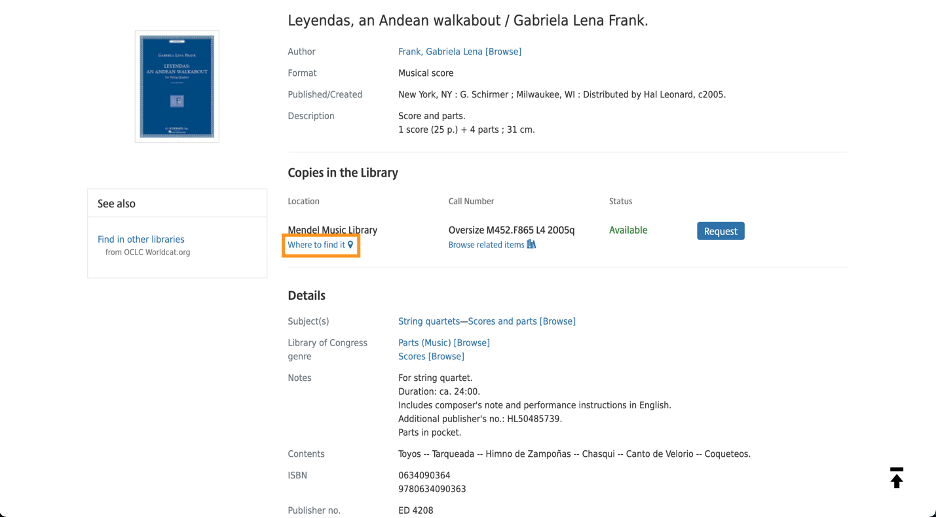
GPS has come to Mendel! We are excited to announce the launch of a new StackMaps feature that enables Mendel Music Library patrons to zero in on the exact location of materials shelved in the library (this tool is also available in other branches). From the catalog record for books and scores, you can now click on the location link to open a window that shows exactly where the item is located in the Mendel stacks. Here's how to bring up the maps in the standard catalog and SearchIt.

From the individual bibliographic records in the standard catalog interface, click on:

Item details: Where to find it:

Thumbnail image for burnham voyager.jpgFrom the new SearchIt interface, click on the Locations & Availability tab, and then click on the Where to find it icon: Thumbnail image for searchit wheretofind.jpgburnham searchit.jpg

And voila! Up comes a map showing you exactly where to find the item in the Mendel stacks:


stackmaps burham full.jpgThis new feature will be particularly helpful for finding scores and books located in separate collections based on size or material type, such as study scores, oversized items (q), folios (f), reference books and scores (SV), facsimiles (SVF), and periodicals (MUSP). Keep in mind, however, that these maps designate where the item is found when shelved in the library. It does not indicate that items are checked out, lost, or otherwise absent from their normal homes on the shelves. Check the status indication to determine if the item is available, checked out, lost, or temporarily relocated before following the map to the first or second floors of Mendel.

We are still refining some formatting for correctly indicating the location of materials held behind the circulation desk (CDs, DVDs, microfilms, etc.); eventually the maps will indicate that you can obtain these items by requesting them at the circulation desk.

If you find yourself misdirected by any of the Mendel StackMaps, please inform Maggie Capewell so that she can correct the coding.

We appreciate any feedback you have to offer on this feature!
As part of the celebration of the long and distinguished career of composer Milton Babbitt (1916-2011) at Princeton University, and in anticipation of the upcoming memorial concert on June 5, the Mendel Music Library has mounted in the three display cases on the first floor of the library a small exhibit of photos, commentaries, musical examples, memorabilia, and a variety of other intriguing materials from the 1950s through the 2000s (and even a picture from his very early youth), many of them kindly loaned by John Burkhalter from the Princeton University Concerts office. For much more on Babbitt, visit the Milton Babbitt Web site maintained by the Music Department. The exhibit will remain on display in the library through August.

Please stop by and enjoy!

Darwin


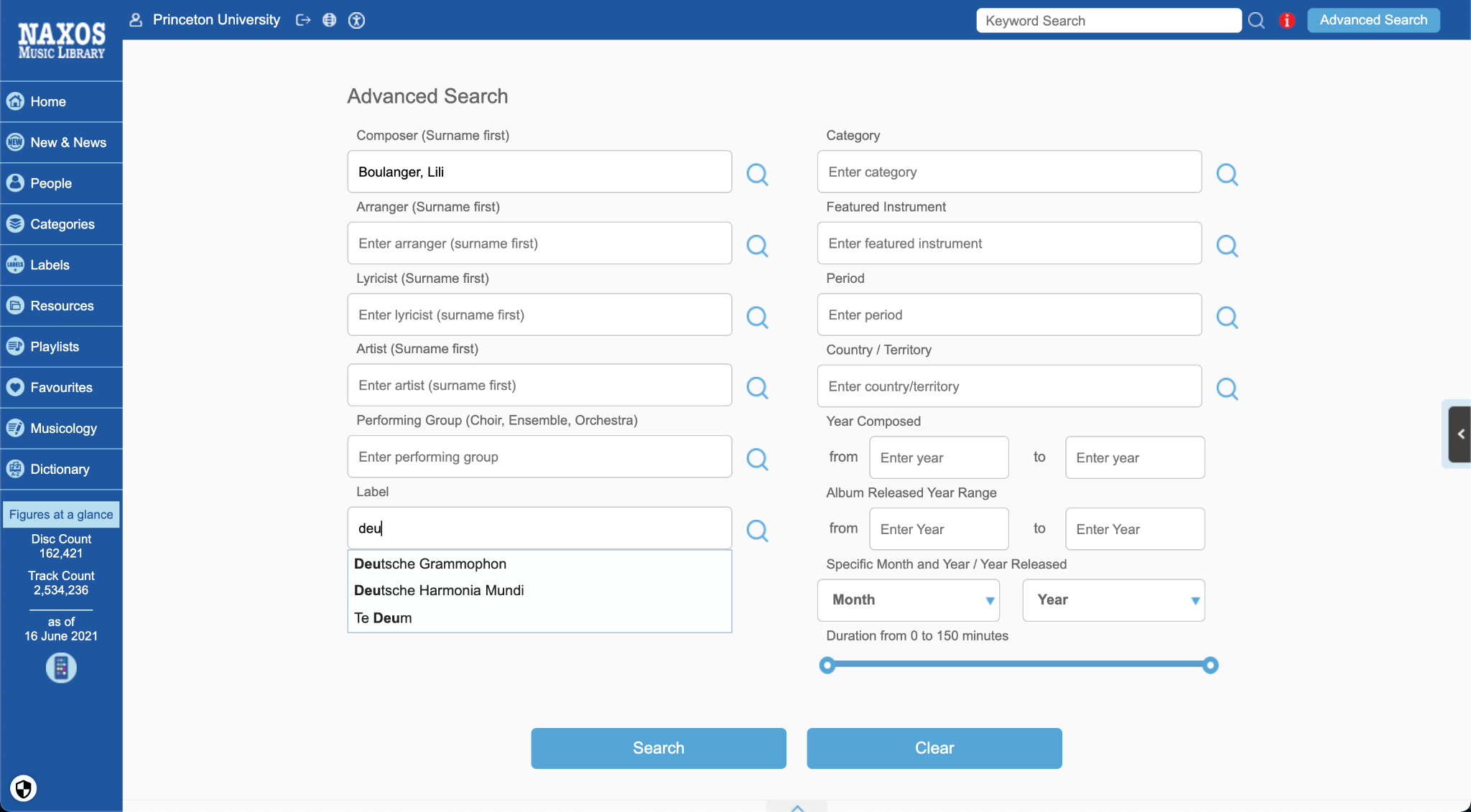
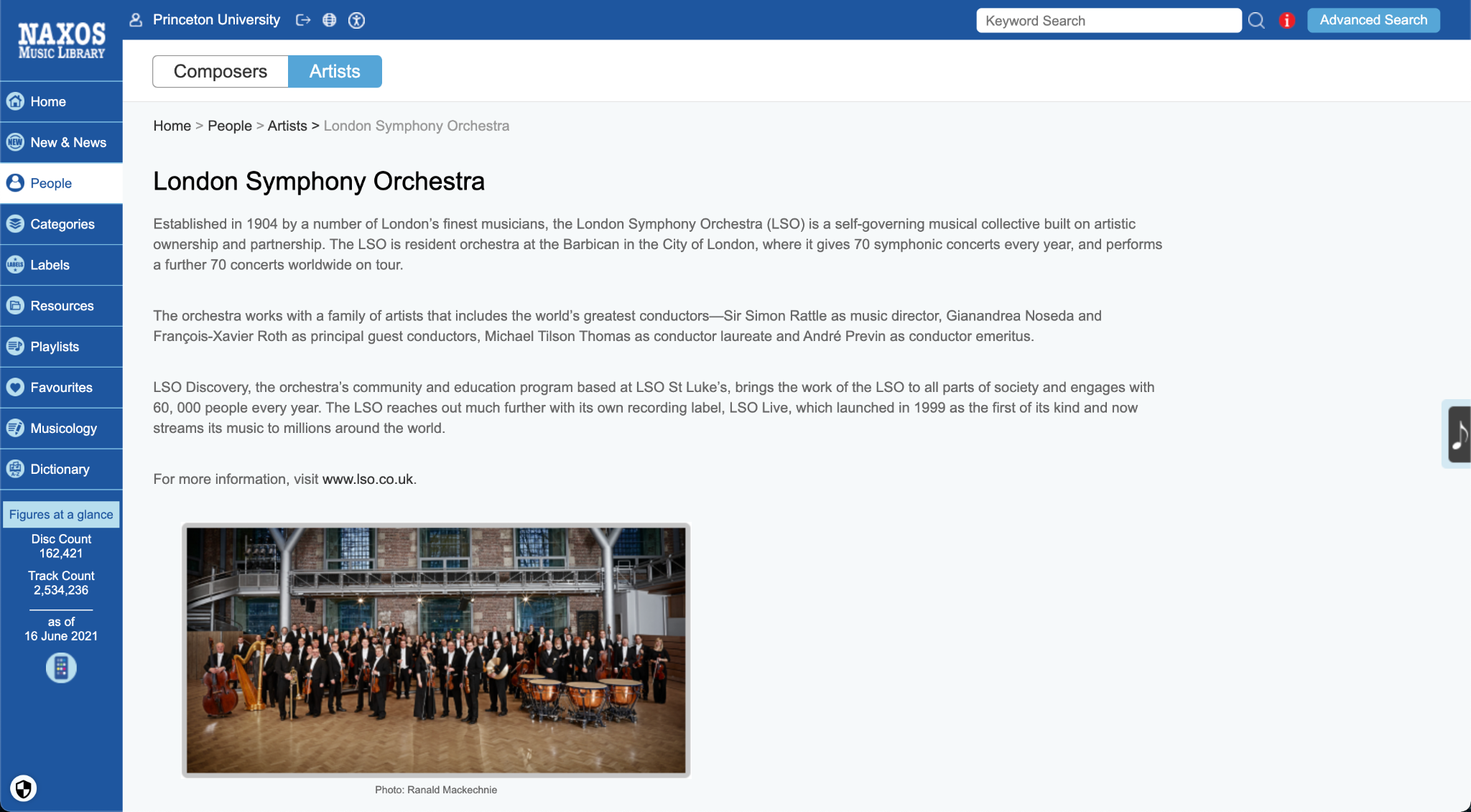
Naxos Music Library Records Now in the Princeton Library Catalog

| 1 Comment
The library has purchased a limited set of catalog records for thousands of the streamed audio recordings in the Naxos Music Library, making it now possible to access these recordings directly from the Princeton Library catalog without searching the Naxos Music Library directly. You can recognize these catalog records by [electronic resource] in the title, Naxos Music Library in the publisher and series fields, "ONLINE" for the location, "electronic resource" as the call no., and, of course, the direct link in the "Electronic access" field. By clicking on this link, you will directly launch this recording in the Naxos Music Library database. Here is a sample of the key fields:

Title: O mio babbino caro [electronic resource] : famous soprano arias from Italian operas.
Published/Created: [Hong Kong] : Naxos Music Library, [2004]
Electronic access: http://princeton.naxosmusiclibrary.com/streamcat.asp?s=8939%2fPrinceton07&item%5Fcode=8.555796
Series: Naxos Music Library.
Location: *ONLINE*
Call number: Electronic Resource

Remember, if you are accessing the catalog from a remote, non-Princeton location, you must have VPN or the proxy server running in the background for the direct link into the Naxos Music Library to work; otherwise, a log-on window will prevent you from entering the resource.

To date, there are 6,142 records now in the Princeton Library catalog describing and pointing to recordings in the Naxos Music Library. To see all of them, search "naxos music library" as the publisher and electronic as a title in the guided search, or click on this link for a pre-canned search. You might want to sort by author for an easier preview once the results appear on the screen.

Keep in mind that acceptable cataloging for all the recordings in the Naxos Music Library is presently not available (particularly for recordings added since 2009), and that to get a full picture of all the recordings available, you must search the Naxos Music Library directly. Nevertheless, it's a real bonus to have even this limited access to over 6,000 complete recordings available at the click of a mouse now available directly from the Princeton Library catalog. 
I am happy to break too long a silence on this blog to announce that Princeton now has online access to the full-text of Richard Taruskin's award-winning magnum opus Oxford History of Western Music (http://www.oxfordwesternmusic.com), originally published in 2005 (hardcover, 6 vols.) and reissued in paperback (2009-10, 5 vols.) This electronic version is only available to authorized Princeton users, and if you are accessing remotely, remember that you must have VPN (or the proxy server) running in the background.

A bit about this resource:

"The Oxford History of Western Music online offers an unmatched account of the evolution of Western classical music by one of the most prominent and provocative musicologists of our time, Richard Taruskin. Since its original publication in print [in 2005 and subsequent reissue in 2009-10], Taruskin's landmark study has received universal acclaim and numerous awards." More information is available on the home page of the electronic version and also from the Oxford University Press here.

Features of the online version include:

  • The full text from The Oxford History of Western Music (2009 edition) with notes, bibliographies, and further readings for all 69 chapters.
  • 500 illustrations, 1,800 musical examples, and index from the 2009 print edition.
  • More than 1,700 editorially-selected links to relevant entries in Grove Music Online.
  • Sophisticated search and browse options for easy navigation of the text, and the original pagination from the 2009 edition is retained to aid location of references.
  • Printer-friendly format.
  • Export citations automatically to ProCite™, EndNote™, Reference Manager™, RefWorks™, and Zotero™.
  • DOIs (data object identifiers) and static URLs.
Enjoy this new addition to Princeton's electronic texts on music!

Cheers,

Darwin
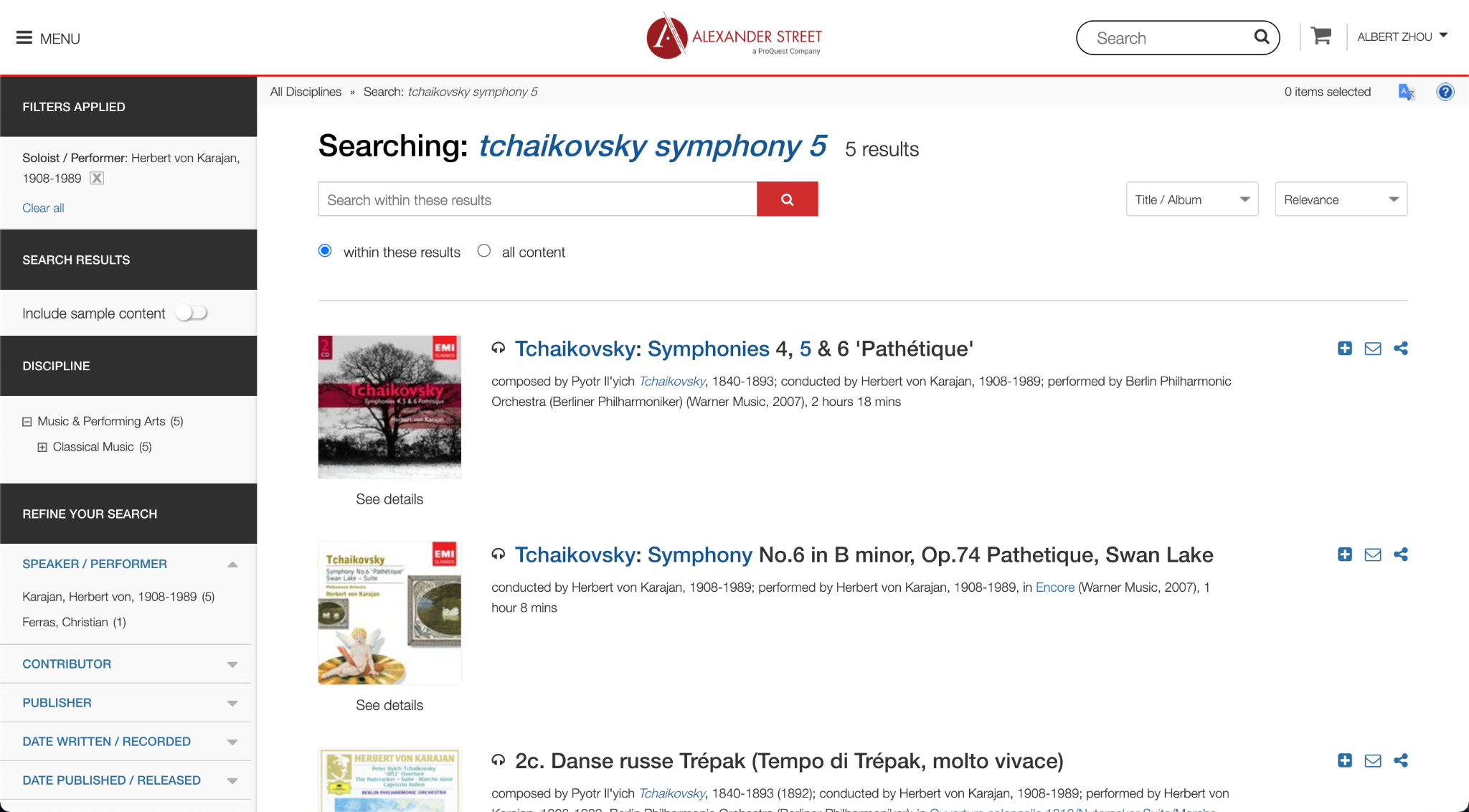
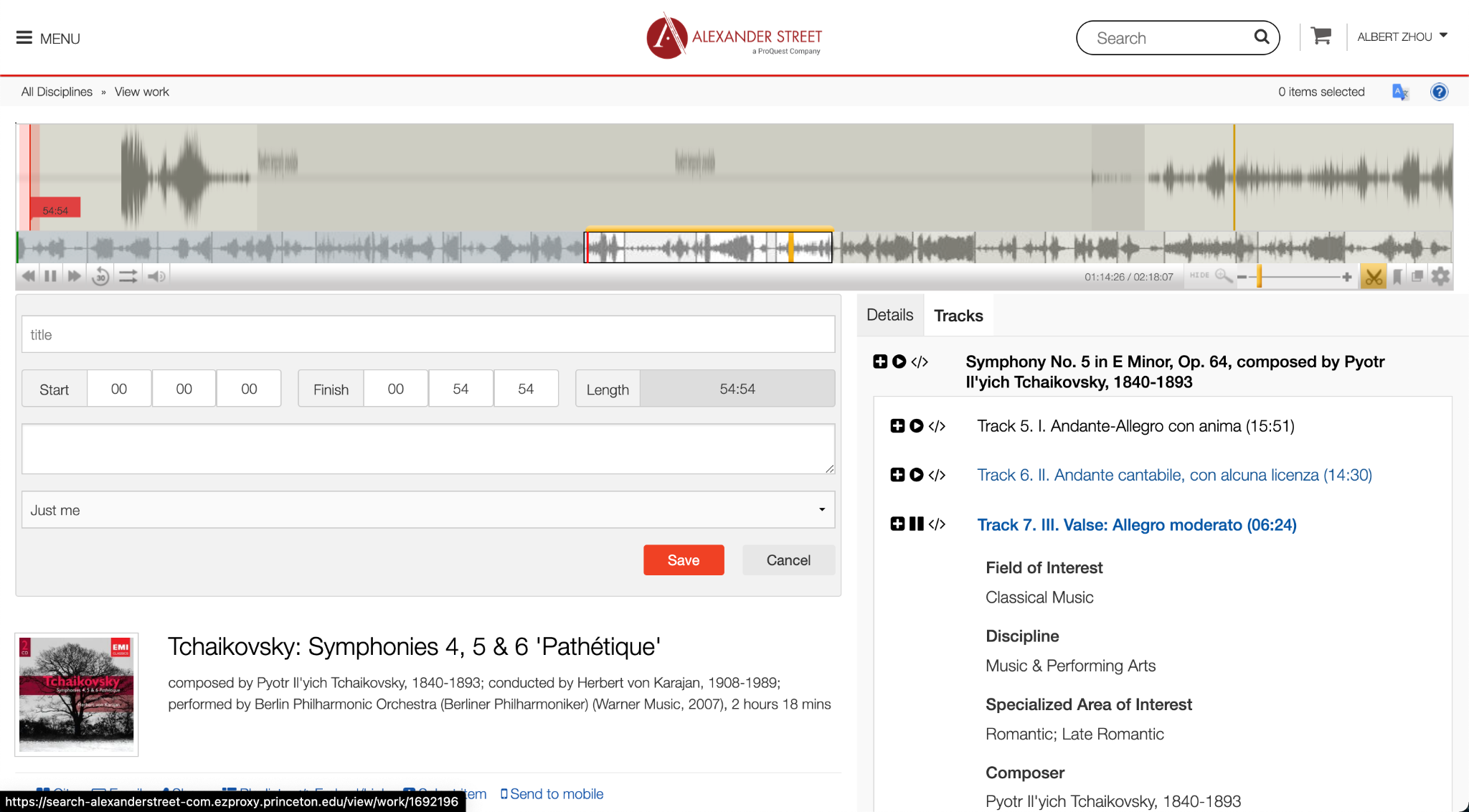
I'm delighted to report that we now have records in the online catalog for the individual streaming audio recordings in DRAM (Database of Recorded American Music) and a good number from the Classical Music Library (we are loading these bibliographic records as they are supplied by the producer of this resource, Alexander Street Press). You no longer have to go only to these electronic resources themselves to find the recordings but can use the Princeton Library catalog, with all the title, composer, and subject access points you'd expect. Plus these streamed recordings will now come up when you perform routine searches in the catalog for recordings. This enhanced access will make these streamed recordings so much easier to find and use--you should be able to click directly from the bibliographic records to the actual sound files by clicking on the Electronic access link. You still need to go to Long View to see all the pertinent information about the recording, but the link is visible in the brief display.

REMINDER, if connecting to these recordings via the catalog from off campus, you'll need to have your VPM Princeton authorization running in the background for the electronic access to open to the streaming audio from the catalog records.

Here are a couple of examples:

DRAM recording sample--click here. If you want to see all 2,073 DRAM streamed recordings now accessible from the catalog, scroll down the Long View to the DRAM (Online service) link under Related name(s) and just click. Voila! You can also click here.

Classical Music Library recording sample--click here (or enter a series title search for classical music library as a phrase). You will see this number grow steadily as Alexander Street Press makes more and more bibliographic records available for us to download into the catalog.

To link directly to these streaming audio resources (you must have VPM running if trying this from off campus), click on the following:

DRAM

Classical Music Library 

Stay tuned--we hope to have similar types of catalog records for the content in the Naxos Music Library available soon.

Happy listening,

Darwin

New Jazz Resources Available at Princeton

| No Comments
In the last few months, the Princeton University Library has acquired noteworthy audio and video jazz resources--from streaming audio to two large and outstanding gifts of CDs and DVDs--that greatly expand access to jazz listening, viewing, and study at Princeton.

Streaming Audio: the Jazz Music Library

Authorized Princeton users can now listen to jazz online via the Jazz Music Library! This new Princeton resource for streaming audio from Alexander Street Press aims to become the largest and most comprehensive collection of jazz available online--with thousands of jazz artists, ensembles, albums, and genres. For more information on the Jazz Music Library, click here. Other key links include a regularly updated "What's New" page, various browse options, and playlists--both pre-formed by Alexander Street and ones you can make yourself. All selections in the Jazz Music Library have unique, persistent URLs, making linking easy from reserve lists and other Web pages. Remember, if you are accessing from off campus, you must first activate VPN or the proxy server for the resource to recognize you as a Princeton user and log you in correctly to the Jazz Music Library.

Two Outstanding Gifts of Jazz CDs, DVDs, and Books

In the summer and fall of 2009, the Mendel Music Library received two remarkable donations of jazz collections assembled by life-long jazz lovers.

In May 2009, Laura Gates Burgess donated the jazz collection of her late father, Stephen Gates, Ph.D. *55. The focus of this pristine compilation of books, vinyl records, and CDs is a treasure trove of more than 400 CD remasterings of essential recordings by famous and lesser-known artists from the 1920s through the 1960s, the golden years of jazz. Numerous CDs of classic performances by Eddie Condon, Count Basie, Duke Ellington, Benny Goodman, Bobby Hackett, Fletcher Henderson, Red Nichols, Bessie Smith, Teddy Wilson, and other luminaries mixed with rare reissues of Wingy Manone, Wilbur De Paris, Bennie Moten, and the Goofus Five, among other delights. We have completed processing the Gates CDs, and they can all be accessed from the library catalog by clicking here. Remember to select "long view" after selecting a particular recording to see all the descriptive information (performers and recording dates, for example).

This fall, we received an extraordinary collection of CDs, DVDs, and books from Doris Rickles, the widow of Bob Rickles of Marlborough, N.J. Until his death in April 2008, Rickles was an active member of the International Association of Jazz Record Collectors (IAJRC) and the Duke Ellington Society in the UK. Bob was an inveterate collector of jazz CDs and his entire collection of some 3,500 jazz CDs is now being processed for the Mendel Music Library's collection. The depth of coverage of key jazz artists in the collection is phenomenal. Rickles was an obvious "completist" who sought to obtain every available recording of his favorite artists--note the number of Count Basie recordings, for example. In addition, the collection is very rich in more obscure performers and covers a wide range of performance and jazz styles. Another bonus of the Rickles collection is over 100 DVDs of jazz performances, none of which Princeton previously owned. The Rickles Collection is still in process and the number of CDs available to the Princeton community grows monthly. To access the processed (and in-process) CDs and all the DVDs from the library catalog, click here.

Both the Gates and Rickles gifts now provide Princeton with a breadth and depth of vintage jazz recordings it previously lacked, and offer a vital complement to the rising interest in jazz studies at Princeton, as marked by the Anthony H. P. Lee '79 Fund for the Study of Jazz, established in 2008.

Krazy Kat and the Toy Box at Princeton: April 8-10, 2010

| No Comments
Since the initial Mendel Library Blog announcement of this production on October 22, 2009, many more details are now available from project director Simon Morrison on this collaboration between the Department of Music and the Lewis Center for the Arts,

New (February 11): Click here to view a digitized version of the 1913 Durand illustrated edition of La Boîte à joujoux: ballet pour enfants.

To follow the day-to-day progress of the productions, consult the new blog Recreating Magic: Krazy Kat and the Toy Box.

Revised announcement about the event:

KRAZY KAT AND THE TOY-BOX

A Berlind Theater Evening of Enchantment, featuring John Carpenter's surrealistic jazz pantomime Krazy Kat (1921) and Claude Debussy's homage to childhood, The Toy-Box (1913). The program opens with Paul Lansky's kitchen fantasy, Table's Clear (1990).
 
Project Director: Simon Morrison
Choreographer/Director (Toy-Box): Rebecca Lazier
Choreographer/Director (Krazy Kat): Tracy Bersley
Choreographer/Director (Table's Clear): Tina Fehlandt
Conductor: Anthony D. J. Branker
Dramaturg: Michael Cadden
Technical Director: Darryl Waskow
 
Décor: Riccardo Hernandez
Lighting: Aaron Copp
Costumes: Catherine Cann
 
Performed Exclusively by Princeton Students
Production Running Time: 1 hour and 20 minutes (excluding intermission)
 
Source materials provided by:
The Dansmuseet, Stockholm
The Russian State Archive of Literature and Art, Moscow
The Newberry Library, Boston
The Library of Congress, Washington DC
 
The project is generously supported by the
Office of the President, Princeton University
Office of the Dean of the Faculty
Department of Music
Lewis Center for the Creative and Performing Arts
Program in African American Studies
Program in American Studies
Department of Comparative Literature
 
PROJECT OVERVIEW
 
The highlight of this project is a staging of the restored version of the French composer Claude Debussy's final masterpiece, the ballet The Toy-Box (La boîte à joujoux). Conceived for his daughter Emma, The Toy-Box offers a poignant look back at the composer's favorite musical things. It dates from 1913, and it was left partially un-orchestrated at the time of Debussy's death in 1919. The basis of this production will be the version of the score premiered in 1918 by the Moscow Chamber Theater. That version of the score includes an unknown "jazz overture."

The scenario was written and gorgeously illustrated in watercolor by André Hellé, a prominent children's writer. He proposed that toy-boxes are "really just like towns in which toys live like people - or maybe towns are really just toy-boxes in which people live like toys." Like Debussy, Hellé intended the ballet to be performed by children or, if children could not be found, marionettes. Yet when the remarkably innovative Ballets Suédois performed a modified version of the work in Paris in the early 1920s, adults played the roles, alternately winding themselves up and down in accord with the unfolding of the simple storyline.
After a preamble titled "The Toy-Box Asleep," the four scenes bring the various characters into conflict: there's a doll, a lovesick soldier, a lazy and irritable buffoon named Punchinello who forces himself upon the doll and wins her favor, plus various other figures, including wooden cutouts of an elephant, ducks, and sheep. The characters spill from the cramped toy-box in scene 1, cued by a phonograph record; the stage then transforms into a battlefield, a sheepfold, and a suburban development. Clones of the soldier wage battle with clones of the Punchinello; the soldier is wounded, and the doll tends to his convalescence, their love symbolized by an itinerant rose. Scene 4, which takes us "20 years" into the future, finds Punchinello transformed into a village constable; the soldier has grown a large white beard, and the doll considerably plumper. Unable to dance, she tries singing instead, but ballet being ballet, she fails. The suburbanites are now the proud parents of a twin girl and boy, who dance a polka as the décor of the first scene slowly returns.
All of this might sound rather benign, but the music and the ballet that emerged from it is a revelation. The Toy-Box offers a corrective to the grinding dissonance and ideological heaviness that characterized artistic trends outside of France. It was, in short, a riposte to German Expressionism and Soviet avant-gardism, an effort to define modernism in a positive rather than a negative way.

For one thing, the characters in the original conception derived from the Italian tradition of commedia dell'arte; for another, there were various visual and narrative allusions to silent film, circus, and vaudeville. Scholarship on the music tends to focus on the relationship between Debussy's score and Stravinsky's 1911 puppet ballet Petrushka. True, the two ballets share some particular technical details, and there are some common instrumental choices. Close study of the two scores reveals that the connection has been overstated. Debussy's network of musical allusions proves richer than his rival's. As is well known, Stravinsky borrowed Russian folksongs in Petrushka. Such borrowings become, in Debussy's hands, a cluster of gentle-spirited references to the most famous works in the Western musical canon. For example, scene changes in The Toy-Box quote from Musorgsky's Pictures at an Exhibition. If each scene of the ballet pops up like a page in storybook, what better than to quote from a composition that presents a tour through a portrait gallery?

The Toy-Box is about a child's imagination, and but it is also an attempt to return music and dance to a more innocent state. At its heart lies something of the sentiments the French Symbolist writer Charles Baudelaire expressed in his essay "A Philosophy of Toys." Baudelaire argues that toys are children's first exposure to art, to the powers of enchantment. Debussy wanted to take us back to that realm of wonder.

The music for the ballet will be conducted by Princeton's Tony Branker and performed by an expanded version of our student jazz ensemble (the score includes a lot of references to ragtime) with new choreography by Rebecca Lazier. The Toy-Box will appear on the second half of a program featuring another short jazz-age ballet, to be staged by Tracy Bersley. This work was performed in Chicago and New York City in the 1920s and 1930s before dropping out of the repertoire. It is based on the famous comic strip by George Herriman, and features music by the iconoclastic American composer John Carpenter. Set in cactus-strewn Coconino County (somewhere in New Mexico), the characters include Krazy Kat, who is insanely devoted to Ignatz Mouse. The mouse does not share the amorous sentiments, preferring instead to bonk Krazy Kat on the head with a brick, which the demented feline interrupts as a sign of affection. The secondary characters include Offisa Pupp, eager to place the menacing mouse behind bars, and Joe Stork. The novelty of the comic strip resided in its surrealism, which was as much verbal as visual: the characters speak a combination of James Joyce, fake Yiddish, highborn English, and American slang. The mélange is used to support a storyline with a great deal of political, religious, and sexual symbolism.
 
The ballet version of the comic strip finds Krazy Kat dozing beneath a tree (a parody of the opening scene of the famous Ballets Russes ballet Prelude to the Afternoon of a Faun). He awakes to catch sight of an announcement for a grand ball, which he mobilizes to attend with the help of the cosmetics and clothes that Joe Stork has casually dropped off. Ignatz sneaks into the scene in disguise and presents the feline with a bouquet loaded with catnip. Intoxicated, Krazy Kat dances a number on hotfoot called "Katnip Blues" before the inevitable whack on the head and the return to the "dream" of everyday existence.
 
Carpenter's score, the first orchestral work to bear the word "jazz" in its title, is of comic-book size, ideally suited for the Berlind Theater. (The one available recording is over-scaled, with too many instruments; the restored and corrected instrumentation, with just twelve strings, can easily be accommodated by the shallow pit at the front of the Berlind Theater stage.) The plethora of styles, high and low, that inform it also make it exceedingly democratic - much like the comic strip itself. The source materials for Krazy Kat, including the unrecorded original version of the score, are scattered around the country. Most of them have now been gathered together, allowing the designer to re-imagine them for the twenty-first century.

The premiere is set for April 8, and it will run for three days (four shows total).

_________________

Original post from October 22, 2009 (slightly tweaked): 

Music department professor Simon Morrison is organizing a fascinating project focused around ballets that have gone unperformed for decades. Expect to see the Princeton's Cotsen Children's Library and the Mendel Music Library playing key roles in exhibits and publicity for this grand fête, which promises to be quite interdisciplinary in scope. So, stay tuned!
____________________

Krazy Kat and the Toy-Box

A Berlind Theater Double Bill

 featuring John Carpenter's surrealistic jazz pantomime
 and Claude Debussy's rediscovered homage to childhood


Additional Dance and Music:
Table's Clear by Paul Lansky 


The highlight of this project is a staging of the French composer Claude Debussy's final masterpiece, the ballet The Toy-Box (La boîte à joujoux). Conceived for his daughter Emma, The Toy-Box offers a poignant look back at the composer's favorite musical things. The work dates from 1913, and it was left partially unorchestrated at the time of Debussy's death in 1919. A manuscript of the score survives in Moscow, where it was used as the basis of a little-known staging of the ballet in 1918 by the Moscow Chamber Theater under the direction of Alexander Tairov. The Moscow archival sources include an unknown jazz-overture to the ballet, which will be performed at Princeton for the first time outside of Russia. The music for the ballet will be conducted by Princeton's Anthony D. J. Branker and performed by an expanded version of our student jazz ensemble (the score includes many references to ragtime) with new choreography by Rebecca Lazier.

The Toy-Box will appear on the second half of a program featuring another short jazz-age ballet, Krazy Kat, to be staged by Tracey Bersley. This work was performed in Chicago and New York City in the 1920s and 1930s before dropping out of the repertoire. Krazy Kat is based on the famous comic strip by George Herriman and features music by the iconoclastic American composer John Carpenter. The novelty of the comic strip resided in its surrealism, which was as much verbal as visual: the characters speak a combination of James Joyce, fake Yiddish, highborn English, and American slang. This mélange is used to support a pantomime freighted with political, religious, and sexual symbolism. Carpenter's score also parodies one of Debussy's masterworks, the Prelude to the Afternoon of a Faun.

Featuring two forgotten, misconstrued masterworks, the project will provide Princeton students an invaluable education in modernism, specifically the impact of jazz on ballet, and the polemics that distinguished Debussy and Carpenter from their German and Russian contemporaries. The premiere is set for April 8, and performances will run for three days.

[Note: original plans to also include "Krazy Kat (Tone Poem in Slow Rhythm)" by Bix Beiderbecke were subsequently abandoned.]
_______________

So, don't be surprised when images of Krazy Kat and French toys start appearing on the Princeton Campus this winter and spring!

Cheers,

Darwin

We now have a new interface for The Music Index Online and RILM Abstracts of Music Literature via EBSCOhost. We have revised the links on the main library electronic resources page, the Mendel Music Library Web page, and also the Music LibGuide. There could be some now errant links out there in on other pages you might occasionally use (please report if you encounter any).

Because the Music Index and RILM now are on the same searching platform, it is easy to cross-search both databases for simultaneous searching of names and terms--thus casting a wider net, since there is a good bit of the music literature not covered by both resources. You can refine the search in either of these databases to also include the other by clicking on the "Choose Resources" link at the top of the screen. But easier is to just use this link (http://search.ebscohost.com/login.aspx?authtype=ip,uid&profile=ehost&defaultdb=mah&defaultdb=rih) - which is now also on the Mendel Web page as well as the Music LibGuide.

If you have old, book-marked links, you should change them so that they will connect to these new paths:

Music Index: (http://search.epnet.com/login.asp?profile=web&defaultdb=mah)

RILM: (http://search.epnet.com/login.asp?profile=web&defaultdb=rih)

Please note: these links only work from Princeton terminals or by using a VPM or ProxyServer connection for authorized Princeton users working from remote locations.

Savvy searchers may also note that there is a new search default on all the EBSCOhost products: "Find all my search terms" - the default used to be Boolean/Phrase, which led to all sorts of false results for those used to basic keyword searching as a default in so many commonly used search engines.

I think you will prefer the EBSCO search interface for RILM over the previous one; similarly for the Music Index--although in this case we have no option as EBSCO bought out the Music Index last week. Such is corporate life in the world of music research as well!

Happy searching,

Darwin

Audio Reserves Now Available in Blackboard!

| No Comments
With the help of systems staff, we've finally been able to perform a minor (or perhaps major) Mendel miracle here -- audio reserves are now available in Blackboard by clicking the Audio Reserve link within the course. There will no longer be a need for an extra password. Enrolled students (and, of course, the faculty member) can now access all print, visual, and audio reserve materials in one place for a course -- and have a total picture of what is available on reserve in all formats for the course as well. Students can access fall 2009 course reserves from the new Mendel Music Library home page in the Quick Links box.

A special thanks to Mendel's e-reserves supervisor Dan Gallagher for shepherding this enhancement through a long path of many months to completion this week.

Cheers,

Darwin

Noted Pianist Alfred Brendel Visits Princeton on November 9

| No Comments
Music Department Chair Steven Mackey has requested that I share the following announcement with the Princeton music community--which is certainly a pleasure!

_______

Alfred Brendel Speaks on Character in Music

November 9, 2009

Cosponsored by the Spencer Trask Fund, Lewis Center for the Arts, Department of Music, Princeton University Concerts, and the Department of German

Time and Location: 8:00 p.m. in Richardson Auditorium, Alexander Hall

The lecture sets out to show that in musical performances the perception of character and atmosphere is no less important than that of form and structure. The belief that the structure of a work automatically reveals its character is a fallacy. The notion of character appears in 18th-century treatises on interpretation as well as in writing on aesthetics where it is first discussed at the time when Beethoven's sonatas begin to appear. Czerny's comments on Beethoven's piano works are full of references to character. The pianist's task becomes related to that of a character actor identifying with different roles, with an ever-widening awareness of the staggering emotional and psychological variety great music has to offer. Mr. Brendel will play a number of musical examples during the lecture.

Alfred Brendel's place among the greatest musicians of the 20th and 21st centuries is assured. Renowned for his masterly interpretations of the works of Haydn, Mozart, Beethoven, Schubert, Brahms, and Liszt, he is one of the indisputable authorities in musical life today and one of the very few living pianists whose name alone guarantees a sell-out anywhere in the world he chooses to play.
_____

To access Alfred Brendel's recordings owned by Princeton, click here. We need to enhance our holdings of Brendel on CD--stay tuned!

Darwin