
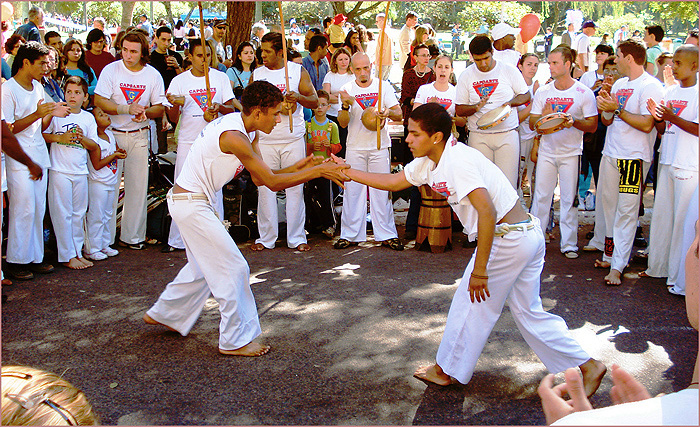
In a recent conversation about Brazilian culture, Schwarcz, who spent last semester at PLAS, said:
It is strange how nowadays Brazil has a new image coming from abroad. We used to be seen as “exotics”; a country of Capoeira (a Brazilian form of martial art), Candomblé (a syncretic African religion), Carnaval, and the “Mulatas.” Now we continue to be viewed as exotic, but the exoticism has a new ingredient: violence, even a new aesthetics of violence, mainly in the way Brazil is portrayed in contemporary films, like City of God. The fascination with favelas among many people outside Brazil is ambiguous. On the one hand, favelas are seen as violent communities, subject to violent leaders outside the authority of the state. On the other, they are just “different”–scenes of a culture outside the dominant culture, with its own special way of partying, dancing, playing soccer.