Princeton acquires the papers of Vicente Leñero and Alejandro Rossi

Alejandro Rossi at his desk [Alejandro Rossi Papers, 1812-2010, Box 31, Folder 6]

Ale­jan­dro Rossi at his desk [Ale­jan­dro Rossi Papers, 1812–2010, Box 31, Folder 6]

The Prince­ton Uni­ver­sity Library’s Man­u­scripts Divi­sion has recently added the papers of Vicente Leñero (1933– ) and of Ale­jan­dro Rossi (1932–2009) to its exten­sive col­lec­tion ofarchives, man­u­scripts, and cor­re­spon­dence by Latin Amer­i­can writ­ers and intel­lec­tu­als.

Con­tinue read­ing

University of São Paulo, Princeton to launch strategic partnership this fall

Next fall, five years after Pres­i­dent Shirley Tilgh­man pub­lished the fall 2007 report “Prince­ton in the World,” which delin­eated mea­sures for expand­ing the University’s inter­na­tional pres­ence, the Uni­ver­sity will announce a for­mal aca­d­e­mic part­ner­ship with the Uni­ver­sity of Sao Paulo in Brazil, accord­ing to his­tory pro­fes­sor and Coun­cil for Inter­na­tional Teach­ing and Research Direc­tor Jeremy Adelman.

Between 2012 and 2015, Prince­ton and USP fac­ulty will study “Race and Cit­i­zen­ship in the Amer­i­cas,” sup­ple­mented by a series of major yearly con­fer­ences and smaller work­shops with fac­ulty and stu­dents at the schools, accord­ing to the project pro­posal announced Thurs­day. The project will facil­i­tate the host­ing of grad­u­ate schools at the two uni­ver­si­ties, with the ulti­mate goal of “strengthen[ing] and broaden[ing] Princeton’s aca­d­e­mic and insti­tu­tional ties with Brazil.”

Con­tinue read­ing the article

Princeton University features a “Spotlight on PLAS

From poetry to pol­i­tics and every­thing in between, the Pro­gram in Latin Amer­i­can Stud­ies (PLAS) brings together schol­ars, artists, stu­dents and experts to explore the many facets of Latin America.

Since its incep­tion in 1967, PLAS has focused on the cul­ture, his­tory, socioe­co­nomic con­di­tions, pol­i­tics, and soci­ety of the region. With a vibrant cadre of asso­ci­ated fac­ulty and vis­it­ing schol­ars, PLAS offers an intel­lec­tual and cre­ative hub for research, teach­ing and cul­tural exchange.

Con­tinue read­ing the article

Sarah Hirschman, founder of People & Stories/Gente y Cuentos, passes away

Dear friends of PLAS:

I write to share some very sad news. Sarah Hirschman passed away ear­lier this week. There will be a memo­r­ial ser­vice this Sat­ur­day, 1/21, at 3:30pm at the Insti­tute for Advanced Stud­ies Din­ing Hall. You can read an arti­cle from Town Top­ics on Sarah list­ing her many con­tri­bu­tions to the Prince­ton com­mu­nity; an intro­duc­tion to one of her talks by Arca­dio Díaz-Quiñones; and her obit­u­ary.

Best,

Rubén

Direc­tor, Pro­gram in Latin Amer­i­can Studies

Juan José Saer manuscripts, 1958–2004 at Princeton University Library

juan-jose-saer.jpg

The Man­u­scripts Divi­sion has recently added the man­u­scripts of Argen­tinean writer Juan José Saer to its pre­mier col­lec­tion of archives, man­u­scripts, and cor­re­spon­dence by Latin Amer­i­can writ­ers and intel­lec­tu­als. The col­lec­tion con­tains numer­ous note­books, notes, and drafts of Saer’s nov­els, essays, short sto­ries, poems, and inter­views. Sev­eral items in the col­lec­tion are unpub­lished. Also included are back­ground mate­ri­als for Saer’s posthu­mous novel, La Grande, and some pho­tographs. A detailed find­ing aid is already available.

Juan José Saer, the son of Syr­ian immi­grants to Argentina, was born in Serodino, a town in the province of Santa Fé, on June 28, 1937. He stud­ied law and phi­los­o­phy at the Uni­ver­si­dad Nacional del Litoral in Santa Fé, and taught film his­tory and crit­i­cism at the same insti­tu­tion. He moved to Paris in 1968, where he taught lit­er­a­ture at the Uni­ver­sity of Rennes, and lived in that city until his death in 2005. Although Saer spent most of his lit­er­ary life out­side Argentina, much of his fic­tion was set on the area of north­ern Argentina known as el Litoral. Among his lit­er­ary works are the nov­els Cica­tri­ces (1968), El limonero real (1974), Nadie, nada, nunca (1980), El ente­nado (1983), La ocasión (1988), La pesquisa (1994), and the book of poems El arte de nar­rar (1977). Saer is con­sid­ered by some crit­ics to be the most impor­tant Argen­tinean writer of the post-Borges generation.

Photo cap­tion: Pho­to­graph of Juan José Saer [Juan José Saer man­u­scripts, Box 13, Folder 9].

Digital Latin American posters collection grows

resolver.jpg

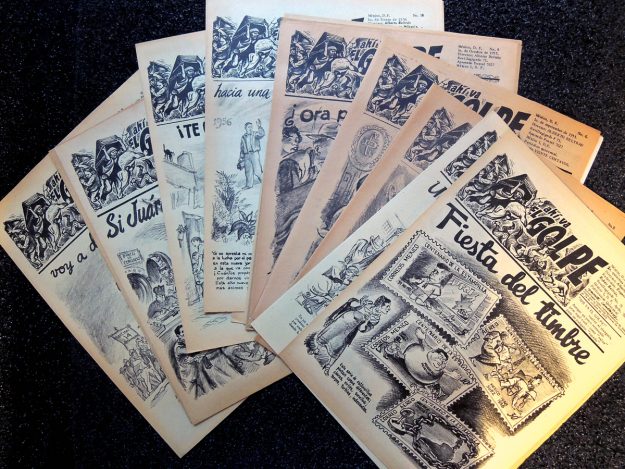
The posters included in this new dig­i­tal project were cre­ated by a wide vari­ety of social activists, non-governmental orga­ni­za­tions, gov­ern­ment agen­cies, polit­i­cal par­ties, and other types of orga­ni­za­tions across Latin Amer­ica, in order to pub­li­cize their views, posi­tions, agen­das, poli­cies, events, and ser­vices. Even though posters pro­duced in Argentina, Bolivia, Chile, Ecuador, Mex­ico, and Venezuela are the most abun­dant among the more than two thou­sand cur­rently avail­able in the site, almost every coun­try in the region is rep­re­sented. In terms of top­ics, some of the best rep­re­sented are human rights, elec­tions, gen­der issues, indige­nous issues, labor, ecol­ogy and envi­ron­men­tal issues, devel­op­ment, pub­lic health, and education.

The Latin Amer­i­can Posters Col­lec­tion is a com­po­nent of the larger col­lec­tion of Latin Amer­i­can ephemera that Prince­ton Uni­ver­sity Library has devel­oped since the 1970s.

View the Latin Amer­i­can Posters Col­lec­tion at Prince­ton Uni­ver­sity Library

Image cap­tion: Diga basta! Vamos a cam­biar la his­to­ria! Movimiento Asam­bleas del Pueblo. Par­tido de las Asam­bleas, Argentina

Congratulations to Noam Lupu, who received the Porter Ogden Jacobus Fellowship

Noam Lupu (Pol­i­tics) is one of four doc­toral stu­dents who received the Porter Ogden Jacobus Fel­low­ship. Lupu, who fre­quently vis­its rel­a­tives in Argentina and Chile, became inter­ested in the break­down of Latin Amer­i­can polit­i­cal par­ties when he wit­nessed the break­down of the Argen­tine rad­i­cal party in the early 2000s.

Read the full arti­cle in the Daily Princetonian

Alumni News: An update from Luis Orcí Gandara *68

Yo ini­cié mi tra­bajo en la CNDH como “Tit­u­lar del Órgano Interno de Con­trol”, o sea el Chief Audi­tor and Comp­trol­ler de la CNDH, donde estuve en esa posi­ción aprox­i­mada­mente 9 años, con un staff de 40 per­sonas para dar seguimiento a las activi­dades de la CNDH, tanto en su ofic­i­nas cen­trales en la Cd. De Méx­ico como las de las ofic­i­nas foráneas que ten­emos en todas las ciu­dades de los esta­dos fron­ter­i­zos de Méx­ico, tanto en el Norte como en el Sur, así como en las ciu­dades situ­adas en las rutas de los migrantes Cen­troamer­i­canos en camino a los EE UU., que nece­si­tan mucho apoyo por los abu­sos a los que están expuestos por el crimen orga­ni­zado, algunos pobladores mex­i­canos abu­sivos y hasta por autori­dades munic­i­pales corruptas.

Con­tinue read­ing

Princeton University Library acquires the papers of Claribel Alegría

The per­sonal and lit­er­ary papers of the Nicaraguan-born Sal­vado­ran writer Clari­bel Ale­gría were recently added to the Man­u­scripts Divi­sion’s exten­sive col­lec­tion of archives, cor­re­spon­dence, and man­u­scripts by 20th cen­tury Latin Amer­i­can and Caribbean authors and intellectuals.

Image for FAR article 08_08_11.jpg 

Con­tinue read­ing