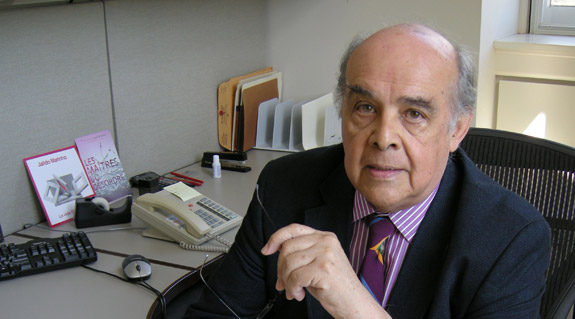
Giancarlo Mazzanti at the MoMa

Gian­carlo Maz­zanti, who is spend­ing the fall semes­ter teach­ing at PLAS, is fea­tured in the exhi­bi­tion “9+1 Ways of Being Polit­i­cal” which just opened at the Museum of Mod­ern Art (MoMa) in New York. The exhibit will be on view until March 2013:

http://www.moma.org/visit/calendar/exhibitions/1313

Ear­lier in the sum­mer Giancarlo’s work was fea­tured in a New York Times arti­cle on Colombia:

New York Times: Past Its Golden Moment, Bogotá Clings to Hope

Gian­carlo will be giv­ing a talk about his work on Novem­ber 6th at 12:00pm in 219 Burr Hall.

Ambassador Ricardo Luna, PLAS visiting fellow

Ambas­sador Ricardo Luna is spend­ing the spring semes­ter as a vis­it­ing fel­low in the Pro­gram in Latin Amer­i­can Stud­ies. A career diplo­mat with over twenty years of expe­ri­ence as Peru­vian ambas­sador, he has served as Peru­vian ambas­sador to the United States, the United King­dom, and the United Nations. Before com­ing to Prince­ton, Ambas­sador Luna has taught at Har­vard, Brown, Colum­bia, and the Fletcher School.

Ricardo Luna

Paulo Fontes, 2006-07 PLAS visiting fellow, wins the Thomas E. Skidmore Prize

Paulo Fontes, the author of Um nordeste em São Paulo: tra­bal­hadores migrantes em São Miguel Paulista (1945–66), (Rio de Janeiro: Fun­dação Getúlio Var­gas, 2009) is the win­ner of the first Thomas E. Skid­more Prize, spon­sored by the National Archive, Rio de Janeiro and the Brazil­ian Stud­ies Asso­ci­a­tion. The $5,000 prize is to sup­port the trans­la­tion of the book so that it can be pub­lished in Eng­lish. The prize, endowed through a gen­er­ous dona­tion of the Skid­more fam­ily, rec­og­nizes his­tor­i­cal works on twentieth-century Brazil­ian his­tory. The first prize com­pe­ti­tion con­sid­ered books cov­er­ing the period 1930–64 that had been pub­lished in Por­tuguese between 2004 and 2010.

Three addi­tional works received Hon­or­able Men­tion: Regina Horta Duarte, A biolo­gia mil­i­tante: o Museu Nacional, espe­cial­iza­ção cien­tí­fica, divul­gação do con­hec­i­mento e práti­cas políti­cas no Brasil — 1926–1945 (Belo Hor­i­zonte: Edi­tora UFMG, 2010); Jorge Fer­reira, O imag­inário tra­bal­hista: getulismo, PTB e cul­tura política pop­u­lar 1945–1964 (Rio de Janeiro: Civ­i­liza­ção Brasileira, 2005); and Anto­nio Luigi Negro, Lin­has de mon­tagem: indus­tri­al­ismo nacional-desenvolvimentista e a sindi­cal­iza­ção dos tra­bal­hadores (São Paulo: Boitempo, 2004).

The Prize Com­mit­tee was com­posed of James N. Green, (Chair), Ângela Maria Casto Gomes, Luís Edmundo de Souza Moraes, Maria Helena Capelato, and Vitor Manoel Mar­ques da Fon­seca. The next Skid­more Prize will be awarded in 2013 and will con­sider works pub­lished in Por­tuguese between 2006 and 2012 cov­er­ing the period 1964–85.

O Globo interviews Princeton faculty about the growing international interest in Brazilian literature and culture

In an inter­view Pedro Meira Mon­teiro (Asso­ciate Pro­fes­sor of Span­ish and Por­tuguese Lan­guages and Cul­tures) talks about the grow­ing inter­est in Brazil­ian stud­ies at Prince­ton and men­tions Lilia Schwarcz (PLAS Vis­it­ing Pro­fes­sor in 2010 and cur­rent Global Scholar in His­tory), and Sil­viano San­ti­ago (Vis­it­ing Lec­turer of Span­ish and Por­tuguese Lan­guages and Cultures).

Read the full arti­cle (Portugues)

Read the full article(English)


Ricardo Luna ’62 named a Distinguished Visiting Scholar for the Library of Congress

Librar­ian of Con­gress James H. Billing­ton has appointed Ricardo V. Luna ’62, a pro­fes­sor and for­mer ambas­sador from Peru, as a dis­tin­guished vis­it­ing scholar at the John W. Kluge Cen­ter at the Library of Con­gress. Luna will be teach­ing at Prince­ton this spring as a PLAS vis­it­ing scholar.

Read the full press release

Prize in Hand, He Keeps His Eye on Teaching”

Five days after the Peru­vian nov­el­ist Mario Var­gas Llosa won the Nobel Prize in Lit­er­a­ture, he walked into a Prince­ton class­room where 25 stu­dents awaited their weekly sem­i­nar on the mag­i­cal real­ism of the Argen­tine writer Jorge Luis Borges.

And then, said one astounded under­grad­u­ate, he pre­tended noth­ing had happened.

Thank you very, very much,” he said, smil­ing broadly, accord­ing to stu­dents who were there and had pre­sented him with a card and a spread of baked goods. “We’ll eat this dur­ing the break. But for now, let’s start class.”

Con­tinue read­ing this arti­cle in the New York Times

Mario Vargas Llosa reflects on receiving the news of his Nobel literature prize

20101011_VargasL_154.jpg

Ese día, como todos los días desde que, hace tres sem­anas, lleg­amos a Nueva York, me lev­anté a las cinco de la mañana y, procu­rando no des­per­tar a Patri­cia, me fui a la salita a leer. Era noche cer­rada todavía y las luces de los ras­ca­cie­los del con­torno tenían la apari­en­cia inqui­etante de una gigan­tesca ban­dada de cocuyos inva­di­endo la ciudad.

Read the full arti­cle in El País

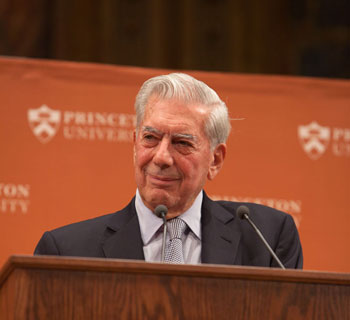
Mario Vargas Llosa, PLAS Distinguished Visitor, wins Nobel Prize in Literature

Acclaimed Peru­vian nov­el­ist Mario Var­gas Llosa, who is spend­ing this semes­ter as the 2010 Dis­tin­guished Vis­i­tor in Prince­ton University’s Pro­gram in Latin Amer­i­can Stud­ies, has been awarded the 2010 Nobel Prize in lit­er­a­ture. He also is a vis­it­ing lec­turer in Princeton’s Pro­gram in Cre­ative Writ­ing and the Lewis Cen­ter for the Arts.

New York Times arti­cle | Prince­ton Uni­ver­sity article