…and thanks for all the fish (and eggplant, tofu, beef, etc.)

At var­i­ous points in my life, some­one has said the fol­low­ing to me: you don’t know what you have until it’s gone.

In the con­text of Jishou, I’d say I’ve had that feel­ing twice—even after dili­gently telling myself that I would not, under any cir­cum­stances, have it the sec­ond time.

Well, even the best laid plans….

Day one back, and I throw myself into a crash course of cul­tural reha­bil­i­ta­tion. Break­fast takes place at a Jer­sey diner, com­plete with oily hash browns and a chatty wait­ress who calls me “Honey,” as in, “Honey, you want lemon or cream with that?”, “Honey, how’s it taste?”, or “Honey, you got the morn­ing off of work or something?”

No,” I say, look­ing up from my eggs. “I actu­ally just got back from a long trip. I was out of the coun­try for two months.”

Where?”

China.”

Huh.” She pro­ceeds to sit down, mak­ing my booth a lit­tle less lonely. “And what did you eat there?”

I pause. Per­haps she should have asked, “What didn’t you eat there?”, but I guess not every­one knows the full range of culi­nary options in the Mid­dle King­dom, what with fish-smelling tofu and the three sounds of Guang­dong. I decide to tell her what seems most inter­est­ing. She nods her head as I talk, say­ing, “You don’t say….” and “Wow!” before going on to her other customers.

Some­how, this con­ver­sa­tion seems want­ing, so I move on to the next great bas­tion of human inter­ac­tion: the New Jer­sey Depart­ment of Motor Vehi­cles. Sure, you might say that you’re going thereto reg­is­ter plates, or as in my case, renew a license, but every­one knows that the real rea­son peo­ple visit is for the thrill of long lines, a smor­gas­bord of accents, and a healthy dose of bureau­cracy (“What do you mean you didn’t bring your six points of identification?”).

Wait….

WHAM.

And all of a sud­den, I feel like I’m in China all over again. Well, a decid­edly cleaner shadow of China, but not too far off. Change the Eng­lish to man­gled Man­darin and switch the DMV with a line for tick­ets at a Chi­nese train sta­tion, and I wouldn’t feel like I was in too dif­fer­ent of an envi­ron­ment. Voila. Magic.

This instance of see­ing bits of China around me has in some ways made things come full cir­cle. I spent a lot of this sum­mer think­ing about the ways that China reflected back the life that I knew back home. I looked for com­mon­al­ity to link what seemed two decid­edly dif­fer­ent places in my life. Famil­ial oblig­a­tion, whether or not within the Con­fu­cian scope, is a pow­er­ful force. I knew this from my own life, and my stu­dents showed it to me in their own lives. Whether it was through ances­tral wor­ship or plan­ning a trip to Shen­zhen to see a father who was work­ing to sup­port them, they were involved in their lin­eage. I also spoke to stu­dents about their frus­tra­tion over the com­pla­cency acquired by many Chi­nese col­lege stu­dents, and I thought of some peo­ple I knew back at Princeton.

Per­haps it seems a sim­plis­tic con­clu­sion to say that both cul­tures reflect back on each other, but I would argue that as the return­ing wan­der, it is a decep­tively easy thought to over­look. I spent so much of my time abroad ana­lyz­ing things in com­par­i­son to what I know, so why should I not do the oppo­site as I return home? The Jishou expe­ri­ence does not end when one leaves Jishou; it ends when one thinks that it no longer holds relevance.

Given the expe­ri­ences that I’ve had over two sum­mers, I’d say that the rel­e­vance will be around for quite a long time.

Final Applause

Late after­noon. Golden sun­light scat­ters the shad­ows as we scram­ble over boul­ders and push through dense bushes. The foliage falls away and the lake stretches out before us, a serene body of water undis­turbed with the excep­tion of two float­ing tur­tles. The oth­ers jump into the sparkling water with reck­less aban­don, shat­ter­ing the silence. I sit on a cliff and soak in the sun, but my mind is else­where. At times, home feels foreign. Things as sim­ple as forks man­age to con­fuse me, and I find myself won­der­ing what peo­ple in Jishou would think of New York.

It’s hard to believe that a week ago I was cram­ming every­thing I could into our last 24 hours in Jishou. Harder to believe is that I sur­vived say­ing good­bye to two sum­mers’ worth of stu­dents and– now I can admit this– friends. Together we taught, learned, hiked, sweated, laughed, cried (well, most of us)…
I’ll miss them, but I’m grate­ful for the time that we shared.

A moment: 
We lounge around the large table at AJB, Drag­ons and scat­tered for­eign teach­ers, pick­ing at nearly cleared plates of food. The egg­plant and eggs are long gone, the bit­ter melon waits unclaimed. Phoebe doesn’t believe in wast­ing food, so she pro­poses that we play a game: cat­e­gories, if you lose you either fin­ish a dish or sing. Jerry def­i­nitely loses in order to sing Call Me Maybe. Food, ani­mals, movies, col­ors… John dili­gently chews through a plate of pep­pers, and then another. Finally he agrees to sing but says he only knows one Eng­lish song “for children”.

So we sit and grin as he ten­ta­tively sings:
“If you’re happy and you know it,
clap your hands.”

He claps. We clap.

Thank you PiA, thank you Jishou, and thank you to all of the teach­ers and stu­dents.
It doesn’t get much bet­ter than this.

Yi, er, san, qiezi!

Yi, er, san, qiezi!” “One, two, three, egg­plant!” That was prob­a­bly one of the phrases I heard and used the most in our last week in Jishou. It is the Chi­nese equiv­a­lent of “say cheese!” when tak­ing a pic­ture. I love to repeat Chi­nese phrases I hear while walk­ing on the street, regard­less of whether or not I know the mean­ing. It’s prob­a­bly not the best idea, but after I saw every Chi­nese tourist in Fenghuan dur­ing our home­s­tay use this phrase, I caught on to it. The stu­dents also all seemed to be thor­oughly amused when I say it.

One thing I’ve learned about Chi­nese peo­ple, is that every moment is a Kodak moment. That was no excep­tion in our last week — Hal­loween, Tal­ent Show, and Grad­u­a­tion. But this rule hasn’t really been an excep­tion for us either, between Nick’s iPhone videos and pho­tos and the col­lec­tive thou­sands of pho­tos taken by the own mem­bers of our group.

This last week has been a week of contrasts.

Con­trast­ing emo­tions.  Joy and hap­pi­ness for suc­cess­fully com­plet­ing the sum­mer, estab­lish­ing beau­ti­ful friend­ships, and all of the joy that the stu­dents always bring to our lives. Sad­ness and nos­tal­gia as we looked back at the sum­mer and real­ize we will soon be leav­ing Jishou and per­haps never see­ing many of the stu­dents again.

Con­trast­ing scenes. The twenty-four hour train ride from Jishou to Shang­hai was full of real­iza­tions. Twenty-four hours on a train did not feel like a long time, as it did at the begin­ning of the sum­mer. Unlike the first time I was absolutely dis­gusted to use the squat toi­let on the train, it now seemed quite clean com­pared to what I’ve encoun­tered on this trip. The ven­dors and carts on the train no longer amused us as much as they first did. The beds on the train felt hard in con­trast to the wooden plank I slept on in Jishou. I was used to  China and every­thing that seemed strange at first.

And then arriv­ing to Shang­hai was a com­plete cul­ture shock. It looked noth­ing like the China I was used to. What were all these West­ern­ers doing here? Why isn’t every­one star­ing and point­ing at our group like we’re aliens? What are all these mod­ern build­ings and West­ern foods? Why is the food not spicy? Shang­hai lit­er­ally felt like being in a dif­fer­ent country.

And that’s when the assim­i­la­tion to West­ern cul­ture began. Now it’s my sec­ond day at home and, to be hon­est, I’ve never expe­ri­enced cul­ture shock like this. Thank­fully we did have those two days in Shang­hai to wel­come us back into West­ern cul­ture; I can’t imag­ine com­ing here straight from Jishou. For instance, yes­ter­day my brother took me shop­ping with him…I asked him if he can bar­gain the price for his jeans. Turns out that’s not an option at the Aven­tura Mall. But as I unpack my bags, upload my pic­tures from this sum­mer, and slowly adjust to being back in Amer­ica, I can’t help but smile when think­ing of the happy days spent in Jishou.

Unexpected Developments

China. Miao songs. Miao dances. Dead birds at the din­ner table. Climb­ing rice ter­races. Way block­ing cer­e­monies. Wooden plank beds. Tongue numb­ing Hunan pep­pers. 7cup. Chi­nese bar­beque. Swim­ming near water­falls. Con­ing in Jishou. Ser­vice club. Fenghuang. Olympics 2012. Hal­loween in August. KTV. Chi­nese birth­day par­ties. Teach­ing. Learn­ing. Grad­u­a­tion. Tears on tears on tears.

Some of the above men­tioned things are things I thought I would never expe­ri­ence in my life. I think the biggest one (lit­er­ally — ha) is China. If you had asked me a year ago if I thought I would ever go to China, the answer would have been no. China wasn’t really on my radar before SoS, but now I can’t stop think­ing about it. Oh how things change.

After a delayed flight from Shang­hai to Osaka and an…exciting (?)…time at the Kan­sai air­port, I am finally at my friend’s house in Japan. How­ever, my brain is still in China mode. Jishou mode, really. When we were in Shang­hai on Sat­ur­day and Sun­day, I couldn’t get used to the large amount of for­eign­ers that we were see­ing. I was con­fused by the Eng­lish around me. Shang­hai was a whole dif­fer­ent world, noth­ing close to the China I had come to know and love over the past two months. Even now, in Japan, Japan­ese sounds a lit­tle strange to me (words I never thought I would type in my life). I’ve become so used to hear­ing Chi­nese that every­thing that isn’t Chi­nese is now foreign.

Maybe it was the food that got me. There were so many things I encoun­tered this sum­mer that I thought I would never eat or never even thought peo­ple could (would?) eat. The list of foods I’ve con­sumed with reck­less aban­don this sum­mer includes pig feet and noo­dles, goose feet, pick­led chicken feet, duck blood and rice, pig blood, frog, duck col­lar bone, and don­key meat dumplings! Who wouldn’t fall in love with a coun­try that has food like this?

Slight jokes about food aside, I really believe it was the peo­ple that got me to love China so much. At first, it was my fel­low SoSers, who are all amaz­ing teach­ers and friends, who helped to spark my China craze. Soon, it became the PIJ stu­dents and Jishou res­i­dents that made me be will­ing to con­sider a seri­ous rela­tion­ship with China. I woke up in the morn­ing excited to see what chal­lenges and sur­prises my kids would have for me, I was excited to walk down the streets and wave at my neigh­bor­hood friends, and I nearly died from excite­ment every week when it was time for ser­vice club. One of the best parts of the sum­mer has been see­ing my rela­tion­ships with all of these peo­ple change and grow as time went on. Some­times I still can’t believe that I was given this amaz­ing oppor­tu­nity so early in my life.

SoS taught me a lot this sum­mer. Not only did I learn about teach­ing, but I learned about learn­ing and com­mu­ni­ca­tion. I found that I had more in com­mon with my baby Phoenixes (who are now full fledged Phoenixes!) that I could have ever imag­ined. As I was hop­ing at the begin­ning of the sum­mer, as I taught my stu­dents, they also taught me. I wouldn’t have wanted it any other way. Every­day that we’re apart, I think of some­thing else that I can take away from this summer.

Over­all, after leav­ing Jishou, I’ve real­ized that my life is turn­ing upside down, just when you would think it should be get­ting back to “nor­mal.” I don’t know what nor­mal is any­more, but I’m okay with that.

Thank you so much, PiA. I owe you big time.

- Kelsey

Chalk

Before I began teach­ing, I absolutely hated chalk. Not just the awful screechy sound it can make on the black­board (which I sur­pris­ingly haven’t heard once this sum­mer), but its abil­ity to linger – in the air, on skin, on table­tops. It has the uncanny abil­ity to infil­trate zipped bags, breach the secret spaces between note­book pages, and invade nos­trils and lungs in a mat­ter of sec­onds; in short, chalk is a nuisance.

At first, I expe­ri­enced major strug­gles with my new teach­ing tool. For a while, the words I wrote on the board were con­stantly lop­sided and wob­bly; I couldn’t quite fig­ure out how not to make them look as if an arthritic 87 year old had writ­ten them. I can’t count the num­ber of times I’ve snapped a piece of chalk mid-sentence, much to the amuse­ment of my stu­dents; or the num­ber of times that, while clear­ing the board, I’ve dropped the sponge eraser on myself, result­ing in obnox­ious white stains down the front of my shirt. It took a while, but after sev­eral weeks of teach­ing, I man­aged to make peace with this pow­dery fiend. I now know the per­fect length of chalk for opti­mal use – not long enough for the stick to break, not short enough for the tips of my fin­gers to come uncom­fort­ably close to the board. Pick­ing up a piece of chalk has become as famil­iar as eat­ing with chopsticks.

I real­ize now that chalk is an elu­sive sub­stance; it never really goes away. Just when you think that the board is wiped clear of all pow­dery traces, you see that the chalk has sim­ply been trans­formed into tiny par­ti­cles of dust, which are now rest­ing on your shoes. This real­iza­tion is what led me to draw the fol­low­ing par­al­lel between chalk and mem­ory. Mem­ory, like chalk, under­goes a series of trans­for­ma­tions — time is the main cul­prit here, insert­ing things that never hap­pened into your most trea­sured mem­o­ries, mutat­ing words that were said, adding and tak­ing away bits and pieces. This is inevitable. But most mem­o­ries don’t just go away. They change a lit­tle over time – that’s all.

I know that my mem­o­ries from Jishou will always remain with me. The way that I remem­ber things now, only one day after leav­ing the city, can be com­pared to a full-length stick of chalk; solid, unblem­ished, easy to hold onto. But I also know that, as time goes by, the mem­o­ries will begin to chip and break, dis­in­te­grat­ing into smaller frag­ments. Then, they will pul­ver­ize, until only dis­con­tin­u­ous snip­pets remain – moments, smiles, words. But they will still be there, nonetheless…and this is what I have come to accept.

Leav­ing Jishou was as dif­fi­cult as I’d imag­ined, if not more so. Snap­shots of the last day: bulging suit­cases, apart­ment dec­o­ra­tions. Sti­fled tears. Tears on tears on tears. Blurry wav­ing fig­ures out­side a train. Nos­tal­gia. Despite the sad­ness I felt on depar­ture, I know that I have left China with the sense of accom­plish­ment that I set out to achieve. I hope to go back to Jishou – whether in one year, or ten years, I don’t know. One thing I am sure of is that my mem­o­ries of this sum­mer are not going anywhere.

The chalk is here to stay.

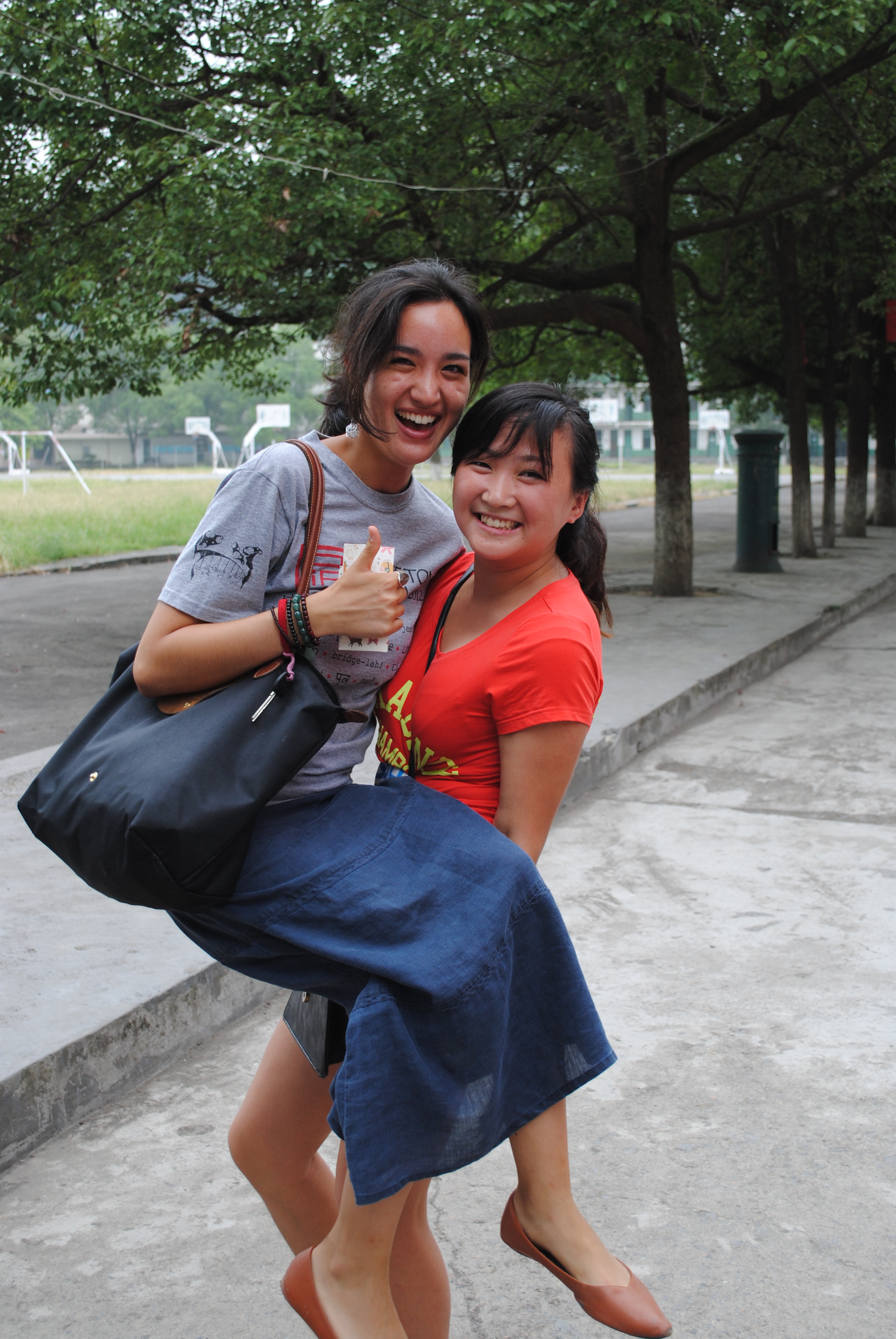
Phoebe and me (thanks, Kelsey!)


Buhbye! Buhbye! Buhbye!

After the first Ser­vice Club trip, I was left feel­ing quite uncom­fort­able and utterly shocked, and I didn’t really know what to do with myself. In the imme­di­ate after­math, I doubted if I ever wanted to return, and momen­tar­ily regret­ted hav­ing agreed to lead the Ser­vice Club. But soon enough, the next Ser­vice Club day rolled around, and we went again. And again. And the gears began churn­ing. And I became attached.

By the end of the Jishou sum­mer, it was one par­tic­u­lar baby that I absolutely fell in love with. Although she has some kind of mus­cu­lar dys­tro­phy, her mus­cles are quite func­tional at this point. Per­haps she will get worse as she grows older, but right now she is a strong girl. What a sweet baby! I’m not sure how or why, but I have so much love for this baby. She loves music, espe­cially Jason Mraz, appar­ently. I don’t know how many times I’ve sang I’m Yours over the past month and a half. This girl is an incred­i­bly happy baby when she gets hugs and kisses, but the ladies at the orphan­age pay almost no atten­tion to her.

It was emo­tional (to say the very least) hav­ing to say good­bye to this baby and every­one else at the home for the last time today. This orphan­age took me by sur­prise. It some­how grabbed my heart and I don’t think it will ever let go. It was dif­fi­cult telling some of them that today would be the last day I’d be com­ing to see them. When prepar­ing for a sum­mer of teach­ing Eng­lish, I never would have expected Ser­vice Club to be a point of the trip that would affect me this much. Hav­ing this expe­ri­ence has changed me, and helped me to real­ize how much I still have left to learn. There are so many peo­ple out there whose expe­ri­ences I can’t even begin to imag­ine. I’m yearn­ing to learn more about the lives of chil­dren like the ones at this orphan­age. There is so much more to know.

By some unknow­able force, I have been given this beau­ti­ful life that some­how brought here this sum­mer. How­ever far life takes me from Jishou, part of me will remain where the chil­dren for­ever are, stand­ing at the gate, smil­ing, wav­ing “buh­bye, buh­bye, buhbye…”

Final Impact.

It ended right where it started. Reuben and I first arrived to Shang­hai with Cameron and Eliot. Reuben and I were the first to leave. I was pumped to be in China, but it didn’t hit me until we began the Wild China trip.

This sum­mer was noth­ing like I expected it to be. We kept hear­ing the term ‘life chang­ing’, but I wasn’t sure if that word would be used to describe my experience.
The last two weeks in Jishou were both phys­i­cally and emo­tion­ally drain­ing. I pushed myself to teach the same way I had been teach­ing even though I knew my health was get­ting worse. I sched­uled meals and activ­i­ties know­ing that I needed time to rest. I went to the orphan­age, enter­ing the build­ing a bit ner­vous because I knew I needed more emo­tional strength. On top of that, the stu­dents drained me of the lit­tle emo­tional sta­bil­ity I had left. On the day of grad­u­a­tion, we went around the class­room and each stu­dent had a chance to say what they expected at the begin­ning of the pro­gram, and what it was really like. Stu­dents who hardly spoke in class expressed their grat­i­tude. Stu­dents who always smiled and laughed were cry­ing. I couldn’t help but to also shed some tears. I wasn’t going to hold them in. I wouldn’t have been able to if I tried. And just when I thought it was all over, just when I thought I could go back to the apart­ment and rest, I was hit with the final blow. Five amaz­ing indi­vid­u­als, not my stu­dents, said their good­byes.  At one point I wished it would have been a sim­ple good­bye. But it wasn’t. It was an expres­sion of sin­cer­ity and grat­i­tude that I have not seen in other peo­ple before. Just when I thought that dehy­dra­tion and fatigue had taken all the water and willpower from my body, those stu­dents made me shed some more tears. To me, this was not an exag­ger­a­tion, but a real­ity. I felt that I was leav­ing them behind. I felt that maybe my job wasn’t completed.
Thank good­ness for the trip to Shang­hai. All I can say is that it was the per­fect tran­si­tion before get­ting on the plane. As Reuben, Eliot and I rode the taxi to the air­port, I found myself smil­ing, no tears. I can’t tell myself that my job isn’t com­pleted. On the con­trary, now I feel like I did more than I thought I’d be able to in Jishou, all thanks to the stu­dents and my fel­low for­eign teach­ers. The eleven teach­ers had to deal with me, and I’m thank­ful to them for their hard work. Jishou stu­dents and Prince­ton stu­dents.  They’re the ones who taught me everything.
I’m on the plane, almost back in New York City. I see Reuben’s head and head­phones from my seat. I’ll ask for water when the flight atten­dant comes around.
I need rest.
–Chris­t­ian J. Rivera

Seeing in color

I wasn’t sad when I left Jishou, and this both­ered me. I would look at the stu­dents and teach­ers cry­ing around me and won­der why I wasn’t cry­ing. The stu­dents waved at us with teary eyes as our train pulled out of the Jishou sta­tion, but I stood calmly and watched them through the window.

Those last few days in Jishou and Shang­hai I ana­lyzed my feel­ings like this: we had a job to do, we did a damn good job with it, and it was time to move on. In a brief six weeks I learned an extra­or­di­nary amount from the stu­dents and they learned from me. Per­haps that sounds pre­sump­tu­ous, but I know it’s true. The stu­dents told us. Dur­ing our last teary pre­cept, which was Thurs­day, August 9th, Nick, Ari­anna and I brought all of the Drag­ons together and reflected on the sum­mer. It was amaz­ing to hear our stu­dents recount the small details of our inter­ac­tions over the sum­mer that meant so much to them. It was more clear than ever that we pro­vided a sin­gu­lar expe­ri­ence for them, and that’s what we came to do. So I left with a com­fort­able sense of sat­is­fac­tion and a per­cep­ti­ble but not over­whelm­ing amount of sadness.

Now I’m on a plane from Moscow to NY and my feel­ings are chang­ing. I just reviewed my pic­tures from our last day in Jishou and felt a sud­den pang of sad­ness. I’m going to miss those guys. They’re the best and they deserve the best. I can still do more for them and I will.

(I also just watched A Beau­ti­ful Mind on the air­plane which was emo­tional and is not help­ing things right now).

Here are some mem­o­ries that make me miss the students:

–Dur­ing one pre­cept, we were dis­cussing whether one’s per­son­al­ity is dif­fer­ent when speak­ing a for­eign lan­guage. Maybe “per­son­al­ity” is too strong, but I do think that one might say some­thing in a for­eign lan­guage that they wouldn’t say in their native lan­guage. For exam­ple, one of the stu­dents men­tioned that when they’re speak­ing Eng­lish they often throw around the phrase “I love you.” In Chi­nese, how­ever, they rarely say it (so when they do, it car­ries much more weight). Dur­ing our final pre­cept, one student’s final com­ment to the three of us was, in Chi­nese, “我爱你们” (I love you.)

–Some of the Drag­ons that we went on our home stay with like to call me “ben ge”. “Ben” is the sec­ond syl­la­ble of “Reuben” and “ge” is a friendly way to say “elder brother.” I like this name.

The first thing I plan to do when I get inter­net access, after pub­lish­ing this post, is respond to two emails from stu­dents from a few days ago.

One last shout out to the sick, mad, dope, crazy awe­some Drag­ons team. And the rest of the amaz­ing SoS group, I love you guys too. Thanks for mak­ing this an unfor­get­table summer.

And thanks PiA for bring­ing me to Jishou. I’ll pay you back somehow.

Over and out.

Same train, different train

Two months ago, we started this trip to China. “The Eleven” who later became “the Twelve” roamed the streets of Jishou for 7 weeks, pass­ing through Miao vil­lages, Dong vil­lages. Zuo­longxia, Wang­cun, Dehang, Fenghuang, Yuan­ling, Shang­hai. Guizhou province, Guanxi province, Hunan province. On Fri­day we took a train– Jishou to Shang­hai, 23 hours non-stop; sim­i­lar to the same train that we had taken when head­ing to Kaili for the begin­ning of Wild China. I remem­ber how on the first train Miryam had to hold my hand while I ven­tured into the squat­ting toi­let on that train. “Which way do I look?! Why is there no paper?? Can I hold on to some­thing?!” Now, we are all pros at squat­ting toi­lets, immune to the worst of them (you look away from the hole, not at it; a Miao vil­lage will do that to you). Some of us even find them com­fort­able and prefer­able to West­ern toi­lets. In the words of Reubes, chew gum and don’t wear flip-flops. Trust us on this one.

The smells of China have become a part of us. Its sounds and grunts– part of our vocab­u­lary. Want a sticky bun? Uh. What? Ah? Want some ice-cream? Uh-uh. Some of us even hock loo­gies and roll our shirts up to fight the heat– Chi­nese man style. We all have QQ accounts and chat and stalk our stu­dents and the sta­tuses and pho­tos they post of us. Some of the teach­ers even know their QQ IDs by heart (QQ is a state-of-the-art social media web­site: Twit­ter, Face­book, Flickr, Foursquare, LinkedIn, Spo­tify, all rolled into one.)

By the end of the 7 weeks, we we’re not only liv­ing in Jishou, we were hav­ing fun with it. Mem­o­rable is the ice-cream par­lor near Jia Le Fu where for Cameron’s birth­day Nick and I pointed at an empty Tup­per­ware and the ice cream machine with the DQ Tor­nado pic­ture on it and asked the lady to fill it up with whip-creamy ice cream. She stared at us, laughed, charged us 20¥ and then filled it up. On Thurs­day, Miryam and Nick went con­ing at the same place– same bewil­dered ladies star­ing and then laugh­ing as Miryam grabbed the cone back­wards, took a bite, said “xie xie” and smiled. 4 weeks ago, there’s no way we would have done that– we already called enough atten­tion by walk­ing, let alone by prank­ing peo­ple. Tonight at din­ner in Shang­hai, we all com­plained that the food was not spicy enough when weeks ear­lier we were kiss­ing bot­tles of beer and chug­ging water to soothe our lips. Hunan heat indeed.

At the train sta­tion on Fri­day, thanks to the won­der­ful uni­ver­sity offi­cials (Mr. Dai, Tony, Chris Wu, Linda, Miss Yang) and our stu­dents, we were able to at least have a chance against the horde of Chi­nese peo­ple try­ing to get on the train. The meek Amer­i­cans who were unwill­ing to push or cut lines at first, were now push­ing and run­ning with their suit­cases, try­ing to at least gain some advan­tage on the Chi­nese. It was an Olympic event– suit­case lug­ging– and this time, we were not los­ing. Train food –which had seemed sketchy weeks before– a feast. No ramen for us this time. Egg­plant and tree ears with beef and two bowls of rice plus a bot­tle of wine.

While every­thing else in com­par­i­son was so much bet­ter than we had first remem­bered– I’m telling you, being a for­eign coun­try for two months changes your per­spec­tive on things (ask any SOSer how fast we ate the queso fun­dido last night at a Mex­i­can restau­rant)- we were still sur­prised by the amount of chil­dren and babies run­ning around in our cart, count­ing us, eat­ing with us. Stares from Chi­nese peo­ple that had grad­u­ally dimin­ished in 7 weeks reap­peared as soon as we stepped onto the train. I hope some­day, I will be able to come to China and be stared at– not for being a for­eigner– but for fit­ting right in. For now, there is noth­ing to do but smile back at them.

A whirl-wind analy­sis of the before and after. In the mean­time, I have to go deal with arriv­ing 6 hours ear­lier and reliv­ing the morn­ing and evening of Tues­day, August 21st in the Dirty Salv. Jet lag, here I come!

–Ari­anna, MengNa.

Fun and Fin

I wanted to see tears, but I couldn’t have expected the final response from my students.

Last Fri­day we decided to have an hour and a half share fest instead of nor­mal pre­cept. This involved talk­ing about our expec­ta­tions before SOS, our expe­ri­ences dur­ing the pro­gram, and our goals after the sum­mer. Since this was the last pre­cept, we under­stood what we were doing: we were cre­at­ing the per­fect storm for ugly group weeping.

The plan went swim­mingly. Soon sev­eral of the stu­dents were snif­fling messes, laugh­ing through tears about their favorite moments, often times call­ing out us teach­ers on aspects of our styles:

Deb­o­rah (from my ear­lier post) was quick to chime in. “Ari­anna, to be hon­est, I wanted to sleep in your class dur­ing the first week of PiJ. How­ever, your class improved very quickly.” Other stu­dents mur­mured in agree­ment, much to Arianna’s cha­grin. How­ever, it was clear that they were only able to tease her because of how close of friends they had become. Another stu­dent wrote to Ari­anna, “I love you, and I need you.” She would later change her train to ticket to wish Ari­anna a pro­longed three-day goodbye.

Nei­ther Reuben nor I were spared col­lec­tive teas­ing. It was almost uni­ver­sally com­mented that at first Reuben seemed seri­ous and hand­some, but later was found to be “humor­ous” (and still hand­some). One stu­dent men­tioned that she counted the amount of times Reuben said OK in class (161 times), and pro­ceeded to imi­tate his laugh. Soon the whole class was form­ing a cacoph­ony of Reuben-like chor­tles. Of course, “The Reubes” him­self was quick to join in.

As for myself, one of my stu­dents was quick to note, “Nick, your hand­writ­ing is very very bad.” I thought this was a fair crit­i­cism, as flash­backs to Ms. Dinoto’s 5th grade class filled my mind, remind­ing me of my bla­tant inep­ti­tude at hand­writ­ing. “And, when I first met you, I thought you were a play­boy.” As the class chimed in agree­ment with her, Ari­anna and Reuben pro­ceeded to die of laugh­ter. Dis­claimer: I am in no way a play­boy, and I vehe­mently protest said label. Nonethe­less, the nos­tal­gic dragon pow­wow was an unfor­get­table experience.

As I reflect now on the sum­mer as whole, I can’t believe how much has hap­pened. After the count­less days of late-night jour­nal­ing and greasy meals shared with teach­ers and stu­dents, I feel I have changed. I have made some close friends, and I’m on track to being the per­son I want to be. Thank you PiA and SOS for the best sum­mer of my life.

Per­haps the most poignant moment of the evening came from a stu­dent who had slipped a tis­sue under­neath her glasses to cre­ate a paper veil that shielded her tears and red­dened eyes from the class. “I will only say two things, oth­er­wise I will cry,” she said shak­ily. “I love you all, and I’m get­ting a gmail.”

Like her, I expe­ri­enced a tremen­dous amount of love from my stu­dents and fel­low teach­ers, and I look for­ward to a future with these peo­ple in my life. As I said to my sad­dened stu­dents when I left, “this is not good­bye, this is only the beginning.”

–Nick