
Students wanting to learn about careers in media received some tough love at Career Services’ Careers in Film and Television event. The panel featured three Princeton alumni, who spoke about the trajectory of their careers and then took the time to answer questions and offer advice to the students gathered.
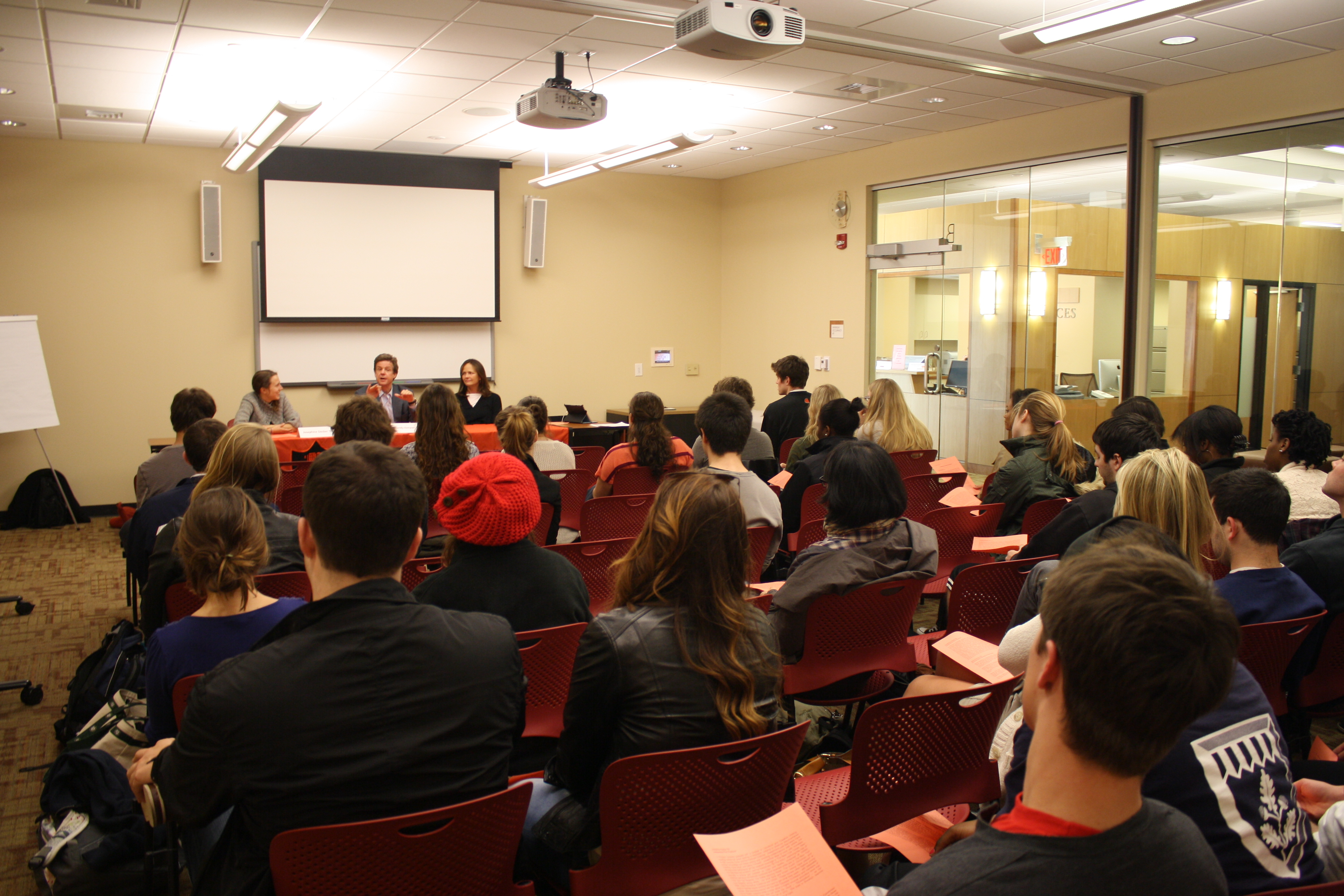 Katherine Carpenter ’79 was the first to address the group. A documentary filmmaker, Carpenter showed a clip of “Bones of Turkana,” the National Geographic special she co-produced. She then spoke about her work with the Discovery Channel, which she joined in its early days. “It was just really fun to work in the early days of cable where everyone was just making it up as they [went] along,” Carpenter said. Fun seemed to be the driving force of Carpenter’s career; she had gotten involved in media after noticing that press teams on the campaign trail always had a good time, and from those beginnings she became an award-winning producer with an Emmy to her credit. (Not bad for a comparative literature major who didn’t give television a second thought in college!) Though she always followed what she thought would be enjoyable, Carpenter had some words of wisdom for the crowd: “Write the scripts, change the toilet paper, you need to be willing to do everything.” Her experience had been that skills in writing and Excel were especially useful in the field.
In contrast to Carpenter, Sandy Kenyon ’78 started looking at media careers when he was sixteen years old. While at Princeton, he joined a fellow student’s radio program, “Focus on You,” and became so involved that schoolwork was an extracurricular in comparison. Kenyon said the industry prizes endurance and offered his personal opinion and this analogy: a finance firm, Kenyon said, will put you through four days of excruciating interviews before giving you a hefty paycheck, but the film industry will put you through five to seven years of 80-hour weeks before paying you a pittance. 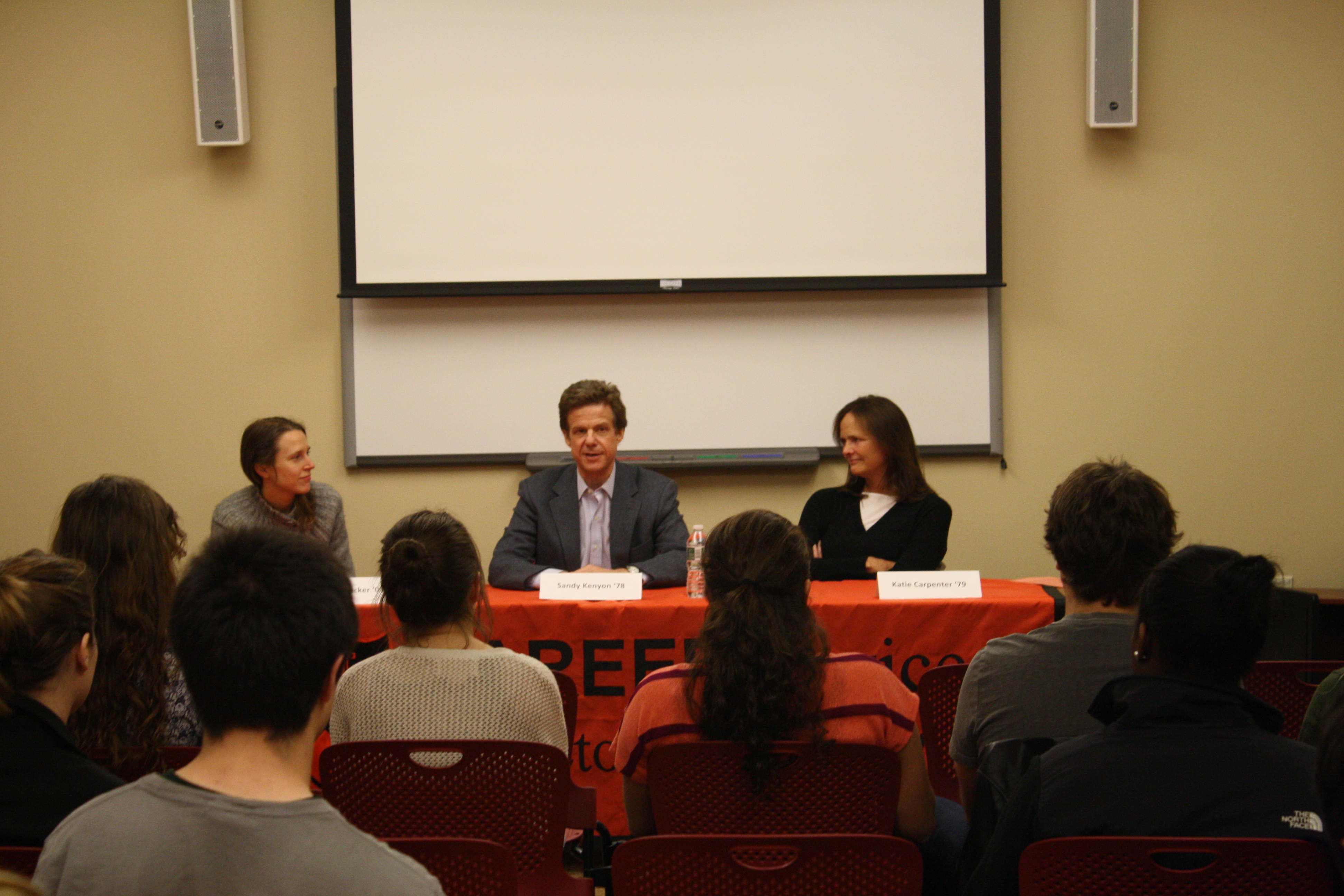 A career in film and television, said Kenyon, is for people who “love it deep enough and wide enough and long enough.” Kenyon also warned about the possibility of burning out or becoming unmarketable after ten years, though he said he’s been lucky. Early experience doing film reviews in his career led him to his current job, doing concise movie reviews for ABC that air in New York City’s taxicabs.
A more recent graduate, Josephine Decker ’03 was able to talk about film and television as it relates to her job as an independent film producer. Like Carpenter and Kenyon, Decker said that hard work and initiative was key. After working as a production assistant, she has moved onto other projects where she has more creative control. However, these projects require a wider knowledge of filmmaking and handling items such as publicity. When asked if she would recommend film school, Decker responded that what’s important is choosing a path that will address a filmmaker’s specific strengths and weaknesses.
In all, the panelists agreed that following one’s passions would yield a difficult but rewarding path. Film and television careers may not be for everyone, but for those that don’t mind hard work, they are attainable.
For more information about careers in the arts, visit Abbey Racelis, career counselor for arts, nonprofit and public sector (and moderator for this panel). And if you want to improve your social media literacy (a valuable skill according to the panel), make sure to RSVP to “Do You Pass the Social Media Recruitment Test?” on April 16.