
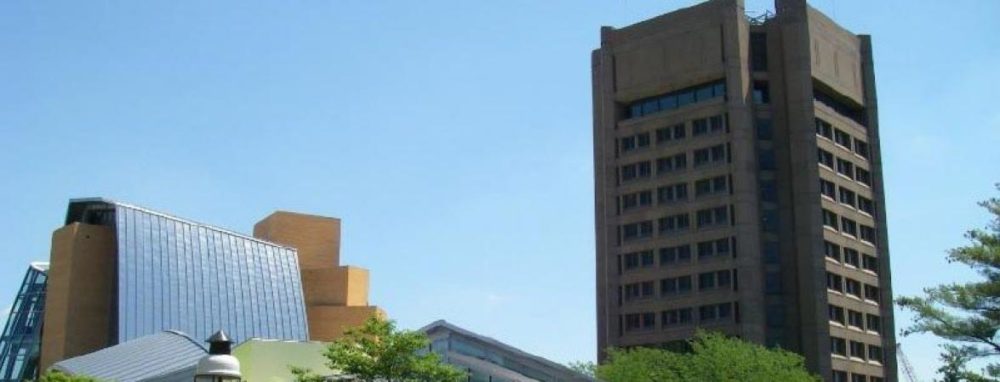

University of Minnesota, Duluth
This is a discrete mathematics REU, with the overwhelming majority of problems drawn from combinatorics, graph theory, and group theory. There is some scope for work in other areas of math, notably number theory, but not as much as one might hope. Students work individually on their particular problems, and you have the freedom to change directions if you so choose. The program is an excellent experience—the research environment, the many talks, and the opportunities to meet smart and interesting mathematicians combine to create an unrivaled REU.
Contacts: Rik Sengupta (rsengupt[at]princeton[dot]edu), Gaku Liu (xueliu[at]princeton[dot]edu), Adam Hesterberg (achesterberg[at]gmail[dot]com).
University of Minnesota, Twin Cities
This is a discrete mathematics REU, but where graph theory is de-emphasized in favor of algebra and algorithmic number theory, and can accurately be characterized as an “algebraic combinatorics REU.” The faculty, who typically include REU founder Vic Reiner, are all heavily involved with mentoring. The program also includes a crash course in representation theory, preparing students to tackle the research problems over the course of the summer.
Contact: Zack Stier (zstier@).
University of Virginia (formerly at Emory University)
This is the continuation of Ken Ono’s famous Emory REU, now held at UVa and offering projects in number theory, representation theory, geometry, and topology. Research is conducted in small groups (typically 2-3 students) and advisors are constantly present to meet with, bounce ideas off of, and broadly suggest project directions. The program begins with background lectures and some short assignments to get everyone started, then progresses to a more open format. Fun talks or activities (such as a movie night, a math magic talk, etc.) are interspersed throughout the program. The environment can be intense at times (the students are expected to work quite hard), but the advisors are supportive and the experience is very rewarding on the whole.
Contacts: Kapil Chandran (kapilchandran@), Alice Lin (adlin@).
Research in Industrial Projects UCLA
This is an REU-style program in applied mathematics, with several (typically around nine) projects in a variety of fields. All the projects involve significant computational components, often in Matlab, although Matlab experience is not strictly required. Each project has full-time academic advisers associated with it who are available in case of difficulties, and all are drawn from industrial problems—so they’re all relevant, “real world” problems. At the end of the programs, each group presents to its industrial sponsor.
Contacts: Mohit Agrawal (magrawal[at]princeton[dot]edu), Angela Dai (adai[at]princeton[dot]edu)
Research in Industrial Projects Berlin
This is run in partnership with UCLA and is similar to the RIPS-UCLA program. Projects range from highly applied (e.g., pattern recognition for proteomics and imaging) to highly theoretical (e.g., analysis of massive graphs or spectral clustering techniques). The research is done in partnership with groups at the Zuse Institute Berlin and Freie Universität.
Contacts: Kamron Saniee (ksaniee[at]princeton[dot]edu)
Cornell University
This REU offers three projects each year: one is always fractal analysis, but the others vary; in my year, they concerned (1) generating sets of finite groups and (2) the combinatorics of triangulations. Some computation is involved, mostly in a software package called GAP, but the focus is always on proving theorems rather than collecting numerical results. Both the research and the other students are great, and Ithaca is a wonderful place to spend a summer. If you choose to go to this REU, seriously consider living in one of the co-ops (Prospect of Whitby is the best!); they are really cheap and offer an easy way to meet people.
Contact: Gabe Frieden (gfrieden[at]princeton[dot]edu).
University of Washington (Elliptic Curves)
This program is somewhat unusual in being relatively new and, when I participated, not a formal REU. Our project was the computation of tables of elliptic curves over the field Q(\sqrt{5}) analogous to existing tables over Q. This included a fair bit of computation, but also a significant measure of theoretical work as we worked to explicitly prove properties of important invariants of the curves (e.g., the Tate-Shafarevich group). William Stein, the coordinator, is an excellent mentor with vast knowledge of number theory who makes himself accessible and available at all times.
Contact: Ashwath Rabindranath (arabindr[at]princeton[dot]edu).
College of William and Mary
This is an REU focused on matrix theory, with problems drawn from linear algebra (broadly construed) but touching on a range of areas, notably graph theory, analysis, and geometry.
Contacts: Ian Frankel (iafranke[at]princeton[dot]edu), Tengyao Wang (tengyaow[at]princeton[dot]edu).
DIMACS (Rutgers University)
This is an REU broadyly focused on discrete mathematics, with a leaning toward applied problems. Applied projects range from computational investigation of mathematical questions to implementation of machine learning algorithms for data analysis. Some participants have an opportunity to apply to participate in a roughly twenty day trip to Prague to attend the Midsummer Combinatorial Workshop—centered on graph theory—at Charles University. There are also a handful of projects in pure mathematics, though these change drastically from year-to-year.
Contact: Zachary Stier ’20 (zstier[at]princeton[dot]edu)
SMALL (Williams College)
The SMALL REU offers projects in commutative algebra, ergodic theory, differential geometry, continued fractions, number theory, and probability theory. Students are split into groups of between three and nine participants according to their research area, and sometimes these groups are themselves subdivided. This sometimes means that you will work on more than one project at a time. The research is very much theoretical. Since the REU has been running since the late 1980’s, everything goes very smoothly, which is a definite plus. Apart from researching, although Williamstown is a small place that doesn’t offer a whole lot to do, student life is pretty lively with everyone sharing a big house and playing frisbee, soccer, and volleyball. The area also offers great hiking and, if you have a car, you always have the option of driving to somewhat bigger towns nearby, or even to Boston and New York City, each about three hours away and making a fun weekend getaway.
Contacts: Oleg Lazarev (olazarev[at]princeton[dot]edu), Lucas Manuelli (manuelli[at]princeton[dot]edu), Andrej Risteski (risteski[at]princeton[dot]edu).
Oregon State University
This REU offers projects in combinatorics, differential equations, game theory, probability theory, and number theory. My project focused on properties of partitions and included a mixture of combinatorics and number theory.
Contacts: Oleg Lazarev (olazarev[at]princeton[dot]edu)
Penn State
I worked on a project motivated by dynamical systems that involved algebraic number theory. It involved looking at conjugacy classes of integral symplectic matrices over the rationals and integers.
Contact: Alexander Leaf (aleaf[at]princeton[dot]edu)
University of Washington
The focus of the program was on inverse problems on electrical networks. My project, however, focused on virtual knot diagrams (a sort of generalization of traditional knot diagrams depicting the projection of a knot in R3 on R2) that corresponded to certain chord diagrams.
Contact: Alexander Leaf (aleaf[at]princeton[dot]edu)
University of Wisconsin-Eau Claire
This REU offers projects in applied math and modeling, combinatorics, and group theory. My project involved describing and characterizing polynomials invariant under separate permutation of two sets of variables, a problem that arises in the representation theory of the Weyl algebra often encountered both in mathematics and theoretical physics.
Contact: Eric Chen (ecchen[at]princeton[dot]edu)
University of Connecticut
I studied groups of symmetries of certain “self-similar” trees and their connections to dynamical systems. This resulted in a publication some time after I participated in the program.
Contacts: Shotaro Makisumi (makisumi[at]princeton[dot]edu), Chuen Ming Mike Wong (chuenw[at]princeton[dot]edu)