Dove Soap Could Learn Something About Stereotyping from Children’s Books

The week in business was a reminder that those who know little history are condemned to repeat it.  Whether it was inadvertent or deliberate, Dove’s allusion to the ancient topos of turning dark-skinned people white to advertise soap, a product with a tradition of exploiting race in its promotion, was a public relations nightmare.

As CEO of Neutrogena, Mr. Cotsen accumulated ephemera about the product his company made that documented the history of promoting the product his company made.  As a children’s book collector, he looked for illustrated pamphlets about soap that were either directed at children or featured child sponsors.  Over the years he selected examples that offer really interesting insights into the way literature and the concepts of  blackness and whiteness have been used to encourage cleanliness in the early twentieth century.   Here are some of the most interesting ones…

The House That Jack Built. Manchester: G.W. Goodwin, [185-?]. (Cotsen 12917)

Under the direction of advertising immortal Artemas Ward, Sapolio Soap drove old-fashioned general household cleaners like bath-brick and rotten-stone out of the cupboards of modern housewives.  Among the brand’s sponsors were the precocious Gemini Twins, Luck and Pluck, featured here on a two-sided accordion-folded strip.  Once they have cleaned all their friends and relations, the two chubbins mount a ladder into the sky and scrub the moon’s face shiny bright.  So bright that the amount of light radiated increased exponentially.

Gemini: A Sapolionic Tale. New York: Enoch Morgans’ Sons, Co., ca. 1900?. (Cotsen 17195)

Their boyish antics contrast sharply with the pictures on the other side of the strip showing female servants hard at work keeping the household’s silverware, dishes, metal, bath tubs, and marble mantels spotless with Sapolio.   But only the African-American woman sings the product’s praises in dialect on her hands and knees scrubbing the floor.

Princeton Department of Rare Books and Special Collections has an archive of the Enoch Morgans’ Sons business papers, if you want to learn more about the early history of Sapolio Soap… (Cotsen 17195)

Other soap manufacturers hired well-known author-illustrators to design promotional brochures that incorporated their iconic characters.   Palmer Cox, the creator of the Brownies, was more than happy to let his little elves pitch all kinds of merchandise.  Neither Cox nor the executives of Oakley’s American Glycerin Soap had any reservations about the Brownies breaking into the company’s premises to steal quantities of product to wash their faces.

Oakley’s American Glycerine. [United States]: Oakley Soap and Perfumery Company, [ca. 1895?]. (Cotsen 8099)

Chicago firm N. K. Fairbanks commissioned E. W. Kemble, whose stereotypical illustrations of African-American children were considered adorable then, to draw those “dear little, queer little Gold Dust Twins”  with their “rolling black eyes and roguish grins” making their work into play as if they were circus performers.  Dressed only in their trademark short skirts, they romp barechested through the laundry, ironing, dish washing, pot scouring, mirror polishing, stair scrubbing, etc. in record time.  The ugly old stereotype of the happy-go-lucky darky makes an appearance at the end of this ostensibly delightful brochure when the two break into  a celebratory clog dance.

E. W. Kemble. The Gold Dust Twins at Work and Play. Chicago: N. K. Fairbanks Co., c. 1902. (Cotsen 61770)

Here is a 1908 reimagining of the Gold Dust Twins by an uncredited artist for comparison.   More submissive than the Kemble’s little imps, the ones here sign the text to the lady of the house as “your servants” and they are depicted as bald with coal black skin and big red fleshy lips.

Who are We? N. K. Fairbank Company, c. 1908. (Cotsen 28337)

One of the most intriguing brochures in the collection is this one published by Larkin Soap.  It contains a heartwarming story of girlish entrepreneurial spirit: Fannie admires the Chatauqua Desk at Margaret’s house and learns that if she sells just $10.00 of Larkin Soap to friends and family (just two afternoons’ work, according to Margaret), she too can purchase her own solid oak desk!  The second story on the back panel which brings us back full circle to this week’s misfired Dove advertisement.   Three Turkish princes are spurned by three “white Caucasian maids” until they agree to try and “erase the dark disgrace with the help of Sweet Home Soap.”  The bars of soap works their magic and turns the boys’ faces milky white, removing all obstacles to immediate marriages.

The Chautauqua Desk. [Buffalo, New York: Larkin Soap Mfs. Co., not before 1901?]. (Cotsen)

This story is a variant of the Aesopian fable, known as “The Ethiopian washed white” or “The Blackamoor,” in which the master foolishly believes that the dark skin of his new enslaved man is simply dirt and filth.  He orders the man to be washed clean, but of course, his servants can make no “progress” and succeed  causing the  poor man’s death from cold.  Obviously, this fable cannot  be included in anthologies for children and probably only older adults remember it.  Below is one of the less objectionable illustrations of the fable by William Mulready that appeared in William Godwin’s Fables.At the turn of the nineteenth century, however, children were still being exposed to the trope of washing a dark-skinned person or thing skin white.

May Byron. The Poor Dear Dollies. Illustrated by Rosa C. Petherick. London: Henry Frowde and Hodder & Stoughton, ca. 1905. (Cotsen 19786)

Rudyard Kipling’s  “How the Leopard Got His Spots” also plays with the idea that skin color can be altered and the resulting transformation is life changing.  To survive in a new environment, the Ethiopian must change his skin from “greyish, brownish-yellowish” to black.  In order to help his hunting companion the leopard, he stamps spots on his coat using the excess pigment on his fingers…

Rudyard Kipling, The Just So Stories. Color plates by Gleeson. New York: Doubleday & Co., 1949. (Cotsen 9736)

There’s some profit in knowing a thing or two about the history of children’s books, even if for titans of business…

New Nation, New Alphabet: Azerbaijani Children’s Books in the 1990’s

pages [27-28]. Älifba. Bakı : “Maarif” Näşriyyatı, 1992. (Cotsen 7654952)

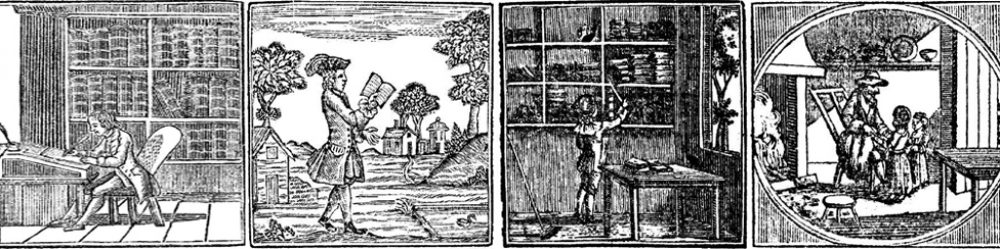
Following the collapse of the Soviet Union in 1991, Azerbaijan (once again) declared itself an independent country.1 The image featured above is from a book published just a year later: Älifba (Baku: “Maarif” Näşriyyatı, 1992). It appropriately reflects both the diversity and optimism of the new nation: vignettes of friendly and modern workers separate the National Museum of Azerbaijani Literature in the bustling capital of Baku on the left from a vibrant vista of forest, farmland, and the looming Caucasus Mountains on the right. But Azerbaijani children’s books published during the new nation’s early years reveal more than national characteristics and pride. In their pictures and stories, and even in the characters of the words themselves, they serve to showcase a national identity in transition.

Perhaps the most significant way that Azerbaijani children’s literature contributed to this identity shaping project is by being the very vehicle which would deliver a new alphabet to millions of Azerbaijani children. Just four days after declaring independence on December 21st, 1991, the Azerbaijani Parliament voted to adopt a Latin script for the Azerbaijani language, abandoning the Cyrillic script which had been in use for the last fifty two years. The impetus for this far reaching and momentous change has deeper roots in a history of script changes imposed by Soviet authorities in the first half of the 20th century. Put succinctly by Lynley Hatcher:

After the Soviet Union incorporated Azerbaijan as a republic in 1920, the Soviets initiated a script shift from Arabic to Latin to divide the nation from Iran and its Muslim roots. A decade later, the Soviets forced another shift from the Latin to the Cyrillic script to alienate Azerbaijan and the Turkic republics from Turkey and from each other. Today, after independence in 1991, the pendulum has swung back in favor of the Latin script (Hatcher, p.106).

The First Turcological Congress convened in Baku in 1926 (with representatives from both the new Turkic Soviet Socialist Republics and Turkey).2 Representatives overwhelmingly agreed to adopt modified Latin scripts for Turkic languages, seeking increased literacy and a separation from the associations of Arabic script with the Muslim religion (thus satisfying Soviet authorities). But in 1939, Joseph Stalin changed the policy again. Turkic languages were Cyrillicized in order to distance Soviet Turkic people from a pan-Turkish identity and facilitate the acquisition of the Russian language (and culture).3 But after the dissolution of the Soviet Union, Azerbaijan (and other newly independent Turkic nations) finally had the freedom to ask: what kind of identity do we want our language to represent? Azerbaijan (and Turkmenistan) chose the arduous but self determined path of Latinisation, firmly associated with the republic of Turkey. Yet Azerbaijan also utilized this script shift as an opportunity to demonstrate its unique national identity.

Älifba, full title: Älifba1 sinif üçün därslik (Alphabet: a textbook for the first year), was one of the first Azerbaijani language instruction course books teaching the post-independence adoption of Latin script for the Azerbaijani language (Sepehri, p.1). It’s front wrapper alone reveals one of the most unique aspects of the Azerbaijani language and its script:

Front wrapper. (Cotsen 7654952)

The first character in the title might be totally unfamiliar to many English speaking readers: “ə”. Transliterated above as Älifba (with an Ä “A-umlaut”), this initial character resembles an inverted “e”. According to IPA standards this character denotes a “schwa” (the mid central vowel sound that is usually unstressed and toneless: think the “a” in “about” or the “u” in “supply”). But in Azerbaijani, the character represents a vowel sound closer to the “a” in “cat” or the “ae” in “archaeology”. Historically this sound was represented in English with the “ash” character (æ), little used today but to purposely invoke archaism (often liturgical).4 Perhaps even more confusingly (sorry), the toneless “schwa” sound is the most common vowel sound in English (though we do not use the “ə” character to represent it), while the ash (æ) vowel sound represented by “ə” is the most common vowel sound in Azerbaijani!

In Azerbaijan, this character has a history of continued use through the script changes of the 20th century demonstrating a nationally unifying representation of Azerbaijani identity. During the most current script change in 1991, Ä “A-umlaut” was briefly considered because it more closely aligns with Turkish letter encoding and can be found in most character sets. But putting two dots above your most commonly occurring vowel proved cumbersome for the written language (as opposed to its typed version). So one year later “ə” was reintroduced. Essentially then, the character “ə” has been used in each of the three script changes initiated since the replacement of Arabic script: initially with the first Latin script introduced in 1926, carried through Cyrillization from 1938-1991, and maintained as a distinct character differentiating the Azerbaijani alphabet from “standard” Turkish. Along with the characters “q” and “x”, “ə” represents a phoneme in Azerbaijani that distinguish the alphabet and language from the “standard” Turkish alphabet. This gives the alphabet itself a uniquely Azerbaijani character (the character ğ is pronounced differently for Azerbaijani and Turkish).

Yet Cyrillic script has left a lasting mark on Azerbaijan. Considering that this script was in use for most of the 20th century, Cyrillic letters dominate not only much of the country’s literature but much of its written infrastructure as well. Even after the official shift to Latin script in 1991, children’s book publishers like Gänclik (Ҝәнҹлик) were still producing Cyrillic script children’s books the following year:

Page [14], a “gəmi” (ship) from Işılda-böcak. Bakı: Gänclik, 1992. (Cotsen 7494222)

Though some children’s book publishers seemed initially reluctant to begin the change to Latin script, Azerbaijani children’s books would be ultimately instrumental for facilitating this script shift. Two years after the publication of Işılda-böcak, Gänclik was producing titles like Gülçiçäk (based on a Tatar folk tale) in Latin script:

front wrapper, Gülçiçäk: Tatar xalq nağılları. Bakı: Gänclik, 1994. (Cotsen 7658006)

In this same publication Gänclik didactically contributed to the transition towards Latin script by providing a transliteration table for its young readers:

back wrapper. (Cotsen 7658006)

Through the 1990’s and early 2000’s Cyrillic script was still in use for newspapers, shops, and restaurants. Only in 2001 did then president Heydar Aliyev declare “a mandatory shift from the Cyrillic to the Latin alphabet” (Hatcher, p.113). The transition has progressed slowly. The two scripts have effectively existed side by side and as a result many Azerbaijanis are literate in both. But as the country and its language transition into the 21st century, Cyrillic script (and its associations with a Russified/Soviet identity) has become increasingly marginalized. As Azerbaijani’s exercise their independence, the unique representation of their language reflects a transition to a new independent identity.

Though seemingly unimportant and relegated to “mere” children’s instruction, alphabets are demonstrably powerful political tools which impact the identities of those who use them (alphabets influence all of us who are literate through subtle historical and social associations). Like in all other countries the story of Azerbaijan’s alphabet reflects the history of its identity (whether self determined or imposed). Few other countries (perhaps only Turkmenistan, another former “Turkic” Soviet state) have been subject to such rapid and far reaching script changes as Azerbaijan. This unique fluctuation is fertile ground for researching how alphabets and children’s literature are utilized for identity formation and the propagandizing of certain associations.

page [10], the canavar (wolf) from the Gülçiçäk folk tale. (Cotsen 7658006)

References

Hatcher, Linley. Script change in Azerbaijan: acts of identity. International Journal of the Sociology of Language, 2008(192).

Sepehri, Abazar. An Azerbaijani Reader In the New Alphabet. Austin, Texas: A. Sepehri, 1994.


  1. To learn more about the Azerbaijan Democratic Republic’s brief independence during the Russian Civil War and the early history of the Azerbaijan Soviet Socialist Republic see my other blog post: Picturing Progress. ↩︎
  2. Contrary to popular belief, Turkey was not the first country to institute a Latin script for a Turkish language. It would not adopt Latin script until 1928. ↩︎
  3. Other minority identities within the Soviet Union that were already perceived as sufficiently Russified or Western would not see their languages Cyrillicized. Conspicuously, the very distinct scripts of Azerbaijan’s neighbors: Georgia and Armenia were never altered by Soviet authorities. ↩︎
  4. For those interested in an even deeper history of alphabets: the grapheme “æ” takes its name “ash” or “æsch” from the even earlier Anglo-Saxon futhorc rune “ᚫ” denoting the same sound (and whose name means literary “ash tree” which the rune superficially resembles). ↩︎