Recently in Ephemera Category

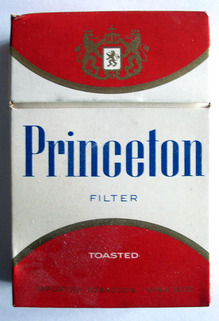
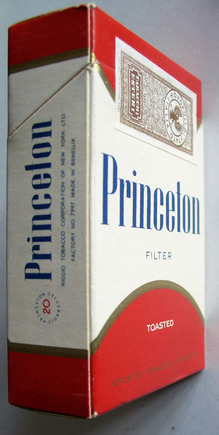
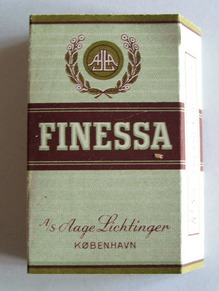
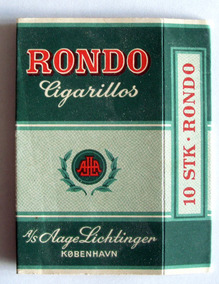
Stop smoking and send your cigarettes to Princeton

| 1 Comment
packaging2.jpg
packaging3.jpg

Within GC149 Ephemera, graphic arts has a small collection of cigarette packages. Some are full and some are not. I think it would be a nice new years resolution for you to stop smoking and instead, send your cigarette packages to the collection at Princeton University. Clean, dry candy packaging and wine labels are also appreciated.

packaging6.jpg
packaging5.jpg
nast4.jpg

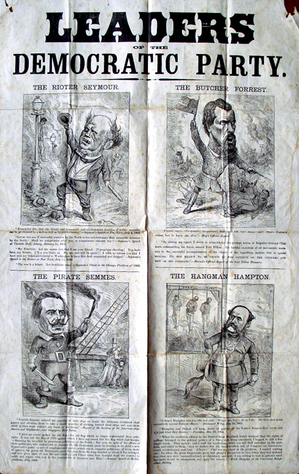
Bernard Reilly, in his catalogue American Political Prints, 1766-1876, describes this Thomas Nast broadside as “a searing, election-year indictment of four prominent figures in the democratic party.” He continues:

“Former New York governor and democratic presidential nominee Horatio Seymour is portrayed as a ‘rioter.’ Standing in a burning city, he waves his hat in the air while he steps on the back of a crawling figure. In the background a corpse hangs from a lamppost. Between 1862 and 1964 Seymour had opposed Lincoln’s was policies, and he was branded as instigator of the 1863 New York draft riots.”

“Tennessee general Nathan Bedford Forrest, the founder of the Ku Klux Klan, and infamous for his role in the massacre of surrendered Union troops at Fort Pillow, is called ‘The Butcher Forrest.’ He waves a flag labeled ‘No Quarter’ and fires a pistol.”

“Confederate Admiral Raphael Semmes is portrayed as a pirate, wielding a knife in one hand and holding a flaming torch in the other … . Semmes was the scourge of Union shipping during the Civil War. Under his command the Alabama, a British-built ship, captured sixty-two merchant vessels, most of which were burned. An excerpt from Semmes’s July 1868 speech at Mobile, Alabama, appears below this image.”

“Confederate cavalry officer Wade Hampton appears as a hangman. He holds his plumed hat at his side and wears inscribed ‘C.S.A.’ (Confederate States of America). In the distance three Yankee soldiers hang from a gallows.”

Thomas Nast (1840-1902), Leaders of the Democratic Party, 1868. 38 x 24 inches (96 x 61 cm). Wood engraved broadside. Graphic arts GA2010- in process.

Bernard Reilly, American Political Prints, 1766-1876 (Boston, Mass.: G.K. Hall, 1991). Graphic Arts Collection (GA) Oversize E183.3 .R45 1991q.

Tobacco packaging papers

| No Comments

tobacco3.jpg
tobacco4.jpg
tobacco2.jpg

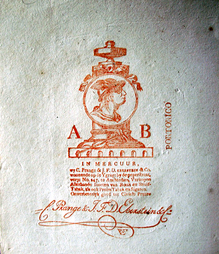
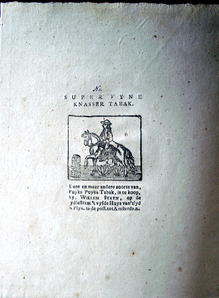
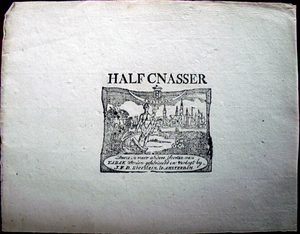
“Tobacco was among the first commodities to be sold in printed paper wrappers,” writes Michael Twyman, in his Enclyclopedia of Ephemera.

“The design element of tobacco papers was normally confined to the centre of the printed sheet, which was large enough to accommodate varying quantities of tobacco. The earliest designs were in the tradition of the bookplate, but later they took on the characteristics of the trade card and were often printed from plates actually designed as trade cards. Engraved pictorial designs were common in Germany, Holland, and France; although almost everywhere they gave way to the crude woodcuts that were to remain the common denominator….”

Here are three recently acquired nineteenth-century examples from Amsterdam.

Maurice Rickards, The Encyclopedia of Ephemera; edited and completed by Michael Twyman, with the assistance of Sally De Beaumont and Amoret Tanner (New York: Routledge, 2000). Graphic Arts: Reference Collection (GARF), Oversize NC1280 .R52 2000q

Binder's Tickets in P.J. Conkwright's Collection

| No Comments

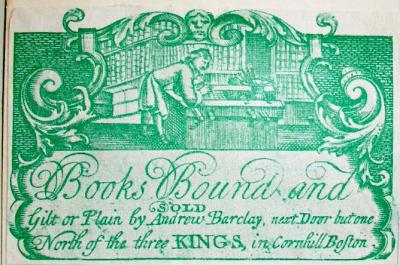
In 2009, Ms. Jan Lilly graciously donated a collection of bookseller and bookbinder tickets to the graphic arts collection. They came with extraordinary provenance, being the collection of P.J. Conkwright (1905-1986). Ms. Lilly told us that

“many from books being rebound by Earl Smith—head of handbindery at PUP [Princeton University Press]—years ago. They used to bind things—and rebind—for the university.”
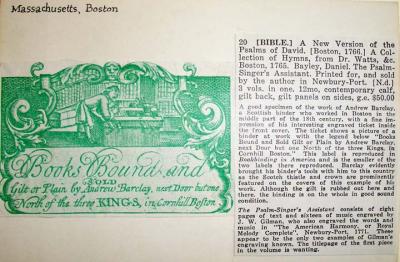
Some, like this one, are reproductions of the original. Some are originals. Perhaps Conkwright made a copy and put the original back? The ones he kept were glued to an index card and filed occording to city and occupation.

“P. J. Conkwright came to the Princeton University Press in 1939 from the University of Oklahoma, from which he had received a masters degree and at whose press he had worked as a book designer. In the following decades, his work as a typographer and book designer became nationally known, particularly in the annual exhibitions of the best fifty books produced in the U.S. held by the American Institute of Graphic Art. Many of the books he designed were honored there, and in 1955 the AIGA awarded him its gold medal. Perhaps the best known work credited to his skills is the multi-volume set of the Jefferson papers, which the Press began issuing in 1950”. From Princeton’s Conkwright finding aid.

For more information on this ticket of Andrew Barclay in particular, see Hannah D. French, “The Amazing Career of Andrew Barclay, Scottish Bookbinder, of. Boston,” Studies in Bibliography XIV (1961): 143-62. It’s onlne at http://etext.virginia.edu/bsuva/sb/. Click on 14, on the left, and you’ll see it in the contents list.

Soft reading, with a fringe

| No Comments

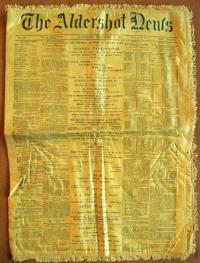
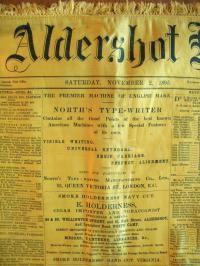
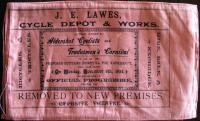
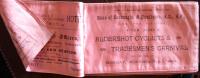
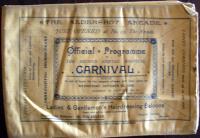
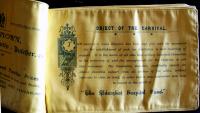
In 1897, the Aldershot Cottage Hospital (approximately thirty-five miles from London) finally opened with beds for ten patients. Every fall, the town of Aldershot had been holding a carnival or park fête to raise money in order to build a hospital. Special cloth programs and issues of the Aldershot newspaper were printed on colorful silk/satin and sold as souvenirs. Several of these from the first and second carnivals have been acquired by graphic arts. Note the advertisement on the front page for a typewriter offering visible writing.

The Aldershot News. No. 72, Saturday, November 2, 1895 (Aldershot: printed and published by the Proprietors, Gale and Polden, Ltd., Wellington Works, 1895). Printed on yellow silk. Graphic Arts (GAX) 2010- in process.

The First Aldershot Cyclists and Tradesmen’s Carnival in Aid of the Proposed Cottage Hospital for Aldershot … November 5th, 1894. Official programme. 10 leaves printed on pink silk. Graphic Arts (GAX) 2010- in process.

Official Programme of the Second Annual Hospital Carnival … Wednesday, October 30, 1895. (Aldershot: J. May, Steam Printer, 1895). 10 leaves printed on yellow silk. Graphic Arts (GAX) 2010- in process.

Roman diptych and stylus

| 2 Comments
diptych
diptych

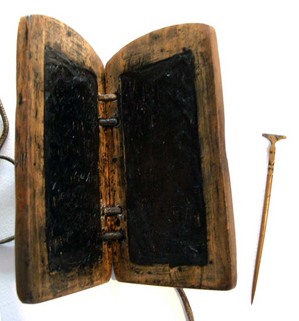
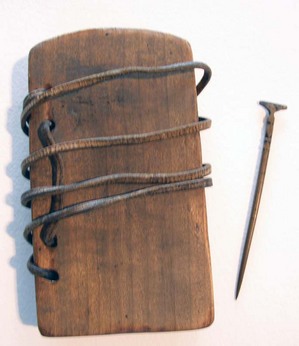
“A diptych is a sort of notebook, formed by the union of two tablets, placed one upon the other and united by rings or by a hinge. These tablets were made of wood, ivory, bone, or metal. Their inner surfaces had ordinarily a raised frame and were covered with wax, upon which characters were scratched by means of a stylus. Diptychs were known among the Greeks from the sixth century before Christ. They served as copy-books for the exercise of penmanship, for correspondence, and various other uses”. (See the Catholic Encyclopedia entry: [http://www.newadvent.org/cathen/05022a.htm])

Wax coated tablets (either singularly or in bound diptyches) provided an inexpensive, portable, and reusable writing surface. Today, we say “start with a clean slate,” after the clerics who would clear the wax surface of their tablets using the flat top of the writing stylus.

The wood diptych and bronze stylus in graphic arts measures 9.5 x 17 x 9.5 x 2 cm with four holes in each tablet bound together with a leather strap. It is assumed that our first curator, Elmer Adler, had this made for teaching.

For more on the history of writing, see Bernhard Bischoff (died 1991), Latin Palaeography: Antiquity and the Middle Ages (Cambridge; New York: Cambridge University Press, 1990). Firestone Z114 .B5713 1990

Louis Prang, 1824-1909

| No Comments
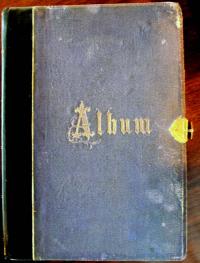
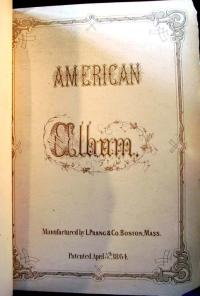
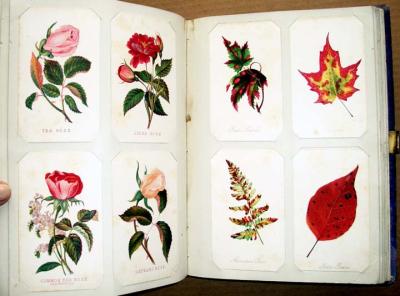
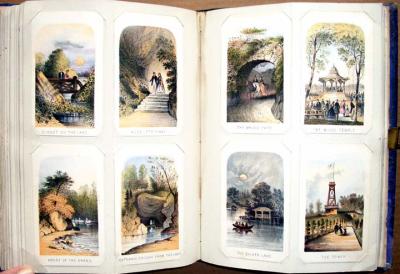
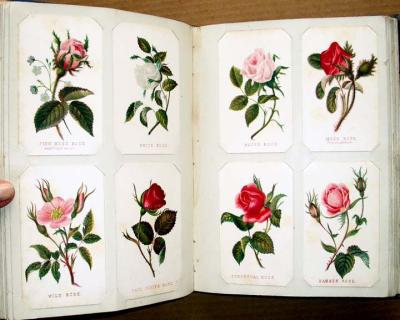
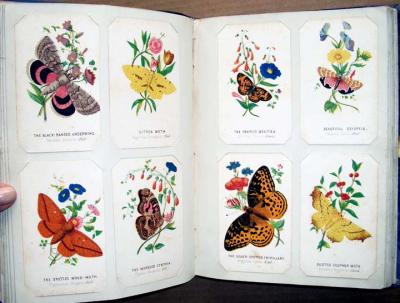
Between 1864 and 1876, the American printmaker Louis Prang (born in Poland, 1824-1909) issued a series of collectable albums, offering examples of his company’s brilliant chromolithographs, or Prang’s Chromos, as they were called. The cards were issued in sets of twelve, presented together on double page spreads as seen here. This album contains twelve scenes each of the Hudson River, Central Park, birds, ferns and mosses, leaves, roses, butterflies, fruit blossoms, wild flowers, and pansies.

Chiaroscuro watermark

| No Comments

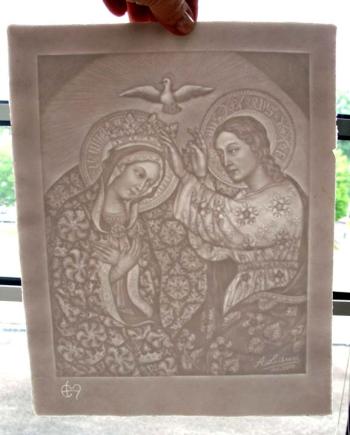
This sheet of handmade paper comes from the Fabriano Paper Mill in Milan. In regular light, it looks like a blank sheet but when you hold it to the light, the watermark becomes visible. The image, which is a reproduction of Gentile da Fabriano’s “Coronation of the Virgin,” comes from the variations in thinness or thickness in the paper.

The watermark begins with the Italian artisan Annarita Librari carving the engraving in wax; a process that may take from five months to a year to complete. Copper dies (positive & negative) are made from the wax sculpture. The dies are pressed into a brass screen, which will form the papermaking mould. Then, tiny wads of screen must be stuffed and stitched invisibly into the mould as reinforcements in all the cavities, such as the forehead or cheeks.

We are fortunate to have acquired two examples of Ms. Librari’s work, one of which is seen here. To see Gentile da Fabriano’s original tempera and gold leaf panel, see: http://www.getty.edu/art/gettyguide/artObjectDetails?artobj=736

Light-and-shade watermark depicting the “Coronation of the Virgin” by the Renaissance painter Gentile da Fabriano (Milan, Fabriano Paper Mill, 2006). Graphic Arts GAX 2010- in process.

Grabhorn Press ephemera

| No Comments

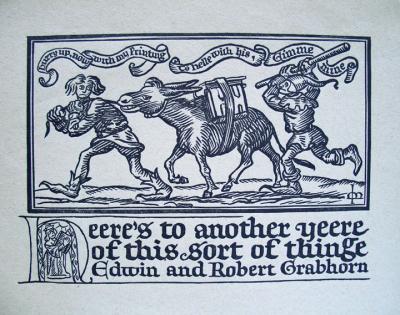
This new years card turned up in our collection of fine printing and ephemera from Grabhorn Press. Note the text: Hurry up now with my Printing. To helle with his, Gimme mine. Heere’s to another yeere of this sort of thinge.

The Grabhorns—Edwin, Robert, Jane, and Mary—moved from Indianapolis to San Francisco in 1919 where they renamed their printing shop “Grabhorn Press”. They produced a wide variety of materials, including limited edition books, pamphlets, cards, and any other type of letterpress printing their customers ordered. The most famous project may have been a handset edition of Walt Whitman’s Leaves of Grass, published by Random House in 1930 (Graphic Arts GAX Oversize 2007-0343Q). Grabhorn Press officially closed in 1965.

Fine Press Printing Ephemera Collection, 1898-2010 (bulk 1924-1948): Finding Aid GC186, Box 2. From the Grabhorn Press collection of Myles Standish Slocum, class of 1909, presented by Isabel Shaw Slocum.

Reference book with added decoration

| No Comments

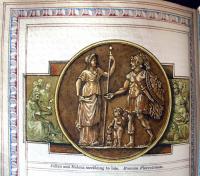
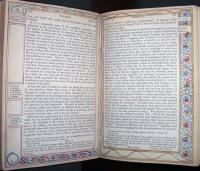
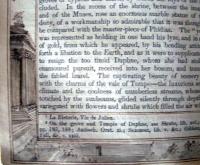
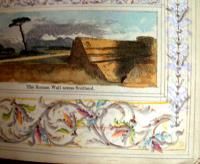
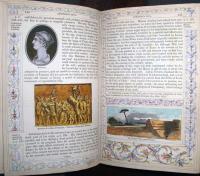
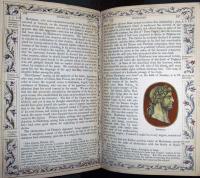
These are pages from a reprint of the Roman part of the History and Biography section of the Encyclopaedia Metropolitana, published in Glasgow 1853. A dry book? This copy has been carefully decorated by a reader in the early twentieth century with original borders and illustrations on more than fifty of its pages.

Encyclopaedia Metropolitana or System of Universal Knowledge... (Glasgow: Richard Griffin and Co., 1853). Graphic Arts GAX 2010 -in process.

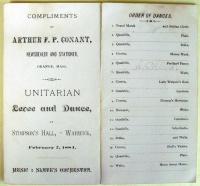
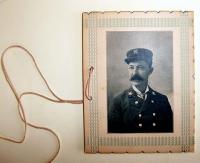
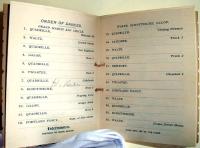
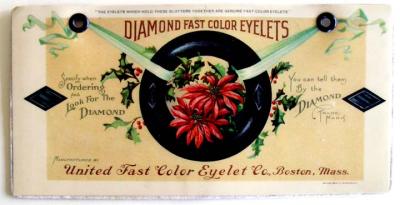
Is Your Dance Card Full?

| No Comments

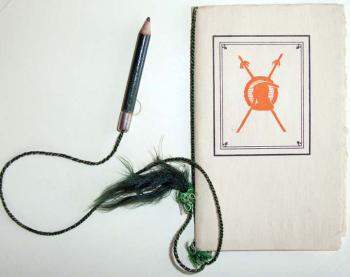
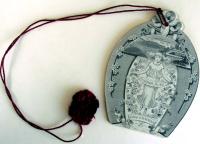
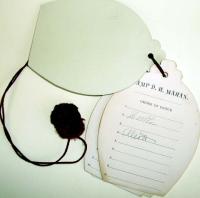
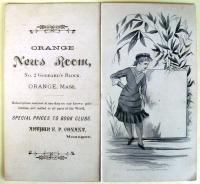
Here are a few examples of nineteenth- and early twentieth-century dance cards from our ephemera collection.

Advertise with blotter paper

| No Comments

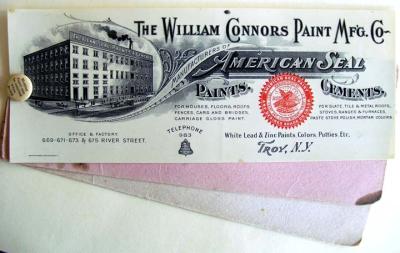
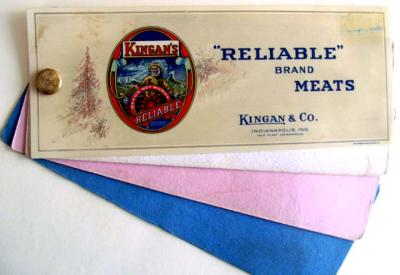
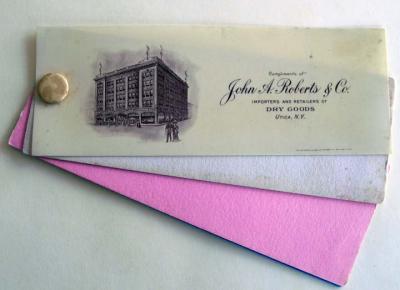
Many years ago, when writing was done with a pen and liquid ink, soft sheets of unsized paper were used to blot the excess ink from the page. During the nineteenth century, the ubiquitous blotter packet was quickly recognized as an advertising opportunity for local companies. Michael Twyman writes “The advertising blotter, effectively a desk-top trade card and year-round promotion piece, remained in general use until the advent of the ball point pen, which in the period 1945 to 1960 progressively replaced the steel rib and liquid inks” (Encyclopedia of Ephemera, 2000).

Early blotting paper was grey and coarse but during the nineteenth century, a higher quality paper was used in a variety of colors. Pink was most common due to the use of turkey and cotton rags, which resisted bleaching. Queen Victoria is said to have used a red blotting paper but we don’t know for sure because each sheet was carefully destroyed. Graphic Arts, Ephemera Collection.

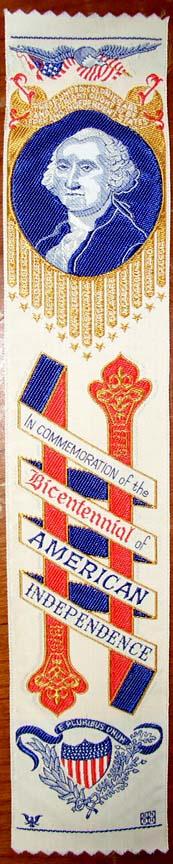
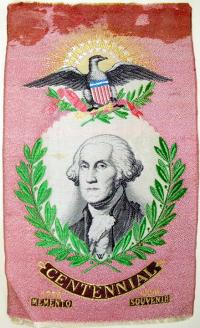
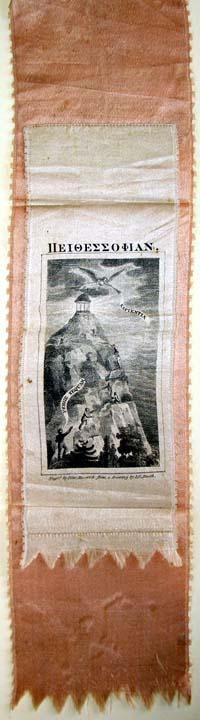
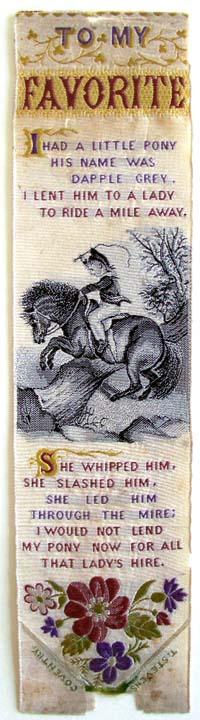
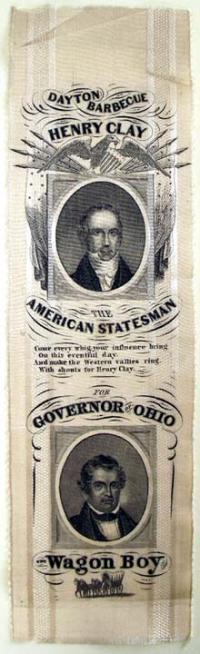
Stitched silk bookmarks or Stevengraphs

| No Comments

Sewing Machines and the World's Fair

| No Comments

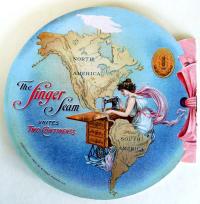
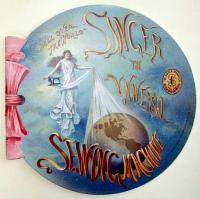
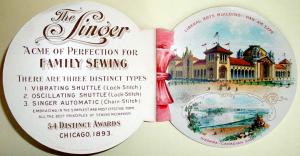
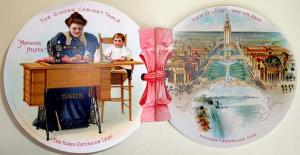
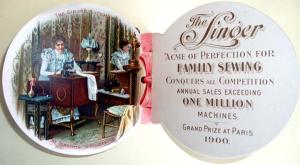
All Over the World: Singer, the Universal Sewing Machine (New York?: Singer Manfg Co., 1901). Graphic Arts GC149 Ephemera Collection, Booklets

For the Pan-American Exposition of 1901 in Buffalo, New York, the Singer Manufacturing Company printed this eight page booklet to advertise their products. Scenes from the World’s Fair were interspersed with vignettes featuring sewing machines. Here are a few of the photo-lithographed pages.

Printed by the weird sisters

| No Comments

In 1902, the Irish carpet designer Evelyn Gleeson (1855-1944) wrote to Elizabeth Yeats (1868-1940) and her sister Lily (1866-1949) in London. She persuaded them to return to Dublin and join her new women’s arts and crafts cooperative. Evelyn taught girls to weave tapestries and rugs, Lily oversaw embroidery, and Elizabeth established a fine press. They named it the Dun Emer Guild, after the nearby village of Dundrum.

Elizabeth’s first book was a collection of poems by her brother, William Butler Yeats, entitled In the Seven Woods. W.B. wrote an introduction mentioning that the book was “finished the sixteenth day of July, in the year of the big wind, 1903.”

When James Joyce wrote Ulysses (1920), he commented on the Yeats family business and the weird sisters:
Haines sat down to pour out the tea.
—I’m giving you two lumps each, he said. But, I say, Mulligan, you do make strong tea, don’t you?
Buck Mulligan, hewing thick slices from the loaf, said in an old woman’s wheedling voice:
—When I makes tea I makes tea, as old mother Grogan said. And when I makes water I makes water.
—By Jove, it is tea, Haines said.
Buck Mulligan went on hewing and wheedling:
—SO I DO, MRS CAHILL, says she. BEGOB, MA’AM, says Mrs Cahill, GOD SEND YOU DON’T MAKE THEM IN THE ONE POT.
He lunged towards his messmates in turn a thick slice of bread, impaled on his knife.
—That’s folk, he said very earnestly, for your book, Haines. Five lines of text and ten pages of notes about the folk and the fishgods of Dundrum. Printed by the weird sisters in the year of the big wind.

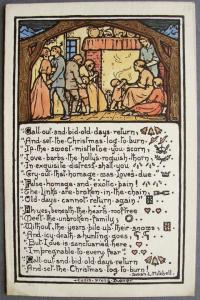
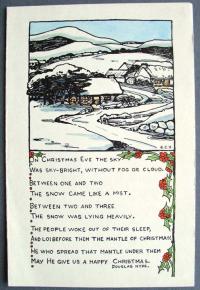
The Yeats sisters eventually split from Gleeson, renaming their operation Cuala Press (pronounced Cool-a), which continued until 1946. Besides the books, Cuala also printed ephemera including Christmas cards, Easter cards, bookplates, calling cards and broadsides. These are a few examples from graphic arts collection.

For more information, try Boston College’s website: http://www.bc.edu/libraries/newsletter/2008fall/cuala/index.html ;
Gifford Lewis, The Yeats Sisters and the Cuala (Blackrock, Co. Dublin: Irish Academic Press, 1994). Firestone Library Z232.C962 L49 1994
and the RBSC exhibition Unseen Hands: Women Printers Binders and Book Designers: http://infoshare1.princeton.edu/rbsc2/ga/unseenhands/printers/yeats.html
Moskovskie Vedomosti supplements

| No Comments

Graphic Arts recently acquired thirty-two announcements or fliers inserted as advertising supplements in the Moskovskie vedomosti (Moscow News), one of Russia’s largest newspapers. They include announcements of bull and bear baiting, lottery results, horse auctions, new medicines, mechanical theatricals, and new books, ranging in date from 1820 to 1835. While issues of the newspaper have been archived and microfilmed, these supplements were often discarded and so, have become rare ephemera sheets.

Moskovskie vedomosti was established by Moscow University in 1756 and ran continuously for over 150 years. The newspaper began by publishing once a week, went to twice a week in 1812, and three times a week in 1842. It was closed by the Bolsheviks on November 9, 1917, two days after the October Revolution.

Eight of the notices are illustrated with woodcuts, as seen here. Several exhibitions and public performances are noted, including a Moscow French theater show featuring horse-riding, drumming, and gymnastics. A performance of the mechanical theater of Kuparenko (Iordache Cuparencu) and Krames is announced, where their newest automated instrument, the “buzuton” would be seen. A fight between a wild Black Sea bull and the bear Evil Makrida was advertised on March 12, 1833, to which the audience was invited to bring their own dogs to participate if the bear was not killed during the performance.

How the cover of "Scribner's Magazine" was printed in 1896

| No Comments
Final chromolithograph

First stone

Scribner’s Magazine, launched in 1887, is credited with being the first magazine to include color illustrations. Here is a progressive set of proofs for the color cover.

Second stone

Third stone

Fourth stone

Fifth stone

Sixth stone

Seventh stone

Eighth stone

Ninth stone

Metamorphosis cards

| No Comments

The Chinese Question Solved (New York: Donaldson Brothers, ca. 1882). Lithography. Graphic Arts GA2010- in process

This metamorphosis or transformation card is an advertisement for the Peerless Wringer washing machine, printed in the 1880s by the Donaldson Brothers based in the Five Points (lower Mulberry Street) in New York City. It features Dennis Kearney (1847-1907), an Irish immigrant who settled in San Francisco. The charismatic Kearney was the leader of the Workingmen’s Party of California, whose platform announced, “The Chinese laborer is a curse to our land, is degrading to our morals, is a menace to our lives, and should be restricted and forever abolished, and the Chinese must go.”

Their efforts resulted in the Chinese Exclusion Act, signed into law on May 8, 1882. Chinese immigration was suspended for ten years, including Chinese “skilled and unskilled laborers and Chinese employed in mining” already settled and working in the United States.

On the card, Kearney is seen enticing a Chinese laundry worker named Ah Sin (after Bret Harte’s poem “The Heathen Chinee”) to insert his queue (braid) into the modern washing machine. The text reads, “‘What makee dis?’ said bland Ah Sin. Said Dennis, ‘Put your pig-tail in.’” The lifted flap shows Ah Sin caught in the wringer and finishes the verse, “Ah Sin Obeys! Though rather slow! The Question’s solved, Chinese must go.”

Donaldson Brothers printing company was established by George, Frank, John, and Robert Donaldson in 1872. Their high-speed steam presses produced, among other things, trade and advertising cards with bright chromolithographed images in large quantities. The Donaldsons merged with the American Lithographic Company in 1891 to form one of the largest commercial printing company in New York.

Hancock. Hancock. Cock-a-doodle-doo (New York, privately printed, 1880). Lithography. Graphic Arts GA 2010- in process

This transformation book was produced for the 1880 presidential campaign of Republican James A. Garfield (1831-1881), running against the Democrat Winfield Scott Hancock (1824-1886). Garfield was a fervent abolitionist. This card not only predicts Hancock’s failure, depicting him as a cock that looses his feathers, but accuses him of racism in the verse on the back. In his campaign, Garfield used this slogan, “Hancock. Hancock. Cock-a-doodle-doo. Hancock. Hancock. Boo-Hoo-Hoo.”

It is curious to find the copyright owned by George H. Hanks, who, in the 1860s, was a Colonel of the 18th Infantry, Corps d’Afrique (a Union corps composed entirely of African-Americans) and later became Superintendent of Negro Labor. I have not found any record of Hanks’s role in Garfield’s campaign.

Black Panthers

| No Comments

Thanks to the Chair of Princeton University’s Center for African American Studies, Eddie Glaude, Jr., we have been able to acquire this wonderful 1968 poster: Bobby. Huey. Political Prisoners of USA Fascism (San Francisco: Ministry of Information Black Panther Party, 1968). Poster 27 1/2 x 23 1/4 inches. Graphic Arts GA 2010. in process

Launched in the fall of 2006, the Center for African American Studies (CAAS) expands upon the initiatives begun by the Program in African American Studies at Princeton University. Since its founding in 1969, the program has offered an interdisciplinary certificate that has allowed students to draw on the insights and techniques of various disciplines in an effort to understand the experiences, history and culture of African-descended people. The new center will build upon that earlier vision and extend its reach broadly across the campus and throughout the curriculum. http://www.princeton.edu/africanamericanstudies/

Power to the People (California, ca. 1970). Red felt banner, 30 x 12 inches. Graphic Arts GA 2010 -in process.

In 1966, Robert George “Bobby” Seale (born 1936) and Huey Percy Newton (1942-1989) founded the Black Panther Party for Self Defense in Oakland, California.

The BPP differed from other groups with its message of “revolutionary intercommunalism” - essentially a socialist way of approaching issues within a community, where all shared in the responsibility of building the community. They also developed survival programs, where social institutions were developed within the community itself to benefit the community without seeking relief from outside organizations or agencies. The Ten-Point Program formed the foundation of ideology for the Black Panther Party; it became the list of demands of the party and the goals of the struggle to regain their Black communities.
Quoted from: http://www.pbs.org/hueypnewton/people/people_seale.html
For more information, see: San Francisco State: on strike / a film from California Newsreel (San Francisco, CA: California Newsreel, [1998]) Humanities Resource Center (VIDL): Video Coll. East Pyne VCASS 439
Not directly related but also of interest, this conference is coming up soon: http://www.librarycompany.org/africanamericanprint/
Early African American Print Culture in Theory and Practice
Philadelphia, March 18-20, 2010

The Shinplasters of 1837

| No Comments
Treasury Note, [1837]. Lithograph. Designed by Napoleon Sarony (1821-1896) and published by H.R. Robinson, New York. Graphic Arts GC2010- in process

This is a parody of the “shinplasters” or worthless paper money issued by banks leading up to the U.S. Panic of 1837.

Although President Andrew Jackson (1767-1845) had been able to pay off the national debt in 1835, the surplus cash was distributed by state governments only in paper notes. Before leaving office, Jackson issued the Specie (coin) Circular, declaring that the Treasury would not accept these paper notes. By 1837, the new president, Martin Van Buren (1782-1862), was faced with a national panic.

Sarony’s original satirical “Treasury Note” had a central panel framed by panels on either side. In the center is a winged chimera with the head of Van Buren riding a wagon, labeled Treasury Department, driven by John Calhoun (1782-1850). They are pulled by men rather than horses and roll over the bodies of others as they rush to Wall Street.

On the left is an image of Jackson dressed as a woman saying “More glory.” Princeton’s copy is missing the section on the right, possibly removed through censorship because of the graphic nature of the design. It shows an ass with Jackson’s face excreting “mint drops” collected by a monkey with the head of Van Buren.

The text of the treasury note states:

“We promise to Pay out of the joint Fund of the United States Treasury Seven Years after it is convenient the Sum of Seventy Five cents Payable at their Office.”

Read more: Harry Twyford Peters (1881-1948), America on Stone: the Other Printmakers to the American People (Garden City, N. Y.: Doubleday, Doran, 1931), p.338. Graphic Arts: Reference Collection (GARF), Oversize NE2303 .P4q

1 2 3 4 5 6 7

Recent Comments

  • Matt SCOVILL: I have the complete "bookplates in Japan" box. I am read more
  • Daniel Joseph Bobroff: April 30, 2013 To Princeton University: This is a Plaintiff read more
  • Ana Paula: Nice! I wish I could be there to enjoy it! read more
  • Nora Lin: What a shame! Those rooms were inspirational, not only on read more
  • pepesel: Why did they have to close it? That seems shortsighted. read more
  • Joshua: This man is my great-great grandfather. I hope to visit read more
  • Lewis Jaffe: You can also see a wide range of bookplate styles read more
  • Elizabeth Van Riper: Thank you for sharing this wonderful tribute to Ulli Steltzer. read more
  • Jonathan Greene: I am trying to reach any member of Eric Sackheim's read more
  • eric adler: I am interested in the issue #2 31 Aug 1919. read more