Recently in Photography Category

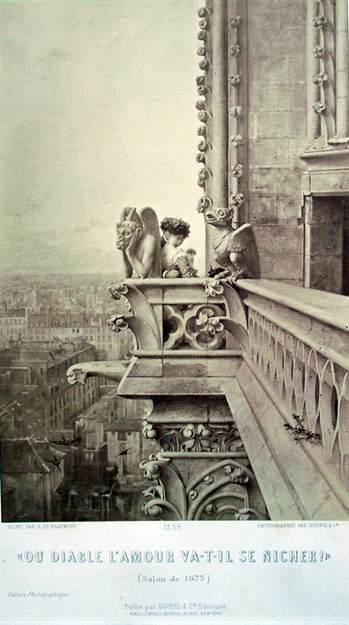
Où diable l'amour va-t-il se nicher!

| No Comments
ou diable lamour.jpg
Photographer unknown, after a painting by Édouard de Beaumont (1821-1888) after a photograph by Charles Nègre (1820-1880), Où diable l’amour va-t-il se nicher! 1873. Albumen silver print. Graphic Arts GA2012- in process

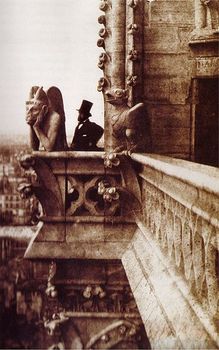
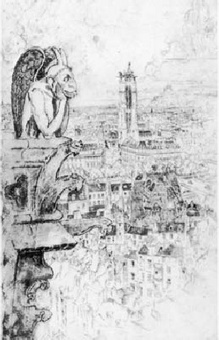
376px-Henri_Le_Secq_near_a_Gargoyle.jpgCharles Nègre (1820-1880) The Vampire, 1853 (c) Musée d’Orsay
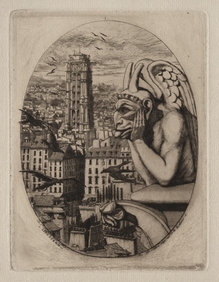
1940.889.jpgCharles Meryon (1821-1868), Le Stryge, 1853. (c) Cleveland Museum of Art
318-02c45db35d.jpg Joseph Pennell, Le Stryge, 1893.
(c) Art Institute of Chicago
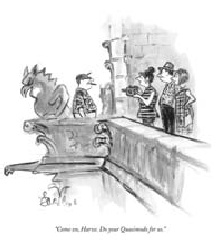
354-191145a9d0.jpgEdward Frascino, “Come on Harve. Do your Quasimodo for us!” 15 July 1972. (c) The New Yorker

In 1844, Édouard de Beaumont (1821-1888) was one of several artists asked to illustrate a new edition of the novel Notre-Dame de Paris by Victor Hugo (1802-1885). First published in 1831, the book was an enormous success and the 1844 edition was to be a sumptuous new printing with two dozen new engravings.

The popularity of Hugo’s book not only resulted in multiple editions in many languages but also in the restoration of the Cathedral of Notre Dame itself. Beginning in 1845 and lasting for twenty-five years, the controversial rebuilding included the addition of the gargoyles on the Galerie des Chimères.

Many visual artists were inspired to create images of the structure, using in particular the gargoyles as romantic icons. Charles Nègre (1820-1880) and Henri Le Secq (1818-1882) playfully photographed each other on the north tower in 1853 and Nègre’s image remains a favorite in museum collections around the world. Views of “The Vampire” looking out over the city of Paris turned up everywhere, including an etching by Charles Meryon and later, a painting by Winslow Homer.

Twenty years after Nègre made his photograph, Beaumont was inspired to revisit the theme in a painting he called “Où diable l’amour va-t-il se nicher!” Historians have translated this enigmatic title several ways, offering “Where the devil will love nest,” “Where will Devil Love nest,” or “Where the hell is love going to nest!” among other variations. Rather than drag his easel up all those stairs, Beaumont simply copied the major portion of the photograph exactly, substituting only the portrait Le Secq for a couple in love (the woman in a startlingly green dress).

Beaumont’s painting was not only accepted into the Salon of 1873 but won second prize. An engraving of the painting was made by Léon Gaucherel and the French firm Goupil et Cie. had both an albumen photograph and a woodburytype created. They first sold them as part of their series Galerie photographique and then, published the woodburytype in their sumptuous journal Galerie contemporaine littéraire, artistique (v. 8, 1884) along with a portrait of the artist and several other paintings.

For more variations on the Vampire theme, see the wonderful study by Michael Camille, Gargoyles of Notre Dame: Medievalism and the Monsters of Modernity (Chicago: University of Chicago Press, 2009). Marquand SA NA3549.P2 C36 2009


Jean-Martin Charcot's Visual Psychology

| No Comments
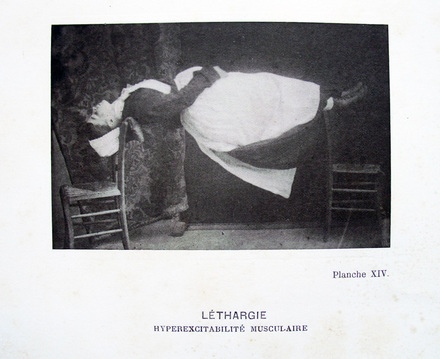
iconographie14.jpg
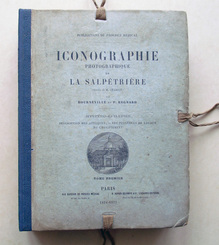
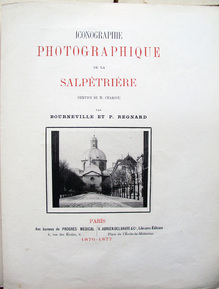
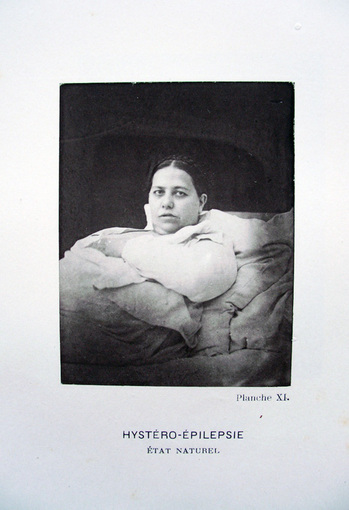
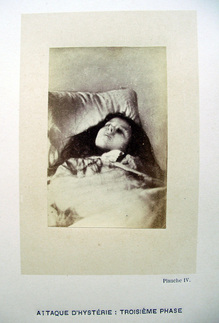
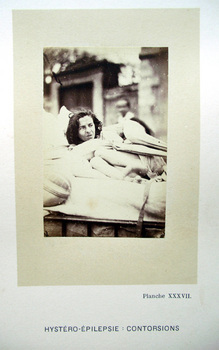
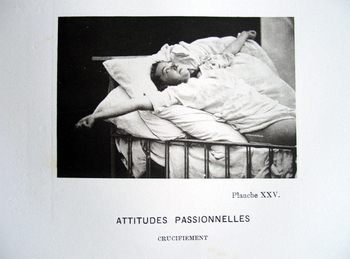
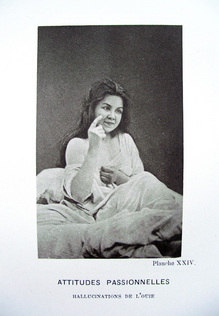
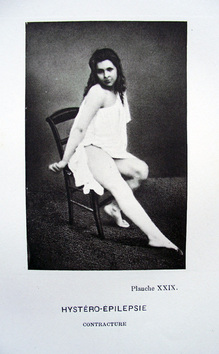
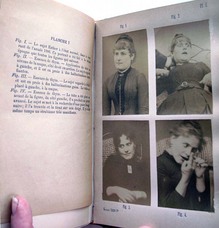
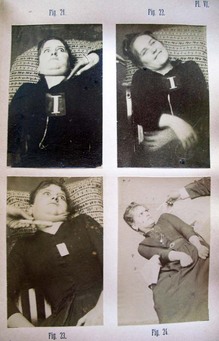
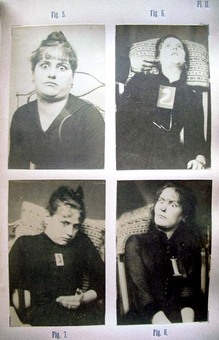
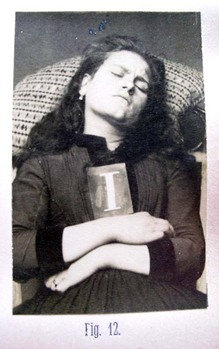
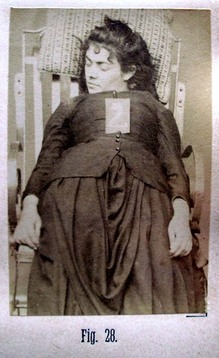
Désiré Magloire Bourneville (1840-1909) and Paul Regnard (1850-1927), Iconographie photographique de la Salpêtrière. Service de M. Charcot (Paris: Adrien Delahaye & Co., 1876-1877, 1878). Graphic Arts Collection GAX 2012- in process

iconographie1.jpg
iconographie11.jpg

As a young professional Jean-Martin Charcot (1825-1893) served his internship at Salpêtrière, a women’s hospital in Paris used as more of “a warehouse for female outcasts: women who were mad, violent, crippled, chronically ill, mentally retarded, unmarried and pregnant, or simply old and poor.” Charcot called it “that grand asylum of human misery.” [Medical Muses, 2011]

In 1862, Charcot returned to Salpêtrière as chief physician of medical services and transformed it. During his tenure, the hospital grew to house more than 5,000 patients in 100 buildings; the largest institution of its kind in Europe. It had its own farm, bakery, and by 1878, a well-equipped photography studio. (Bellevue Hospital in New York City also had a full photography department.)


iconographie2.jpg
iconographie10.jpg
iconographie7.jpg

Asti Hustvedt writes, “Charcot … brought hysteria, hitherto marginal, into the mainstream. He legitimized the disease by defining it as an inherited neurological disorder, not madness or malingering.” Martin Kemp noted that the doctor’s work was “an unrivaled attempt to create what may be called ‘visual psychology’ —in which imagery and environments played a central role in diagnosis, recording, clinical suggestion, treatment and the design of the patients’ surroundings.”

Charcot was deeply influenced by his predecessor at Salpêtrière, Guillaume-Benjamin Duchenne de Boulogne who published his treatise Mécanisme de la physionomie humaine in 1862. Six years earlier, Duchenne had begun photographing his patients, thanks to the help of Adrien Tournachon (Nadar’s brother), as a form of “orthography of the physiognomy in motion.” Charcot began to do the same.

iconographie3.jpg

In 1875, he selected as an intern a young psychiatry student named Désiré-Magloire Bourneville, who was also a journalist. Bourneville wrote extensively for medical journals and eventually, published two of his own. Under Charcot, he learned to keep extensive medical histories on the patients, many of which were later published in Iconographie. It is thanks to Bourneville that Charcot’s many accomplishments became known both in his own time and today.

iconographie8.jpg
iconographie4.jpg

Another intern, Paul Regnard, was hired, in part, for his ability to make photographs. Charcot hoped these would provide visual evidence to support his conviction that hysteria was a real organic disease with particular symptoms. In 1882, photographer Albert Londe (1858-1917) was hired as a chemistry assistant and before long, took over the running of the photography laboratory. Londe published his own study in 1893 entitled La photographie médicale: application aux sciences médicales et physiologiques, dedicated to Charcot.

iconographie9.jpg

“The photographs in the Iconographie haunt its pages,” writes Hustvedt, “[they are] the ghosts of women who refuse to be reduced to medical illustrations.”


See also:
Asti Hustvedt, Medical Muses: Hysteria in Nineteenth-Century Paris (New York: W.W. Norton & Co., 2011). Firestone RC339.52.C453 H87 2011

Ann Thomas, Beauty of Another Order: Photography in Science (New Haven, CT: Yale University Press in association with the National Gallery of Canada, Ottawa, 1997). Marquand Library (SAPH): TR692 .T466 1997

National Photo and Lantern Slide Color Company

| No Comments
colors1.jpg

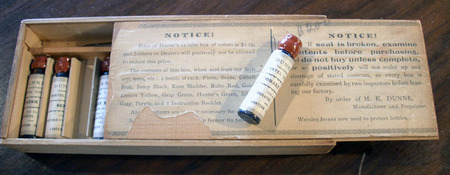
Dunne’s Transparent Pastel Colors … For All Photographs, Pictures, and Lantern Slides ([New York]: M.K. Dunne, [ca. 1910]. Graphic Arts GAX 2012- in process

Mary Katharine Dunne established the National Photo and Lantern Slide Color Company at 2021 Fifth Avenue in New York City. From here, she not only sold boxes of “Dunne’s Color” but also taught the hand coloring of photographs. In the June 1910 issue of The Photo-Miniature a short note asks the reader:

“Are you interested in the coloring of photographs and lantern slides? If you are, then you should know Mrs. M.K. Dunne, of the National Photo and Lantern Slide Color Company …Mrs. Dunne is a charming Southern woman, expert in her art, with a great big enthusiasm for the beauties of color in nature and American scenery. I thoroughly enjoyed my hour with her and, as one result of the interview, can advise readers to invest, say ten dollars, in the Dunne Correspondence course of Photograph coloring and the necessary coloring outfit, as the simplest and surest way of getting a practical mastery of this special branch of work. For those who really want to know, this expenditure is abundantly worth while. The Dunne color outfits are sold by dealers everywhere in the United States, Canada, and Great Britain, but Mrs. Dunne will gladly answer any inquiries about instruction, if those who write her will mention this magazine as an introduction.”

Birdmen of the World United

| No Comments
bird men7.jpg
bird men2.jpg
bird men3.jpg
bird men6.jpg

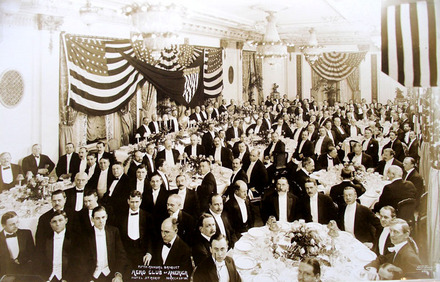
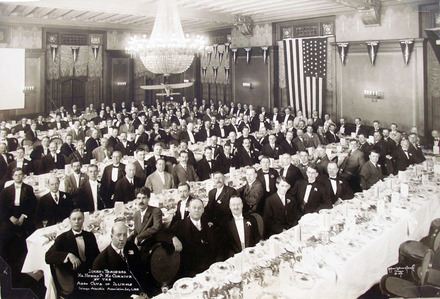
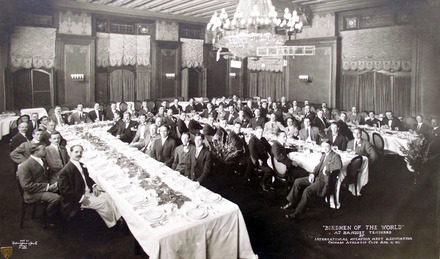
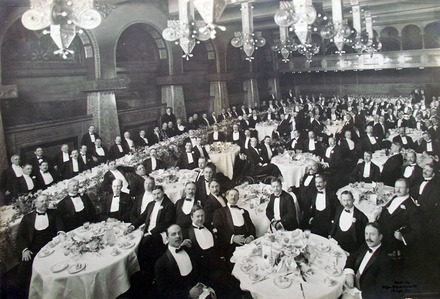
1910 was a pivotal year for aviation enthusiasts in the United States. The New York Times ran three separate stories outlining the organization of the first Aero Club of America in 1906 and the subsequent controversies that led to the reorganization of the Clubs. Three different conventions were held in New York City in 1910 among aeronautical clubs and societies, resulting in the formation of The National Council of Affiliated Clubs of the Aero Club of America.

In his January 12 Times article “Growth of Aviation Due to Aero Club,” Charles H. Heitman wrote “…a number of experimenters in this country were beginning to show encouraging results, but their progress was necessarily slow.”

“The public regarded anyone interested in aeronautics as a special kind of maniac, and there was absolutely no encouragement for the experimenter or no recognition for the work he accomplished. …In the summer of 1905 the subject was discussed with great interest by members of the Automobile Club of America; it was realized that if these workers could be brought together in one body where they could compare notes and exchange the knowledge gained by their efforts it would insure much more rapid progress; it was also suggested to start a club, such as the Aero Club of France, to offer facilities for its members to make ascensions, &c.: aeronautics as a sport would also benefit very largely, and as a result the Aero Club of America was born.”

bird men5.jpg

“Little did its originators imagine that what they looked upon as a mere experiment would grow with leaps and bounds and become the powerful institution it is to-day.”

An unsigned article, probably also by Heitman, followed on June 23, 1910 entitled “National Aero Body Formed After Fight.” This piece recorded that at the first meeting of the newly formed organization “thirty-six clubs were represented, with a total membership of more than 3,300 individuals.”

bird men8.jpg

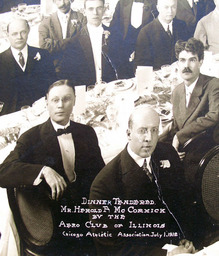
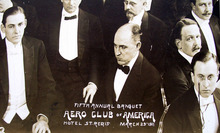
Seen here are photographs of the annual dinners of the Aero Clubs of America found in the collection assembled by Harold Fowler McCormick, Class of 1895, and given to Princeton University by Alexander Stillman of Chicago, a relative of the McCormick family. These are now housed in the Graphic Arts collection.
Providing WiFi in 1918

| No Comments
fourth liberty2.jpg
fourth liberty1.jpg
fourth liberty3.jpg

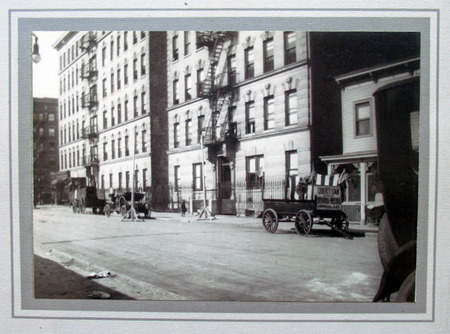
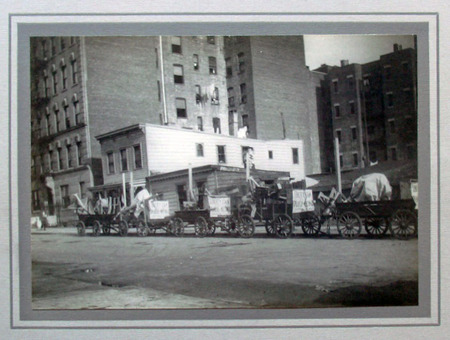
“Memorandum. Portable Exhibition Outfits for Motion Pictures.

During the Fourth Liberty Loan Campaign in connection with the Outdoor activities of the Speakers Bureau, motion pictures were exhibited at night on the streets as part of the regular Outdoor meetings.

It was necessary to provide a movable platform on which could be mounted a motion picture projection apparatus, the standards to support the motion picture screen and some means of providing an electric current for use in the lamp house.

On careful consideration it was decided that the light wagon type of trailers was best suited to this work, and arrangements were made with The Eastern Trailmobile Sales Co. #110 West 40th St., New York City, to supply the trailers for this work.

Such an arrangement provided a complete unit made up of projection apparatus, storage battery and motion picture screen all mounted upon the trailer, in such manner that it was only necessary to haul this equipment to the point where the meeting was to be held.

A full report on this matter has been made by the Speakers.

[Signed] H. L. Adams [October 1918]”

William Roe Howell, photographer

| 1 Comment
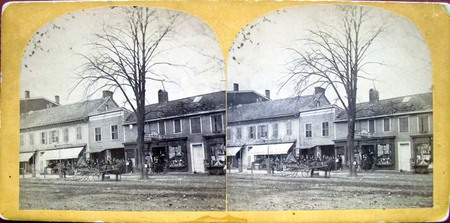
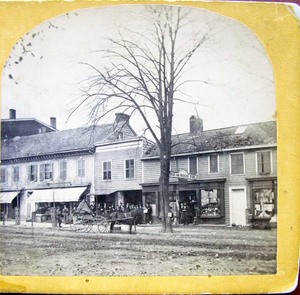
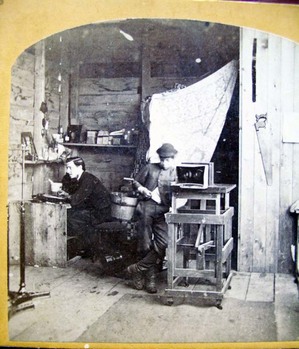
stereo princeton2.jpgWilliam Roe Howell (1846-1890), [Nassau Street], ca. 1870. Albumen stereograph. Graphic Arts collection GC131.
stereo princeton.jpg

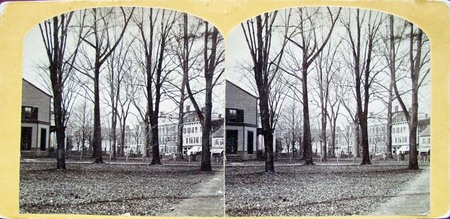
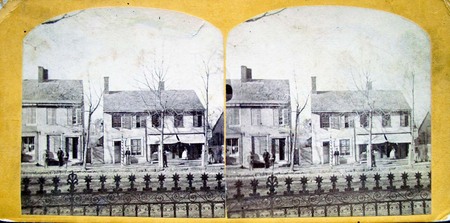
Among his many commissions, William Roe Howell (1846-1890) worked as senior class photographer for Princeton College 1869-1870 and 1872-1873. Melissa Johnson wrote, “The following notice in the October 1868 issue of the Nassau Literary Magazine announced the presence of William R. Howell (d. 1890) on campus as class photographer: ‘Photographer — The Seniors have chosen Mr. Howell, of New York City, to be their class photographer. He has erected a sky-light, and gone bravely to work to make 54 as good looking pictures as possible, while imitating nature sufficiently to secure a tolerable resemblance between picture and pictured.’”

stereo princeton3.jpg
stereo princeton4.jpg

“…Howell appears to have been very popular at Princeton, serving the Classes of 1869, 1870, 1872, and 1873. … Howell, like many photographers who traveled for their trade, used a portable photographer’s shanty in which to take and develop photographs. Photographers had long made use of portable darkrooms and studios.”

stereo princeton5.jpg
stereo princeton6.jpg

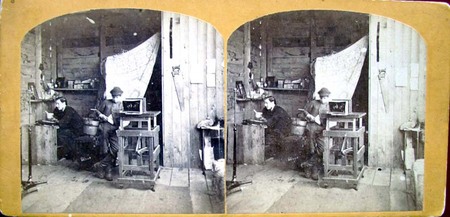
“…By the time Howell had finished erecting his studio on the Princeton campus behind East College (the present site of East Pyne), it was a building complete with skylight over the sitting-area. …The skylight of Howell’s shanty, on the side and roof of the building, allowed sufficient light for exposures made inside the otherwise windowless studio. Its interior is shown in a stereoscopic photograph taken by Howell ca. 1869-1870, revealing his work area. A young assistant sits by the camera, while a man we assume to be Howell sits at a desk working. The light coming in from the skylight is visible at the right side of the gallery.”

— Melissa A. Johnson, “Reflections on Photographing Princeton,” Princeton University Library Chronicle 60, no. 3 (spring 1999): 422-425. http://libweb5.princeton.edu/visualmaterials/pulc/pulcv60n_3.pdf

Visit to Hongkong in 1869

| 1 Comment
thomson6.jpg
thomson1.jpg

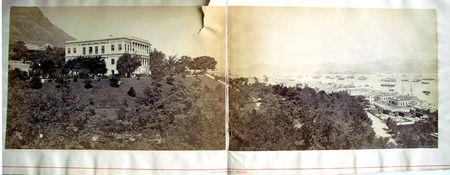
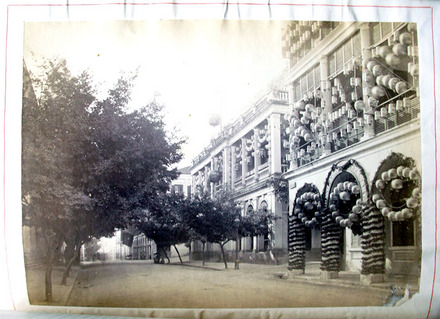
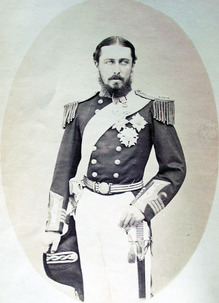
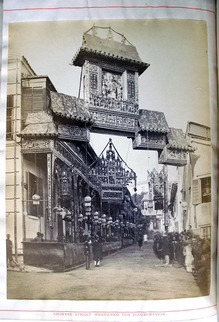
John Thomson (1837-1921) and Rev. William R. Beach, Visit of His Royal Highness the Duke of Edinburgh, K.G., K.T., G.C.M.G., to Hongkong in 1869: Compiled from the Local Journals, and Other Sources (Hongkong: London: Printed by Noronha and Sons, Government Printers; Smith, Elder and Co., 1869). Graphic Arts GAX 2011- in process.

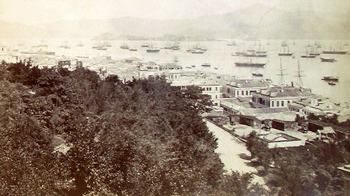
The Scottish photojournalist John Thomson was one of the first Western photographers to travel to the Far East. In 1862, Thomson left Edinburgh for Singapore, where he and his brother William manufactured optical and nautical instruments. While there, he also opened a photography studio, shooting portraits of the European visitors and native residents.

After a year back in Edinburgh, Thomson returned in 1868, this time settling in Hong Kong. Over the next four years, he traveled throughout the country, photographing the people of China and recording Chinese culture.

thomson2.jpg
thomson3.jpg

In 1869, His Royal Highness Prince Alfred, Duke of Edinburgh, sailed to the Far East in HMS Galatea (seen above). The Anglican Colonial Chaplain, William Beach, hired Thomson to provide photographs of the visit for a commemorative book, with the profits promised to the Building Fund for the new choir in St. John’s Cathedral, Hong Kong.

Thomson wrote: “He was the first English Prince who had roamed so far and wide … and who, according to the Chinese notion, had braved the dangers of the deep in order that he might, for once, feast his vision on the glories of the ‘Great Middle Kingdom.’”

thomson4.jpg

“… I well remember his landing. Ships of all nations vied in the splendour of their decorations; long lines of merchant boats guarded the approach to the wharf; and on a thousand native craft … swarming over the decks or clinging to the rigging of their vessels… . Nor can I forget the regret expressed by some at finding he was only a man and a sailor after all… . A different being, this, surely, from the offspring of their own great Emperor, who is brother of the Sun, and full cousin to the Moon, and on whose radiant countenance no common mortal may look and live.”— John Thomson, The Straits of Malacca, Indo-China and China (London: S. Low, Marston, Low, & Searle, 1875). Graphic Arts (GAX) 2006-2337N

Back in Scotland, Thomson’s images of China found wide distribution and earned him the nickname of ‘China’ Thomson. Near the end of his life, Thomson made plans to sell his 650 glass negatives to the Wellcome Historical Medical Museum but died before the sale could be completed. Eventually Henry Solomon Wellcome (1853-1936), the American-born pharmacist and philanthropist, bought the negatives from Thomson’s heirs.

See also:
John Thomson (1837-1921), Illustrations of China and Its People: a Series of Two Hundred Photographs (1873). Rare Books (Ex) DS709 .T475f

John Thomson (1837-1921), Spain (1876). Rare Books (Ex) 1521.286q

John Thomson (1837-1921), History and Handbook of Photography (1877). Firestone Library (F) TR149 .T513 1877

John Thomson (1837-1921), Street Incidents: a Series of Twenty-One Permanent Photographs (1881). Marquand Library (SAX) DA683 .T463 1881

John Thomson (1837-1921), Through China with a Camera (1898). Graphic Arts Collection (GAX) 2006-2368N

Brady's House of Representatives

| No Comments
brady house.jpg
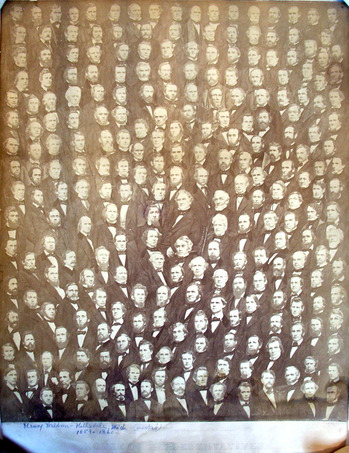
Mathew Brady (1822-1896), Composite of the Members of The United States House of Representatives, 1860. Salted paper print, Graphic Arts GA 2011- in process. Gift of Wm. B. Becker. [It’s just a shadow at the corners, nothing is wrong with the photograph]

In 1858, Mathew Brady opened a Washington D.C. gallery in Willard’s Hotel on Pennsylvania Avenue and 14th street. http://tinyurl.com/bradygallery. Built eleven years earlier, the hotel was both close to the White House and frequented by both northerners and southerners. Some called it the “Residence of Presidents.” Nathaniel Hawthorne said it was “more justly called the center of Washington and the Union than either the Capitol, the White House, or the State Department.”

It was from this location that Brady and his staff began to photograph the politicians and celebrities of Washington D.C., including the members of the Senate and the House of Representatives. When he finished capturing all the heads of the Thirty-Sixth Congress, Brady combined the individual portraits into two enormous panels measuring three by five feet. Then, he rephotographed them and sold large prints at $5.00 each. See the Senate photograph in an earlier post.

As the Southern states began to secede from the Union, Brady’s photographs were copied to wood engravings and published in magazines such as Harper’s Weekly and Frank Leslie’s Illustrated Monthly. Sales to Brady, however, were not good and he lost a great deal of money on this project.

For more information, see
Mary Panzer, Mathew Brady and the Image of History (Washington: Smithsonian Institution Press, 1997), Firestone TR140.B7 P36 1997

Jules Bernard Luys

| 1 Comment
luys7.jpg
luys6.jpg
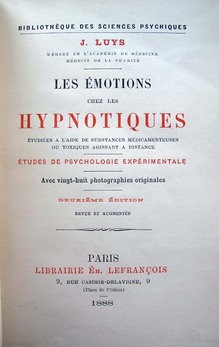
Jules Bernard Luys (1828-1897), Les émotions chez les hypnotiques, étudiées à l’aide de substances médicamenteuses ou toxiques agissant à distance (Paris: E. Lefraçois, 1888). Graphic Arts GAX 2011- in process
luys5.jpg
luys3.jpg
luys2.jpg
luys1.jpg

Jules Bernard Luys was a French neurologist who began practicing medicine in 1857, first with the Pitié-Salpêtrière Hospital, then to the Hôpital de la Charité. According to André Parent, writing for the Journal of Neurology (vol. 249, no.10, pp.1480-81), “Luys devoted the last period of his life to the study of hysteria and hypnosis. In doing so he became perhaps the most highly caricatured example of the fascination that hysteria exerted at the end of the 19th century, even upon individuals with a supposedly rational and scientific mind.”

“Luys imagined extravagant hypnosis experiments that were frequently performed during public sessions and attracted not only specialists but also le Tout-Paris. Most of Luys’ colleagues, however, were convinced of the scientific integrity of this courteous man whose foray into the mine field of hysteria cost him part of the scientific renown he took nearly forty years to acquire.”

Luys illustrated this book with 28 woodburytypes mounted four to a plate. Most of the photography was done by his son, George Luys (1870-1953), who was also a practicing physician.

See also:
Asti Hustvedt, Medical Muses: Hysteria in Nineteenth-Century Paris (New York: W.W. Norton & Co., 2011). Firestone Library (F) RC339.52.C453 H87 2011

The Free Acres Association

| No Comments
new jersey6.jpg
new jersey5.jpg
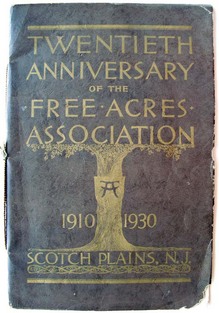
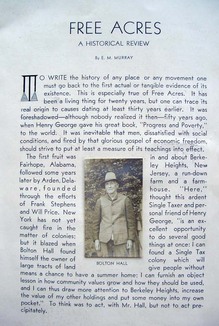
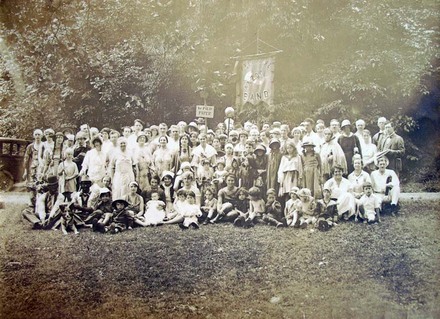
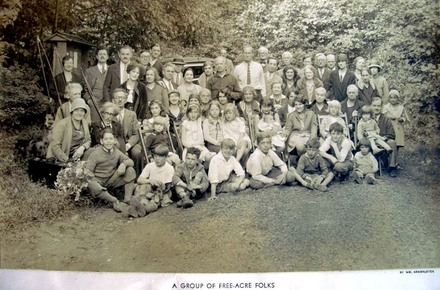
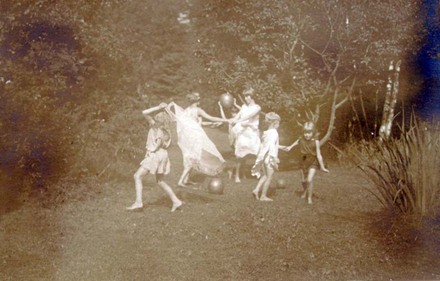
Twentieth Anniversary of the Free Acres Association, 1910-1930 (Scotch Plains, N.J., 1930). 9 mounted photographs by William Armbruster (1865-1955). Graphic Arts collection GAX 2011- in process

new jersey4.jpg

The community of Free Acres was founded on the ideals of Henry George, a 19th-century political economist. According to George, all land is a gift of nature and all people have an equal right to use the land and its fruits.

One of George’s followers, Bolton Hall (1854-1938) founded Free Acres in 1910. Originally just a social experiment, the community continues to thrive. Today, Free Acres is a seventy-five-acre wooded community of eighty-five households, located about 33 miles west of New York City within Berkeley Heights and Watching, New Jersey. People can own the houses on the lots they lease, but they can never own the land. All the land is held collectively by the community, along with a century old farmhouse and a spring-fed pool.

new jersey3.jpg
See http://www.freeacres.org/Content/PDF/GroupPhoto1930.pdf for a complete list of names of the Free Acres members seen here.

new jersey1.jpg

Goldie Burke, Pickles Martin, and Dynamite Murphy

| No Comments
boxers8.jpg

Al Delmar was a middleweight boxer from San Francisco. His first professional fight took place on June 23, 1920 against Earl Biddle. Delmar won this fight in a knock out and went on to win twelve more, losing seven, and had nine end in a draw.

Eddie McGovern, alias Iron Man, was a light heavyweight from San Francisco. He boxed from 1920 to 1932, winning sixty-two matches (thirty-four in a knock out), lost thirty-four, and finished in a draw thirty-four times.

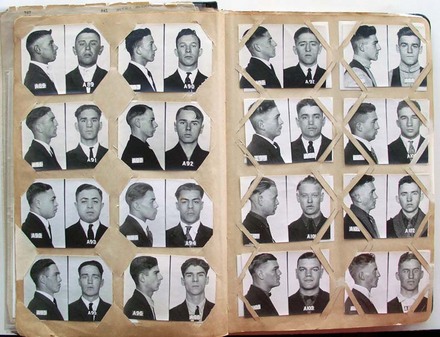
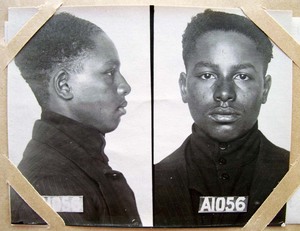
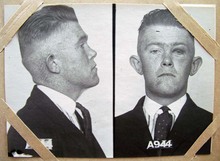
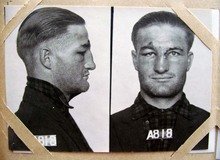
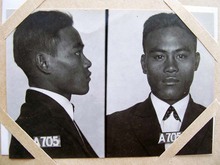
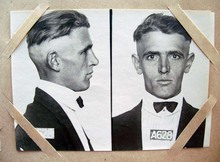
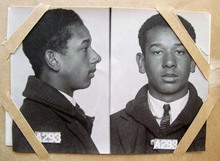
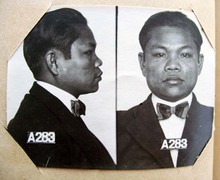
These are only two of the nearly 1100 boxers whose photographs are preserved in an album recently acquired by graphic arts. Each portraits is numbered in the negative and, happily, a previous owner has gone to the trouble of listing the names of the boxers who could be identified. Goldie Burke, Pickles Martin, and Dynamite Murphy are among the men represented in these oddly criminal-looking mug-shots.

boxers1.jpg
boxers2.jpg
boxers3.jpg
boxers4.jpg
boxers5.jpg
boxers6.jpg
boxers7.jpg

In the early 20th century, San Francisco was known as The Cradle of Fistic Stars, because of the number of boxers living there. Many began their training at the San Francisco Olympic Club, the oldest athletic club in the United State. It is curious that the use of photographic mug shots also began in San Francisco, where Chief of Police James Curtis established the practice in 1857.

Photographing Venus and Thebes

| 1 Comment
abney6.jpg

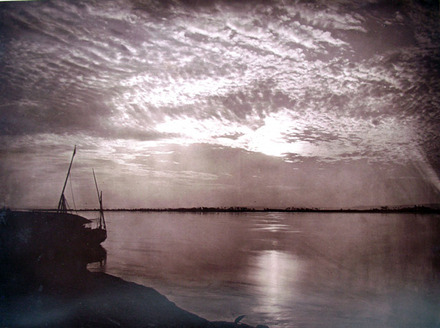
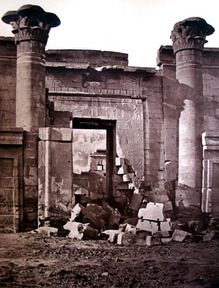
A Sunset at Thebes, negative 1874, woodburytype 1876

On June 8, 2012, the last transit of Venus (when the planet passes between the earth and the sun) will occur in our lifetime. This rare event takes place in pairs eight years apart separated by gaps of ~122 years. For our generation, this means 2004 and 2012. Before this, the last pair of transits took place in December 1874 and December 1882.

For the 1874 transit, the British Observatory sent five expeditions to different parts of the world; including Hawaii, the Mauritius Island, the Kerguelen Island, Cape Town, and Egypt. Charles Orde Browne led the party to Cairo, which included photographer William de Wiveleslie Abney (1843-1920).

abney2.jpg
abney5.jpg

According to the Oxford Dictionary of National Biography, Abney was educated at the Royal Military Academy at Woolwich and, after a brief service in Bombay, was stationed at Chatham in 1871. As assistant to the instructor in telegraphy at the School of Military Engineering, Abney was given a small laboratory and photographic darkroom.

abney10.jpg

By the end of that year, he published Instruction in Photography for Use at the School of Military Engineering and became an active member of the Royal Photographic Society of London. Thanks to the generous donation of David H. McAlpin, Class of 1920, we hold this and most of Abney’s other scientific studies.

The young officer’s work led directly to the formation of a new school of chemistry and photography in 1874, with Abney as assistant instructor. Then, at the age of thirty-one, he was asked to organize the photographic observation of the transit of Venus from Egypt.

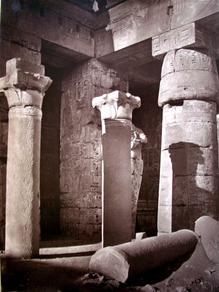
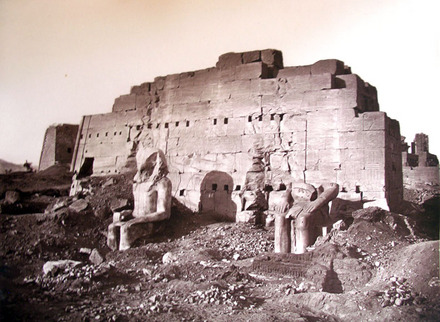
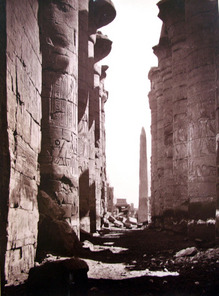
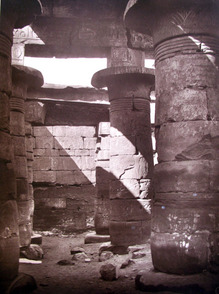
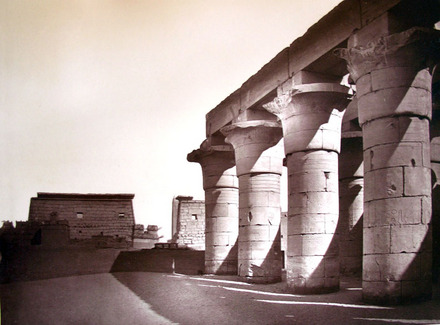
While in Egypt, Abney and his three assistants also created dozens of photographs not directly related to Venus, forty of which he later published in Thebes and its Five Great Temples (1876). A copy of Abney’s book with outstanding woodburytypes has been acquired by Princeton University.

abney8.jpg
abney9.jpg

In a letter sent to the London Photographic Society in 1875, Abney wrote, “…My chief work lay at Thebes, distant nearly 500 miles to the south of Cairo; and it was a matter of no small anxiety to me how I should transport all my instruments and observatory to that spot. The boats, or “dahabeaths” as they are called, would hardly have taken all unless I had engaged one which was out of all proportion to the passenger accommodation which I required.”

“…We started on the 25th October from Cairo, our baggage occupied three large trucks on the railway … On the 7th November we sighted Karnak just at sunset, and a glorious vision it was. The old ruins seemed like rubies set in the dark green of the palms which rose between us and them.”

“…We had taken out some ten dozen dry plates for solar work, which we had prepared at home, and began exposing them … I may mention one fact, viz., that dissolved dried albumen was used instead of white of eggs … On the day of the transit we exposed a plate about every one and a-half minute during the transit, beginning about twenty minutes after sunrise and finishing twelve minutes before internal contact.”

“As each plate was exposed it was passed into the dark room through a different aperture, taken out of the slide by a second sapper in the dark room, placed in its own groove, and the slide passed to be filled from the next box. I personally placed the slide in the photoheliograph, exposed each plate, taking up the time from my chronometer, and registered the number of the plate as shown on the back, together with the exact time of exposure.”

abney7.jpg

Abney’s photographs of Venus can be seen at National Maritime Museum, Greenwich. Here is one: http://www.nmm.ac.uk/server/show/conMediaFile.15732

William de Wiveleslie Abney (1843-1820), Thebes and its Five Greater Temples (London: Sampson, Low, Marston, Searle & Rivington, 1876). 40 woodburytypes and descriptive text on the Egyptian city and its monuments, including Karnak, Luxor, Medinet Haboo, the Memnonium, and the Goorneh Temple. Graphic Arts GAX 2011- in process. OCLC lists only eight other copies in the United States.

Colored Photography in 1848

| 1 Comment
willats color2.jpg

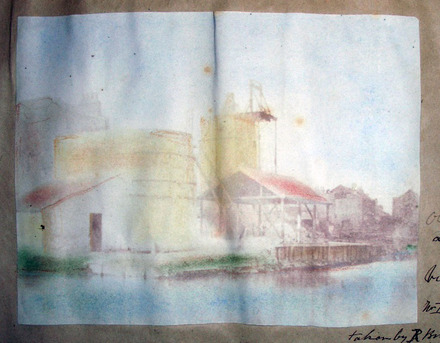
Robert Jefferson Bingham (1825-1870), Old Lime Kiln. View on the Regents Canal. Nr Hackney Road from the bridge taken by R. Bingham, coloured by R. Willats about 1848. ca. 1848. Salt paper print with hand coloring; plate 34 in Richard Willats’s photography album, no date. Graphic Arts collection GA 2005.00262.

Bingham was an amateur photographer active both in London and Paris during the 1840s. This photograph was taken in the southeastern London area of Limehouse (named after the lime kilns located at Limekiln Dock). The Limehouse Cut was opened in 1770 to provide a short cut for grain and malt barges, from the River Lea to the River Thames. The Regent’s Canal Company, formed in 1812, built an additional canal to link the Grand Junction at Paddington with Limehouse.

willats color3.jpg

Richard Willats also hand-tinted this calotype (left) taken by a Jersey photographer named Brodie. The Island of Jersey, in the Channel Islands off Normandy, is a British Crown dependency but not part of the United Kingdom or the European Union. By 1840, up to 5,000 English men and women had settled in Jersey.
Princeton’s Willats album holds twenty-one calotypes and salted paper prints taken by Brodie on the Isle of Jersey and another forty-three that can be attributed to him, including genre studies and portraits.

London in 1844

| No Comments
london 1844.jpg

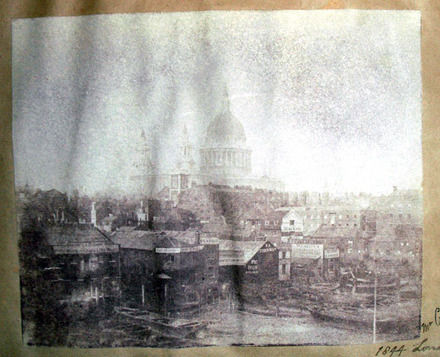
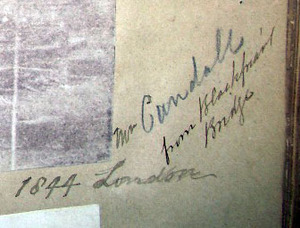
One day in 1844, twenty-six year old Joseph Cundall walked from his printing shop on Old Bond Street down to the Thames River carrying the box camera he recently designed and built, along with bottles of’ silver nitrate and gallic acid. Once settled on the Blackfriars Bridge, under a black cloth, he painted the chemistry onto some writing paper that had already been treated with silver nitrate and potassium iodide and then, inserted it into the camera. Focusing on St. Paul’s Cathedral in the distance, Cundall opened the lens and made a single exposure.

This calotype (paper negative) was used later to make several positive prints, one of which was given to his friend, optician Richard Willats, who pasted it into an album. That album and what might be the earliest photograph taken by Joseph Cundall is now at Princeton University.

The Victorian children’s book publisher, Joseph Cundall (1818-1895), was also a pioneer in the art of photography, working in London at the same time as William Henry Fox Talbot. While Talbot was proprietary and secretive, Cundall often joined forces with others and was responsible for the careers of many young artists. Together with Robert Hunt, he founded the Calotype Club in 1847 and later, was a founding member of the Royal Photographic Society of London. In 1852, he established The Photographic Institution at 168 New Bond Street, which became ground zero for all photographic activity at the time. His career culminated in 1871 when the British Government sent him to Bayeux to organize the first photographic record of the famous tapestry.
london 1844 2.jpg

The first photograph taken from a negative on glass

| No Comments
poitevin1.jpg

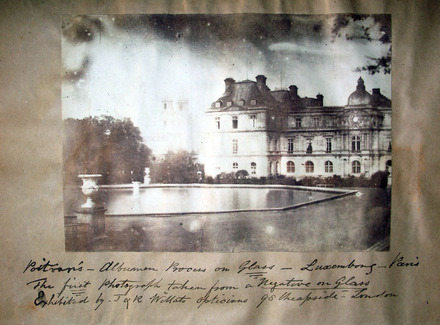
Alphonse Louis Poitevin (1819-1882), [Luxembourg Palace and grounds], ca. 1850; plate 42 verso in Richard Willats’s photography album, no date. Graphic Arts collection GA 2005.00262.

In the personal album of amateur London photographer, Richard Willats, is a print depicting the exterior of the Luxembourg Palace and grounds in the 6th arrondissement of Paris. Willat’s inscription reads, “Poitvan’s [sic] - Albumen Process on Glass - Luxemburg - Paris / The first photograph taken from a Negative on Glass / Exhibited by J. & R. Willats Opticians 98 Cheapside, London.”

The photographic use of albumen (egg white) on paper was credited in 1850 to Louis Désiré Blanquart-Evrard (1802-1872) but at the same time, Alphonse Louis Poitevin (1819-1882) was experimenting with printing from albumen on glass and on stone. The French engineer and inventor, Poitevin is credited with the development of a variety of photomechanical processes, in an attempt to transfer an image from a photographic negative into a permanent ink print.

Writing in 1892, Sylvester Koehler explains Poitevin’s early use of albumen to make photolithographs: “A grained lithographic stone was covered with an albuminous solution mixed with bichromate of potash, and exposed, after it had dried, under a negative. The picture was then developed, i. e., the unchanged albumen was washed away with cold water, and the stone treated with acid and gum as usual.” (Exhibition Illustrating the Technical Methods of the Reproductive Arts).

More recently, Sylvie Aubenas wrote, “In 1855 Poitevin perfected the process of photolithography by coating a lithographic stone with albumen (or, alternatively, gelatin) sensitized with potassium dichromate. In 1857, after attempting unsuccessfully to exploit the process himself, Poitevin sold the rights to the lithographic printer Lemercier.” (Oxford Companion to the Photograph)

Anyone who is interested in Poitevin’s multifaceted career can read his personal notebooks held in the La Bibliothèque nationale de France.

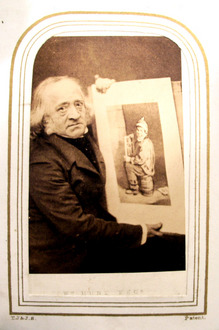
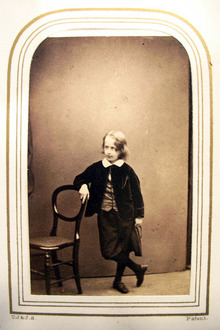
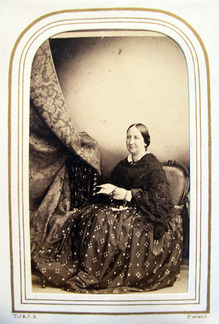
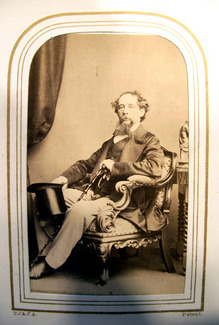
Victorian Photography Album

| No Comments
victorianalbum1.jpg
victorianalbum4.jpg

Rosa Bonheur

victorianalbum5.jpg

William Hunt

victorianalbum7.jpg

Duke of Argyll’s son


victorianalbum6.jpg

Miss Marsh

victorianalbum3.jpg

Charles Dickens

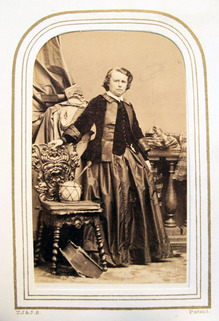
This anonymous photography album of British carte-de-visite (cdv) comes with notes from, perhaps, a previous owner listing the names of each sitter. As is often the case, the volume begins with royalty and continues through celebrity artists and writers until you get to the last few pages, which hold rather obscure portraits.

Unknown photographer, Untitled Victorian photography album, ca.1880. Albumen carte-de-visite. GAX 2011- in process.

Mathew Brady's 1859 Senate

| No Comments
bradysenatecompositepostvalerieMaster2.jpg

Mathew Brady (1822-1896), Composite of the Members of The United States Senate, 1859. Salted paper print, 11.75 x 9.5 inches on mount trimmed to 12.5 x 10 inches. Graphic Arts GA 2011- in process

Mathew Brady was the most celebrated of the early American photographers. In 1844, he opened his first commercial studio in New York City and added a Washington D.C. branch in 1856. His success was, at least in part, thanks to the expert operators he employed, included Alexander Gardner, Timothy H. O’Sullivan, George N. Barnard, among others. Many of these men left Brady’s studio during the Civil War and a few years later, Brady was forced to declare bankruptcy. He was never able to regain his early success and died penniless.

Princeton’s graphic arts collection has acquired a salt print composite of the United States Senate; one of only three known imperial prints of this historic image. To create the print, Brady and his operators photographed each member of the Senate individually, then cut and collaged the photographs and finally, re-photographed the composite.

brady key.JPG

It would have been worth the trouble, had South Carolina not seceded from the Union shortly after the composite was finished. By the time Brady was ready to sell copies of this photograph, it was already out of date.

Only two other copies have been located, thanks to the research of William Becker. One is in the Prints & Photographs Division of the Library of Congress. That print carries the handwritten notation, “Deposited in Clerk’s office Southern Dist. New York Sept. 20, 1859.” Library of Congress also holds a copy negative of the “key,” a reduced-size copy identifying each of the sitters (copied here on the left).

The other copy of Brady’s Senate photograph is owned by the New-York Historical Society.

The print now at Princeton University was originally the property of U. S. Rep. Henry Waldron (1819-1881), six term Congressman from Hillsdale, Michigan.
Becker has also identified ten of the fourteen members seen in Brady’s composite as ones who were expelled from the Senate for supporting the Confederate rebellion. At least twelve others resigned or withdrew after their states seceded from the union. The composite also depicts Sam Houston of Texas, who served in the US Senate from 1846 to March 4, 1859; Sen. Hannibal Hamlin of Maine, who resigned January 17, 1861 to become Vice President of the United States under Lincoln; and Sen. David C. Broderick of California, who died September 16, 1859 after being mortally wounded in a duel with the chief justice of the supreme court of California.
Brady’s 1859 Senate composite includes the following members who did not complete their terms due to the outbreak of the Civil War:

Alabama: Benjamin Fitzpatrick (withdrew January 24, 1861); Clement Claiborne Clay (withdrew January 24, 1861)
Arkansas: William K. Sebastian (Expelled July 11, 1861); Robert Ward Johnson (Term Ended (?) March 3, 1861)
Florida: Stephen R. Mallory (withdrew January 21, 1861); David L. Yulee (withdrew January 21, 1861)
Georgia: Robert A. Toombs (withdrew February 4, 1861); Alfred Iverson, Sr. (withdrew January 28, 1861)
Indiana: Jesse D. Bright (Expelled February 5, 1862 for support of the Rebellion)
Kentucky: John C. Breckinridge (14th Vice President of US; Democratic Candidate for President of US, 1860; Expelled Dec. 4, 1861; CSA General, CSA Secretary of War)
Louisiana: Judah P. Benjamin (withdrew February 4, 1861; Attorney General, Secretary of State, and Secretary of War, CSA); John Slidell (resigned February 4, 1861)
Mississippi: Albert Gallatin Brown (withdrew January 12, 1861); Jefferson Davis (withdrew January 21, 1861; President, CSA)
Missouri: Trusten Polk (Expelled January 10, 1862 for support of the Rebellion)
North Carolina: Thomas L. Clingman (withdrew March 28, 1861; Expelled July 11, 1861); Thomas Bragg (Withdrew March 6, 1861; Expelled July 11, 1861; Became Attorney General, CSA)
South Carolina: James Chesnut, Jr. (Expelled July 11, 1861); James Henry Hammond (Retired November 11, 1860)
Tennessee: Andrew Johnson (Resigned March 4, 1862; Vice President of U.S. under Lincoln; 17th President of the U.S.); Alfred O. P. Nicholson ( Expelled July 11, 1861)
Texas: Matthias Ward (Resigned December 5, 1859)
Virginia: James M. Mason (Withdrew March 28, 1861; Expelled July 11, 1861); Robert M. T. Hunter (Withdrew March 28, 1861; Expelled July 11, 1861)

For more information, see
Mary Panzer, Mathew Brady and the Image of History (Washington: Smithsonian Institution Press, 1997), Firestone TR140.B7 P36 1997

The Island of Rota

| No Comments
rota11.jpg

Abelardo Morell, Ted Muehling, and Oliver Sacks, The Island of Rota (New York: Library Council of the Museum of Modern Art, 2010). Copy G of 25 deluxe copies. Graphic Arts 2011- in process.

rota9.jpg
rota7.jpg

Graphic Arts is the proud new owner of The Island of Rota, a collaboration between the neurologist and writer Oliver Sacks, designer Ted Muehling, and photographer Abelardo Morell (who was recently at Princeton University as a Class of 1932 Fellow in Visual Arts in the Council of the Humanities).

rota5.jpg
rota4.jpg

The Island of Rota considers the unique natural history of a particular island in Micronesia. The prospectus notes, “Sacks’s text is excerpted from his book The Island of the Colorblind, which takes its name from its study of a Micronesian island population that harbors an extreme form of color blindness—a handicap for which the islanders are compensated with a heightened perception of pattern, shadow, texture, and tone.”

rota2.jpg
rota6.jpg

“… Inspired by Sacks’s observations on color blindness as well as by his description of the plant life of Rota, Morell and Muehling have created a tactile volume in black-and-white and sepia that reconceives the author’s text and responds to his sense of deep geological and botanical time. Morell has made thirteen cliché-verres, images made by hand in ink and plant matter on glass and then digitally printed as photographs. Twelve are bound into the book; the thirteenth is placed loose in the book’s box.”

rota1.jpg
rota3.jpg

“…Muehling’s contributions encompass almost every aspect of the book, including the typography, the papers, the structure, and a pair of altered historical maps. A master of metalwork, porcelain, and glass based on organic forms, Muehling designed the covers of the book, the box, and castings of cycads and sea fans in handmade paper for the interior. He also designed a pattern of small apertures for two leaves of the book, to be seen at different angles as the pages are turned.”

http://www.moma.org/explore/multimedia/videos/146/885 Click here to see a video of Sacks reading from his book.

Radical Members of the South Carolina Legislature

| No Comments
south carolina2.jpg

Attributed to J. G. Gibbes, Radical Members of the So. Ca. [South Carolina] Legislature, no date [ca. 1868?]. Albumen photograph. GA 2009.01025 and GA 2009.01024

south carolina.jpg

Graphic Arts has two copies of this photograph of the 1868 South Carolina legislature, one slightly larger, 16 x 13 cm and one with a caption 7.5 x 5.5 cm.

The composite image documents the implementation of the Reconstruction Act of 1867, which redesigned the governing bodies of the southern states after the American Civil War. Not only did African Americans have the right to vote, but also serve within the government. When South Carolina rejoined the Union in 1868, they had the first state legislature with a black majority.

Created to frighten the white population, this image was widely distributed in many sizes and formats. One of our copies includes the text: These are the photographs of 63 members of the reconstructed South Carolina Legislature, 50 of whom are negroes or mulattoes and 13 white. 22 read and write (8 grammatically), the remainder (41) make their mark with the aid of an amanuensis. Nineteen (19) are tax-payers to an aggregate amount of $146.10, the rest (44) pay no taxes, and the body levies on the white people of the State for $4,000.00.

These images were found in a scrapbook of engravings, with a note saying they “apparently belonged to Mrs. J.V. Stromeyer, 164 E. 94th St. N.Y. … probably put to-gether in the 1870’s.” The album was given to the library by Mrs. John N. Reynolds in 1943.

Charles Nègre's Héliogravures

| 2 Comments
chartres.jpg
Charles Nègre (1820-1880), Chartres Cathedral, South Transept, printed ca. 1857. Héliogravure. Graphic Arts in process

The French photographer Charles Nègre (1820-1880) was one of the earliest practitioners of photogravure. Together with Nicéphore Nièpce, Nièpce de St. Victor, and Alphonse Poitevin, he developed the process he called héliogravure, which translated a light-sensitive photograph to a permanent ink print. Héliogravure should not to be confused with the photogravure process commonly used today, which was invented by Karl Wenzel Klic (1841-1926) and combines aquatint with a photographic negative.

In 1854, Nègre published the first reproduction of a small proto-photogravure within a page of text in the journal La Lumière. Not long after this, at the request of the architect Jean-Baptiste Lassus (1807-1857), Nègre produced a series of large architectural studies and details of Chartres cathedral, which was under renovation. Graphic Arts is fortunate to hold two of these enormous prints.

See also Françoise Heilbrun, Charles Nègre photographe 1820-1880 (Paris: Éditions des Musées nationaux, 1980). Marquand TR647 .N43 1980

chartres2.jpg
Charles Nègre (1820-1880), Chartres Cathedral. Right Door of the Royal Portal, West Side, printed ca. 1857. Héliogravure. Graphic Arts in process
1 2 3 4 5 6

Recent Comments

  • Elizabeth Van Riper: Thank you for sharing this wonderful tribute to Ulli Steltzer. read more
  • Jonathan Greene: I am trying to reach any member of Eric Sackheim's read more
  • eric adler: I am interested in the issue #2 31 Aug 1919. read more
  • Luffy: Quelle chance d'être tombé sur ce rare album ! Puis-je read more
  • Sigrun Siladji: I have got a set of these Wellington Picture Medals read more
  • Melvin Franklin: Thank You !!! I'm one the kids that Ulli helped. read more
  • Shortshanks: Of course this print was actually a direct copy of read more
  • pamela wesson: Thanks for this. Joe was an important figure to me read more
  • Sarah: Thank you for posting these - I've never seen grotesquerie read more
  • Wendy Hodgden: I have two signed etchings By Brouet that I inherited read more