A lesson for fundraisers: the solicitation process for “A Campaign for Princeton,” 1982

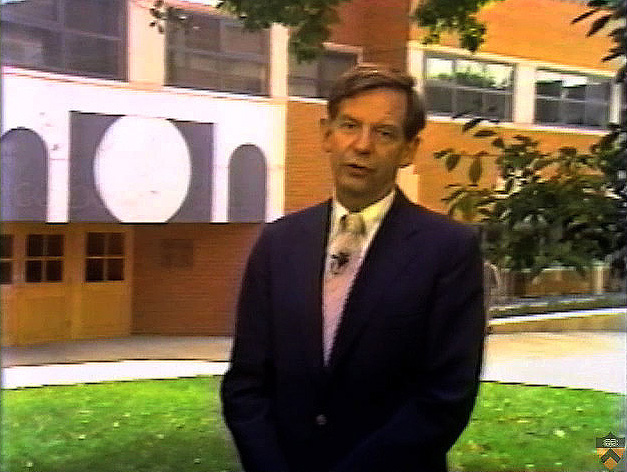
In a pre­vi­ous blog we dis­cussed the three-year $53 Mil­lion Cam­paign, launched at the begin­ning of Robert’s Goheen’s pres­i­dency in 1959. On an even larger scale was the five-year fundrais­ing cam­paign that was launched on Feb­ru­ary 19, 1982 dur­ing the pres­i­dency of Goheen’s suc­ces­sor William G. Bowen. The goal for “A Cam­paign for Prince­ton” was set at $275 mil­lion (raised to $330 mil­lion in Jan­u­ary 1984). Three years into the cam­paign, the fund drive ran like a “well-oiled machine,” accord­ing to the Daily Prince­ton­ian, bring­ing in more than $1 mil­lion a week. Fifty-five pro­fes­sion­als worked with a body of 2.500 alumni vol­un­teers, spread over sev­en­teen regions, who were trained to ask fel­low alumni to give at their max­i­mum capac­ity. Fea­tured here is “You Ask For It: An Intro­duc­tion to Cam­paign Solicitation,” an instruc­tional film that, how­ever much a prod­uct of the 1980s, may still be of inter­est for today’s fundraisers.

The cam­paign goals were sum­ma­rized in a Cam­paign Primer, pub­lished at the launch of the cam­paign. A full list and descrip­tion of the goals, which included aca­d­e­mic pro­grams, facil­i­ties, stu­dent aid, and res­i­den­tial col­leges, can be found at  CampaignPrimer.pdf.

Alumni solic­i­tors pre­pared to “make an ask” to prospec­tive donors with the help of a writ­ten solic­i­ta­tion plan, pro­vided by Princeton’s cam­paign staff. The solic­i­ta­tion plan, accord­ing to the Vol­un­teer Hand­book, con­tained par­tic­u­lar infor­ma­tion about the “prospect” as well as spe­cific guide­lines on how to work with the per­son to “help ensure max­i­mum giv­ing.”  For the first time in Princeton’s fundrais­ing his­tory, alumni with cap­i­tal gift poten­tial were asked to make one sin­gle com­mit­ment to the cam­paign that included both Annual Giv­ing (AG) and a cap­i­tal gift (this was known as a “joint ask”). As the cam­paign was spread over five years, it allowed for all alumni to be addressed with their class’ major reunion goals in mind.

Solic­i­tors were not meant  to be bash­ful about their “ask.” Out­right gifts of cash or assets (gen­er­ally secu­ri­ties) were first pri­or­ity, accord­ing to the Vol­un­teer Hand­book, but if that was a prob­lem, other char­i­ta­ble tax plan­ning tech­niques were encour­aged. “If you are per­suaded that a donor sim­ply can­not meet the requested level through an out­right gift, you should then intro­duce Planned Giv­ing to the nego­ti­a­tion.” Since these tech­niques were rather sophis­ti­cated, fur­ther nego­ti­a­tions were referred to Princeton’s Planned Giv­ing staff.

The above VHS video fea­tures two alumni ‘novices’ to the solic­it­ing process, who ask an expe­ri­enced alum­nus named Jim, a regional chair­man in charge of Major Gifts, in a staged inter­view for advice. The woman in the film is in charge of “Spe­cial Gifts” for her Class’ 10th Reunion, and the male novice alum­nus is asked to solicit money for a large cap­i­tal gift from a man who never donated more than $2.500 for Annual Giv­ing. The film lets Jim go back in his­tory, show­ing one failed solic­it­ing attempt at the begin­ning of his career, because he was not well enough pre­pared (1:05). This is fol­lowed by his account of one recent suc­cess­ful attempt, in which an alum­nus ended up giv­ing much more than he ini­tially thought he could man­age, par­tially through Planned Giv­ing (5:03).

Although the Uni­ver­sity Archives con­tain a lot of infor­ma­tion about the cam­paign itself, infor­ma­tion about the VHS film fea­tured here is lack­ing. In the lists of Regional Chair­men Major Gifts, pro­vided in the Vol­un­teer Hand­book, there is no James or Jim, hence the peo­ple in the staged inter­view may not be actual alumni. If you can pro­vide more infor­ma­tion about the mak­ing of the film, please let us know!

For more infor­ma­tion on the cam­paign itself, see The Story of A Cam­paign for Prince­ton, 1981–1986 by William McCleery.

This VHS video is part of the Uni­ver­sity Archives’ His­tor­i­cal Audio­vi­sual Col­lec­tion (Item no. 1422)

Men’s Basketball — Princeton vs. Georgetown, 1989: Who does not like a David versus Goliath matchup?

On March 17, 1989, in the open­ing round of the NCAA men’s bas­ket­ball tour­na­ment, Prince­ton Uni­ver­sity, seeded #16, faced national pow­er­house George­town Uni­ver­sity, seeded #1 in the East Region. It was a clas­sic David ver­sus Goliath matchup. Since the tour­na­ment was expanded to 64 teams in 1985, a #16 seed has never defeated a #1 seed. There have been some close calls, but none closer than Georgetown’s nar­row one point vic­tory over Princeton.

The video below fea­tures four seg­ments from the game. At the begin­ning of the broad­cast (0.04), Dick Vitale, noted col­lege bas­ket­ball com­men­ta­tor and ana­lyst, and John Saun­ders dis­cuss the game. Vitale promises to don a Prince­ton cheer­leader out­fit if Prince­ton can beat George­town. He, like so many oth­ers, gave the Tigers lit­tle chance against the big­ger, faster, and stronger Hoyas. Princeton took the floor as twenty-three point underdogs.

The start­ing line ups are pre­sented in the sec­ond seg­ment (0:28), and view­ers can watch the first six min­utes of the game (from 3:58), and see the final three min­utes of play (from 12:03), includ­ing Vitale’s reac­tion to Princeton’s per­for­mance and near victory.
George­town, under head coach John Thomp­son, entered the tour­na­ment ranked #2 in the coun­try and had recently won the Big East Con­fer­ence title. They had a 26–4 pre-tournament record, and the team was loaded with tal­ent, includ­ing fresh­man star and future NBA player Alonzo Mourn­ing and senior cap­tain Charles Smith, the Big East Player of the Year. Many pre­dicted them to win the tournament.

Callill1.jpgPrince­ton, led by their famously col­or­ful coach Pete Car­ril (left), was 19–8 over­all, and as Ivy League cham­pi­ons had earned an auto­matic bid to the national tournament. They were a young team, with only one junior, Matt Lapin, and one senior, Ivy League Player of the Year and cap­tain Bob Scra­bis, on the roster. But, this was also a Prince­ton team that led the nation in defense, allow­ing only 53 points per game.

How could Prince­ton stay with George­town and keep the game close? The “Prince­ton Offense,” the hall­mark of Carril’s coach­ing style, slowed down the Hoyas and forced an entirely dif­fer­ent style of play. The “Prince­ton Offense” spread the floor, uti­liz­ing a three guard set, and made the con­test a half court game. Clock man­age­ment and patience were key.
In those days the shot clock was 45 sec­onds, and it was quite typ­i­cal for Prince­ton to run the clock down for 30 sec­onds before they even began their offen­sive set. With con­stant ball move­ment and pass­ing, the guards looked for play­ers mov­ing toward the bas­ket, espe­cially by back door cuts, which led to easy lay ups.
This style of play stymied George­town through­out the first half, and Princeton’s con­fi­dence seemed to grow with each basket. They picked up rebounds, scram­bled for loose balls, lim­ited turnovers, and gen­er­ally frus­trated the Hoyas. At half time, Prince­ton led 29–21, and there was a notice­able buzz of excite­ment in the arena.

Con­tinue read­ing

Post-War Princeton: The building of Firestone Library, the Dillon Gym, and Bicentennial celebrations, 1945–1949

From the start of the Depres­sion until the end of World War II, con­struc­tion activ­ity at Prince­ton, like at other uni­ver­si­ties, was at a near stand­still. The first build­ings to be erected here as part of the post-war build­ing boom on Amer­i­can cam­puses were the Dil­lon Gym and the Har­vey S. Fire­stone Memo­r­ial Library. The four silent films dis­cussed on this post, which are all in color, cap­ture the begin­ning of the con­struc­tion of Fire­stone Library, the ded­i­ca­tion of the Dil­lon Gym in June 1947, and other activ­i­ties at the close of the bicen­ten­nial cel­e­bra­tions of 1946–1947 and the imme­di­ate years thereafter.

The ori­gin of the 16mm film that is fea­tured here is unknown. Although it seems excru­ci­at­ingly slow at times, the 14 minute long time lapse footage spans almost one and a half years, dur­ing which the exca­va­tion work for Fire­stone Library was under­taken, the struc­ture of the three under­ground floors almost com­pleted, and the steel struc­ture of the upper part of the library erected.

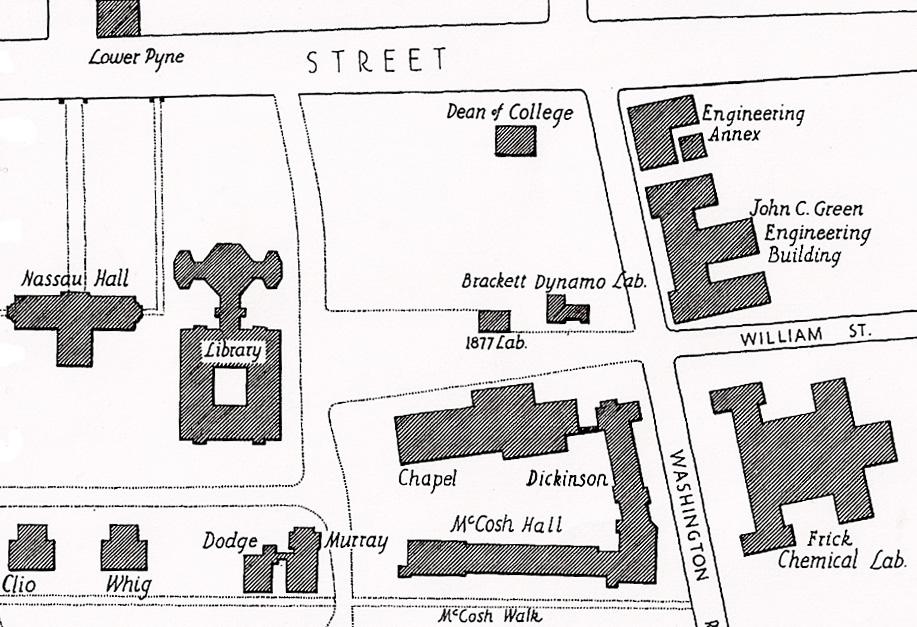
Firestone ground.jpgAs can be seen on this cam­pus map, the space between Wash­ing­ton Road and the then library (what is now Chan­cel­lor Green and Pyne Hall) was quite open. Dur­ing most of the film the cam­era is fac­ing the Engi­neer­ing Build­ing on Wash­ing­ton Road (now Burr and Green Hall), and moves between the Joseph Henry House, home of the Dean of the Col­lege (the white house seen on the left) and the ’77 Lab­o­ra­tory (the square brick build­ing with the cres­cent shaped win­dows on the right). This biol­ogy lab­o­ra­tory, donated by the Class of 1877 at its tenth reunion, was demol­ished in the sum­mer of 1946, which is cap­tured start­ing at 9:15. The ’77 Lab appears as a pile of rub­ble at 9:21, when the Bracket Dynamo Lab­o­ra­tory behind it becomes vis­i­ble. This sec­ond lab is grad­u­ally bro­ken down in the footage that follows.

The Joseph Henry House, how­ever, was not destroyed but moved instead, for the third time since it was built in 1837. Although the cam­era focused on the exca­va­tion work, prepa­ra­tions for the move to its present loca­tion, which accord­ing to the Prince started in April 1946, can be fol­lowed from 8:40 at the top of the screen. The actual move took place at the end of May, and the house can be seen to have moved a few yards between 9:45 and 9:48. Most of the footage con­cerns the dig­ging and exca­va­tion work prior to the con­struc­tion work, which had started on Christ­mas Eve 1945, and was sub­con­tracted to George M. Brew­ster and Sons (Turner Con­struc­tion Com­pany was the con­trac­tor). The work of Brewster’s “blast­ing crew,” which accord­ing to the Prince in March con­sisted of a “blast expert,” a “pow­der mon­key” and twelve drillers, can be fol­lowed from 3:28, with two explo­sions vis­i­ble at 4:35 and 6:48.

Only the last few min­utes of the film (10:39–14.15), cap­ture the begin­ning of the con­struc­tion of the Fire­stone Library itself, start­ing with the low­est floor. The snow at 11.31, sur­round­ing the con­crete columns, indi­cates that a year has passed since the time lapse film­ing began. On Jan­u­ary 15, 1947 the Prince wrote that most of the under­ground struc­ture had been com­pleted. The footage at 11.53, which includes a view on Nas­sau Street, must have been filmed dur­ing or shortly after Feb­ru­ary 1947, when the library, accord­ing to the Prince had risen above the ground. The film ends with footage of the build­ing of the steel struc­ture of the library’s three floors (13:11), the last shots of which indi­cat­ing that it is spring­time now (13:32).

Con­tinue read­ing

James Baker at Princeton before and after the Cold War

Baker at Princeton

In 1949, as the United States and its west­ern allies estab­lished the North Atlantic Treaty Orga­ni­za­tion to “con­tain” Soviet expan­sion into Europe, James A. Baker III was a fresh­man at Prince­ton. He was, in his words, “focused more on mak­ing grades, play­ing ten­nis and rugby, and chas­ing girls — not nec­es­sar­ily in that order — than on U.S. for­eign pol­icy” (Baker p. 287).

In his mem­oir, Baker pro­vides a good-natured account of his early years here. “I became a mem­ber of both Princeton’s Right Wing Club — so named because we spent much of our time using our right arms to hoist spir­i­tu­ous bev­er­ages — and the 21 Club, another social orga­ni­za­tion with a sim­i­lar mis­sion” (Baker p. 9). But by the time he left Prince­ton, Baker had pro­duced seri­ous work; he found his inter­est in his­tory and clas­sics and had writ­ten his senior the­sis about par­lia­men­tary pol­i­tics in Britain in the two pre­ced­ing decades.

The Cold War would soon find him, how­ever. Baker grad­u­ated in 1952 and imme­di­ately entered the U.S. Marine Corps’ offi­cer train­ing pro­gram while the Korean War was still ongo­ing. The Cold War would con­tinue to shape Baker’s career, by which he was both a wit­ness to and agent of the fall of the Soviet Union. By the end of 1991, Baker had served as Ronald Reagan’s Chief of Staff and Trea­sury Sec­re­tary and as Sec­re­tary of State for George H. W. Bush.

Return to Princeton

This video, doc­u­ment­ing a talk by Baker co-sponsored by the Woodrow Wil­son School and the Class of 1993, was deliv­ered on Decem­ber 12, 1991 in Alexan­der Hall. Baker was then serv­ing as Sec­re­tary of State.

Con­tinue read­ing

Princeton’s Bicentennial: Charter Day, October 19, 1946

In the 1946–1947 aca­d­e­mic year, Prince­ton cel­e­brated its 200th anniver­sary with a series of con­vo­ca­tions and events, end­ing with a con­clud­ing cer­e­mony, cap­tured in a news­reel, which included a con­vo­ca­tion address by US Pres­i­dent Harry Tru­man. Today’s blog fea­tures another news­reel about the University’s bicen­ten­nial year that focuses on “Char­ter Day,” Octo­ber 19, 1946. In addi­tion to Princeton’s almost 200-year old char­ter and the “largest pro­ces­sion in Prince­ton his­tory” at the time (which included 23 hon­orary degrees recip­i­ents), the news­reel addresses the begin­ning of inter­col­le­giate foot­ball, depict­ing a re-enactment of the first foot­ball game between Prince­ton and Rut­gers from Novem­ber 6, 1869 dur­ing half­time of the 1946 Princeton-Rutgers game.

Princeton’s char­ter, granted to the Uni­ver­sity on Octo­ber 22, 1746 (then still known as the “Col­lege of New Jer­sey”) is shown fleet­ingly in the news­reel (0:38). Read­ers of our reg­u­lar blog already know that the char­ter, on inter­mit­tent dis­play dur­ing the cel­e­bra­tion of Mudd Man­u­script Library’s 50th anniver­sary, is actu­ally not the orig­i­nal (which was lost) but the sec­ond char­ter, drawn up in 1748. (An expla­na­tion can be found in our Fre­quently Asked Ques­tions.) The famous early pic­ture of Nas­sau Hall that fol­lows at 0:48 is the cop­per engrav­ing by Philadel­phia artist Henry Dawkins (copied from a draw­ing by Prince­ton stu­dent William Ten­nent, Class of 1758), which was printed in Samuel Blair’s Account of the Col­lege of New Jer­sey (1764). For more infor­ma­tion about the engraver, who was also a coun­ter­feiter of paper money, see Julie Mellby’s Graphic Arts blog.

Over 500 peo­ple com­prised the aca­d­e­mic pro­ces­sion that opened and closed the morning’s con­vo­ca­tion, accord­ing to the Prince, includ­ing fac­ulty, trustees, rep­re­sen­ta­tives of all alumni classes and mem­bers of the Under­grad­u­ate Coun­cil. The pro­ces­sion included an offi­cial del­e­ga­tion from the United Nations, headed by Sec­re­tary Gen­eral Trygve Lie, and mem­bers from the State Bicen­ten­nial Com­mis­sion, includ­ing Wal­ter E. Edge, Gov­er­nor of New Jer­sey. Lie (1:42) and Edge (2:11) were among the 23 hon­orary degree recip­i­ents, as were the Dan­ish physi­cist Niels Bohr, the Span­ish writer Sal­vador De Madariaga, and the French philoso­pher Jacques Mar­i­tain (2:21–not all recip­i­ents are clearly visible).

The last eight min­utes of the news­reel are occu­pied by the 38th Rutgers-Princeton foot­ball game in the after­noon (2:47), with a humor­ous reen­act­ment of the first Rutgers-Princeton game of Novem­ber 6, 1869 (5:51), con­sid­ered the ‘birth’ of inter­col­le­giate foot­ball. A descrip­tion of the foot­ball game and the reen­act­ment by The­atre Intime and mem­bers of the Rut­gers soc­cer team can be found in the Prince. A copy of the pro­gram notes about the 1869 foot­ball game, with an expla­na­tion of the rules, may be down­loaded at Twenty-four Stal­wart Men.pdf. A sec­ond arti­cle from the pro­gram, sum­ma­riz­ing the his­tory of the Princeton-Rutgers foot­ball rivalry, can be viewed at  77 Years Princeton-Rutgers.pdf. More infor­ma­tion about early foot­ball can be found in Foot­ball: the Ivy League Ori­gins of an Amer­i­can Obses­sion by Mark Bern­stein ’83, who wrote our pre­vi­ous blog entry.

The footage on this 16mm film is part of the Uni­ver­sity Archives’ His­tor­i­cal Audio­vi­sual Col­lec­tion (part of item no. 0092).

Post-war Princeton football newsreels (1947–1956)

Today’s blog is writ­ten by Mark F. Bern­stein ’83, author of Foot­ball: the Ivy League Ori­gins of an Amer­i­can Obses­sion (2001).

The decade after World War II was a Golden Age of Prince­ton football. Under the lead­er­ship of coach Char­lie Cald­well ’25, the Tigers were often nation­ally ranked and it was not unusual for news­reel cam­eras to film Prince­ton games. These Para­mount news­reels give high­lights from across that era, although the clips are not in chrono­log­i­cal order.

The first game shown here, a 13–7 vic­tory over Penn in 1951, was almost cer­tainly broad­cast on national tele­vi­sion, as the Quak­ers had a lucra­tive con­tract with ABC to broad­cast all their home games. Dick Kaz­maier ’52, a triple-threat tail­back in Princeton’s dis­tinc­tive sin­gle wing offense, won the Heis­man Tro­phy that year, graced the cover of Time mag­a­zine, and was named the AP’s ath­lete of the year, beat­ing out such lumi­nar­ies as Otto Gra­ham and Stan Musial. Kazmaier showed off his pass­ing skills here with a bomb to Frank McPhee ’53. (0:48)
The sec­ond clip shows a 42–20 loss to Yale in 1956, the first year of Ivy League competition. Although it is not known if this game was broad­cast, one con­ces­sion to tele­vi­sion in those years was a rec­om­men­da­tion that the road team wear white uni­forms, which made the teams eas­ier to dis­tin­guish on black-and-white TV sets. For gen­er­a­tions before that, Prince­ton always wore black and orange, whether play­ing at home or on the road. Nineteen fifty-six was also Caldwell’s last full sea­son as coach. He died of can­cer the fol­low­ing year and was suc­ceeded by his assis­tant, Dick Colman.
Cald­well was just begin­ning to build his dynasty in 1947, when the third clip was filmed show­ing a 26–7 loss to the Quakers. Dick West ’48 pro­vided the lone high­light, con­nect­ing with George Sella ’50 for a touchdown. (3:40) West played for the Tigers in 1942 but inter­rupted his edu­ca­tion to join the military. Sella, like Dick Kaz­maier, was later drafted by the Chicago Bears but decided to pass up the NFL for Har­vard Busi­ness School.
The final clip shows a hard-fought 24–20 vic­tory over Navy dur­ing the unde­feated 1951 sea­son.   The win was Princeton’s fif­teenth in a row. Their streak would even­tu­ally extend to 24 games before Penn snapped it the fol­low­ing year.

Con­tinue read­ing

Interview with Dean Ernest Gordon and tour of University Chapel, 1977

Today’s post is writ­ten by Rev. Fred­er­ick Borsch ’57, for­mer Dean of Reli­gious Life and the Chapel 1981–1988.

“A ser­mon in stone” is a famil­iar descrip­tion of the Prince­ton Uni­ver­sity Chapel, and it is used to intro­duce this 1977 film tour of the Chapel’s archi­tec­ture and win­dows through an inter­view with its then Dean Ernest Gor­don. Although an effort was made to give the pro­gram a sem­blance of infor­mal­ity, it comes across now as rather rehearsed. First tele­cast (Nov. 27, 1977) as a 10 minute seg­ment in a Sun­day morn­ing NBC-TV series, “The First Estate: Reli­gion in Review,” the film is also, how­ever, not with­out attrac­tive and edu­ca­tional fea­tures. Since the Chapel remains essen­tially the same, the infor­ma­tion is not dated, and there is much to appre­ci­ate in watch­ing it. For con­sid­er­able fur­ther infor­ma­tion about the Chapel, one can go to the University’s Office of Reli­gious Life’s site about the His­tory of the Chapel to find links to a self-guided tour and an exten­sive audio-tour. There is also Richard Stilwell’s splen­did The Chapel of Prince­ton Uni­ver­sity (Prince­ton Uni­ver­sity Press, 1971). Next one could go to the Chapel.
“Bring binoc­u­lars,” was the advice I was given, as that is the only way to take in much of the detail. The film seems to have been made in antic­i­pa­tion of the 50th anniver­sary of the 1928 ded­i­ca­tion of the Chapel. I first entered the build­ing as a fresh­man in 1953 when it was 25 years old. We under­grads, of course, had other names for the building–not least because atten­dance at reli­gious ser­vices was then required of fresh­men and sopho­mores on every other week­end. One of my room­mates, though not him­self Jew­ish, usu­ally went to their Fri­day evening ser­vices in order to get his chit signed and have the rest of the week-end free. Other of my friends might go to a denom­i­na­tional ser­vice, but often enough on Sun­day morn­ings we went to the ecu­meni­cal (though rather Pres­by­ter­ian) “God Box” or “Fire­stone South,” so labeled because the Chapel was neigh­bor to our more fre­quent destination–the Fire­stone Library just across the plaza.

Or, since lore had it that alum­nus and plu­to­crat Har­vey Fire­stone had donated a goodly part of the over two mil­lion dol­lars for build­ing the Chapel, it was also “Firestone’s Folly.” We heard that this sobri­quet had been given by ear­lier crit­ics who would have pre­ferred that the money be used for lab­o­ra­to­ries, libraries and fac­ulty salaries. At the time, how­ever, Pres­i­dent Hibben had acclaimed the Chapel as Princeton’s two mil­lion dol­lar wit­ness against materialism!

Yet it was hard not to stand–literally stand–in awe of the build­ing and all it rep­re­sented. I stood there. I wor­shipped in the Ralph Adams Cram Anglo-collegiate Gothic trib­ute to the unity of faith and knowl­edge. The vis­age of the philosopher-skeptic David Hume could even be glimpsed in one of the win­dows. I lis­tened to the Aeolian-Skinner organ while admir­ing what has been called the “finest assem­blage of stained glass in all the west­ern hemi­sphere.” (Recently the win­dows were com­pletely refur­bished and restored to the tune of some­thing like ten mil­lion dol­lars. The build­ing and its fab­ric have over the years been very well endowed!) As an Eng­lish major, I liked to sense the whole build­ing as a paean to Chris­t­ian human­ism and to pick out Chaucer, Shake­speare, George Her­bert, Donne, Mil­ton, Blake, Emily Dick­in­son and T.S. Eliot. In the only appar­ent attempt at humor in the 1977 film (other than a ref­er­ence of Donne’s “unholy” son­nets), Dean Gor­don notes the tiger on which William Blake seems to sit. “Tiger, tiger, burn­ing bring / In the forests of the night,” runs through one’s mind, fol­lowed by “tiger, tiger, tiger; sis, sis, sis; boom, boom, boom; ah.”

Ernest Gor­don became the Chapel’s Dean in 1955. He was “earnest” all right (a lit­tle joke of ours), but what a change he brought to the wor­ship with his Scot’s burr, his ener­getic faith and dra­matic story of con­ver­sion to Chris­tian­ity dur­ing his four years in a mis­er­able Japan­ese con­cen­tra­tion camp. A hand­some man with a cer­tain win­some­ness about him (still seen in the film), he invited Billy Gra­ham to cam­pus for what was in affect a mis­sion to undergraduates.

Later Gor­don would twice invite (over a num­ber of protests) Mar­tin Luther King, Jr. to the Chapel’s pul­pit and pre­side over the Chapel dur­ing the civil rights move­ment, then a memo­r­ial ser­vice for Dr. King, tur­moil and protests over the Viet­nam War–some of these gath­er­ings tak­ing place in the Chapel. As part of all that, a mea­sure of inter­est in reli­gion grew, but not nec­es­sar­ily in for­mal church-going. By 1964 all Chapel require­ments had finally been dropped as the Uni­ver­sity became still more sec­u­lar in out­look and at the same time more diverse in terms of reli­gions. I had to won­der if Dean Gor­don did not wince to him­self when, at the end of the film, he com­mented on how impor­tant the Chapel was for under­grad­u­ates although far fewer were com­ing to his Sun­day morn­ing ser­vices than in ear­lier years.

Truth in blog­ging: in 1981 I suc­ceeded Ernest Gor­don as Dean, and one can read some­thing more about his min­istry, the Chapel and the times in my forth­com­ing Keep­ing Faith at Prince­ton: A Brief His­tory of Reli­gious Plu­ral­ism at Prince­ton and Other Uni­ver­si­ties (Prince­ton Uni­ver­sity Press, 2011).

–Fred­er­ick Borsch ‘57

This 16mm film is part of the Uni­ver­sity Archives’ His­tor­i­cal Audio­vi­sual Col­lec­tion (item no. 1974)

Princeton traditions, old and new: the Class of 1986’s “video yearbook”

The Class of 1986 was a ‘his­toric’ class, so the fresh­men were told: they were the first to begin their Prince­ton years in the new social sys­tem of the res­i­den­tial col­leges. Accord­ing to their Class His­tory in the Nas­sau Her­ald, how­ever, the stu­dents car­ried on as the gen­er­a­tions before them. “We worked hard and we par­tied hard. This blend of con­ti­nu­ity and change, of tra­di­tion and tran­si­tion, would char­ac­ter­ize our four year stay at Old Nas­sau.” The ‘video year­book’ fea­tured here, in itself a reminder of the “class films” of the 1920s and 1930s, is an expres­sion of that expe­ri­ence. A fast-paced arrange­ment of video­taped snip­pets cap­tur­ing cam­pus events and stu­dent life, the 26 minute film is a cel­e­bra­tion of both old and new.

The video year­book, pro­duced by “Ground Floor Video,” a group of stu­dents under the direc­tion of Glenn Picher ’86, was filmed dur­ing the class’ junior and senior year. Meant as a com­ple­ment to the print year­book, accord­ing to the Prince, the film con­tains selec­tions from some thirty to forty hours of video­tape, accom­pa­nied by orig­i­nal music com­posed by Peter Cur­tiss ’86 (other music cred­its can be found at 25:55). The film is divided into seven chap­ters: Stu­dent Life (1:03), Aca­d­e­mics (5:33), Sports (7:08), Hol­i­days (10:39), Cam­pus issues (15:09), Spring (17:15), and Grad­u­a­tion week­end (20:50).

The sports and spring scenes, along with the Grad­u­a­tion week­end events were already tra­di­tional ele­ments in the class films of the 1920s. Incom­ing fresh­men were intro­duced to other Prince­ton tra­di­tions in the Spe­cial Class of 1986 issue of the Daily Prince­ton­ian. Some of those tra­di­tions are cap­tured in the “video year­book” fea­tured here. They include the bon­fire on Can­non Green after a major sports victory–in this case the foot­ball team’s “Big Three Title,” the first since 1967 (9:44, com­pare with the bon­fire of the Class of 1923); House Par­ties (19:29; com­pare with the class film of the Class of 1939); and “Arch Sing” (12:48), rem­i­nis­cent of the tra­di­tion of “Senior Singing” as seen in the Class of 1928 footage. The footage in the  “Grad­u­a­tion Week­end” (20:50), cap­tur­ing the P-rade, the break­ing of the pipes on Can­non Green, and the com­mence­ment cer­e­monies is very sim­i­lar to the films from six decades pre­vi­ous depict­ing the grad­u­a­tion of the Classes of 1921 and 1928.

Addi­tion­ally, more recent tra­di­tions fea­tured here include the “Nude Olympics (12:00), and the party activ­i­ties of “blow pong” (3:35 and 4:47), and what is assumed to be the “Trees and Trolls,” the annual rum­ble between the over 6 ft tall and the shorter mem­bers of the then still all-male eat­ing club, the Tiger Inn (4:23). Both activ­i­ties were accom­pa­nied by copi­ous amounts of beer. Dur­ing 1986’s fresh­men year the drink­ing age was raised from 18 to 21, mak­ing senior year the first year that most stu­dents could legally drink alcohol.

Of par­tic­u­lar inter­est for the topic of “tra­di­tions” is the address of Sally Frank ’80 at the Woodrow Wil­son School on Novem­ber 20, 1985 (16:28). Ear­lier that year, Sally Frank had won her law­suit against the all-male eat­ing clubs of Cot­tage, Ivy, and Tiger Inn, which she had filed in 1979 after they refused her a chance to bicker due to her gen­der. Addi­tional issues addressed in the sec­tion ‘Cam­pus protests’ include the block­ade of the entrance to Nas­sau Hall on May 23, 1985 to protest Princeton’s  invest­ments poli­cies with respect to South Africa (15:09) and the Women’s Cen­ter sit-in of May 1, 1986 (16:52).

Within the video a few other faces have been iden­ti­fied as the following.

  • Eng­lish pro­fes­sor John Flem­ing is shown lec­tur­ing (5:39)
  • The late art his­to­rian John R. Mar­tin (5:56)
  • Pres­i­dent Bill Bowen (6:32, appears again 19:05).
  • The late art pro­fes­sor Jerry Buchanan cri­tiques a student’s work (5:42).
  • Harold Med­ina ’09 is seen rid­ing in a golf cart (21:20)
  • Dr. Ruth Wes­t­heimer makes a brief appear­ance (22:41)

This VHS tape is part of the Uni­ver­sity Archives’ His­tor­i­cal Audio­vi­sual Col­lec­tion (item no. 1324).

The Year of the Tiger:” the 1964–1965 Basketball Season at Princeton

The 1964–1965 bas­ket­ball sea­son was an unprece­dented sea­son of suc­cess for the Prince­ton men’s team as it played some of the finest bas­ket­ball in the coun­try, led by All-American and cap­tain Bill Bradley ’65. During that mag­i­cal sea­son, the Tigers won the Ivy League title and earned a trip to the NCAA tournament. By season’s end they had bested teams from Navy, Syra­cuse, Rut­gers, Cor­nell, and Providence. Bradley, arguably one of the best ath­letes ever to play at Prince­ton, led a tal­ented group of juniors and up-and-coming sopho­mores as they demon­strated that an Ivy League team, devoid of schol­ar­ship play­ers, could hold their own, and indeed, com­pete with bas­ket­ball pow­er­houses such as Michi­gan and North Car­olina State.

Princeton’s sea­son opened on Decem­ber 2nd with an 83–74 vic­tory over Lafayette College. Crowds filled Dil­lon Gym­na­sium to watch the team, and as the end of Decem­ber approached, Prince­ton was 6–2. Then at New York City’s Madi­son Square Gar­den (2:34), where the annual Hol­i­day Fes­ti­val tour­na­ment was played, Prince­ton opened with a vic­tory over Syracuse. But the match-up every­one was anx­ious to watch pit­ted Prince­ton against the Uni­ver­sity of Michi­gan — then the num­ber one ranked team in the country. Michigan’s star player was Cazzie Rus­sell, a ver­sa­tile 6’ 6” all court player.

The first half was a fairly evenly matched con­test, with Prince­ton secur­ing a 39–37 half time edge. During the sec­ond half, Prince­ton opened up a sig­nif­i­cant lead. With four and a half min­utes to go, the Tigers lead by 12 (4:52). But, the game quickly turned when Bradley was called for his fifth and final per­sonal foul — a costly error that sent him to the bench for the remain­der of the game. With­out their floor gen­eraBradley2x.jpgl, Prince­ton strug­gled to find its rhythm, but man­aged to keep things close. With less than a minute to play, they still led by two points. In the wan­ing sec­onds (6:08), Michi­gan put the ball in Russell’s hands, and he did not dis­ap­point, nail­ing the win­ning shot which gave Michi­gan an 80–78 victory. It was not the last time that these two teams would meet dur­ing the season. Nor would it be the last time that Bradley and Rus­sell would com­pete together. Both played on New York Knicks teams in the late 1960s. (The Daily Prince­ton­ian, Jan­u­ary 5, 1965)

Con­tinue read­ing

Moving Corwin Hall 100 feet, May 20, 1963

Robert­son Hall, the build­ing that cur­rently houses the Woodrow Wil­son School of Pub­lic and Inter­na­tional Affairs (WWSPIA) has been fea­tured in two news­reels: the “Prince­ton news­reel” of 1961, announc­ing the, at the time anony­mous, $35 mil­lion gift of Charles S. Robert­son ’26 and his wife, Marie; and the 1966 news­reel about Pres­i­dent Lyn­don Johnson’s visit to ded­i­cate the build­ing. This post fea­tures the build­ing that orig­i­nally housed the Woodrow Wil­son School: Cor­win Hall, erected in 1951 and orig­i­nally known as “Wil­son Hall,” which had to be moved 100 feet to make way for the new WWSPIA facility.

The spec­tac­u­lar move of the build­ing to its present site between Wal­lace and Robert­son Hall was recorded via time lapse film­ing on an 8mm cam­era by Lawrence l. Rauch *49, who donated the footage to the Prince­ton Uni­ver­sity Archives. The engi­neer­ing feat was accom­plished by the New York firm of Spencer, White, and Pren­tiss, using hydraulic jacks to push the build­ing along twelve steel tracks. The actual mov­ing took only twelve hours but two months were needed to pre­pare for it and another three months to secure the build­ing to its new foundation.

When Robert­son Hall was com­pleted in 1965, Wil­son Hall was re-assigned to one of WWSPIA’s chief allies, the Depart­ment of Pol­i­tics, and to the Cen­ter of Inter­na­tional Stud­ies. Its name was changed to Cor­win Hall, in honor of Edward S. Cor­win, the first chair­man of the Depart­ment of Pol­i­tics and the long-time holder of the McCormick Pro­fes­sor­ship of Jurispru­dence, the pro­fes­sor­ship orig­i­nally held by Woodrow Wilson.

This 8mm film, a gift from Lawrence L. Rauch *49, is part of the Prince­ton Uni­ver­sity Archives’ His­tor­i­cal Audio­vi­sual Col­lec­tion (item no. 1980). Adapted from the post by John DeLooper in Mudd Man­u­script Library’s Blog with excerpts from Alexan­der Leitch A Prince­ton Com­pan­ion (Prince­ton Uni­ver­sity Press, 1978).