Recently in Illustrated books Category

Lascivious Old Men or Art Historians?

| 1 Comment
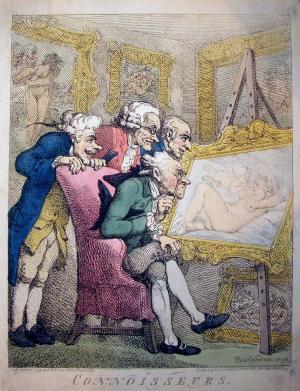
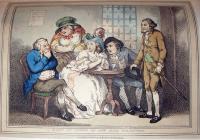
Thomas Rowlandson (1756-1827), Connoisseurs, 1799. Hand-colored etching. GC112 Thomas Rowlandson Collection, Gift of Dickson Q. Brown, Class of 1895.

Four elderly men peer pruriently at a painting of a reclining Venus, with similar framed work around the room. Lascivious old men or art historians? While the designer of this print, Thomas Rowlandson, was poking fun at the connoisseurs, he was himself as interested in sexual imagery as the others.

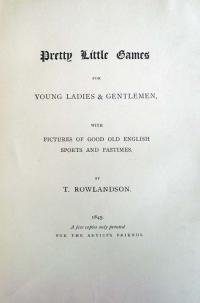
During the final years of his life, Rowlandson privately printed at least ten stipple engraving depicting sexual encounters he called Anatomy Diversions. Long after Rowlandson’s death, John Camden Hotten (1832-1873) collected a set of these prints and published them in a bound edition accompanied with his own equally explicit poems. Only 100 copies were printed, entitled Pretty Little Games for Young Ladies and Gentlemen with Pictures of Good Old English Sports and Pastimes ([London: J.C. Hotten], 1845 [i.e. 1872]). Graphic Arts Collection (GA), Rowlandson 1845

See Henry Spencer Ashbee, Centuria librorum abscondorum, (Encyclopedia of Erotic Literature, v.2), p. [346]-354.

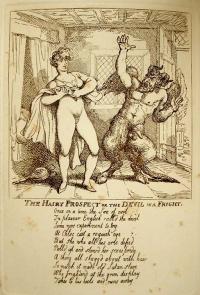
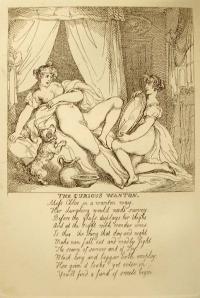
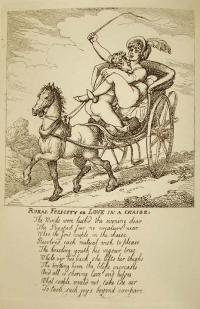
Here are a few examples:

The Hairy Prospect or the Devil in a Fright

Once on a time the Sire of evil,
In plainer English call’d the devil,
Some new experiment to try
At Chloe cast a roguish eye -t
But she who all his arts defied,
Pull’d up and shew’d her sexes pride :
A thing all shagg’d about with hair,
So much it made old Satan stare,
Who frightend at the grim display,
Takes to his heels and runs away.


The Curious Wanton

Miss Chloe in a wanton way
Her durgling would needs survey.
Before the glass displays her thighs
And at the sight with wonder cries,
“Is this the thing that day and night
Makes men fall out and madly fight ?
The source of sorrow and of joy
Which King and beggar both employ?
How grim it looks, yet enter in,
You’ll find a fund of sweets begin!”


Rural Felicity or Love in a Chaise

The Winds were hush’d, the evening clear,
The Prospect fair, no creature near,
When the fond couple in the chaise
Resolved each mutual wish to please.
The kneeling youth his vigour tries,
While o’er his back she lifts her thighs.
The trotting horse the bliss increases,
And all is shoving love and kisses.
What couple would not take the air
To taste such joys beyond compare.


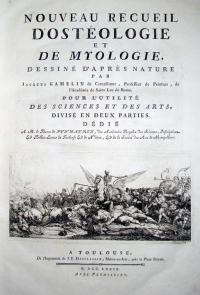
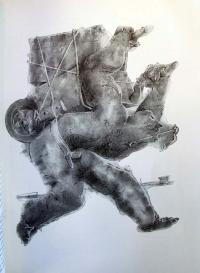
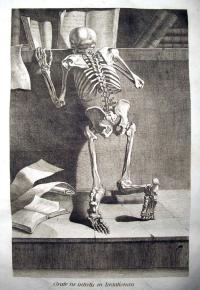
Jacques Gamelin (1738-1803), Nouveau recueil d’ostéologie et de myologie, dessiné d’après nature … pour l’utilit des sciences et des arts [A New Collection of Bones and Muscles, Drawn from Life… for the Use of Sciences and the Arts] (Toulouse: J.F. Desclassan, 1779). Two parts in one. Etched frontispiece, title with etching, 41 full-page engraved plates and ten etched vignettes. Graphic Arts GAX 2010- in process

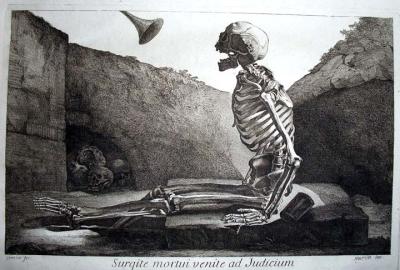
Surgite mortui, et venite ad judicium (Arise, ye dead, and come to the judgment). [From XXVIII Sermons (1651), Sermon XIX]).

The French painter and engraver Jacques Gamelin (1738-1803) entered the Art Académie Royale de Toulouse under the patronage of Baron de Puymaurin, a wealthy industrialist (to whom he dedicates this book). Puymaurin also financed a trip to Rome, where Gamelin studied with the Neoclassical master painter Jacques-Louis David (1748-1825) and eventually became the chief painter to Pope Clement XIV.

In 1777, Gamelin’s father died and he returned to Toulouse. Using his inheritance, Gamelin began work on the most important project of his career Nouveau recueil d’ostéologie et de myologie. With the assistance of local magistrates, Gamelin was given access to the corpses of executed criminals, which he both dissected and sketched. Then, he hired two engravers, Jacques Lavallée (active 1790-1830) and an artist known only as Martin, to assist him in converting these drawings to prints. After two years, Gamelin released his masterpiece in an edition of 200 copies, priced at forty livres each (nine livre may be the cost to dress a man at that period). The book did not sell and Gamelin went bankrupt. Most of the unsold copies were either pulped or dismembered, accounting for the book’s exceptional rarity.
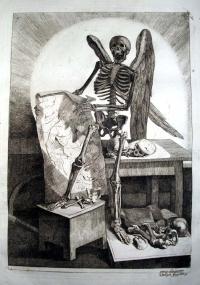
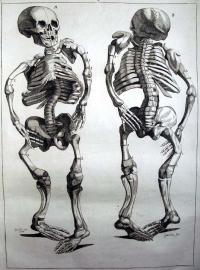

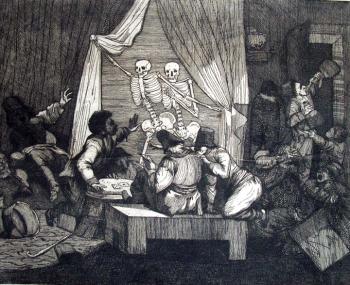
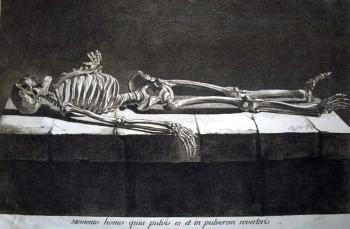
The atlas is a mixture of imaginative artistic life-studies and technical anatomical drawings. The first part is devoted to bones and the second part to muscles. Allegorical scenes of death, battle, and genre scenes appear throughout.

The plates of the second part are larger and more expressive, while those of the first part more fantastical in their conceptions. Many are done in the crayon manner with Gamelin personally engraving much of the second part. Chalk or crayon manner engraving is a technique used to imitate chalk or pastel drawings. Special toothed tools, such as roulettes, mattoirs (punches), or champignons were used to create dotted patterns on the plate that suggest the grainy appearance of chalk strokes on paper.

Gamelin hoped to offer this work to both anatomy students and artists, thereby embracing both art and science.

“Gamelin is acknowledged as one of the “little masters” of French eighteenth-century painting. The plates for his anatomical atlas … were prepared from drawings made at his own dissection facility; they are distinct from the plates of other works of its type, being larger, more artistically varied, and more expressive and fantastic in their conceptions. ….Gamelin’s technical perfection, coupled with the emotional and fantastical elements in his images, have led him to be seen as a precursor of Goya; in fact, the young Goya may have known or studied with Gamelin, who taught in Rome during the time Goya was there.” (The Haskell F. Norman Library of Science and Medicine, p.316).

Memento homo, quia pulvis es, et in pulverem reverteris (Remember, man, that you are dust and unto dust you shall return)

To read more, see Hook & Norman, The Haskell F. Norman Library of Science and Medicine (1991) no. 872, Annex A, Z7401 .H347 1998.
Also Garrison-Morton 401.1. Choulant-Frank 352. Campbell Dodgson, “The Macbre in Two Centuries,” in Print Collector’s Quarterly, April 1929, XVI, 135-143. G. Bazin, “Un Précurseur de Goya et de Delacroix,” Marianne, 17 August 1938, p.8. Waller 3404. Rifkin & Ackerman, Human Anatomy, 219-227.
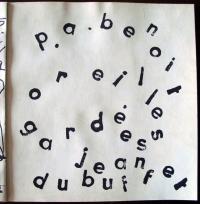
Picture of Slavery

| No Comments

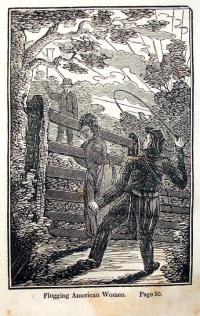
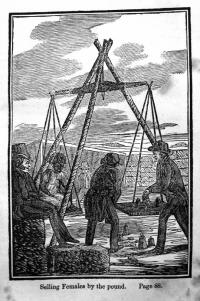
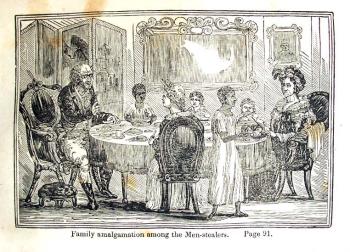
George Bourne (1780-1845), Picture of Slavery in the United States of America (Middletown, Conn.: E. Hunt, 1834). Wood engravings designed by H.A. Munson (born 1814)and G.W. Flagg (1816-1897), carved on wood by Munson. Original cloth binding. Graphic Arts Collection (GAX) Hamilton 1870

George Bourne was a Presbyterian minister and abolitionist who called for the “immediate emancipation without compensation” of American slaves. As one of the founders of the American Anti-Slavery Society, Bourne was himself the object of persecution throughout his adult life.


At the National Antislavery Society meeting in Philadelphia on December 4, 1833, Bourne was chosen as one of three delegates to prepare

“a synopsis of Wesley’s Thoughts on Slavery, and of the Antislavery items in the note formerly existing in the Catechism of the Presbyterian Church of the United States; and of such other similar testimony as they can obtain, to be addressed to Methodists, Presbyterians, and all professed Christians in this country, and published under the sanction of this convention.”

Following the 1833 conference, Bourne re-issued an expanded version of The Book and Slavery Irreconcilable (originally published in Virginia, 1816) under the title Picture of Slavery in the United States. One of several appendixes in this volume is the statement he helped to write for the 1833 National Antislavery Society.

Melville's Moby Dick

| 1 Comment

Connections between Herman Melville (1819-1891) and Princeton University began in the eighteenth century, with his grandfather Major Thomas Melvill (1751-1832) graduating with Princeton class of 1769. His uncle Peter Gansevoort (1788-1876) followed in the class of 1808. To celebrate the centenary of Moby Dick in 1951, Firestone Library mounted a Melville extravaganza featuring dozens of the significant holdings, detailed in a catalogue compiled by Howard C. Rice, Jr., Alexander D. Wainwright, Julie Hudson, and Alexander P. Clark. http://libweb5.princeton.edu/visual_materials/pulc/pulc_v_13_n_2.pdf

Melville and Moby Dick continue to make connections with our students, as AMS 353/ENG 355 “Moby-Dick Unbound” taught by Professor William Howarth begins this week. It is a good excuse to post a few of the dozens of editions available to researchers through rare books and special collections.


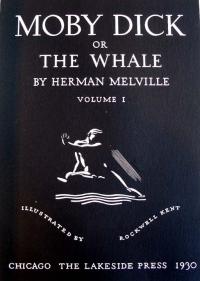
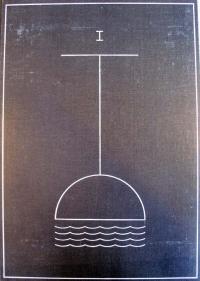
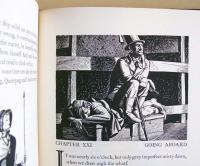
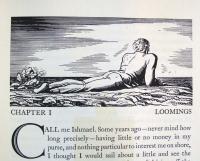
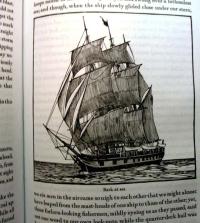
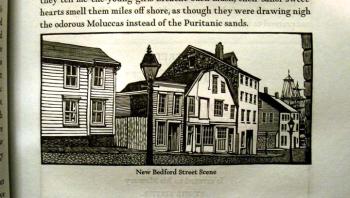
Herman Melville (1819-1891), Moby Dick; or, The Whale … illustrated by Rockwell Kent (Chicago, The Lakeside press, 1930). “One thousand copies have been printed”—Colophon. Graphic Arts Collection (GAX) Oversize PS2384 .M6 1930q. Rockwell Kent (c) Plattsburgh State Art Museum.


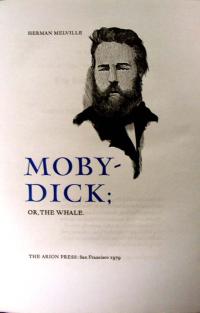
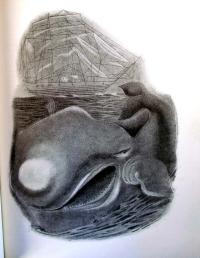
Herman Melville (1819-1891), Moby-Dick, or, The Whale (San Francisco: Arion Press, 1979). Illustrations engraved by Barry Moser. Edition limited to 265 copies. Graphic Arts Collection (GAX) Oversize Z232.A74 M44 1979f


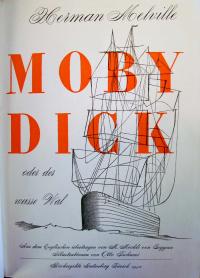
Herman Melville (1819-1891), Moby Dick, oder Der weisse Wal / aus dem Englischen übertragen von M. Möckli von Seggern; Illustrationen von Otto Tschumi (Zürich: Büchergilde Gutenberg, 1942). Rare Books (Ex) 3854.9.364.8


Jeremiah N. Reynolds (1799-1858), Mocha Dick, or The White Whale of the Pacific (London: Glasgow: Cameron & Ferguson, [1870?]). Rare Books (Ex) 3906.39.364.1900

Her name was George Paston

| No Comments

Samuel De Wilde (1751-1832), [Frontispiece to The Satirist, Vol. I.], 1807. Etching. Bound into George Paston, Social Caricature in the Eighteenth Century (London: Methuen & co. [1906]) Graphic Arts Collection (GA) Oversize Rowlandson 943.3q Gift of Dickson Q. Brown, class of 1895

The British writer Emily Morse Symonds (1860-1936) published under the pen name George Paston, in the same spirit as George Sand and George Eliot. After a series of novels, culminating with A Writer of Books, Symonds turned to theory and criticism. Her first and best effort was this book on caricature. A review in a the Saturday Review of Books begins:

“Although a keen satirical tendency may be noticed in certain expressions of Egyptian, Grecian, and Roman art, it is significant rather of the class of ithyphallic drollery than that of the ironical grotesque… It remained for the English of the eighteenth century to invent the ironical grotesque… Paston’s book deals textually and pictorially with the various phases of social caricature and of the social groups which inspired the pens of the artists.”

Graphic Arts is fortunate to hold an extra-illustrated edition of Symonds’ book that includes 140 original prints in addition to the 200 reproductions printed within the text. Here are a few examples.

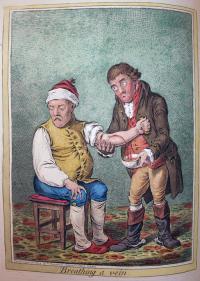
James Gillray (1756-1815), Breathing a vein, 1804. Etching.

Matthew Darly (ca.1720-1781 or later), Chloe’s cushion or the cork rump, 1777. Engraving.


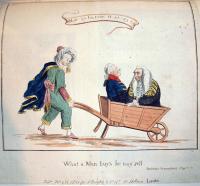
Joshua Kirby Baldrey (1754-1828), H-st-gs ho, rare H-st-gs!, 1788. Etching. Hastings at wheelbarrow in which sit George III and Thurlow. “What a Man buys he may sell”

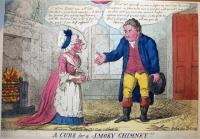
Charles Williams (1797-1830) after a design by George Moutard Woodward (1797-1830), Cure for a Smoky Chimney, 1808. Etching.


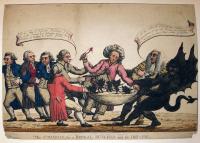
Joshua Kirby Baldrey (1754-1828), The Struggle, for a Bengal butcher and an imp-pie, 1788. Etching. Hastings holding a large pie; on the right are Thurlow and the Devil.

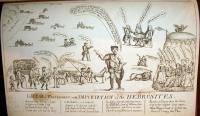
Gisbal’s Preferment; or the Importation of the Hebronites, 1762. Etching. “To suit the Times, and raise a Laugh … Arrive to Occupy their Place”


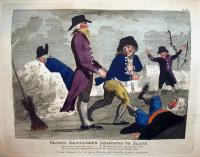
Artist unknown


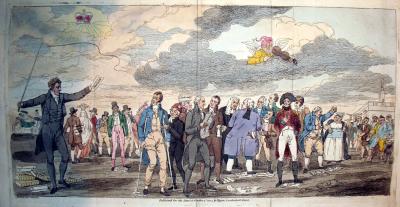
Grown Gentlemen learning to skate, 1794. Engraving. Published by John Evans and Thomas Prattent, London. “Alas what various ills await / The booby who attempts to skate…”.

Picturing the French Revolution

| No Comments
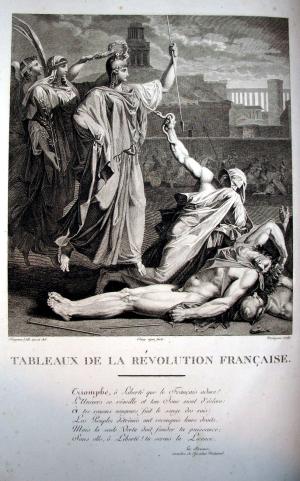
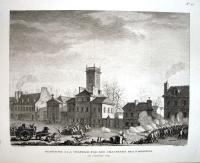
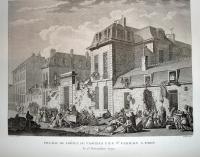
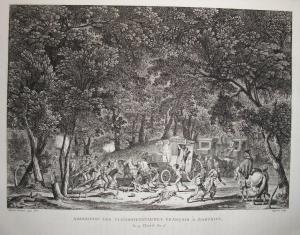
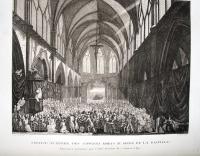
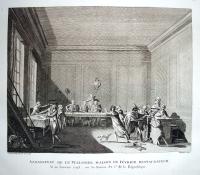
Collection complete des Tableaux historiques de la Révolution française, en deux volumes: … (Paris, de L’imprimerie de Pierre Didot L’Aîné An VI de la Republique française, 1798). 144 engravings. Graphic Arts GA2010- in process.


The French painter and draftsman, Jean Louis Prieur, the younger (1759-1795) is principally known for his drawings, a few shown here, of the French revolution. Engraved by Pierre Gabriel Berthault (ca. 1748-ca. 1819) these images were published by L’imprimerie de Pierre Didot in several editions under the title Collection complete des Tableaux historiques de la Révolution française. They sold originally in sets of two for six livres each and in 1802, a three-volume deluxe edition was published that included portraits.

Like Gardner’s Photographic Sketch Book of the Civil War in the next generation, Prieur and several other artists created these images from 1789 to 1792 as the revolution was taking place. In the final volumes, the engravings are each accompanied by extensive commentaries written by Sébastien Roche Nicolas de Chamfort and Abbé Claude Fauchet.

For more information, see Amy Freund, “The Legislative Body: Print Portraits of the National Assembly, 1789-1791,” Eighteenth-Century Studies 41, no. 3 (Spring 2008): 337-58.

Claudette Hould, L’Image de la Révolution française (Québec: Musée du Québec, 1989)

Cincinnati photographer James Landy

| No Comments

James Landy (1838-1897), Cincinnati Past and Present: or, its Industrial History, as Exhibited in the Life-Labors of its Leading Men (Cincinnati: Printed by the Em Street Printing Co., 1872). Graphic Arts GAX 2009-0858N

Each volume of this biographical series on prominent Cincinnati men contains 125 albumen silver prints. Photographer James Landy said he spent over two years making the nearly 70,000 prints that were required for the whole edition.

In an interview with Landy, published in the Commercial Gazette (January 26, 1896) just a year before his death, Landy discussed his life and work:

“During my career as photographer I have met hundreds of men and women, who were or are still prominent in politics, or in the professions, and I could tell you many an interesting reminiscence. My collection of portraits of celebrities, taken during the last thirty-five years, numbers many hundreds, and at present I am at work cataloguing them. They will be exhibited some time this year.”

Mr. Landy has been exceptionally successful during his career, and many are the acknowledgments of the superiority of his artistic work which have been awarded to him. His series of seven photographs, representing Shakespeare’s “Seven Ages,” has become famous all over the world. A set of these pictures, tastefully framed, adorns the walls of the Shakespeare Memorial Library in Stratford-on-Avon, and a handsome letter of thanks from the Shakespeare Memorial Association is in Mr. Landy’s possession, and treasured highly by him.

At many exhibitions valuable prizes have been awarded to Mr. Landy for his excellent and artistic work. At the Chicago Exhibition of the Photographers Association of American, in 1887, he was awarded the Blair Cup for his “Man, Know Thy Destiny,” and at the Convention in 1888, in Minneapolis, his “Hiawatha” again won him the Blair Cup.

Thanks to Gary W. Ewer for finding the quote.

Mammoth magic book

| No Comments

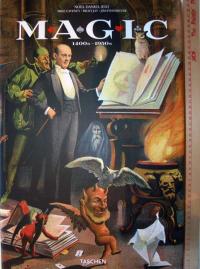
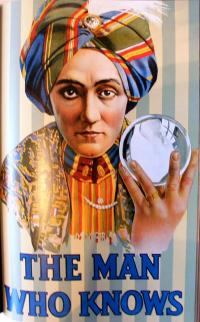
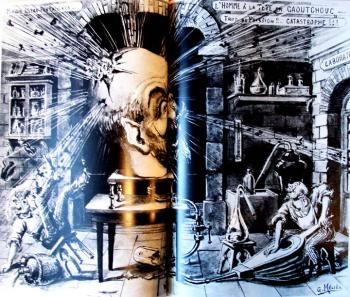
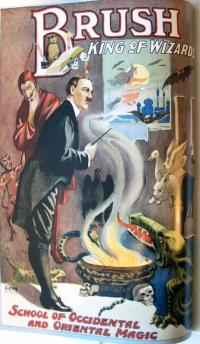
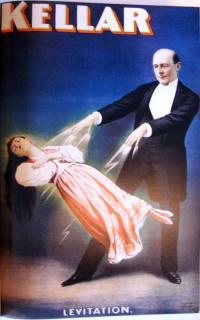
Magic, 1400s-1950s (Köln: Taschen, 2009). Edited by Noel Daniel, introduction by Ricky Jay, essays and captions by Mike Caveney and Jim Steinmeyer. Written in English with parallel text in German and French.

Graphic Arts recently acquired this 650 page folio covering approximately 500 years of magic history and graphic ephemera. The book features reproductions of more than 1,000 posters, photographs, handbills, and engravings as well as paintings by Hieronymus Bosch and Caravaggio.


Here are biographies of the contributors as provided by the publisher:

Mike Caveney is a writer, collector, professional magician, and the publisher of over 50 books on the theory, practice, and history of magic. His biographical works include Kellar’s Wonders (2003) with Bill Miesel, and Carter the Great (1995). An avid collector and performer for over four decades, he has appeared onstage or on TV in more than 20 countries. http://www.mcmagicwords.com/

Jim Steinmeyer is the author of many books on magic history and practice, including Los Angeles Times bestseller Hiding the Elephant (2004) and The Glorious Deception (2006). He has created deceptions featured by magicians such as Doug Henning, David Copperfield, and Siegfried and Roy, and critically acclaimed illusions for Broadway hits Mary Poppins, Beauty and the Beast, and Into the Woods. http://www.jimsteinmeyer.com/

Ricky Jay is one of the world’s great sleight of hand artists, and a distinguished actor, historian, and best-selling author. His Learned Pigs & Fireproof Women and Jay’s Journal of Anomalies were both New York Times “Notable Books of the Year,” and he defined the terms of his art for The Cambridge Guide to American Theatre and Encyclopedia Britannica. http://www.rickyjay.com/

About the editor: Taschen editor Noel Daniel graduated from Princeton University, and studied in Berlin on a Fulbright Scholarship. She received a master’s in London and was the director of a photography art gallery before becoming a book editor. Her Tachen books include Magic 1400s-1950s (2009) and The Circus 1870-1950 (2008).

Flaxman's Iliad

| 1 Comment
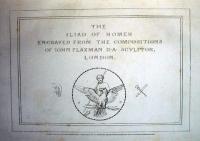
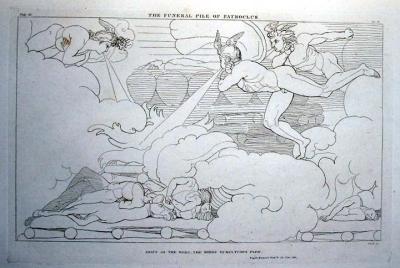
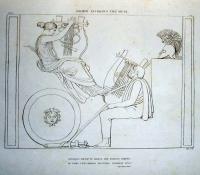
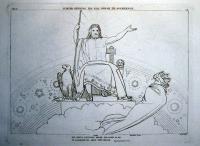
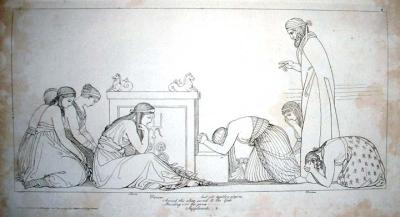
John Flaxman (1755-1826), The Iliad of Homer (London: Longman, Hurst, Rees & Orme [etc.] 1805). Bound with The Odyssey of Homer (London: Longman, etc., 1805), Compositions from the Tragedies of Aeschylus

(London: Matthews, 1795), and The Theogony, Works & Days, & the Days of Hesiod (London: Longman, etc., 1817). Graphic Arts Collection (GAX) Oversize 2006-0096F

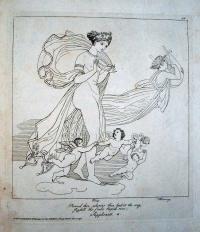
Halfway through his seven year stay in Rome (1787 to 1794), the British sculptor and designer John Flaxman received a commission from Thomas Hope (1769-1821) for a set of drawings for Dante’s Divine Comedy. By the time these 109 drawings were finished, Flaxman had other commissions from Mr. Udney and Mrs. Hare-Naylor for drawings after the Iliad and the Odyssey and from Countess Dowager Spencer for Aeschylus drawings. Flaxman worked furiously, sculpting during the day and drawing all night, to finish this work.

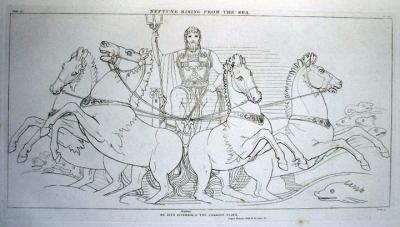
The Iliad and the Odyssey drawings were engraved by Tommaso Piroli (ca. 1752-1824) and published in Rome in 1793, followed by Aeschylus (1795). Hope wanted to keep the Dante drawings only for himself and so, an engraved edition did not appear until 1802. Back in England, Flaxman completed a set of drawings to Hesiod (1817) that were engraved by his friend William Blake (1757-1827). Princeton is fortunate to have a set of each.


Delacroix's Faust

| 3 Comments
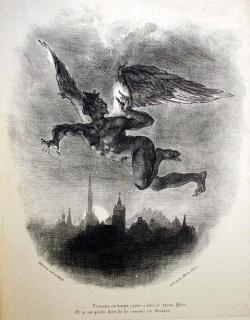
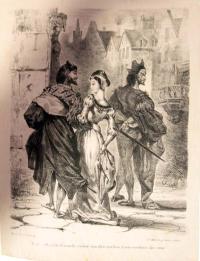
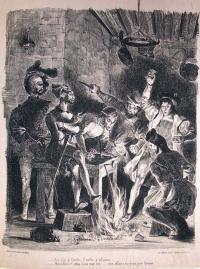
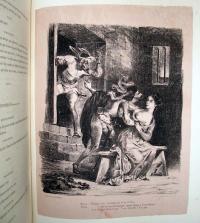
“Delacroix has surpassed my own vision.” This was Goethe’s response to Delacroix’s 1828 lithographs for his drama Faust.

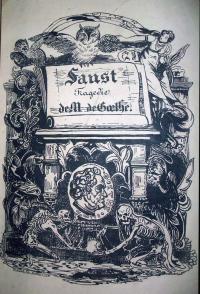
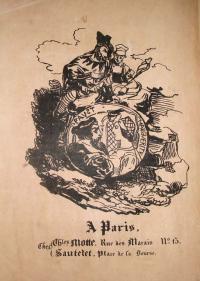
Johann Wolfgang von Goethe (1749-1832), Faust, tragédie de M. de Goethe. Translated by Philipp Albert Stapfer (1766-1840). Illustrated with 17 lithographs by Eugène Delacroix (1798-1863), plus two variant issues of Delacroix’s portrait of Goethe and an added portrait of Delacroix by A. Masson (Paris: C. Motte [etc.], 1828). Front and rear original illustrated wrappers bound-in, design attributed to Achille Devéria (1800-1857). Purchased by Rare Book and Graphic Arts divisions, 2009- in process

Princeton University Library is fortunate to have acquired a superb copy of the 1828 illustrated edition of Goethe’s Faust, considered by most historians to be one of the finest publications of the nineteenth century. Gordon Ray calls Delacroix’s illustrations “the high point of Romantic book illustration,” and David Bland called the volume “one of the very greatest of all illustrated books.”

This copy survives in a particularly fine condition, with brilliant impressions of the lithographs printed on white, rose, blue, and light grey Chine collé. The individual prints are all second or third states (a complete description continues below).

“‘It must be admitted,” said Goethe (translated from Eckermann), “that I myself scarcely imagined the scene so perfectly! M. Delacroix is a great artist of exceptional talent, who has found in Faust precisely the subject that suits him.”


Loys Delteil writes in Delacroix, the Graphic Work: A Catalogue Raisonné (Marquand Library Oversize ND553.D33 D4613 1997Q) that

“Delacroix planned to have a portfolio of illustrations without text but Sautelet, one of the publishers, wished to reissue Stapfer’s translation, which he had first published in [1822]. The initial plan was for twelve plates, but this was later increased to seventeen plus the portrait of Goethe. Delacroix’s first idea for the project dated from 1824 when he had begun to share his friend Jean-Baptiste Pierret’s enthusiasm for Faust. He worked on it from mid-1825 until December 1827. The publication was announced in February 1828.”
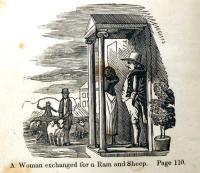
The sequence of execution of all the plates has not been determined, but covered the period 1825-1827. It is known that Delacroix had finished “Méphistophélès in Auerbach’s Tavern” and “Faust and Méphistophélès galloping on Walpurgis Night” by the end of November 1826 since impressions of those prints were in Goethe’s possession by that time. “Méphistophélès introduces himself at Martha’s House” was completed about October 1827. The portrait of Goethe was not completed before December 1827.
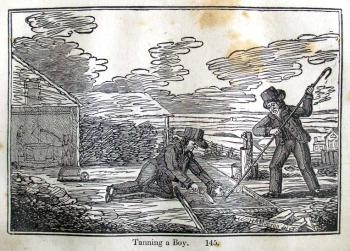
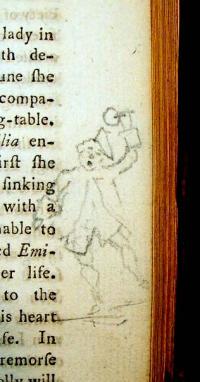
In the letter to Burty, Delacroix mentioned a dramatic opera Faust in London in 1825 with the actor Terry as the greatest inspiration to his plates. He described that performance in a letter to Pierret June 18, 1825. The production Delacroix attended has been identified as the romantic melodrama Faustus by George Sonane and Daniel Terry with music by Bishop, Horn, and Cooke, which opened at the Duruy Lane Theater May 16, 1825.
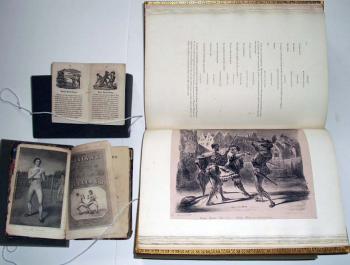
Delacroix’s large, free lithographs met with a hostile reception. His stated purpose was “to astonish the middle class” and he conceived them as a deliberate act of aggression. Goethe said “The French public reproach him for an excess of savage force, but, actually, here it is perfectly suitable.” Delacroix’s Faust is seen here in relation to two other contemporary British and American publications, using the prevailing illustrative style of small, formal engravings.

top left: Book of Cuts, Designed for the Amusement and Instruction of Young People (New York: M. Day, 1828). Wood engravings by Alexander Anderson (1775-1870). Graphic Arts Collection (GAX) Hamilton 1439

and

bottom left: Pierce Egan (1772-1849), New Series of Boxiana: Being the Only Original and Complete Lives of the Boxers (London: George Virtue, 1828-1829). Rare Books off-site, 4276.325.2

Jack Sheppard: A Romance

| No Comments

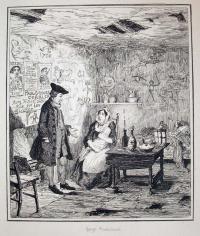
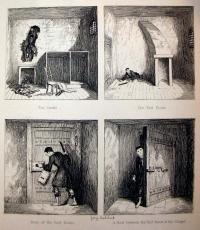
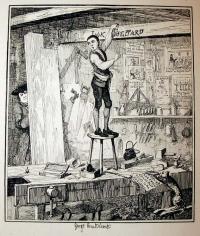
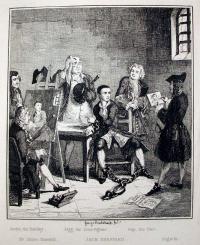
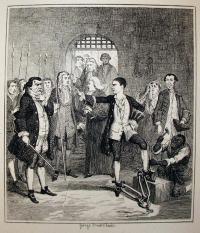
George Cruikshank (1792-1878), [Illustrations to Jack Sheppard, by William H. Ainsworth (1805-1882)] (London: R. Bentley, 1839). Graphic Arts Collection (GA) Cruik 1839.01

William Harrison Ainsworth (1805-1882), Jack Sheppard: a Romance. Illustrations by George Cruikshank (London: R. Bentley, 1839). 3 volumes with 27 etchings. Includes 4 additional pencil drawings. Graphic Arts Collection (GA) Cruik 1839


At the age of twenty-two, the handsome Cockney thief Jack Sheppard (1702-1724) was arrested and imprisoned five separate times in the same year. Each time he escaped, only to be captured again. Near the end of the year he was recaptured, convicted, and hanged.

During his final incarceration in Newgate prison, Sheppard was bound with three hundred pounds of iron weights. Guards charged visitors four shillings to see him. 200,000 people followed him through the streets of London to attend his hanging. A play based on his life opened less than two weeks later.

Dozens of book, plays, and songs have been written about Sheppard, including William Ainsworth’s novel Jack Sheppard, a Romance (seen here) illustrated by George Cruikshank. Ainsworth’s story was serialized in Bentley’s Miscellany beginning January 1839 and the complete book released before the end of the year, outselling Oliver Twist.

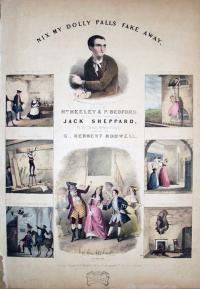
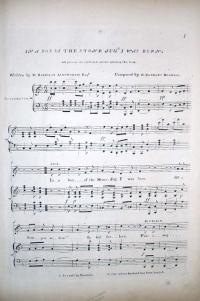
George Herbert Rodwell (1800-1852), Nix my dolly palls fake away: sung by Mrs. Keeley & P. Bedford, composed by G. Herbert Rodwell (London: D’Almaine, [ca. 1839]). Words by William H. Ainsworth and illustrations by George Cruikshank. The drama was first performed at the Adelphi Theatre, London, on 28 October 1839. Graphic Arts Collection (GA) Oversize Cruik 1839.7.183-q

Here is a small selection of projects based on the life of Jack Sheppard:

  1. A narrative of his life, published by John Applebee Harlequin Sheppard (1724)
  2. A pantomime by Thurmond, performed in Drury Lane in December 1724
  3. The character of Macheath in John Gay’s The Beggar’s Opera (1728) and The Threepenny Opera of Bertolt Brecht and Kurt Weill (1929)
  4. “Industry and Idleness,” a series of twelve engravings by William Hogarth (1747)
  5. Jack Sheppard the House-breaker (1825)
  6. A melodrama by W.T. Moncrieff Jack Sheppard
  7. A novel by William Harrison Ainsworth (1839) (later the same year adapted into a play by John Buckstone)
  8. Little Jack Sheppard, an operetta with libretto by Henry Pottinger Stephens and William Yardley, and score by Meyer Lutz (1885)
  9. Silent movies: The Hairbreadth Escape of Jack Sheppard (1900) and Jack Sheppard (1923)
  10. Where’s Jack? directed by James Clavell (1969)
  11. The Thieves’ Opera by Lucy Moore (1999)

Thackeray in the margins

| No Comments

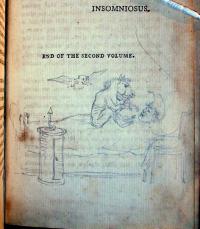
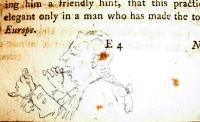
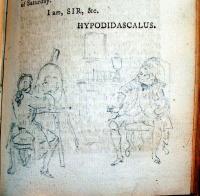
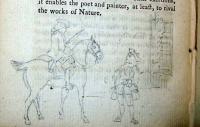
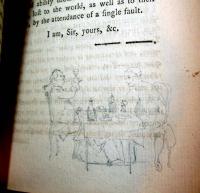
Henry Mackenzie and others, The Mirror: A Periodical Paper (London: printed for A. Strahan and T. Cadell in the Strand…, 1787). Three volumes from the library of William Makepeace Thackeray (1811-1863) with twenty-four pencil drawings by Thackeray in the margins. Graphic Arts GAX 2009- in process

William Thackeray was not only a nineteenth-century writer but also a graphic artist with a talent for caricature. He owned these three volumes of The Mirror and was inspired to make twenty-four small drawings at the ends of chapters and in the margins of stories.

Thanks to the research of Christopher Edwards, we know that the volumes were mentioned in the short catalogue issued by Henry Sotheran in February 1879, as “Relics from the library of the late W.M. Thackeray, comprising books of no great value in themselves, but enriched by numerous characteristic drawings, executed with remarkable skill and taste.” These three small volumes and their marginalia were priced at two pounds, five shillings, one of the higher prices in the catalogue.

Thackeray’s volumes were eventually donated to University of Aberdeen by A.A. Jack (1869-1946), professor of English at the University, but have since been deaccessioned. Happily, they now reside in graphic arts and can be viewed Monday to Friday in our reading room.

See also: William Makepeace Thackeray (1811-1863), Album of sketches and drawings, [183-?], in the Robert H. Taylor collection of English and American literature, Rare Books Manuscripts Collection (MSS) RTC01 (no. 145)

Colonel Johnson VS Tecumseh in the War of 1812

| 1 Comment

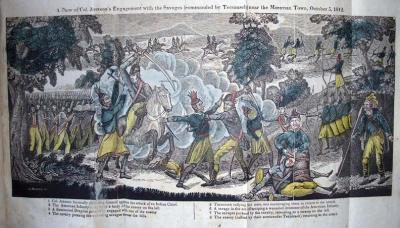
Henry Trumbull, History of the Discovery of America (Boston: J.P. Peaslee, 1828). Illustrated with hand colored wood engravings by Abel Bowen. Graphic Arts, Hamilton 446.

The Boston printmaker Abel Bowen (1790-1850) has been listed in this blog before. The graphic arts division holds nearly ninety books illustrated by the artist. This volume contains three prints, one of which is the remarkable fold-out of “A View of Col. Johnson’s Engagement with the Savages (commanded by Tecumseh) near the Moravian Town, October 5, 1812.”

While crude, the print give a vivid account of the war between the native Americans led by Tecumseh (1768?-1813), chief of the Shawnee, and the U.S. cavalry led by Colonel Richard M. Johnson (1780 or 81-1850). These same three cuts are also found in the 1819 edition of the book published in Boston by Stephen Seweel and in editions published in Boston by George Clark in 1822, 1830, and 1831.

Tecumseh was a widely respected war chief, whose given name was actually Tecumtha or Tekamthi, meaning Celestial Panther Lying in Wait. In 1795, he refused to sign the Treaty of Greenville, which ceded much of present-day Ohio to American settlers. Instead, Tecumseh attempted to form a confederacy of tribes for the purpose of holding the Ohio river as a permanent boundary to white settlers. He did not succeed. During the War of 1812, he fought to support the British and received a commission as brigadier general.

For more information, see Colin Gordon Calloway, The Shawnees and the War for America (New York: Viking, 2007). Firestone Library (F), E83.775 C355 2007

Washington Irving Footprints

| No Comments

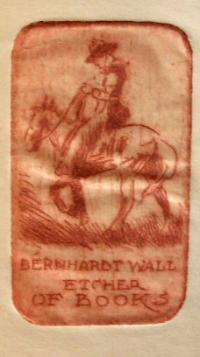
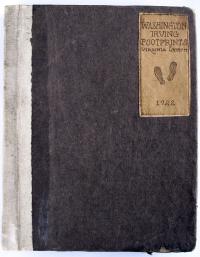
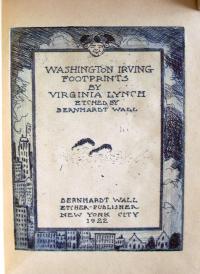
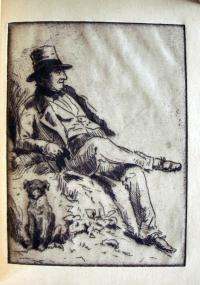
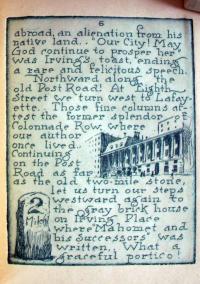
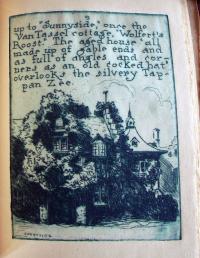
Washington Irving Footprints. Text by Virginia Lynch. Drypoint etchings by Bernhardt Wall (New York: B. Wall, 1922). Rebound. Copy 116 of 250. Gift of David B. Long in honor of Gillett G. Griffin. Graphic Arts GAX in process

We are fortunately to have received the donation of another Bernhardt Wall (1872-1956) etched book, joining the eight already in rare books and special collections (see earlier post). It is a fine example of Wall’s publications, in which he not only drew the etchings for his books, but also printed and bound them.

Wall was an avid researcher of American history. He published biographies of several American presidents and various American writers, including Theodore Roosevelt, Warren Taft, Henry Coolidge, Sam Houston, Mark Twain, Thomas A. Edison, Abraham Lincoln, and Andrew Jackson. This is his biography of Washington Irving.

For more information on Wall, read Francis J. Weber, Following Bernhardt Wall: 1872-1956 (Austin, Tex: Book Club of Texas, 1994). Graphic Arts (GAX) Oversize 2005-0466Q

True and Correct Tables of Time

| No Comments

This posting is to remind us all that the daylight savings time clock change is coming next weekend.

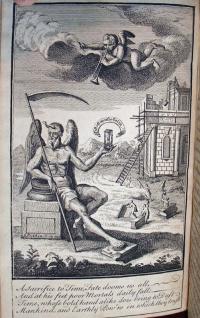
A sacrifice to Time, Fate dooms us all // And at his Feet poor Mortals daily fall // Time whose bold hand alike does bring to Dust // Mankind, and Earthly Pov’ns in which they Trust

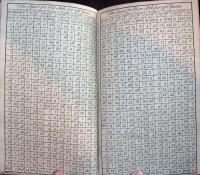
Robert Tailfer (1710-ca.1736), True and correct tables of time: calculated for the old stile for 784 years viz. from A. D. 1300, to 2083, both inclusive; and for the new stile, from its commencement viz. 1582 to 2083 inclusive, being 501 years (London 27 Decr. 1736). Graphic Arts (GAX) 2009 -in process

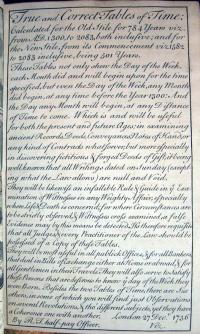
Written by a British naval officer Robert Tailfer, these tables were designed to ease the conversion between dates on the Gregorian calendar and the Julian (Old Style) calendar. The book includes a brief history of the Gregorian calendar (part seen above) and three tables: the first giving the dominical letter for each year from 1300 to 2083, the second relating the days of the week to the dominical letter for each month of the year, and the third relating the epact (surplus days of the solar over the lunar year) and golden number for each year in both the Old Style and the Gregorian systems. See: http://www.newadvent.org/cathen/05480b.htm

According to Tailfer, these tables are useful “in examining ancient Records, Deeds, Conveyances, Notes of Hand, or any kind of Contracts whatsoever, but more especially in discovering fictitious & forged Deeds of Gift, it being well known that all Writings dated on Sunday (excepting what the Law allows) as null and Void.”

The English artist George Bickham I (also known as the Elder, ca. 1684-1758) engraved the entire work, including the allegorical frontispiece. Bickham was a writing master who is best known for his engraved copy books, such as Art of Writing, in its Theory and Practice (1712) Rare Books (Ex) 2007-0692Q; Second Part of Natural Writing: Containing the Breakes of Letters and Their Dependance on Each Other (1740) Graphic Arts Collection (GAX) 2007-0421Q; Natural Writing: In All the Hands, with Variety of Ornament (1740) Graphic Arts Collection (GA) 2007-0462Q; and most important of all, The Universal Penman; Or, the Art of Writing Made Useful to the Gentleman and Scholar, as well as the Man of Business … (1743) Cotsen (CTSN) Folios 11406

Calligraphy in its Entirety

| No Comments

Anton Kuchenreiter, Die Calligraphie in ihrem ganzen Umfange, geschrieben in Stein (Calligraphy in its entirety, written in stone) (Neuburg an der Donau, 1831). 35 x 51 cm.

This is the first and only edition of a German writing album containing thirty-three plates printed lithographically by Anton Kuchenreiter. It is a dedication copy for Princess Therese von Thurn und Taxis (1773-1839) and the bookplate bears the Thurn und Taxis arms. The dedication is signed “Anton Kuchenreiter lithograph.”

Kuchenreiter is not listed in any of the standard indexes to printmakers. However, there was a Swiss firm named Kuchenreiter known for their elaborately engraved firearms, led by Andreas Kuchenreiter I (1716-1795). It seems likely that Anton learned engraving from members of the family and incorporated the detail of the cut line with the ease of lithography.

The book was printed in Neuburg an der Donau (Neuburg on the Danube River), the capital of the Neuburg-Schrobenhausen district in the state of Bavaria, not far from the first quarries of Bavarian limestone, which was the favored stone of the earliest lithographers.

Princess Therese was born Duchess von Mecklenburg-Strelitz before marrying Prince Karl Alexander von Thurn und Taxis. Her younger sisters were Louise, Queen of Prussia; Duchess Charlotte von Saxe-Hilburghausen; and Princess Friedrike of Prussia. In the volume’s final plate, Kuchenreiter has drawn three names as though they were printed on top of each other: Louise, then Charlotte, and finally Therese. If you look closely, you will see additional words inside the letters of Therese’s name.


One more point of interest, the work is an example of lithographic engraving, or engraving on stone. A coating of grease-resistant gum arabic is painted on the stone and the artist scrapes away the text with a steel point. The exposed stone is inked and the rest is treated like lithography. This means that it would be written laterally reversed. For more, see Michael Twyman’s Early Lithographed Music (1996), p. 504. Mendel Music Library Ref SV ML112.T89 1996

Hot Corn

| No Comments

It seem fitting in a week when announcements are issued concerning Playboy as mandatory reading for certain Architecture graduate students and masturbation being prohibited in Princeton bathrooms, that we post something from a temperance book devoted to showing the “lamentable conditions” to which the wicked are apt to fall.

Solon Robinson (1803-1880), Hot Corn: Life Scenes in New York Illustrated. Including the Story of Little Katy, Madalina, the Rag-Picker’s Daughter, Wild Maggie, etc. (New York: DeWitt and Davenport, 1854). Half title and six full-page illustrations by John McLenan (1827-1865) and one by Frederick M. Coffin, all engraved on wood by N. Orr. Graphic Arts Hamilton 1043.

This is a collection of stories first published individually in the New York Tribune, then released, according to an 1853 advertisement in the New-York Daily Times, in an edition of 15,000. The book sold in a cloth binding for $1.25 and in a gilt edition for $2.00. It was a best-seller. The sad stories focus on the beggars, the alcoholics and the prostitutes who lived in and around the Five Points area in the lower east side of Manhattan.

So popular were the stories that three separate theater productions were developed around the character of Little Katy (who sold hot corn in the winter and peanuts in the summer) at Barnum’s American Museum, the Bowery Theatre, and the National Theater. At the latter venue, Little Katy ran in repertory with Uncle Tom’s Cabin.

There are many such books on our collection. See also Ernest Gray or The Sins of Society by Maria Maxwell (1855) Graphic Arts Hamilton 1055

According to Sinclair Hamilton, the artist John McLenan was discovered by the publishers working in a pork-packing plant in Cincinnati and making drawings on the tops of barrels. He became one of the most prolific of our early illustrators. Besides the American temperance books, McLenan illustrated many English novels for Harper’s, such as The Woman in White, Tale of Two Cities, and Great Expectations, as well as being well-known as a comic draftsman.

Unfortunately McLenan died in 1865 at the age of thirty-eight. The memorial which appeared in the May number of Yankee Notions called him:

…one of the best draughtsman America has ever produced…. Equally at home in caricature and in sketches from the life, with a quick perception of the ridiculous and a fine appreciation of the picturesque, he soon took his place among the illustrators of our current literature, second to none.

See another biography at http://www.victorianweb.org/art/illustration/mclenan/bio.html

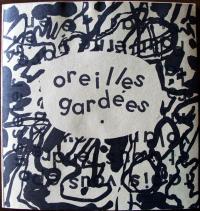
Books that can't be read with Google, no. 1

| No Comments

Molly Burgess, Still ([Piscataway, N.J.] : Carolingian Press, 1975). Copy 16 of 25. Graphic Arts Collection (GAX) in process

This is a book of concrete poetry, based on Eastern philosophy and religion. The words have the appearance of a typewriter face but are in fact printed by letterpress at the Carolingian Press on different handmade rice papers. The book includes anagraphic, concrete poems incorporating the words: breath, earth, heart, death.

The artist writes:

Still is my response to a study of Eastern philosophy and religion. Though the book is based on personal interpretation and experience, there are specific links to both the history and philosophy from which it was conceived. Designed as a complete experience, it leads from the unfolding of the cover through the colors, into the patterns, the paradox, the stillness….

The book is arranged on four different levels: by color, by country, by thought, and by number…. There are thirty-two poems, eight in each of the four sections (the Eightfold way: right views, right intentions, right speech, right action, right profession, right effort, right watchfulness, right concentration). Each section of eight is again divided in two sections of four (the Four Noble Truths) by the ‘lace’ papers. The paterns of the four ‘lace’ papers progress from diamond to star to scallop to circle.

Koloman Moser in the TLS

| 2 Comments

In the September 18, 2009, issue of the Times Literary Supplement on paper, the TLS chose to illustrate Robert Vilain’s review of three books about Rainer Maria Rilke with a double-page spread from Ver Sacrum (correct citation: Heft 21, 1. November 1901). Don’t check the digital article because the online TLS does not include the images from the paper copy, only the words. The Rilke verse is from the dialogue Vorfrühling (Early Spring) from Drei Spiele (Three Plays), spoken by Die Schwarze Herzogin (the Black Duchess) and a servant. There is a credit line for Rilke but no mention of the graphic artist who makes the pages so appealing.

The pages were drawn and printed by Koloman Moser (1868-1918). In the outer margins you can see his small printed signature “Kolo Moser”. As a cofounder of the Vienna Secession, Moser joined Gustav Klimt, Josef Hoffmann, and others to establish a revolutionary new art outside of academia. Moser served as editor of their journal, Ver Sacrum, as well as the chief designer for several years. Through the journal’s pages, Moser endeavored to fuse art and literature, graphics and text. With respect to TLS, I’m not sure he would have approved of their description of his work as illustration or the disconnect between paper and digital versions of their publication.

Ver sacrum: Organ der Vereinigung Bildener Künstler Österreichs (Wien: Verlag Gerlach & Schenk, 1898-1903). Marquand Library (SAX) Oversize N6494.W5 V47q

For more information, see also Koloman Moser, 1868-1918 (Vienna: Leopold Museum; Munich; New York: Prestel, c2007). Marquand Library (SA), ND509.M7 A4 2007b

During 1903, Moser and Hoffmann left the Secession group and founded the Wiener Werkstätte. Their Almanach also included texts by Rilke and designs by Moser. See Almanach der Wiener Werkstätte (Wien: Rosenbaum, [1911]). Graphic Arts Collection (GAX) 2007-0687N

Portrait of Einstein by Okamoto Ippei

| No Comments

We recently found we have a rare copy of Ando Hiroshige’s Fifty-Three Stations on the Tokaido (Jimbutsu (Mankind) Tokaido), Muraichi, 1852. Chuban tateye. As if that isn’t good enough, it may have been the personal copy of Albert Einstein (1879-1955), who traveled to Japan in 1922. The library has a number of ephemeral items from that trip. http://diglib.princeton.edu/ead/getEad?id=ark:/88435/9880vr03d.

At the back of this volume is a portrait of Einstein by the cartoonist Okamoto Ippei (1886-1948), done in December of 1922 in Sendai, Miyagi Prefecture, Japan. The artist was fluent in English, having traveled a great deal, and was actively publishing his cartoons in several magazines and newspapers at the time. We hold a number of his published books, such as Yama to umi (Mountain and ocean) ([Osaka]. Osaka Asahi Shinbunsha. 1926) Cotsen Children’s Library (CTSN) Non-Roman — Japanese 38189. He must have made Einstein’s acquaintance and agreed to do this caricature in the man’s book.

1 2 3 4 5 6 7 8 9 10 11 12 13 14

Recent Comments

  • Isabel Ribeiro: Thank you for your reply. I would indeed love to read more
  • Isabel Ribeiro: Gorgeous! Is there any way to access the rest of read more
  • S. Scudder: Mary Stilwell is my ggg-grandmother ... thank you for posting read more
  • V.E.G.: James Franklin, Benjamin Franklin's half-brother is a direct descendant of read more
  • Bob Fleck: Nice comments and well worth it. read more
  • N. Sutherland: Do you have any further biographical material on this Thomas read more
  • john W: Have the complete collection of EA Seguy papillons including front read more
  • Vermathio: algarabia, charabia et Picabia. Le premier désigne la langue read more
  • Matt SCOVILL: I have the complete "bookplates in Japan" box. I am read more
  • Daniel Joseph Bobroff: April 30, 2013 To Princeton University: This is a Plaintiff read more