Recently in Illustrated books Category

In that Droll and Pleasing Manner of Mary Darly

| 1 Comment
darly3.jpg
darly10.jpg

Mary Darly (flourished 1756-1779) managed a London print shop call The Acorn, first on Ryder’s Court, near Cranbourn Alley and later at 39 Strand, on the corner of Buckingham Street. Here’s a modern map to see where she worked:


View Mary Darly in a larger map

darly2.jpg
darly6.jpg

Darly designed and sold a variety of uncomplicated caricatures of politicians and upper class women’s fashion. Mary also taught etching and printing, probably to the very ladies she was satirized in her prints. Her husband, Matthew Darly (flourished 1741-1778) was also a printmaker and their penchant for both signing prints “M. Darly” has led to some confusion over authorship.

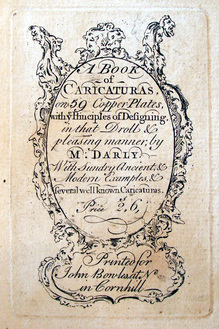
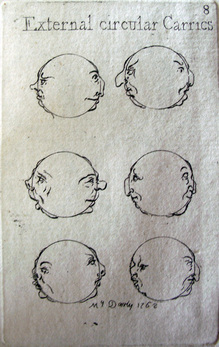
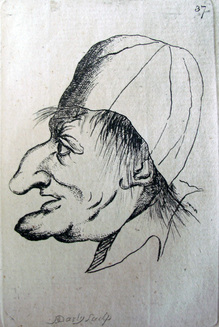
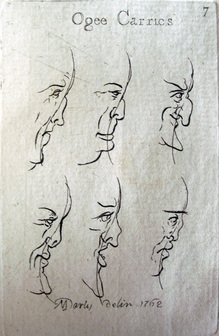
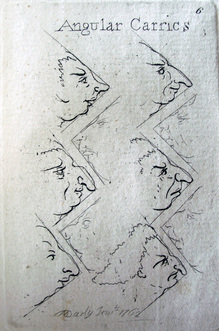
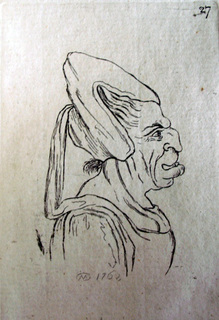
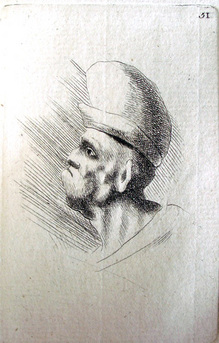
Mary Darly is credited with writing (and engraving) the first manual to drawing caricatures, A Book of Caricaturas on 59 Copper-Plates (1762), seen here. There is only one page of commentary, three pages of instruction, and a number of specimens.

darly9.jpg
darly8.jpg

Mary Darly (flourished 1756-1779), A Book of Caricaturas: on 59 Copper-Plates, with Ye Principles of Designing in that Droll & Pleasing Manner, with Sundry Ancient & Modern Examples & Several Well Known Caricaturas (Cornhill [London]: Printed for John Bowles, 1762). All etched and engraved. Graphic Arts GA 2005-2501N

darly7.jpg
darly5.jpg

Seba's Thesaurus

| No Comments
locup2.jpg
Pierre Tanje (1706-1761), after a design by Louis Fabricius Dubourg (1693-1775), Industria. Frontispiece in volume one of Albertus Seba (1665-1736), Locupletissimi Rerum Naturalium Thesauri Accurata Descriptio [An Accurate Description of the Very Rich Thesaurus of the Principal and Rarest Natural Objects] (Amsterdam: Wetsten, Smith, Jansson-Waesberg; 1734-65). Graphic Arts Dutch prints.

locup1.jpg

The engraving seen above was found in the graphic arts collection without attribution. After some searching, Vicki Principi matched it with a spectacular thesaurus of animal specimens by the Dutch zoologist Albertus Seba. The four-volume reference work was derived from the physician’s own Cabinet of Curiosities and has been called one of the greatest natural history books ever published.


Our plate is the frontispiece for volume one, engraved by Pierre Tanje (1706-1761) after a design by the Dutch painter Louis Fabricius Dubourg (1693-1775). A quick check of Princeton University’s copy showed that the plate had not been removed from Princeton’s set and so, we now have two copies of this engraving: one bound and one unbound.

Albertus Seba collected exotic plants, snakes, birds, insects, shells, lizards and other animals. At first, these specimens were part of his profession, used to mix treatments in his pharmacy. But then, collecting grew into a personal obsession. In the early eighteenth century his entire collection was sold to Peter the Great (1672-1725) and moved to St. Petersburg, helping to establish the Russian Academy of Sciences.

For the complete set, see Albertus Seba (1665-1736), Locupletissimi Rerum Naturalium Thesauri Accurata Descriptio (Amsterdam: Wetsten, Smith, Jansson-Waesberg; 1734-65). Rare Books EX Oversize 8607.847e

More than 100,000 copies sold in the first few days

| No Comments
cruikshank bottle 8.jpg
cruikshank bottle 9.jpg
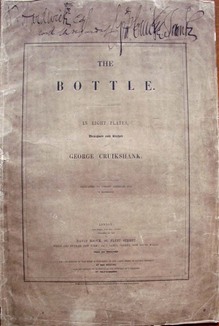
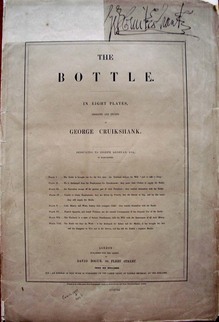
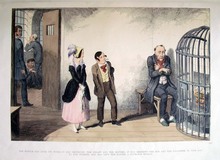
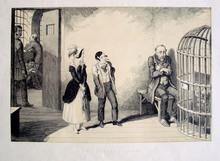
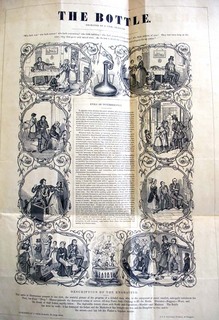
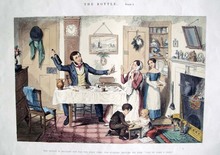
George Cruikshank (1792-1878), The Bottle, 1847. Two issues of the imperial folio edition; eight glyphographs with tint (right) and with hand coloring (left). Both gifts of Richard Waln Meirs, Class of 1888. Graphic Arts GA Oversize Cruik 1847.6eq

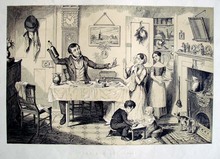
In 1847, inspired by William Hogarth’s Rake’s Progress, George Cruikshank published a graphic narrative in eight plates showing one man’s descent into sin, poverty, and insanity, due to alcoholism. More than 100,000 copies of The Bottle were sold in the first few days. The book was exported to America and Australia, dramatized at eight London theaters simultaneously, and performed as a magic lantern show.

cruikshank bottle 7.jpg
cruikshank bottle 6.jpg
cruikshank bottle 10.jpg
cruikshank bottle 11.jpg

George’s father, Isaac Cruikshank (1756-1811), was also a successful caricaturist until he died in a drinking contest. George was himself a heavy drinker until 1847, when he signed a vow of total abstinence. The Bottle was first published while he was still drinking.

The title page for an 1881 edition carries the following message: “Mr. George Cruikshank thinks it right to state that the first edition of this Bottle (the title of which ought to have been THE BLACK BOTTLE) was first published in 1847, double the size of this edition, and sold at One Shilling. And he wishes it to be further understood that these smaller plates are taken from the original Etchings, which he has in his own possession.”

cruikshank bottle 4.jpg
cruikshank bottle 2.jpg
cruikshank bottle poster.jpg
cruikshank bottle 5.jpg
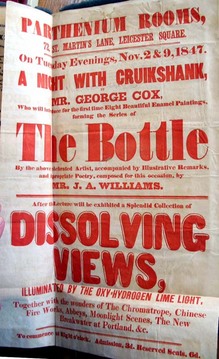
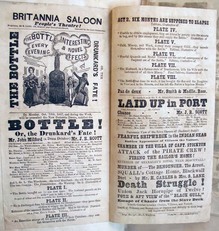
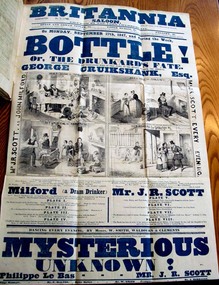
Broadsides from George Cruikshank’s scrapbook for The Bottle 1847-1848. Rare Books: Manuscripts Collection (MSS) C0256 (Series 10, volume no. 46)

“And Mr. George Cruikshank’s [objective] in producing this work of the Bottle was to assist, if possible, in putting a stop to the poverty, misery, wretchedness, insanity, and crime which are caused by strong drink. And this Bottle was published before G.C. became a Teetotaler; but upon mature reflection he came to the conclusion that nothing would ever stop these dreadful evils but Universal Total Abstinence from all intoxicating liquors; and thus having come to the belief that it was of no use preaching without setting an example, George Cruikshank in the same year, 1847, became a Total Abstainer.”

Cruikshank reproduced his drawings by glyphography, a quicker, cheaper way of making printing plates than carving wood blocks or etching plates with acid. Patented in 1842, the glyphographic plate was made by covering copper with a thick wax resist and drawing through the wax to expose parts of the metal. The plate was then electroplated creating a metal relief line, similar to the etched metal relief plates of William Blake but much less detailed or elegant. The relief plate can then be letterpress printed along with a caption or other text.

cruikshank bottle 14.jpg
cruikshank bottle13.jpg

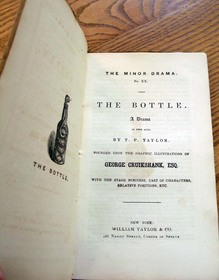
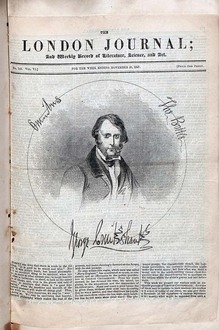
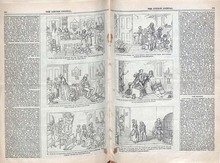
Above: Tom Taylor (1817-1880), The Bottle. As first performed at the City of London Theatre, in 1847 (New York: DeWitt Publishing House, [1847?]). Theatre Collection (ThX) TC023 (Playbooks Collection) Box 155. Below:The London Journal and Weekly Record of Literature, Science, and Art, November 20, 1847

cruikshank bottle15.JPG

cruikshank bottle 16.JPG

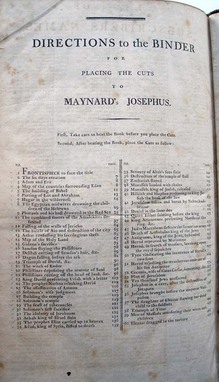
Flavius Josephus, with a map of Paradise

| No Comments
flavius2.jpg
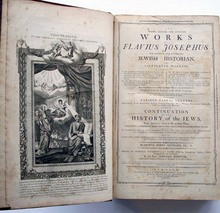
Flavius Josephus (37-ca.100), The Whole Genuine and Complete Works of Flavius Josephus, the Learned and Authentic Jewish Historian and Celebrated Warrior (New-York: William Durell, 1792). (GAX) Oversize Hamilton 207f
flavius.jpg

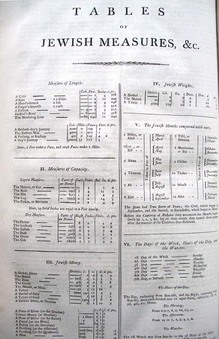
Josephus was a first century Jewish historian. According to the Catholic Encyclopedia, Josephus’s second work, the Jewish Antiquities (Ioudaike Archaiologia), contains in twenty books the whole history of the Jews from the Creation to the outbreak of the revolt in A.D. 66. His writings were translated into English in 1609 by Thomas Lodge (1558?-1625) and published as: The Famous and Memorable Workes of Iosephus, a Man of Much Honour and Learning among the Iewes. (William H. Scheide Library (WHS) 24.5.12).

flavius5.jpg
flavius4.jpg

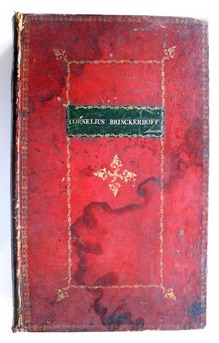
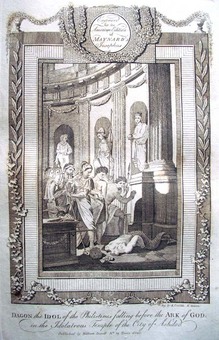
The front cover of this early American edition is stamped in gold letters with the name of Cornelius Brinckerhoff, who was one of the original subscribers. The book is impressively illustrated with sixty plates drawn by European artists Conrad Martin Metz (1749-1827), Thomas Stothard (1755-1834), and Richard Corbould (1757-1831), then engraved in wood by some of the leading American artists of the period, including Alexander Anderson (1775-1870), Cornelius Tiebout (1773-1832), Amos Doolittle (1754-1832), William Rollinson (1762-1842), J. Allen (active 18th century), Benjamin Tanner (1775-1848), and Elkanah Tisdale (1768-1835).

flavius6.jpg
flavius3.jpg

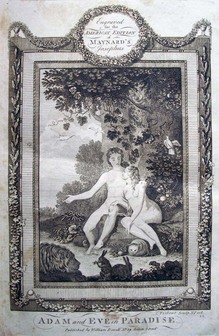
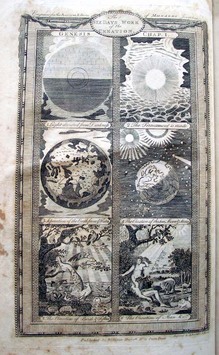
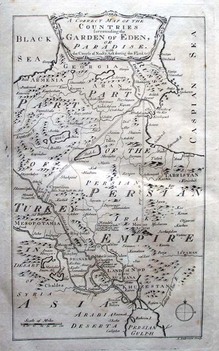
Above left: The Six Days Work of Creation. Above right: A Correct Map of the Countries surrounding the Garden of Eden or Paradise.

flavius7.jpg
flavius9.jpg

Winslow Homer buried in advertising

| No Comments
homerill2.jpg
homerill3.jpg

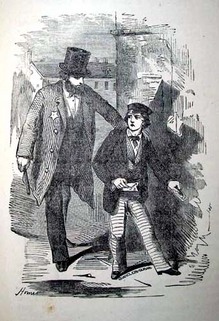
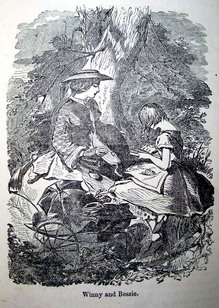
At the same time that Winslow Homer (1836-1910) was drawing his most famous illustration for Harper’s Weekly, “A Sharp-Shooter on Picket Duty” (1862), he was also illustrating children’s books, including Bessie Grant’s Treasure (GAX Hamilton 1726) and Fred Freeland or The Chain of Circumstances.

Original wood engravings created after his designs for the stories were reprinted in numerous advertisements for these books. Boston publishers Walker, Wise & Co. ran sixteen pages of advertising in the back of Susan Lander’s Spectacles for Little Eyes (1862) (Graphic Arts GAX 2011- in process). Three Homer prints can be found in these back pages.

Thanks to donor Tom Lange for discovering these prints and delivering them to graphic arts where they take their place alongside the wood engravings of the Sinclair Hamilton collection.


homerill5.jpg

Audubon's Four Striped Ground Squirrels

| 1 Comment
audubon squirrel4.jpg

audubon squirrel2.jpg

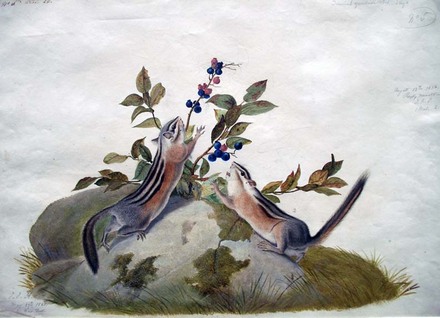
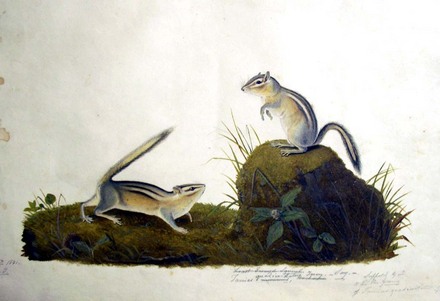
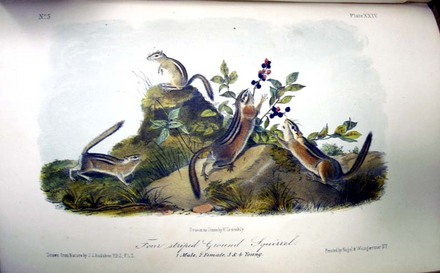
John James Audubon (1785-1851), Tamias Quadrivittatus, Striped Ground Squirrel, 1841. Two pen and watercolor drawings. Gifts of John Stanton Williams, Class of 1925. GC154 John James Audubon Collection. Drawn for Audubon’s Viviparous Quadrupeds of North America. No. 5, Plate 24 (below).

audubon squirrel3.jpg

The last ten years of Audubon’s life were spent documenting four-legged mammals. He traveled up the Missouri River and around the Southern United States with his collaborator, Reverend Dr. John Bachman (1790-1874). The original folio edition of The Viviparous Quadrupeds of North America (1845-1848) contains 150 colored lithographs executed by the British engraver John T. Bowen (1801-ca. 1856), working in Philadelphia. These prints were made after watercolor drawings, about half of which are the work of Audubon and the other half were by his son, John Woodhouse Audubon (1812-1862).

Two drawings for the Striped Ground Squirrel were completed in May 1841 (the final plate combined them into one image of four squirrels). Audubon noted, “We met with this species as we were descending the Upper Missouri … we saw it first on a tree; afterwards we procured both old and young among the sandy gulleys and clay cliffs, on the sides of the ravines near one of our encampments.”

This drawing comes to Princeton thanks to John Stanton Williams (1902-1982, Class of 1925), who also donated Audubon’s shotgun. Mr. Williams was the founder of the Shaker Museum in Old Chatham, N.Y. and an ardent collector of Audubon’s work.

Often overshadowed by Birds of North America, the imperial folio edition of The Viviparous Quadrupeds of North America is a scholarly and artistically beautiful work. It was not until 1952 that Quadrupeds came to Princeton University as a gift from Edwin N. Benson, Jr. Class of 1899 and Mrs. Benson, in memory of their son Peter Benson, Class of 1938. Our copy of the first edition (three volumes) was bound at Newcastle-upon-Tyne, stamped M.P.

The Loss of the Whaling Brig William and Joseph

| No Comments
whaling2.jpg

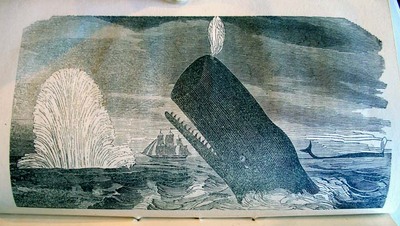
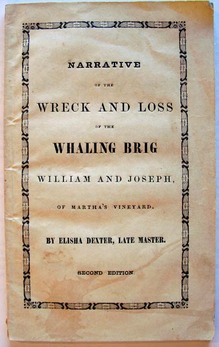
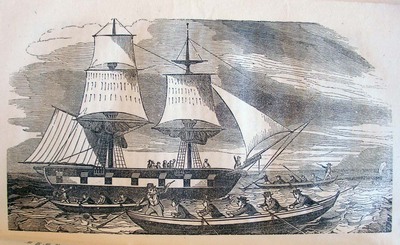
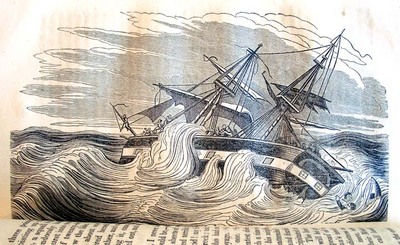
Elisha Dexter, Narrative of the Loss of Whaling Brig William and Joseph, of Martha’s Vineyard, and the Sufferings of Her Crew for Seven Days, a Part of the Time on a Raft in the Atlantic Ocean: with an appendix, containing some remarks on the whaling business, and descriptions of the mode of killing and taking care of whales: with plates descriptive of some of the principal scenes. 2nd ed. (Boston: Charles C. Mead, 1848). Graphic Arts GAX 2011- in process

whaling4.jpg

According to Dexter, the whaling brig William and Joseph departed Holmes’ Hole on August 2, 1840 in search of sperm whales. They stopped briefly at the Azores and Capre Verde islands before sailing to the West Indies, where they stopped to restock the ship.

In September 1841, the William and Joseph set sail for Boston with 200 barrels of oil. A month later, they were caught in a storm and the ship first capsized and, ten minutes later, righted itself but with significant damage. Over the next week two sailors died and the cargo was lost.


Elisha Dexter had a financial interest in the ship and published this narrative to recoup his losses. OCLC notes only one institutional copy of Dexter’s first edition and ten of the second, enlarged and improved edition. This acquisition will make it eleven.

whaling1.jpg
whaling3.jpg

The Art of Ingeniously Tormenting

| No Comments
rowlandsonart of.jpg

Jonathan Swift (1667-1745) wrote the satirical household manual Directions to Servants in 1745 (RHT 18th-581) and eight years later, Jane Collier (1715?-1755) followed with An Essay on the Art of Ingeniously Tormenting (Ex 3684.585.333). Her anti-etiquette handbook provided advice on how to nag and was quickly reprinted six times.

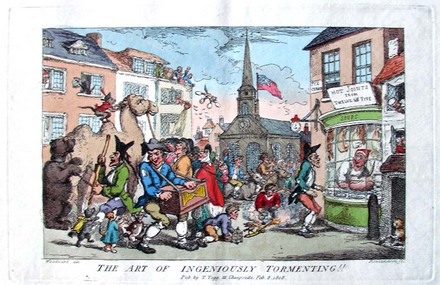
In 1809, an illustrated edition was planned by the popular print publisher Thomas Tegg (1776-1846). The new, corrected, revised, and illustrated Essay featured five plates designed by George Moutard Woodward (1760-1809). A folded frontispiece was etched by Thomas Rowlandson (1756-1827) after Woodward’s drawing (GA Rowlandson 1808.11).

Collier’s narrator advised, “If you have no children, keep as large a quantity of tame animals as you conveniently can. If you have children, a smaller number will do. Shew the most extravagant fondness you possibly can for all these animals. Let them be of the most troublesome and mischievous sort, such as cats, monkeys, parrots, squirrels, and little snarling lapdogs. Their uses for the Tormenting [of] your servants are various.”

Woodward’s frontispiece, as described by Joseph Grego (1843-1908), includes a Savoyard with a barrel-organ and a troop of dancing dogs; a Frenchman with a dancing bear; and a showman dragging a dromedary, with a monkey perched on its back pulling the animal’s ears. Everyone is taunting or torturing someone else.

Graphic Arts has copies of the print in the bound volume, as a separate sheet, and in Caricature Magazine, or Hudibrastic Mirror, another project on which Woodward, Rowlandson, and Tegg were collaborating in 1808. (GA Rowlandson 1807.5f).

See also Joseph Grego (1843-1908), Rowlandson the Caricaturist (London: Chatto and Windus, 1880). Graphic Arts (GARF) Oversize NE642.R7 G8q

Journal des dames et des modes

| 1 Comment
journal2.jpg
journal3.jpg
journal1.jpg
journal4.jpg
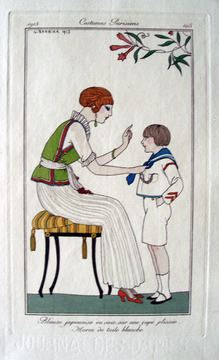
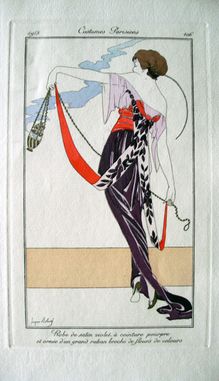
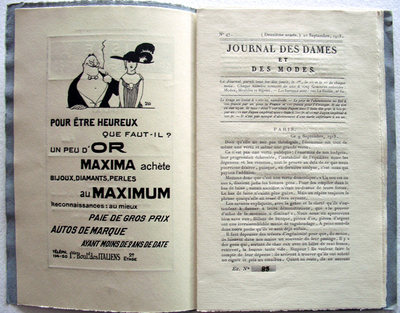
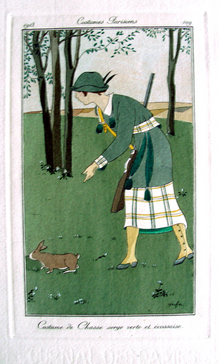
Journal des dames et des modes ([Paris: Aux bureau du Journal des dames, 1912-1914]). Charles Rahn Fry Pochoir Collection. Graphic Arts Collection (GAX) GT500 .J62

Three times each month, from June 1912 to August 1914, the exclusive subscribers of this limited edition journal received pochoir prints by George Barbier (1882-1932), Umberto Brunelleschi (1879-1949), Roger Broders (1883-1953), and many others. The cost was 100 francs/year. Altogether 186 plates were issued, before the publication ended with the outbreak of the First World War. Note the watermark on the journal’s own hand-made paper.

A Great Little Man's Night Comforts

| 1 Comment
caricaturegillray.jpg
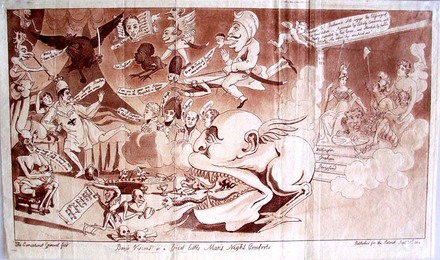
Artist unidentified, Bony’s Visions or a Great Little Man’s Night Comforts, 1811. Aquatint. GC021 British Caricatures. Gift of Dickson Q. Brown, Class of 1895.

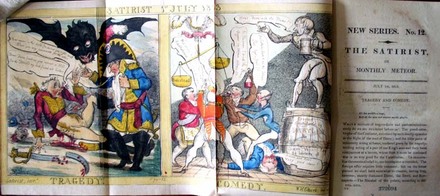
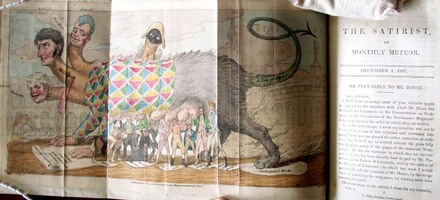
The Satirist, or Monthly Meteor was founded and edited by George Manners (1778-1853). Beginning in October 1807, the monthly journal exposed the foolishness of contemporary politicians, opening with a folded frontispiece caricature. Manners sold the magazine in 1812 to the Scottish journalist William Jerdan (1782-1869), who ran it until 1814.

This print is signed by The Caricaturist General. Several others in The Satirist are designed by Sylvester Scrutiny. Neither artist can be identified. Many are etched by “de Wilde” e.g. Samuel De Wilde (1751-1832), a portrait painter and etcher who specialized in theatrical subjects.

Bony’s Visions or a Great Little Man’s Night Comforts was published in volume 9, p. 165 as an illustration to “The Vision of Buonaparte,” p.110-21, which claims to be the Emperor’s account of a dream the night after his son’s birth.

In it, we see Napoleon, wearing a night-shirt, leap from a canopied bed, terrified at the demons, goblins, and ghosts that surround him. He holds a dagger and calls, “Duroc, Savory, Roustan, aux armes aux armes.” Napoleon’s son is nursed by a demon, who says: “Dear Image of my darling Nap, / Suck milk of Hell instead of pap.”

Near the bed is a coffin marked with ‘N’ and a crown; on this are a rat and two birds; a stork and an owl. An imp with antlers, crouching on the bed-curtain, is about to knock off with a wand the crown surmounting Napoleon’s night-cap.

satirist1.jpg

There is good reason the prints in The Satirist are rarely credited. George Manners and his writers were the targets of multiple lawsuits. The magazine was only two years old when Manners wrote Vindiciæ Satiricæ, or a Vindication of the Principles of the “Satirist,” (1809) documenting the action brought by Peter Finnerty.

Three years later, Thomas Gill wrote, Libels: a Statement of the Trial of an Indictment against George Manners, … 1st June, 1811, for Libels in The Satirist of the 1st May, 1809, and 1st September, 1810, on the Character of William Hallett, Esq., upon which Indictment the Defendant was Found Guilty….

satirist2.jpg

In the third volume, Manners published a statement:
Notwithstanding the unparalleled opposition which we have experienced, and the multitude of hostile scoundrels whom we have encountered, our publication is daily increasing its circulation….

We have dragged from their filthy dens a horde of miscreants, who battened on the fruits of slander, who mangled and destroyed alike the characters of the guilty and the innocent, and who, the moment we exposed them to the public eye, have either shrunk into their original insignificance, or only been noticed like gibbet ted murderers, for the enormity of their crimes.

…We defy our enemies to point out a single instance where we have inflicted unmerited punishment, or bestowed unjust commendation. …Adieu for the present, dear Sir Richard, thou hast afforded us much amusement, but more melancholy reflections on the pride, vain glory, and hypocrisy of mankind: if we have waged war against thy vanity, folly, and—errors, remember, we were not the first to kindle the flame!

See also William Jerdan (1782-1869), The Autobiography of William Jerdan (London: A. Hall, Virtue & Co., 1852-53).Firestone Library 3802.4.31

The Satirist, or Monthly Meteor, 1807-1814. Graphic Arts Collection Cruik 1808 v.1-14. Gift of Richard Waln Meirs, Class of 1888.

Dance of Death

| No Comments
holbein2.jpg
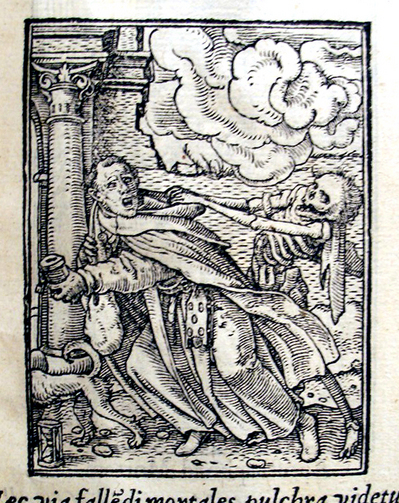
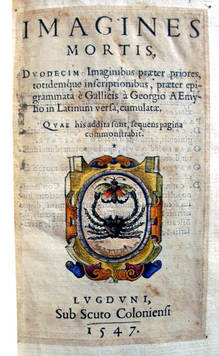
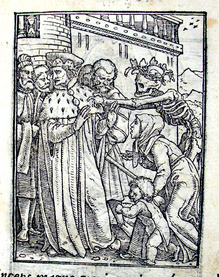
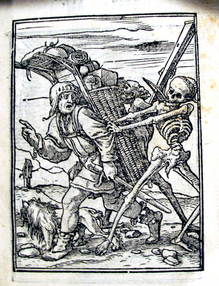
Hans Holbein the Younger (1497-1543) Imagines Mortis (Lugduni: Sub scuto Coloniensi, 1547). The epigrams are attributed to Jean de Vauzelles and Gilles Corrozet. Illustration (C4v) signed by the woodcutter “HL” (i.e. Hans Lützelburger 1495?-1526). Rebound in 1987 by Jamie Kamph. Gift of Elmer Adler. Graphic Arts Collection (GAX) 2004-3458N


holbein9.jpg
holbein10.jpg

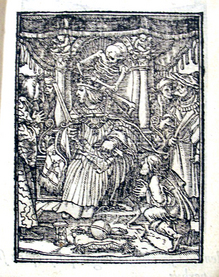
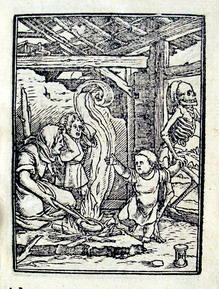
Holbein’s designs were originally cut and printed in 1526 for a dance of death alphabet and then, included in an Old Testament. In 1538, forty-one of the blocks were published under the title Les simulachres & historiées faces de la mort avtant elegamtment pourtraictes, with a bible quote at the top and a poem by Gilles Corozet below. The book was banned but new editions continued to appear every few years.

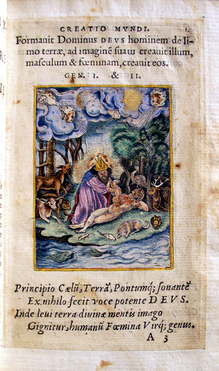
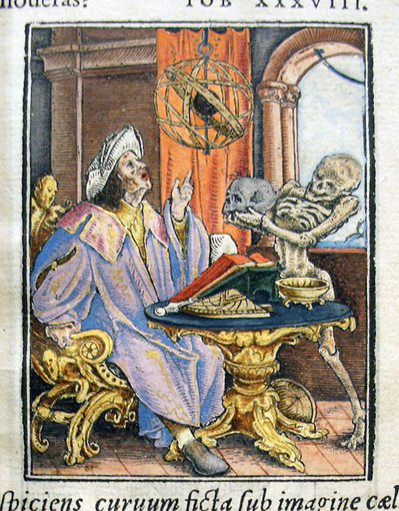
This 1547 expanded edition includes fifty-seven woodcuts. The artist of the new plates remains unidentified. They are interspersed with Holbein’s designs, with no explanation as to why another artist’s work was included. In addition, three of the plates in the Princeton volume, including the title page, have contemporary hand coloring. Here are a few samples.

holbein7.jpg
holbein5.jpg
holbein6.jpg
holbein4.jpg
holbein8.jpg

Thanks to John Delaney for identifying the instrument hanging at the center as an armillary sphere, described by Ptolemy as a zodiacal instrument of six rings, designed to determine the locations of celestial objects. For more, see www.hps.cam.ac.uk/starry/armillary.html

Street Cries Updated

| No Comments
street1.jpg

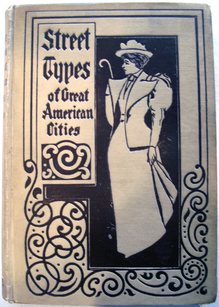
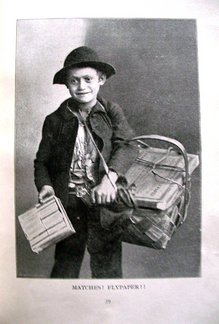
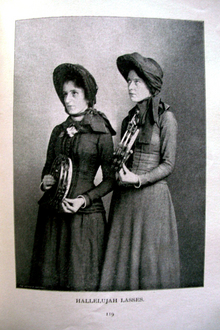
In the manner of eighteenth-century street cries, photographer Sigmund Krausz staged these photographs of peddlers, beggars, and street regulars in his Chicago studio. Original prints were used to illustrate his 1892 publication Street Types of Chicago.

Four years later, he expanded the volume to include Street Types of Great American Cities, this time illustrated with half-tone reproductions of his photographs. Portraits include the iceman, milkman, letter carrier, urchins, religious fanatics, food vendors and others.

Sigmund Krausz, Street Types of Great American Cities (Chicago, New York: Werner Company, 1896) Graphic Arts Collection (GAX), F548.9.S9 K92

street5.jpg
street4.jpg
street3.jpg
street2.jpg

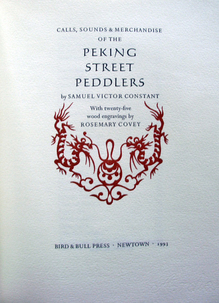
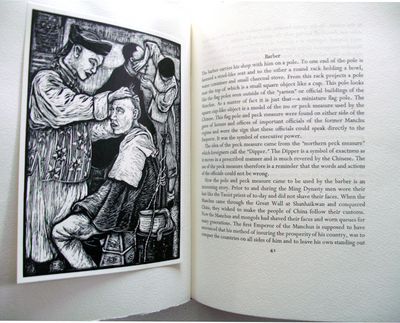
Another example of modern street cries was made in China by Samuel Victor Constant, who served there as an assistant to a military attaché from 1925 to 1937. While in Peking, he studied at the College of Chinese Studies, completing his master’s thesis, entitled “Calls, Sounds and Merchandise of the Peking Street Peddlers” in 1936. A copy of the work was commercially published that same year.

streetch4.jpg

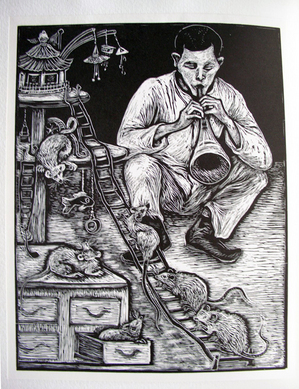
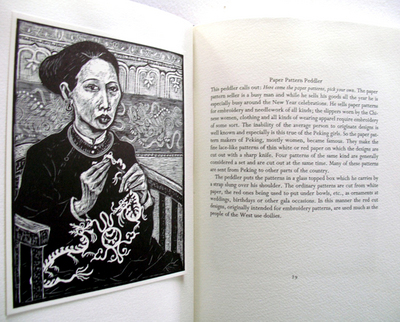
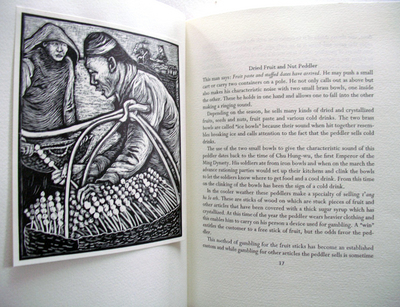
In 1993, Bird & Bull Press, under the leadership of Henry Morris, revived the text with new wood engravings by Rosemary Covey (seen below). Princeton also owns the 1994 Beijing edition: Samuel Victor Constant, Jing du jiao mai tu / Samo’er Weikeduo Kangsitan zhu; Tao Li yi; Tao Shangyi hui tu = Calls, Sounds & Merchandise of the Peking Street Peddlers. (Beijing: Shu mu wen xian chu ban she, 1994). East Asian Library (Gest) DS795.2 .C6612


Samuel Victor Constant, Calls, Sounds & Merchandise of the Peking Street Peddlers with Twenty-Five Wood Engravings by Rosemary Covey (Newtown [Pa.]: Bird & Bull Press, 1993). Copy 182 of 200. Graphic Arts Collection (GAX) 2003-1335N

streetch6.jpg
Trained Mice Man
streetch1.jpg
Paper pattern peddler
streetch2.jpg
Dried fruit and nut peddler
streetch3.jpg
Barber

Expedition to the West-Indies

| No Comments
expedition7.jpg
expedition3.jpg
expedition2.jpg
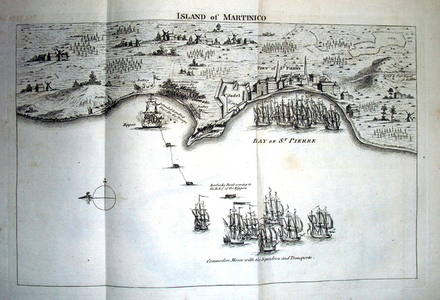
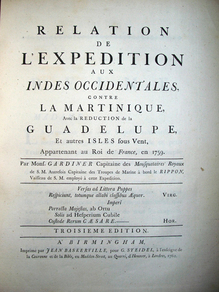
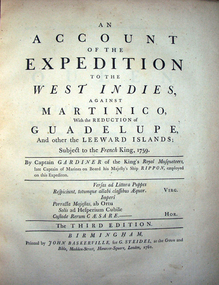
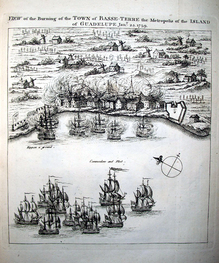
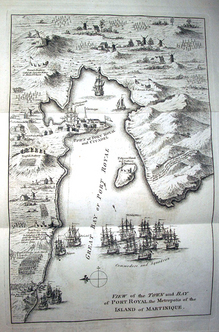
Richard Gardiner (1723-1781), An Account of the Expedition to the West Indies, against Martinico, with the Reduction of Guadelupe, and other the Leeward Islands, Subject to the French King, 1759, 3rd ed. (Birmingham [Eng.]; London: Printed by John Baskerville, for G. Steidel, 1762) Bound with the French translation: Relation de l’expédition aux Indes occidentales…. Bequest of Archibald S. Alexander, Class of 1928. Graphic Arts Collection (GAX) Baskerville 1762e


expedition5.jpg
expedition6.jpg

When the British Naval officer Richard Gardiner returned from a campaign against the French colonies in 1759, he published an account of the major battles at Martinique and Guadeloupe. A second edition was issued and then, in 1762, John Baskerville (1706-1775) undertook the printing of a third edition. The English account was published along with a French translation (Baskerville’s only French book). Four unsigned copperplate engraving are included between the two and Baskerville dedicated the volume to the Queen.

Tobias George Smollett (1721-1771) reviewed the book in The Critical Review (vol. 8), “If this performance was not a little too much embroidered with quotations from the classics, and, in some places, a florid Iuxuriancy of stile, we should not fear to pronounce it one of the best pieces of this kind which have appeared since the beginning of the last Spanish war. It is indeed written with such spirit, elegance, and precision … and we hope the author’s ingenuity will be thrown into the scale, with his other military qualifications, when it comes to his turn to be promoted in the service.”

New Years Resolutions: Manly Exercises

| No Comments
exercises3.jpg
exercises1.jpg
exercises6.jpg

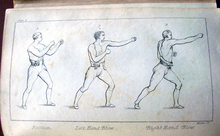
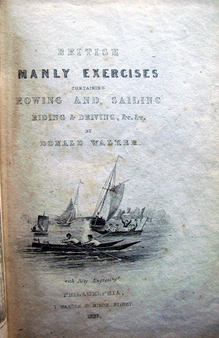
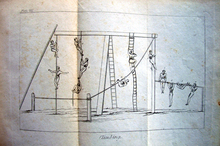
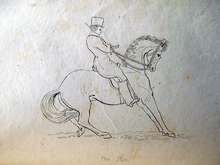
Donald Walker. British Manly Exercises: in which rowing and sailing are now first described; and riding and driving are for the first time given in a work of this kind; as well as the usual subjects of walking, running, leaping, vaulting, balancing, skating, climbing, swimming, wrestling, boxing, training, &c., &c., &c. Philadelphia: Thomas Wardle, 1836 [i.e., 1837]. Graphic Arts Collection (GAX) 2006-1726N

exercises4.jpg
exercises5.jpg

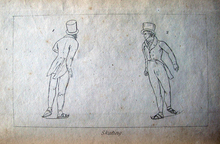
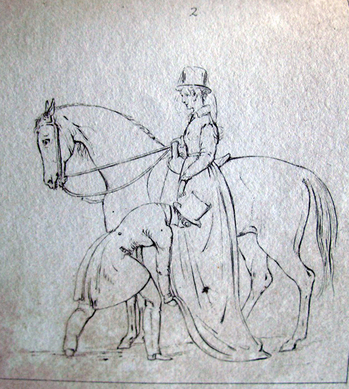
Donald Walker was the Jack Lalanne of the nineteenth century. An expert on physical fitness and training, his first book (for men only) was published in 1834 and quickly sold out. Ours is an American reprint from a few years later, at the same time that Walker adapted his training exercises for women and published a companion volume, “calculated to preserve and improve beauty.”

exercises7.jpg

Donald Walker, Exercises for Ladies: calculated to preserve and improve beauty, and to prevent and correct personal defects, inseparable from constrained or careless habits. 2nd ed.: with great additions and improvements as well as original communications from Madam Dulcken on the proper seat at the pianoforte, from Mr. Bochsa on the proper seat at the harp, from Mr. Schulz on the proper seat at the guitar, &c. &c. &c. London: Thomas Hurst, 1837. Rare Books (Ex) 2005-2464N

Bacchus and the Tee-Totallers

| No Comments
bacchus2.jpg
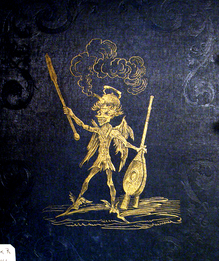
Bacchus and the Tee-Totallers by Rumfusticus Bibulus, esq., president of the Anti-Temperance Society (London: Sherwood, Gilbert, and Piper, 1841). Illustrations by Robert Cruikshank (1789-1856). Graphic Arts Collection (GA) Cruik R 1841.2

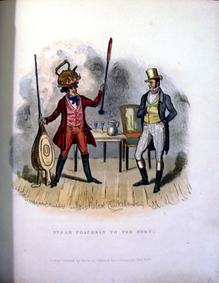
At left, Steam Coachman to the Moon stamped on a Riviere binding.


bacchus3.jpg
bacchus1.jpg


A collection of drinking songs (without music) by an anonymous author using the pseudonym Rumfusticus Bibulus. The text and songs are all attacks on abstinence by the fictitious Anti-Temperance Society. Here’s a piece:

“The Publicans, as well as every other branch of the community, were aware that recent improvements in modern science had effected a Rail Road from this Earth to the Moon, in which part of the Isle of Sky Bacchus has an airy summer residence; they therefore resolved to send up by the new Steam Coach, one of the Victualler Chiefs, to invite their jovial patron down to head their forces, and to fight their battles with their foes, The Tee-Totallers.”

Robert Riviere (1808-1882) established a bindery in Bath around 1829, moving to London eleven years later where he opened a shop on Great Queen Street, and then, on Piccadilly. Riviere was the top of the line and this small satirical volume must have had an important backer to finance a custom Riviere binding and six aquatinted plates by Cruikshank.

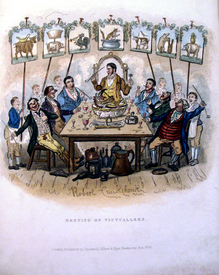
A Meeting of Victuallers

The Victuallers of old,
Were jolly and bold,
And quaff’d Brandy and Water gaily,
And were all well nurs’d
With a quart of the First,
To a pint of pump water daily!

Water when mix’d up with Spirits strong store,
No Publican dreams of scorning,
But of Water alone, why—he drinks no more,
Than his pots supply,
Of the drops that lie
In his pewter pints of a morning!


hop6.jpg
hop4.jpg
George Cruikshank (1792-1878), Hop o’ My Thumb and the Seven League Boots … [from the Fairy library] ([London : D. Bogue, 1853]). Separate issue of the plates on India proof paper, in green morocco portfolio. With pencil inscription in bottom margin of first plate: “To John Adams Acton with the kind regards of his sincere friend, George Cruikshank, Jan. 1st, 1872.” Graphic Arts Collection (GA) Oversize Cruik 1853.4q; part 1, copy 3

hop5.jpg
hop3.jpg

hop1.jpg
hop2.jpg

When George Cruikshank (1792-1878) published a group of fairy tales using a form of social realism not previously seen by the Victorian public, his friend and sometimes collaborator Charles Dickens (1812-1870) objected. In his journal Household Words (no. 184, vol. VIII, 1 October 1853, pp. 97-100), Dickens wrote a humorous but heartfelt reply, titled “Frauds on the Fairies.” A complete transcript of Dickens’ essay is available at: http://www.victorianweb.org/authors/dickens/pva/pva239.html
but here is a taste.

“We must assume that we are not singular in entertaining a very great tenderness for the fairy literature of our childhood. What enchanted us then, and is captivating a million of young fancies now, has, at the same blessed time of life, enchanted vast hosts of men and women who have done their long day’s work and laid their grey heads down to rest.”

“…In an utilitarian age, of all other times, it is a matter of grave importance that Fairy tales should be respected. Our English red tape is too magnificently red ever to be employed in the tying up of such trifles, but every one who has considered the subject knows full well that a nation without fancy, without some romance, never did, never can, never will, hold a great place under the sun.”

“…We have lately observed, with pain, intrusion of a Whole Hog of unwieldy dimensions into the fairy flower garden. The rooting of the animal among the roses would in itself have awakened in us nothing but indignation; our pain arises from his being violently driven in by a man of genius, our own beloved friend, MR. GEORGE CRUIKSHANK. That incomparable artist is, of all men, the last who should lay his exquisite hand on fairy text. In his own art he understands it so perfectly, and illustrates it so beautifully, so humorously, so wisely, that he should never lay down his etching needle to “edit” the Ogre, to whom with that little instrument he can render such extraordinary justice. But, to “editing” Ogres, and Hop o’-my-thumbs, and their families, our dear moralist has in a rash moment taken, as a means of propagating the doctrines of Total Abstinence, Prohibition of the sale of spirituous liquors, Free Trade, and Popular Education.”

The Tabula of Cebes or The Journey of Human Life

| No Comments
tavola4.jpg
tavola3.jpg
Cornelio Pepoli, Lettere instruttive intorno alla Tavola di Cebete …col Nome Pastorale di Cratejo Erasiniano (Venezia: Appresso Francesco Sansoni, 1771). Frontispiece engraved after Hans Holbein (1497-1543). Includes Latin and Italian versions of the Kebētos Thēbaiou pinax, on facing pages. Graphic Arts (GAX) 2010- in process

Cebes of Thebes (ca. 430-350 B.C.E.) was a member of Socrates’ inner circle. One of the dialogs that has been attributed to him is the Pinax or Tabula, also known as the Tablet of Cebes.


In fact, it was probably Hellenistic, from the second or at the earliest, the first century. The Tabula was well known in antiquity, and after the first modern publication in the late fifteenth century, popular in Europe through the eighteenth century (such as this example).

tavola2.jpg

Pepoli’s bilingual text is a dialogue describing a vast panoramic painting of human life in allegorical terms, and depicting the dangers and temptations that the frail human pilgrims encounter. It is an attempt to show that only the proper development of our mind and the possession of real virtues can make us truly happy. Parallels are often drawn between this work and John Bunyons’ The Pilgrims’ Progress.

Frontispiece is based on a design by Hans Holbein (below), although Pepoli’s includes a key at the foot of the plate identifying the highlights and low points of human progress, such as genius, luck and happiness, but also misery, penitence, folly of love, and much more.

tavola1.jpg

Below: Hans Holbein’s title page with the Tabula Cebetis, metalcut, 1521. Kunstmuseum Basel. First used in De patienta, in Quintus Septimius Tertullian’s Opera …, edited by Beatus Rhenanus, Basel: Johann Froben, July 1521.

Holbein_the_Younger.jpg

tabula1.jpg

Princeton has a large collection of Tabula Cebetis. Here are two more examples.

See also Princeton’s Rare Books blog: http://blogs.princeton.edu/
rarebooks/2009/01/
beyond_is_prisonton_deliriumto.html

For more information: John T. Fitzgerald and Michael White, Kebētos Thēbaiou pinax (The Tabula of Cebes) (Chico, CA: Scholars Press, 1983). Classics Collection (Clas). Firestone PA3948.C2 A24 1983

tabula2.jpg

Above: Cebes, of Thebes, Paráfrasis árabe de la tabla de Cebes. Traducida en castellano é illustrada con notas por Pablo Lozano y Casela. (Madrid: Imprenta Real, 1793). Rare Books (Ex) 2010-1020N

Below: Hendrick Laurenszoon Spieghel (1549-1612), H. L. Spieghels Hertspieghel en andere zede-schriften (Amsterdam: Hendrik Wetstein, 1694). Rare Books (Ex) N7710 .S64 1694

The True History of Deacon Giles' Distillery

| No Comments
dream4.jpg
George Barrell Cheever (1807-1890), The Dream, or, The True History of Deacon Giles’ Distillery and Deacon Jones’ Brewery: Reported for the Benefit of Posterity … (New York: Printed for the publishers, 1848). First published in Salem, February 1835. Graphic Arts Collection (GAX) Hamilton 974 (2)


dream3.jpg

“In 1835 Rev. George B. Cheever, then the youthful pastor of a church in Salem, Mass. published, under the title of Deacon Giles’s Distillery, what purported to be a dream. Daemons were represented as working in the deacon’s distillery, and manufacturing ‘liquid damnation,’ ‘murder,’ ‘suicide,’ etc., for the human employer.”

“The stinging satire took effect. Mr. Cheever was assaulted in the streets of Salem, and was also prosecuted for slander by a certain rum-distilling deacon, who thought he recognized his own portrait in the deacon Giles of the dream. Mr. Cheever was convicted and imprisoned for a few days, but on his release returned at once to the attack in another dream concerning Deacon Jones’s Brewery, in which devils are described as making beer, and, as they dance about the caldron….”

dream2.jpg

“The assault and the prosecution called universal attention to the affair; the dreams were published everywhere and produced great effect. About the same time another local excitement aided the general cause. Mr. Delavan exposed the methods of the Albany brewers, whom he charged with procuring water for their business from a foul pond covered with green scum and defiled with the putrid remains of dead cats and dogs. Eight brewers brought suits against him, claiming damages to the amount of three hundred thousand dollars, but did not succeed in recovering a dime.”


From Cyclopaedia of Biblical, Theological, and Ecclesiastical Literature, Volume 10 By John McClintock (Firestone library, BR95 .M335 1873)

dream1.jpg

Frans Masereel's cuts for Some Corners of the Heart

| 2 Comments
quelques4.jpg
quelques3.jpg

Henri Barbusse and Frans Masereel, Quelques Coins du coeur (Some Corners of the Heart), (Genève: Le Sablier, 1921). Graphic Arts (GAX) 2010- in process

The Flemish artist Frans Masereel (1889-1972) is best remembered for his graphic novels, in the classic sense of the term. Masereel settled originally in France but moved a great deal, returning to Paris in 1921 when he completed the illustrations for Henri Barbusse’s novel Quelques coins du coeur (Some Corners of the Heart). In all, Masereel completed over twenty graphic novels, most of which are available at Princeton.

quelques2.jpg
quelques1.jpg

As a pacifist, soon to be member of the French communist party, Masereel had great sympathy for the work of Henri Barbusse (1873-1935), who was also politically outspoken. Both campaigned in 1921 in favor of Sacco and Vanzetti. 1921 was also the year Barbusse completed Le Couteau entre les dents (The Knife Between My Teeth), which reflected his sympathy with Bolshevism.

Edition Schwarze Seite

| No Comments
editions5.jpg
editions6.jpg
editions2.jpg
editions3.jpg
editions4.jpg

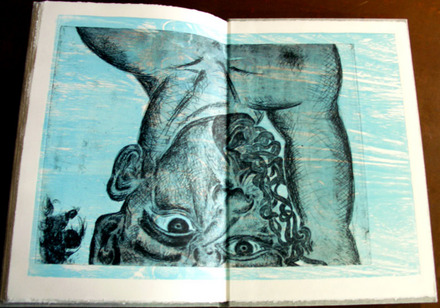
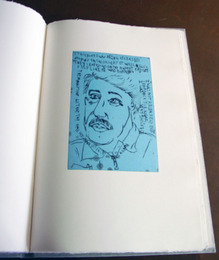
Edition Schwarze Seite (Black Page Edition) is the small press of German artists Anne Buessow and Eckhard Froeschlin. http://www.froeschlin-buessow.de. Froeschlin writes “our books are a combination of original graphic art: etchings, woodcuts or lithographies, with letterpress, mostly handset texts.” For the last twelve years, Froeschlin has spent time each year in Nicaragua, holding printing workshops and collaborating with the TallerContil group in Matagalpa. Four artists’ books emerged from this project, specifically focused on the culture, poetry, and graphic arts of Nicaragua.

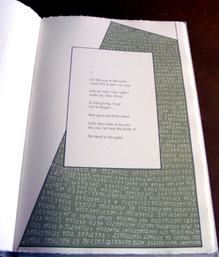
The TallerContil started with woodcuts printed in the most basic conditions and evolved to a well-fitted studio boasting an etching press and a Hollander beater, both built in Matagalpa. The two volumes seen here resulted from the Wuppertal-Matagalpa friendships. Note: There will be a workshop about this collaboration at the upcoming CODEX III conference. http://www.codexfoundation.org.

Above, Pablo Antonio Cuadra (1912-2002) [poetry], Eckhard Froeschlin [etchings], El Nicán-Náuat (Wuppertal: Editions Schwarze Seite, 2003). Edition: 25. Graphic Arts GAX 2010- in process

Below: Ernesto Soto [short stories], Eckhard Froeschlin [etchings], Casas Perdidas = Fundstücke [Lost Homes] (Wuppertal: Editions Schwarze Seite, 2010). Edition: 25. Texts in Spanish and German translated by Guenter Schmigalle. Handmade mould paper by Danilo Rivera, Matagalpa, using banana leaf fibers. Handbound by Roger Green using Nicaraguan coffee bags. Graphic Arts 2010- in process
editions1.jpg
editions8.jpg
editions7.jpg
1 2 3 4 5 6 7 8 9 10 11 12 13 14

Recent Comments

  • V.E.G.: James Franklin, Benjamin Franklin's half-brother is a direct descendant of read more
  • Bob Fleck: Nice comments and well worth it. read more
  • N. Sutherland: Do you have any further biographical material on this Thomas read more
  • john W: Have the complete collection of EA Seguy papillons including front read more
  • Vermathio: algarabia, charabia et Picabia. Le premier désigne la langue read more
  • Matt SCOVILL: I have the complete "bookplates in Japan" box. I am read more
  • Daniel Joseph Bobroff: April 30, 2013 To Princeton University: This is a Plaintiff read more
  • Ana Paula: Nice! I wish I could be there to enjoy it! read more
  • Nora Lin: What a shame! Those rooms were inspirational, not only on read more
  • pepesel: Why did they have to close it? That seems shortsighted. read more