Recently in Illustrated books Category

le mot

| No Comments
le mot1.jpg
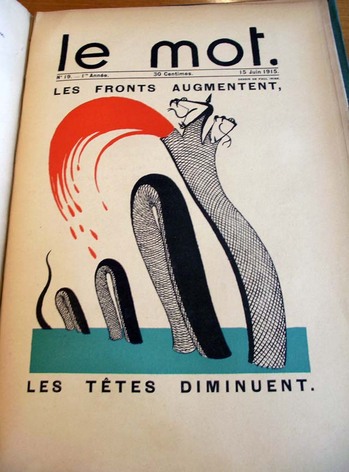
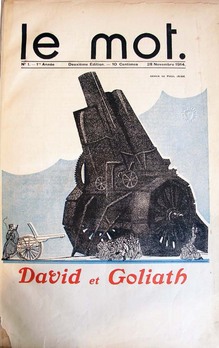
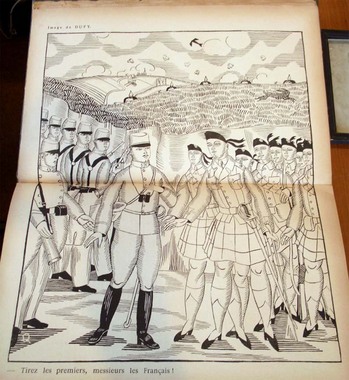
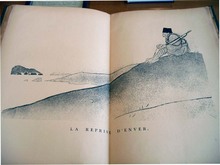
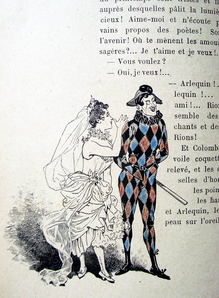
In August 1914, when war was declared with Germany, Jean Cocteau was twenty-five years old. Like many patriotic young Frenchmen, Cocteau tried to enlist but was turned down because of his health. Looking for other ways to serve his country and the war effort, he joined with the illustrator Paul Iribe (1883-1935) to publish a fortnightly journal, called Le Mot (The Word).

le mot6.jpg
As a teenager, Iribe drew illustrations for the popular caricature journal L’Assiette au Beurre (The Butter Plate), which ran from 1902 to 1912 (Ex Oversize 0904.133q). He also freelanced for Rire, Sourire and other periodicals, so Iribe was enthusiastic about starting a journal of his own.

le mot5.jpg
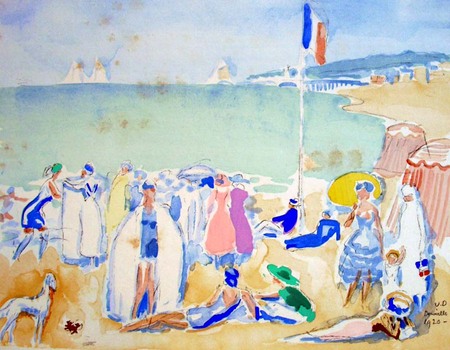
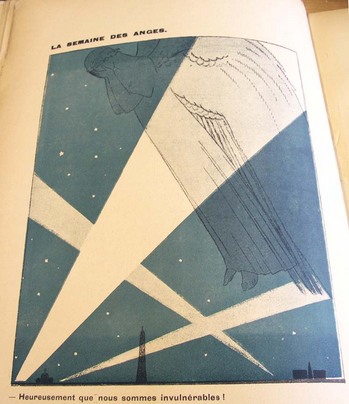
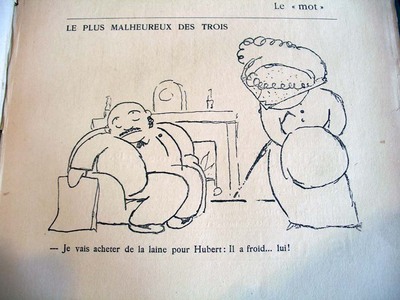
Cocteau contributed both image and text, signing his drawings with the pseudonym Jim (the name of his dog). The first issue was released on November 28, 1914 and by January, the magazine had gone weekly. Other contributors included Léon Bakst (1866-1924); Raoul.Dufy (1877-1953); Albert Gleizes (1881-1953); André Lhote (1885-1962); and SEM (Georges Goursat 1863-1934).

le mot4.jpg
Unfortunately, both Iribe and Cocteau were involved with too many projects to keep Le Mot flourishing for long and after only 20 issues it ended on July 1, 1915.

Paul Iribe (1883-1935) and Jean Cocteau (1889-1963), Le Mot (Paris: Société Générale d’Impression, 1914-1915). Gift of John W. Garrett, Class of 1895. Graphic Arts Collection GAX Oversize 14094.00.647f

le mot2.jpg
le mot3.jpg

"The Practice of Piety" illustrated by James Franklin

| 1 Comment
hamilton 11d.jpg

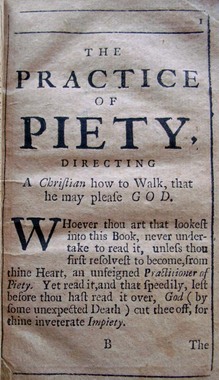
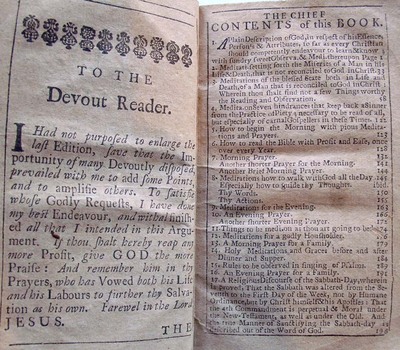
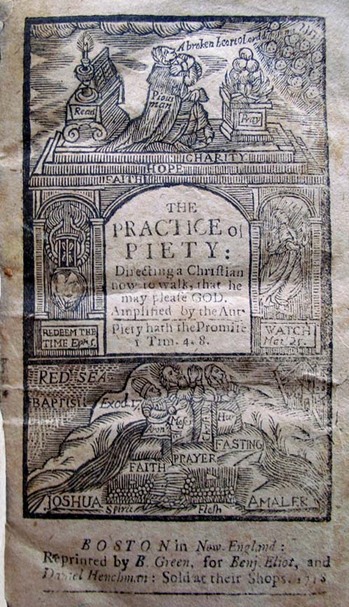
Lewis Bayly (1565-1631), The Practice of Piety: Directing a Christian How to Walk, That He May Please God (Boston in New-England: Reprinted by B. Green, for Benj. Eliot, and Daniel Henchman, sold at their shops, 1718). Graphic Arts Collection, Hamilton 11. Gift of Sinclair Hamilton.

hamilton 11a.jpg

Sinclair Hamilton was one of the first to attribute the allegorical title page woodcut to James Franklin (1697-1735), Benjamin Franklin’s older half-brother. Twenty-one year old James returned to Boston after an apprenticeship with a London printer and opened his own printing shop at the corner of Queen (now Court) Street and Dassett Alley (now Franklin Avenue). Twelve-year-old Benjamin became his apprentice and his wife managed the office.

One of James’s first jobs, in the spring of 1718, was to draw and print the allegorical woodcut for the title page of Lewis Bayly’s The Practice of Piety. Written originally in 1611, the devotional manual was now in its fifty-third edition when Franklin cut the illustration. By 1842, the book had gone through eighty English editions and had been translated into several other languages.

Born in Wales, Bayley became Treasurer of Saint Paul’s Cathedral in London and Chaplain to King James the First. In 1616, he was appointed Bishop of Bangor, remaining there until his death in 1631. “Deeply influential on the Puritan movement, The Practice of Piety systematically investigates piety, beginning with a detailed account of God and Christ. In it, Bayly contrasts the ‘misery’ of someone not reconciled to Christ with the happiness of the ‘godly man’ who is reconciled to God.” —Tim Perrine.

hamilton 11b.jpg

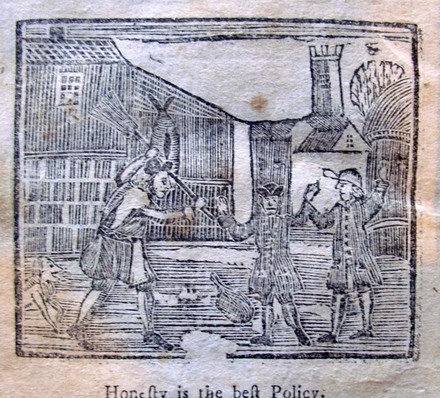
Honesty is the Best Policy

| No Comments
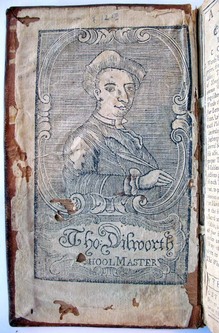
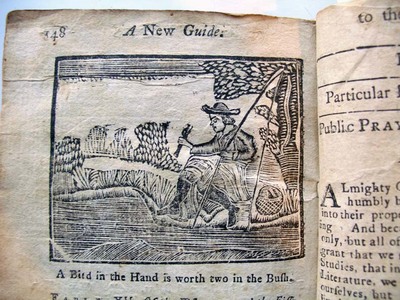
hamilton 64c.jpgThomas Dilworth (died 1780), A New Guide to the English Tongue (Boston: Printed by J. Kneeland, in Milk-street, for A. Ellison, MDCCLXXIII, [1773]). Graphic Arts Collection (GAX) Hamilton 64. Gift of Sinclair Hamilton.
hamilton 64f.jpg
Charles Dickens remembered his copy of A New Guide and mentioned Dilworth’s frontispiece portrait in his Sketches:
“But the party arrives, and Dando, relieved from his state of uncertainty, starts up into activity. They approach in full aquatic costume, with round blue jackets, striped shirts, and caps of all sizes and patterns, from the velvet skull-cap of French manufacture, to the easy head-dress familiar to the students of the old spelling-books, as having, on the authority of the portrait, formed part of the costume of the Reverend Mr. Dilworth.”

—from Charles Dickens (1812-1870), Sketches by “Boz,” [pseud.] illustrative of every-day life, and every-day people … Illustrations by George Cruikshank (London: J. Macrone, 1836). Graphic Arts Collection (GA) Cruik 1836


hamilton 64b.jpg

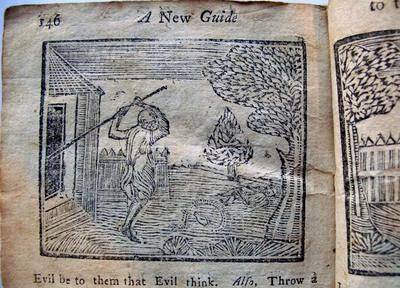
“Perhaps the most successful of the spellers of this period was Thomas Dilworth’s A New Guide to the English Tongue. The first edition of this book was issued in England in 1740. The first American reprint was made by Benjamin Franklin in 1747. Fourteen additional reprints were made in America between this date and 1778. The 1770 edition was 4 by 6 inches in size and was bound in leather. The typographical features were the same as in all other books of the period. This speller, however, had one feature which none of the contemporary spellers displayed—a series of 12 crude little woodcuts, 2 ¾ by 3 inches.” —Nila Banton Smith (1889-1976), American Reading Instruction (2002)

hamilton 64a.jpg


View an animation of early relief printing:
http://atlas.lib.uiowa.edu/press-animation.html

Jules Chéret's design for Scaramouche

| No Comments
lefevre scaramouche1.jpg
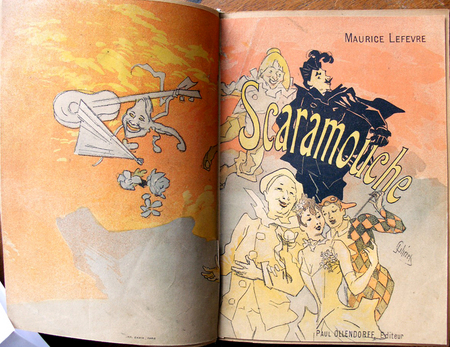
Maurice Lefèvre (1863-1917), Scaramouche. Conte suivi de l’argument du ballet (Paris: P. Ollendorff, 1891). Libretto for Scaramouche with lithographic title page by Jules Chéret. Graphic Arts GAX 2012- in process

83-01.jpg
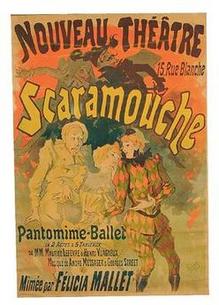
Jules Chéret (1836-1932), Nouveau théâtre, 15 rue Blanche, Scaramouche, 1891. Lithographic poster.

lefevre scaramouche2.jpg

The Parisian ballet/pantomime Scaramouche had a story written by Maurice Lefèvre and Henri Vuagneux together with music composed by André Messager (1853-1929). For the show’s opening on October 17, 1891 at the Nouveau-Théâtre 15, rue Blanche, the celebrated artist Jules Chéret (1836-1932) was commissioned to design a poster.

Within the same year, publisher Paul Ollendorff simplified Chéret’s design and used it as a frontispiece for the publication of the libretto. There was a vogue for the artist’s brightly colored designs and Ollendorff knew the image would sell the book.


“The man who places something good where before was nothing but bad, something beautiful where before was ugliness, is a veritable missionary. Jules Chéret went out into the desert and produced an oasis—beauty where none was expected. Reds, yellows and blues are not tractable; yet they are a part of the language of the advertiser. He sounds a trumpet in prismatic colors; he announces a bargain sale, a cure-all, a new book, a play, a singer.”
—Louis H. Gibson, “Jules Chéret,” Modern Art 1, no. 1 (Winter 1893).


See pp. 68-72 in Julies Chéret (1836-1932), La Belle Époque de Jules Chéret: de l’affiche au décor / sous la direction de Réjane Bargiel et Ségolène Le Men (Paris: Les Arts décoratifs/BNF, 2010). Marquand SA ND553.C582 B374 2010q

Pilgrim's Progress 1744

| No Comments
hamilton 20b.jpg

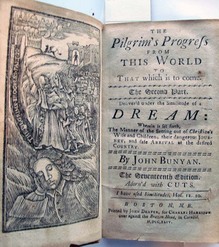
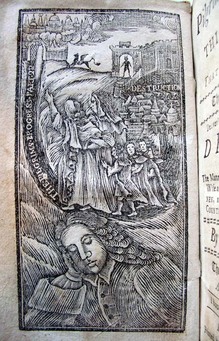
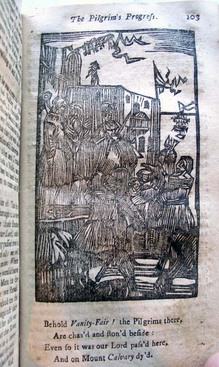
John Bunyan (1628-1688). The Pilgrim’s Progress from This World to That which is to Come. The Second Part. Deliver’d under the Similitude of a DREAM: Wherein is Set Forth, The manner of the setting out of his Christian wife and children, His Dangerous Journey; And safe Arrival at the Desired Country. The Seventeenth Edition. Boston: Printed by John Draper for Charles Harrison, 1744.
Gift of Sinclair Hamilton. Hamilton 20.


hamilton 20f.jpg

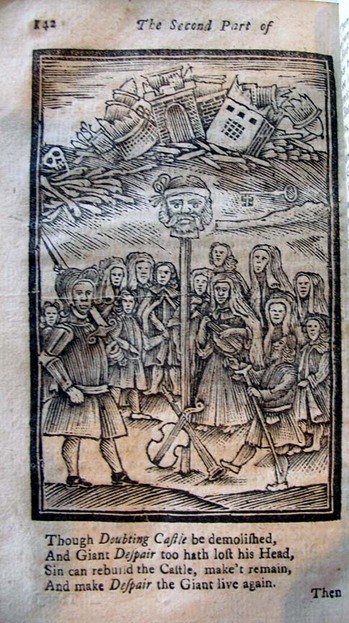
This is the first American edition of the Second Part of The Pilgrim’s Progress, originally published in London in 1684. The Boston edition is illustrated with four woodcuts, one of which was also used in the First Part published four yeas earlier in Boston by G. Rogers and D. Fowle.

“… I did not think / To shew to all the World my Pen and Ink / In such a mode; I only thought to make / I knew not what: nor did I undertake / Thereby to please my Neighbour; no not I; / I did it mine own self to gratifie.”

hamilton 20e.jpg
hamilton 20c.jpg
hamilton 20a.jpg

The AUTHOR’S Apology For His BOOK

When at the first I took my Pen in hand,
Thus for to write; I did not understand
That I at all should make a little Book
In such a mode; Nay, I had undertook
To make another, which, when almost done,
Before I was aware, I this begun.

Au Sans Pareil

| No Comments
apollinaire poete 4.jpg

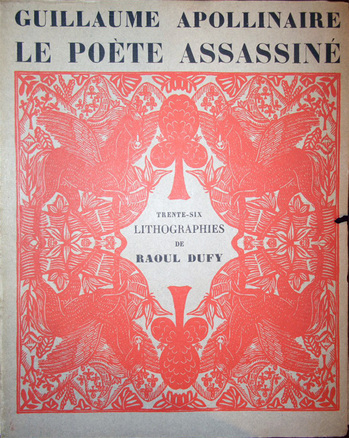
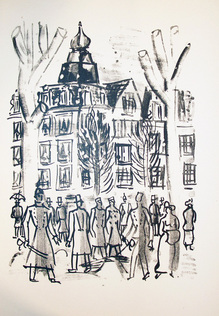
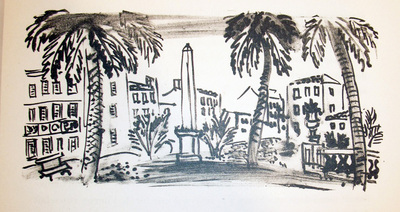
Guillaume Apollinaire (1880-1918), Le poète assassiné (The Poet Assassinated), Lithographies de Raoul Dufy (Paris: Sans Pareil, 1926). Copy 136 of 380. Graphic Arts Collection (GAX) Oversize 2011-0228Q


apollinaire poete 2.jpg
apollinaire poète assassiné.jpg

René Hilsum (1895-1990) launched his first publication in 1912 while still a student at the Collège Chaptal in Paris. The magazine was called Vers l’Idéal: rêver le juste, aimer le beau et dire le vrai (Towards the Ideal: Dream of the Just, Love Beauty and Speak the Truth). Although it didn’t last long, it had the distinction of being the first to publish the poetry of a classmate, André Breton (1896-1966).

During the First World War, both Hilsum and Breton joined the medical auxiliary and when the war was over, Hilsum decided he wanted to continue publishing the work of his friends and acquaintances. He talked his godmother into giving him some money and opened a publishing house and gallery, Sans Pareil (Without Equal) in 1919.

Hilsum published the recently discovered Les mains de Jeanne-Marie by Arthur Rimbaud (1854-1891) together with illustrations by Jean-Louis Forain (1852-1931) and then, Breton’s Mont de Piété with plates by André Derain (1880-1954). Over the next 17 years, Hilsum published 170 books before he finally closed the doors in 1936.

The first years were the most daring. By the time he published Apollinaire’s novel Le poète assassiné (The Poet Assassinated) with illustrations by Raoul Dufy (1877-1953), most of the Surrealists had left his shop for that of Gaston Gallimard (1881-1975).

apollinaire poete 3.jpg

See also Pascal Fouché, Au Sans Pareils (Paris: Bibliothèque de littérature française contemporaine de l’Université Paris 7, 1983). Recap Z305.A7 F68

Shunga

| No Comments
utagawa toyokuni 5.jpg

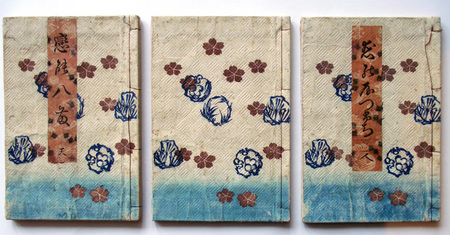
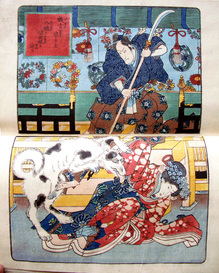
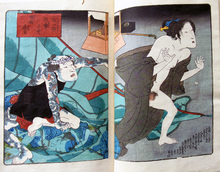
Utagawa Toyokuni III (Utagawa Kunisada 1786-1865), Koi No Yatsu Fuji (Edo, ca. 1870). Graphic Arts Collection 2012- in process


utagawa toyokuni 4.jpg
utagawa toyokuni 1.jpg


utagawa toyokuni 3.jpg
utagawa toyokuni 2.jpg

Koi no Yatsu Fuji, published at the New Year in 1837, is a shunga version of Satomi Hakken-den, the most representative work of Kyokutei Bakin (also known as Kyokutei Shujin), originally published in 1814-42. Both its text and illustrations are clever parodies of the original work. The author’s name is given as Kyokudori Shujin, a perversion of and is the pseudonym of the gesaku writer Hanagasa Bunkyō. The illustrations are by Bukiyo Matahei, otherwise known as Kunisada. The title is a version of the ‘eight tufts of hair-amulets (yatsu-busa)’ of the dogs in the original work, which appear as such in the main text; but for some reason the term is Yatsu Fuji in the title. The inside title reads Nansō Satomi Hakken-den.” -Yoshikazu Hayashi, Kunisada’s Koi no Yatsu Fuji Shunga Book (1996)

Utagawa Kunisada (later Utagawa Toyokuni III, 1786-1864) was the Andy Warhol of his day. He was the most popular, most copied, and most financially successful artist of that period. As a young man, he apprenticed with Toyokuni, later having the honor of taking that master printer’s name. Experts estimate Kunisada’s total work to be over 20,000 prints.

Many of the Shunga (erotic) prints and books in this country are in the backrooms of art museums and library, carefully housed and controlled by shy librarians. This is only the second such volume to enter Princeton University Library but an important example of a significant genre. The date of this edition is only a guess, there is no date inside the volume.

Newark

| 1 Comment
ruzicka newark6.jpg
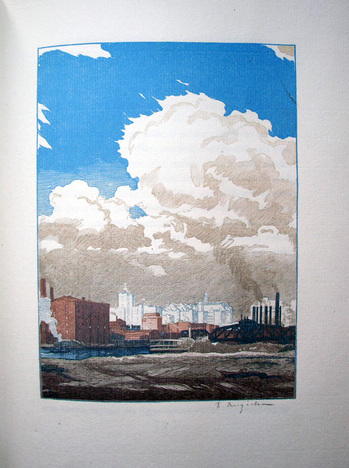
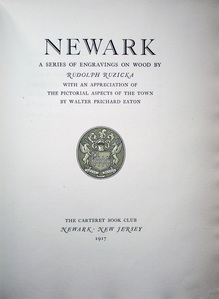
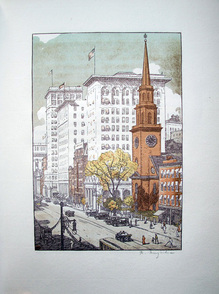
Walter Prichard Eaton (1878-1957), Newark: A Series of Engravings on Wood by Rudolph Ruzicka (Newark: Carteret Book Club; printed by D.B. Updike of the Merrymount Press, 1917). Copy 124 of 200. Graphic Arts Collection
GAX Oversize F144.N6 E15q

ruzicka newark 1.jpg
ruzicka newark5.jpg
ruzicka newark4.jpg
ruzicka newark3.jpg

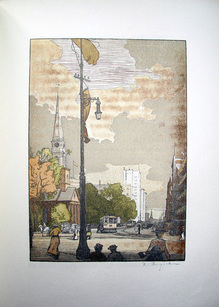
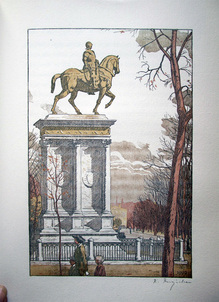
From 1908 to 1957, the Carteret Book Club brought together book lovers from New Jersey and New York at monthly meetings in the Newark Public Library. At its height, the club boasted 80 members, including Elmer Adler the first curator of graphic arts at Princeton University.

These men (no women) sought to promote the study of book production, to hold regular exhibitions, and to publish their own fine press, limited editions with original illustrations commissioned especially for each volume. Twenty-three volumes were published and one of the best was their 1917 Newark. The book combines an appreciation of the city by Walter Prichard Eaton, principal drama critic for the Sun and American Magazine, with color wood engravings by Rudolph Ruzicka (1883-1978).

ruzicka newark2.jpg


James Nasmyth and the Durable Image

| No Comments
nasmyth the moon15.jpg
First edition, heliotype with thumb right

nasmyth the moon1.jpg
Second edition, woodburytype with thumb left

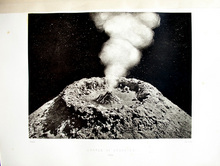
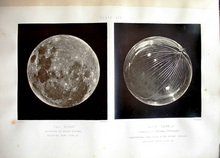
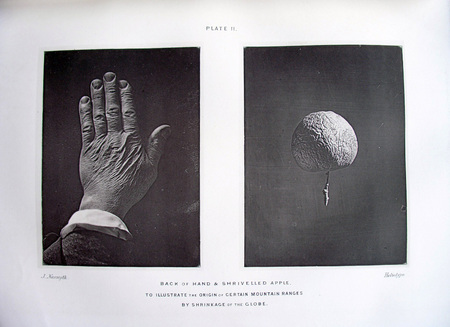
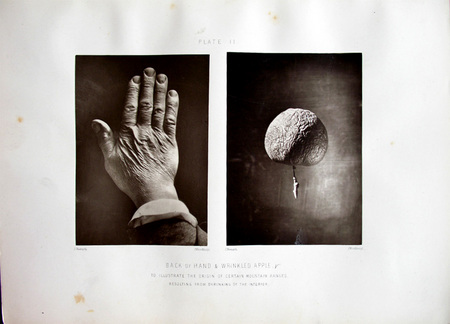
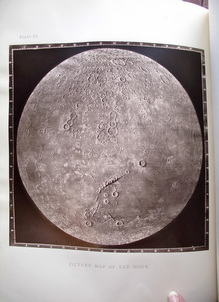
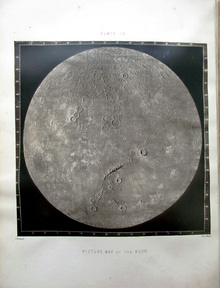
In 1874, the Scottish engineer James Nasmyth and London publisher John Murray prepared and released two simultaneous editions of Nasmyth’s study of the moon. Although the text and pagination is the same, the illustrations are not. Why?

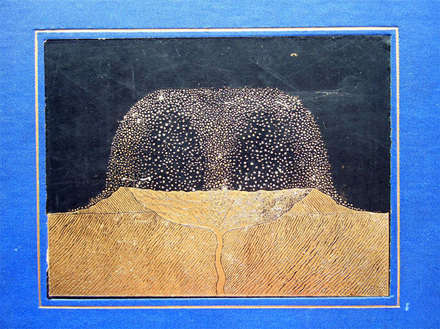
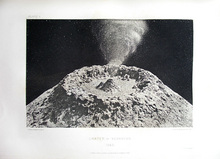
Nasmyth was an amateur astronomer who built his own 20-inch reflecting telescope and made detailed observations of the moon. He was also an amateur photographer and experimented with various ways of making images of the moon. He drew, creating the plaster models, and photographed both the moon itself and his own reproductions.
nasmyth the moon4.jpg1st ed., heliotype dated 1865
nasmyth the moon5.jpg2nd ed., woodburytype dated 1864

It was a time when many men and women were attempting to find the perfect form of reproduction: the durable photograph. One that would not fade or change over time AND could be printed in ink (independent of the action of light), so it could be made on cloudy days.

Heliotypes, autotypes, and woodburytypes were only a few of the non-silver prints made from photographic negatives. Each had their own drawbacks, especially the beautiful woodburytype, which was the most time-consuming. Some publishers preferred the heliotype, which did not have the glossy surface of the woodburytype or the albumen photograph. The autotype was the quickest but didn’t have the detail of the others.

nasmyth the moon12.jpg
nasmyth the moon11.jpg
Both woodburytypes, one with pigment?

Is it possible that Nasmyth and Murray were experimenting with book illustration, to see which edition would remain true longer? If so, the woodburytype won because the third edition of this book, published in 1885, is listed as having only woodburytypes (not held at Princeton).
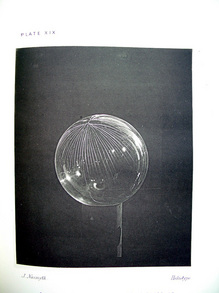
nasmyth the moon9.jpg1st ed., single heliotype
nasmyth the moon10.jpg2nd ed., two woodburytypes
nasmyth the moon8.jpg

1st ed., front cover

James Nasmyth (1808-1890) and James Carpenter (1840-1899), The Moon: Considered as a Planet, a World, and a Satellite. 1st edition (London: John Murray 1874). Graphic Arts Collection GAX 2012- in process. With 23 plates, including 6 photogravures, 4 heliotypes, 2 lithographs and 1 chromolithograph after drawings or photographs by Nasmyth, 12 mounted photographs on 11 leaves (10 autotypes by Brooks, Day & Son and 2 woodburytypes), and various wood engravings with text.

James Nasmyth (1808-1890) and James Carpenter (1840-1899), The Moon: Considered as a Planet, a World, and a Satellite. 2nd edition (London: John Murray 1874). Graphic Arts Collection GAX Oversize 2003-0202Q. Note, frontispiece and plates XII, XIII XVI, and XX are photogravures in the first edition, woodburytypes in second edition; plates II, XIX, XXI, XXIII in first edition are heliotypes, woodburytypes in second edition; plate XIX in first edition has one illustration (glass globe cracked) and two illustrations in second edition (add the full moon); plate III is woodburytype in both editions, but larger in first edition; plate XIV is woodburytype in both editions, but smaller in first edition.
Engraved on steel

| No Comments
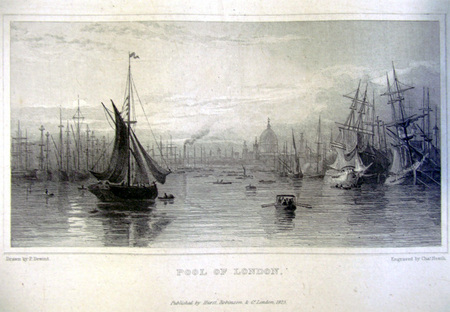
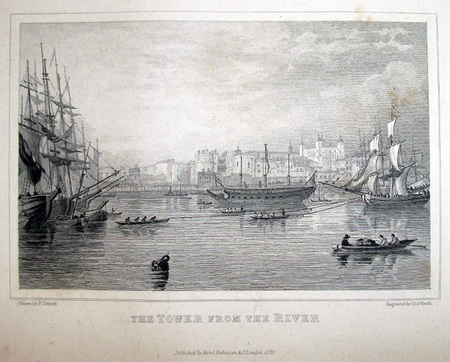
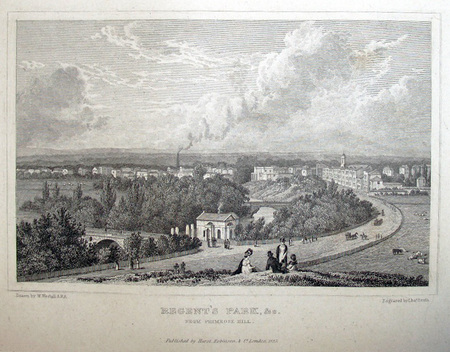
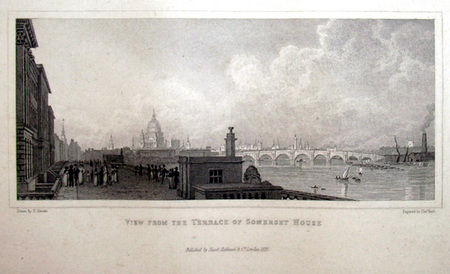
heath views of london1.jpg
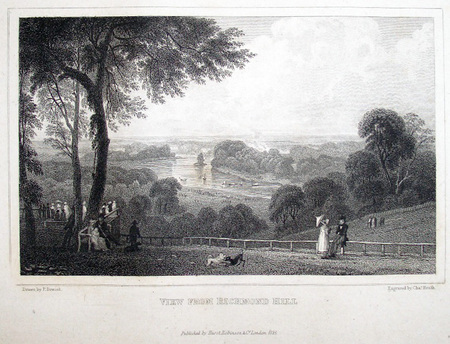
Views of London. 45 plates engraved by Charles Heath (1785-1848) (London: Hurst, Robinson & Co., & R. Jennings Year: 1825). Each plate accompanied by a leaf with descriptive letterpress. Graphic Arts Collection GAX 2012- in process

Charles Heath made his first etching when he was six years old and in 1840, was responsible for engraving on steel the world’s first postage stamps. It is his skill engraving on steel rather than copper, for which he is best remembered today.

“Heath was also a pioneer in new printmaking techniques… . In 1820, for an edition of Thomas Campbell’s poem Pleasures of Hope, he engraved the first plates on mild steel rather than copper, giving much longer production runs from each plate. In larger commercial plates he was less successful. By contrast his View from Richmond Hill and his Gentlemen of the Time of Charles I, together with his Christ Healing the Sick, were masterpieces of their kind.

In 1821 and again in 1826, Charles Heath got into financial difficulties, but quickly recovered following an energetic diversion into the new fashion for illustrated annuals and giftbooks… . From 1825 onwards he was almost entirely occupied first in engraving for The Amulet, Literary Souvenir, and Landscape Annual, and then in promoting his own productions, notably The Keepsake, Picturesque Annual, the Book of Beauty, and similar publications such as J. M. W. Turner’s Picturesque Views in England and Wales.” Dictionary of National Biography

heath views of london2.jpg
heath views of london3.jpg
heath views of london4.jpg
heath views of london5.jpg

Be Merry and Wise. He! He! He!

| No Comments
be merry1.jpg
be merry2.jpg
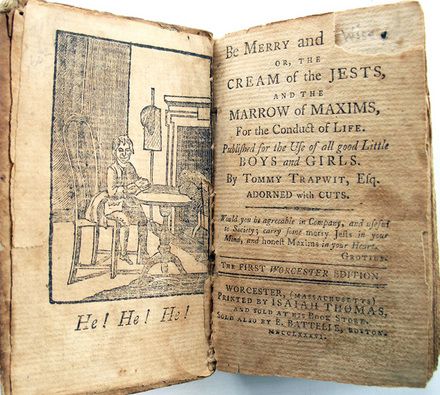
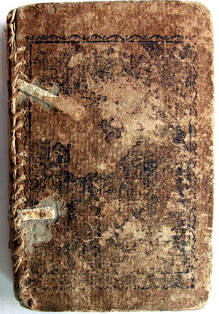
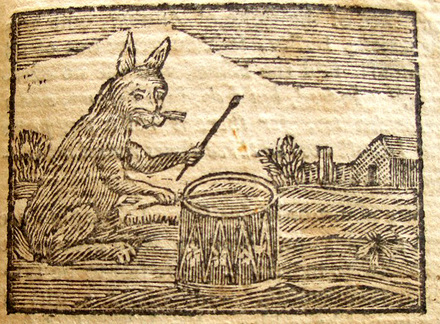
Tommy Trapwit, Be Merry and [Wise], or, The Cream of the Jests, and the Marrow of Maxims, for the Conduct of Life: Published for the Use of All Good Little Boys and Girls. The first Worcester edition. (Worcester: Printed by Isaiah Thomas, 1786). Sinclair Hamilton Collection of American Illustrated Books (GAX) Hamilton 107s
history of the holy8.jpg

In 1770, the children’s book Be Merry and Wise was published by Carnan and Newbery at no. 65 in St. Paul’s Church-yard in the City of London. A copy sold for six-pence and the frontispiece showed a picture of a young boy reading a book. John Newbery (1713-1767) had begun publishing books in 1740 and moved it to central London around 1743. After Newbery’s death, his son Francis and his stepson Thomas Carnan continued the business.

The American printer Isaiah Thomas (1749 -1831) set up his press in Worcester, Massachusetts, where he published more than 900 books. Thomas decided to bring Newbery’s books to the United States and simply began printing copies. There was no payment to the London firm or mention of copyright. The same year he released Tom Thumb (1838-1883), A Bag of Nuts Ready Cracked, or, Instructive Fables, Ingenious Riddles, and Merry Conundrums; and the following year The History of Little Goody Twoshoes and The History of Master Jackey and Miss Harriot, among many others.

history of the holy7.jpg

See also Carnan and Newbery’s edition of Be Merry and Wise, (CTSN) Eng18 / Newbery 5359

Margaret Armstrong

| 1 Comment
van dyke ryling.jpg

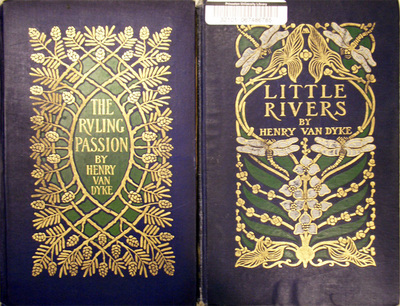
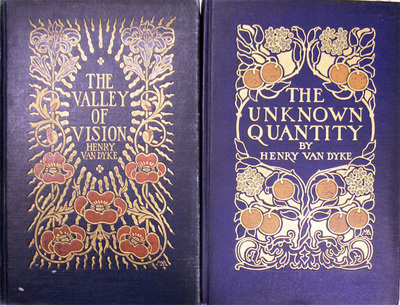
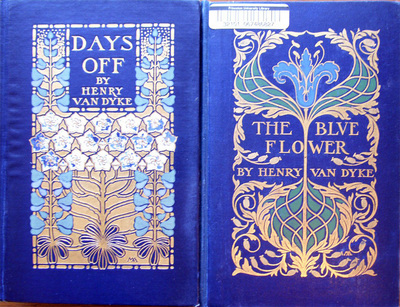
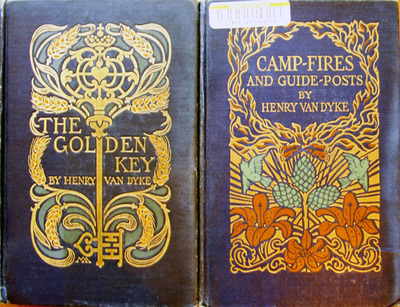
American publishers’ trade bindings are a popular topic in book collecting. One of the best designers of this genre was Margaret Neilson Armstrong (1867-1944). She worked primarily for Scribner’s, completing at least 270 books for the publisher. Henry Van Dyke (1852-1933) was one of the authors whose novels were all originally bound with Armstrong’s decorative gold stamping. Here are a few, but for a complete inventory see the database mounted in 2003 by The University of Alabama, University Libraries, in partnership with the University of Wisconsin-Madison Libraries. http://digicoll.library.wisc.edu/WebZ/SearchOrBrowse?sessionid=01-62870-520831238

van dyke valley.jpg
van dyke days.jpg
van dyke golden.jpg

See also: Charles B. Gullans, A Checklist of Trade Bindings Designed by Margaret Armstrong (Los Angeles: University of California Library, 1968). Graphic Arts Collection (GA) Oversize Z269.2.A75 G84 1968q

Max Weber, Cubist Poems

| No Comments
weber10.jpg
weber6.jpg

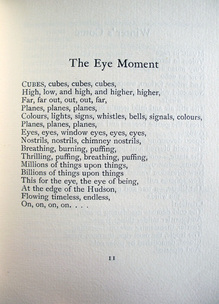
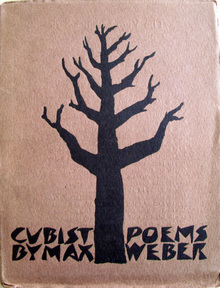
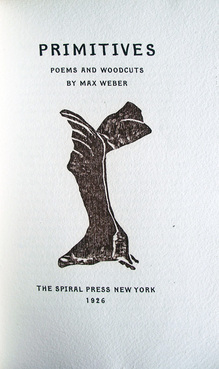
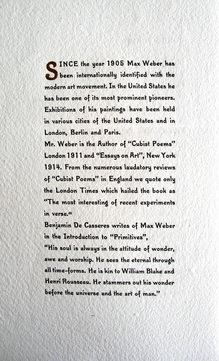
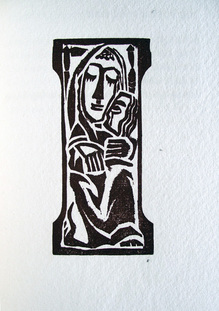
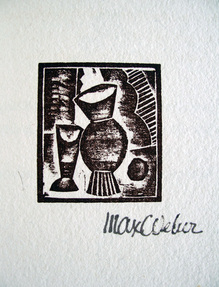
Known primarily as a painter and printmaker, the Russian-born Max Weber (1881-1961) was also a poet. His first book of poems, Cubist Poems (1914) was written while lecturing in art history at the Clarence H. White School for Photography. The book was dedicated to the pictorial photographer Alvin Langdon Coburn (1882-1966), who wrote a brief foreword and published in London by Elkin Mathews (1851-1921), where Coburn’s Moor Park was published the following year.

weber9.jpg
weber3.jpg

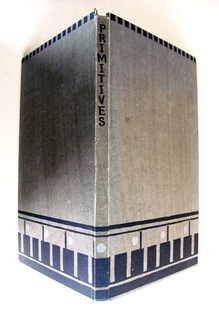
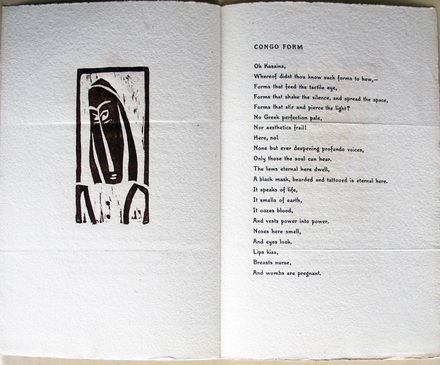
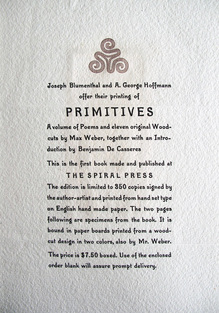
Twelve years later, Weber’s second book of poems, Primitives: Poems and Woodcuts, was published in an edition of 350 copies by Spiral Press. He not only illustrated the work with eleven woodcuts but also designed the binding.

weber5.jpg
weber7.jpg
weber4.jpg

Weber and his family moved from Russia to New York City in 1891. He enrolled at Pratt Institute to study with Arthur Wesley Dow (1857-1922), who taught him to carve and print in wood. Weber became a public school teacher for several years but gave this up to study painting in Paris from 1905 to 1909. The artist was not only inspired by the cubist style of painting he saw there but also by the French appreciation for African or what he called the primitive arts.

Back in the United States, Weber frequented New York’s Museum of Natural History and, in 1910, published the essay, “The Fourth Dimension from a Plastic Point of View” in Alfred Stieglitz’s journal Camera Work. Barely three years later, Weber was given a one-man exhibition at the Newark Museum, arguably the first modernist exhibition in the United States.

weber2.jpg
weber1.jpg


Max Weber (1881-1961), Cubist Poems (London: E. Mathews, 1914). Rare Books (Ex) 3981.48.327
Max Weber (1881-1961), Primitives: Poems and Woodcuts (New York: Spiral Press, 1926). Copy 90 of 350. Gift of Elmer Adler. Graphic Arts Collection (GAX) PS3545.E337 P75 1926

Marvels of the New West Identified

| No Comments
marvels3.jpg“A nineteenth-century illustration”


marvels1.jpg

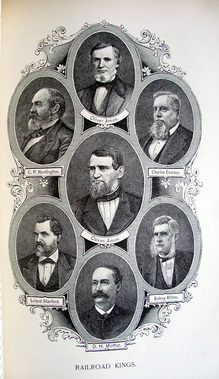
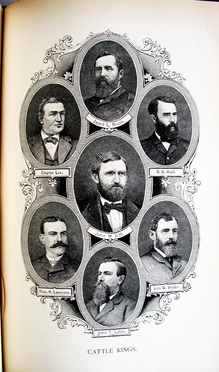
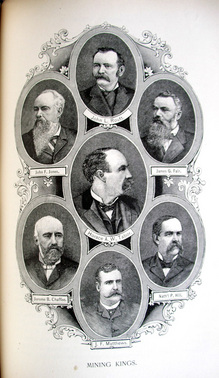
In a recent Times Literary Supplement (June 8, 2012), a review of three new books, each focused on the development of the American railroad, is illustrated with an image simply captioned “Railroad Kings: a nineteenth-century illustration.” Since there were more than a few illustrations in the nineteenth century, I thought a little more information might be helpful.

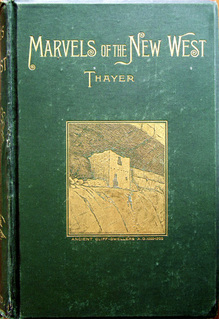
The plate (seven photographs translated to a wood engraving and electrotyped by J.S. Cushing & Company, Boston) is from the book Marvels of a New West by the Congregationalist minister William M. Thayer (1820-1898). Three similar plates are included in Thayer’s book, listed as Portraits and set apart from the illustrations. The sitters are identified as Railroad Kings, Mining Kings and Cattle Kings. While he used some existing photographs, Thayer tells us “others have been prepared from reliable data for this volume.”

In his introduction, Thayer spends considerable time discussing the portraits and illustrations prepared for this volume. “To make it ‘next to seeing,’ a large number of pictorial illustrations are introduced, without which it is quite impossible for this class to appreciate its marvels. No person can understand a cañon by merely looking at a stereopticon view, unless he has seen a cañon with his own eyes.”


marvels4.jpg
marvels2.jpg

“But transfer that view to a book, by the engraver’s art, accompanied by a careful description, and the reader can readily take it in. That is “next to seeing.” Therefore, the numerous illustrations in this volume occupy a prominent place in its plan. Indeed, in one sense, we may truly say that more dependence is placed upon the pictorial illustrations than the text, to convey the information intended. They are not designed merely for entertainment, but also for instruction. Through the objects illustrated, the character, thrift, and aims of the people appear… . “
“For this reason, we claim a special mission for the many illustrations in this volume. They are furnished at heavy expense; but are indispensable to the author’s purpose. It would be quite impossible to learn what the New West is without them.”

William Makepeace Thayer (1820-1898), Marvels of the New West. A Vivid Portrayal of the Stupendous Marvels in the Vast Wonderland West of the Missouri River … Six Books in One Volume, Graphically and Truthfully Described by William M. Thayer … Illustrated with over three hundred and fifty fine engravings and maps (Norwich, Conn.: Henry Bill Pub. Co., 1887). Rare Books: Western Americana Collection (WA) Rollins 2654

Old Tom and Blue Ruin

| No Comments
cruik time7.jpg

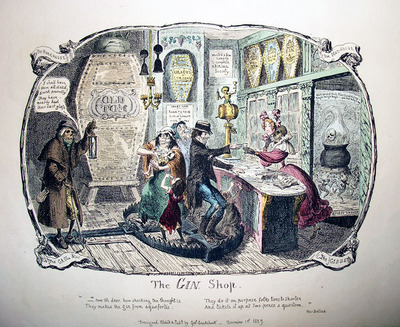
George Cruikshank (1792-1878), “The Gin Shop” in Scraps and Sketches, 1829. Hand colored etching. Graphic Arts Oversize Kane Room Cruik 1827.81q

Long before George Cruikshank signed a temperance pledge, he was satirizing the gin palaces of St. James Place. This is his earliest.

Images of death and dying are everywhere. Customers are standing inside a giant bear trap, waited on by a skeleton in the costume of a pretty woman (we can see her skull and the bones of her ankle and foot).

A woman is feeding gin to her baby, with the figure of death close behind her holding an hourglass. Spirits are held in coffins rather than casks: Old Tom is good gin; Blue Ruin is bad gin; Kill Devil is strong rum; and so on.

The inscription reads:
Now Oh dear, how shocking the thought is
They makes the gin from aquafortis:
They do it on purpose folks lives to shorten
And tickets it up at two-pence a quarter

Vattemare, the Father of Interlibrary Loan.

| No Comments
vattemare2.jpg

W.T. Moncrieff, Memoirs and Anecdotes of Monsieur Alexandre, the Celebrated Dramatic Ventriloquist. Adventures of a Ventriloquist; or, The Rogueries of Nicholas . . . . Illustrations by Robert Cruikshank (London: J. Lowndes, 1822). Graphic Arts Cruik R 1822

Graphic Art holds a rare copy of the memoir of Nicolas-Marie-Alexandre Vattemare (1796-1864), an actor, ventriloquist, quick-change artist, and philanthropist, who used as his stage name Monsieur Alexandre. Although trained as a doctor, Vattemare's natural talents as an entertainer led him onto the stage, a career which lasted from 1815 to 1835.

Vattemare performed a one-man show in which he transformed into dozens of different characters, each with their own costumes and voices. Bound with his memoir are scripts of the various sketches he performed, each one illustrated with a frontispiece portrait of that individual persona, made by Robert Cruikshank (1789-1856).

vattemare5.jpg
vattemare4.jpg

Vattemare's fame led to great wealth, which he used to acquire a vast collection of rare books and coins (among other things). Late in his life, Vattemare was instrumental not only in founding of the Boston Public Library but also a system of interlibrary loans and cultural exchanges between libraries around the world.

vattemare3.jpg
vattemare6.jpg

"The extraordinary life of Nicolas-Marie-Alexandre Vattemare (1796-1864)," wrote Suzanne Nash (Princeton University Professor of French and Italian, Emeritus), "known today by a handful of bibliographers as the founder of the American Collection at the Bibliothèque Administrative de la Ville de Paris and for his role in the creation of the Boston Public Library, deserves to be told, not only as a revealing page in the history of Franco-American relations, but as a window onto the rapidly changing cultural history of nineteenth-century France."
"Alexandre Vattemare: A 19th Century Story," Society of Dix-Neuviémistes (2004) http://www.sdn.ac.uk/dixneuf/september04/nash/vattemare.pdf

In 1824, Sir Walter Scott wrote Vattemare an epigram:
Of yore, in Old England, it was not thought good
To carry two visages under one hood;
What should folks say to you who have faces so plenty
That from under one hood you last night showed us twenty?

Stand forth, arch-deceiver, and tell us in truth
Are you handsome, or ugly? In age, or in youth?
Man, woman, or child? Or a dog or a mouse?
Or are you at once each live thing in the house?

Each live thing, did I ask, each dead implement too?
A workshop in your person -- saw, chisel and screw.
Above all, are you one individual? I know
You must be, at the least, Alexandre and Co.

But I think you're a troop, an assemblage, a mob,
And that I, as the sheriff must take up the job;
And instead of rehearsing your wonders in verse,
Must read you the riot act and bid you disperse.

vattemare1.jpg


See also Earle Havens, "The Ventriloquist Who Changed the World," American Libraries 38, no.7 (2007): 54-57.

James Whitney, "Incidence in the History of the Boston Public Library," Papers and proceedings of the ... General Meeting of the American Library Association, 24 (1902): 16.

Dard Hunter at the Roycroft Shop

| No Comments
hunter4.jpg

hunter2.jpg


hunter1.jpg
hunter3.jpg

(above) Washington Irving (1783-1859), Rip Van Winkle (East Aurora, N.Y.: Roycroft Shop, 1905). Initials & title-page by Dard Hunter (1883-1966). Gift of David B. Long, in honor of Gillett G. Griffin. Graphic Arts Collection (GAX) 2007-3529N

(below) Ralph Waldo Emerson (1803-1882), Nature (East Aurora, N.Y.: Roycroft Shop, 1905). Initials, title-page, and colophon by Dard Hunter (1883-1966). Gift of David B. Long, in honor of Gillett G. Griffin. Graphic Arts Collection (GAX) 2007-3634N

hunter8.jpg
hunter9.jpg

From 1904 to 1910 Dard Hunter was a Roycrofter, working for Elbert Hubbard (186-1915) at the Roycroft Shop, an art and crafts collective in East Aurora, New York. Rip Van Winkle and Nature are among his first published book designs for the group, where he also designed stain glass and other handcrafts.

Eventually Hunter tired of their repetitive, communal book production and left the Roycrofters to study traditional European typography and papermaking. He wrote, “My mind, however, does not run East Aurora way as I believe I have fully recovered from the disease. Poetically speaking, I have been vaccinated by the virus of something better, something nearer the ideal. My time is spent, I believe, as my mind seldom reaches back to that beautiful little village with its surface of good cheer and its gizzard of strife, jealousy and hate.” —The Life Work of Dard Hunter (GA Oversize TS1098.H8 H86f)

hunter 5.jpg


Magic Colored Pictures

| No Comments
mother g3.jpg
mother g5.jpg
mother g4.jpgFlap open (above)


and flap closed (left)

Mother Goose, The Old Fashioned Mother Goose’ Melodies, Complete: with Magic Colored Pictures ([New York]: G.W. Carleton & Co.; Donaldson Brothers, designers & printers, MDCCCLXXIX [1879]). Graphic Arts Collection (GAX) 2005-0660N

Before the Cotsen children’s literature collection came to Princeton, Elmer Adler collected a few specifically graphic books of juvenilia. This metamorphic (or transformation) picture book contains chromolithographed illustrations with foldout flaps. The plates are signed “W.L.S.” which refers to the Virginia-born illustrator and writer William Ludwell Sheppard (1833-1912) who worked for several of the large publishing houses such as Donaldson Brothers.

As a young man, Sheppard served in the Richmond Howitzers artillery and during the American civil war, he was a member of the Topographical Engineers Department of the Army of Northern Virginia. If you go to Richmond today, you can see three monuments he designed to honor the Confederate soldiers.

mother g2.jpg
mother g1.jpg

Epithalamium by Paul Muldoon

| No Comments
muldoon2.jpg
muldoon1.jpg
muldoon3.jpg
muldoon4.jpg

Paul Muldoon, Epithalamium. Designed and illustrated by Debra Weier (Princeton, N.J.: Emanon Press, 2011). Copy 6 of 50. Gift of Leonard L. Milberg, Class of 1953 in honor of Richard M. Ludwig. Ex 2012-0017Q

Epithalamium, a wedding poem by Pulitzer Prize winning Paul Muldoon, was designed, printed and bound by Debra Weier of Emanon Press. The book was conceived and produced over four years and seven months, and completed in May of 2011. Each of the seven verses claims its own page and is nestled in its own popout, and each popout symbolizes its respective verse through its structure.”—Prospectus inserted.

Additional images can be found at: http://debraweier.com/books/muldoon/muldoon.html

Oxford English Dictionary:
Epithalamium, n.: A nuptial song or poem in praise of the bride and bridegroom, and praying for their prosperity.
1595 Spenser (title) Epithalamion.
c1600 Timon (1980) iii. v. 49 Sing vs some sweete Epithalamion.
1607 J. Marston What you Will ii. i, Epythalamiums will I singe.
1653 Cloria & Narcissus I. 81 To sing Epithalamions to our marriage Feasts.
1690 T. Burnet Theory of Earth iv. 168 The 45th psalm‥is an epithalamium to Christ and the Church.
1739 W. Melmoth Fitzosborne Lett. (1763) 339 Give me timely notice of your wedding day, that I may be prepared with my Epithalamium.
1828 T. Carlyle Crit. & Misc. Ess. (1857) I. 163 Epithalamiums, epicediums.
1859 J. C. Hobhouse Italy II. 210 The Epithalamiums of Catullus and of Statius.
1860 G. J. Adler tr. C. C. Fauriel Hist. Provençal Poetry iv. 67 The epithalamia belonged likewise to the popular class of poetry.
2011 P. Muldoon Epithalamium

A copy (or two) of the Gutenberg Bible

| No Comments
gutenberg3.jpg

[Facsimile edition of the Biblia Latina, commonly known in English as the Gutenberg Bible, formerly known as Mazarin or Mazarine Bible] [Leipzig: Insel-Verlag, 1913-1914]. 2 v. Copy 6 of 300. Gift of Elmer Adler. GA Oversize 2006-0087F

“Diese faksimile-ausgabe des ersten [-zwelten] bandes der zweiundvierzigzeillgen Gutenburg-Bibel erschien im jahre 1913[-14] im Insel-verlag zu Leipzig. Die wiedergabe in mehrfarbigem lichtdruck erfolgte durch die Hofkunstanstalt Albert Frisch in Berlin nach dem pergament-exemplar der Königlichen bibliothek in Berlin und dem der Ständischen landsbibliothek in Fulda. Gedruckt wurden 300 exemplare / davon nr. 1-3 auf pergament / die übrigen auf van Gelder-bütten. Durch professor Ansgar Schoppmeyer in Berlin wurden die exemplare nr. 1-3 mit der hand ausgemalt und bei diesen / wie auch bei 10 exemplaren auf büttenpapier nr. 4-13 das gold mit der hand aufgelegt. Der einband ist dem Fuldaer exemplar nachgebildet.”
gutenberg5.jpg
gutenberg1.jpg

Johann Gutenberg (1397?-1468), working with merchant and money-lender Johann Fust (1400-1466) and printer Peter Schöffer (ca. 1425-ca. 1502), completed the printing of a 42-line Bible some time before August 1456. This lavishly produced facsimile edition of their book is based on the copies held by the Berlin Koniglichen Bibliothek and in the Stadtischen Landes-bibliothek in Fulda (the binding comes from this copy). Our former curator of graphic arts, Elmer Adler, generously donated a copy to Princeton University. A second set is housed in the William H. Scheide Library.

gutenberg12.jpg
gutenberg7.jpg
gutenberg9.jpg
gutenberg11.jpg
gutenberg6.jpg
gutenberg10.jpg
gutenberg13.jpg
gutenberg4.jpg
1 2 3 4 5 6 7 8 9 10 11 12 13 14

Recent Comments

  • Isabel Ribeiro: Thank you for your reply. I would indeed love to read more
  • Isabel Ribeiro: Gorgeous! Is there any way to access the rest of read more
  • S. Scudder: Mary Stilwell is my ggg-grandmother ... thank you for posting read more
  • V.E.G.: James Franklin, Benjamin Franklin's half-brother is a direct descendant of read more
  • Bob Fleck: Nice comments and well worth it. read more
  • N. Sutherland: Do you have any further biographical material on this Thomas read more
  • john W: Have the complete collection of EA Seguy papillons including front read more
  • Vermathio: algarabia, charabia et Picabia. Le premier désigne la langue read more
  • Matt SCOVILL: I have the complete "bookplates in Japan" box. I am read more
  • Daniel Joseph Bobroff: April 30, 2013 To Princeton University: This is a Plaintiff read more