Main

Illustrated books Archives

November 3, 2009

Washington Irving Footprints

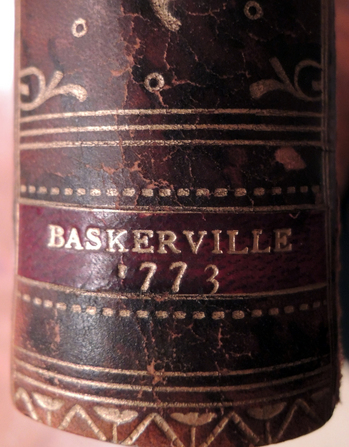
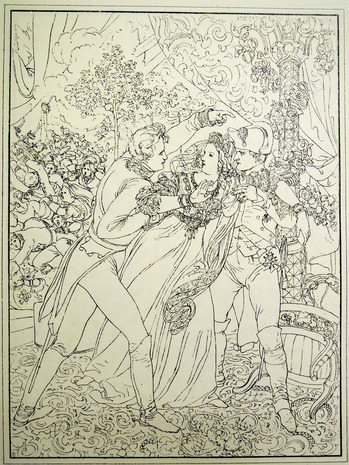
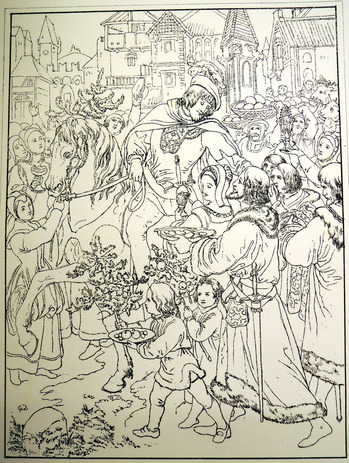
Washington Irving Footprints. Text by Virginia Lynch. Drypoint etchings by Bernhardt Wall (New York: B. Wall, 1922). Rebound. Copy 116 of 250. Gift of David B. Long in honor of Gillett G. Griffin. Graphic Arts GAX in process

We are fortunately to have received the donation of another Bernhardt Wall (1872-1956) etched book, joining the eight already in rare books and special collections (see earlier post). It is a fine example of Wall’s publications, in which he not only drew the etchings for his books, but also printed and bound them.

Wall was an avid researcher of American history. He published biographies of several American presidents and various American writers, including Theodore Roosevelt, Warren Taft, Henry Coolidge, Sam Houston, Mark Twain, Thomas A. Edison, Abraham Lincoln, and Andrew Jackson. This is his biography of Washington Irving.

For more information on Wall, read Francis J. Weber, Following Bernhardt Wall: 1872-1956 (Austin, Tex: Book Club of Texas, 1994). Graphic Arts (GAX) Oversize 2005-0466Q

October 23, 2009

True and Correct Tables of Time

This posting is to remind us all that the daylight savings time clock change is coming next weekend.

A sacrifice to Time, Fate dooms us all // And at his Feet poor Mortals daily fall // Time whose bold hand alike does bring to Dust // Mankind, and Earthly Pov’ns in which they Trust

Robert Tailfer (1710-ca.1736), True and correct tables of time: calculated for the old stile for 784 years viz. from A. D. 1300, to 2083, both inclusive; and for the new stile, from its commencement viz. 1582 to 2083 inclusive, being 501 years (London 27 Decr. 1736). Graphic Arts (GAX) 2009 -in process

Written by a British naval officer Robert Tailfer, these tables were designed to ease the conversion between dates on the Gregorian calendar and the Julian (Old Style) calendar. The book includes a brief history of the Gregorian calendar (part seen above) and three tables: the first giving the dominical letter for each year from 1300 to 2083, the second relating the days of the week to the dominical letter for each month of the year, and the third relating the epact (surplus days of the solar over the lunar year) and golden number for each year in both the Old Style and the Gregorian systems. See: http://www.newadvent.org/cathen/05480b.htm

According to Tailfer, these tables are useful “in examining ancient Records, Deeds, Conveyances, Notes of Hand, or any kind of Contracts whatsoever, but more especially in discovering fictitious & forged Deeds of Gift, it being well known that all Writings dated on Sunday (excepting what the Law allows) as null and Void.”

The English artist George Bickham I (also known as the Elder, ca. 1684-1758) engraved the entire work, including the allegorical frontispiece. Bickham was a writing master who is best known for his engraved copy books, such as Art of Writing, in its Theory and Practice (1712) Rare Books (Ex) 2007-0692Q; Second Part of Natural Writing: Containing the Breakes of Letters and Their Dependance on Each Other (1740) Graphic Arts Collection (GAX) 2007-0421Q; Natural Writing: In All the Hands, with Variety of Ornament (1740) Graphic Arts Collection (GA) 2007-0462Q; and most important of all, The Universal Penman; Or, the Art of Writing Made Useful to the Gentleman and Scholar, as well as the Man of Business … (1743) Cotsen (CTSN) Folios 11406

October 15, 2009

Calligraphy in its Entirety

Anton Kuchenreiter, Die Calligraphie in ihrem ganzen Umfange, geschrieben in Stein (Calligraphy in its entirety, written in stone) (Neuburg an der Donau, 1831). 35 x 51 cm.

This is the first and only edition of a German writing album containing thirty-three plates printed lithographically by Anton Kuchenreiter. It is a dedication copy for Princess Therese von Thurn und Taxis (1773-1839) and the bookplate bears the Thurn und Taxis arms. The dedication is signed “Anton Kuchenreiter lithograph.”

Kuchenreiter is not listed in any of the standard indexes to printmakers. However, there was a Swiss firm named Kuchenreiter known for their elaborately engraved firearms, led by Andreas Kuchenreiter I (1716-1795). It seems likely that Anton learned engraving from members of the family and incorporated the detail of the cut line with the ease of lithography.

The book was printed in Neuburg an der Donau (Neuburg on the Danube River), the capital of the Neuburg-Schrobenhausen district in the state of Bavaria, not far from the first quarries of Bavarian limestone, which was the favored stone of the earliest lithographers.

Princess Therese was born Duchess von Mecklenburg-Strelitz before marrying Prince Karl Alexander von Thurn und Taxis. Her younger sisters were Louise, Queen of Prussia; Duchess Charlotte von Saxe-Hilburghausen; and Princess Friedrike of Prussia. In the volume’s final plate, Kuchenreiter has drawn three names as though they were printed on top of each other: Louise, then Charlotte, and finally Therese. If you look closely, you will see additional words inside the letters of Therese’s name.


One more point of interest, the work is an example of lithographic engraving, or engraving on stone. A coating of grease-resistant gum arabic is painted on the stone and the artist scrapes away the text with a steel point. The exposed stone is inked and the rest is treated like lithography. This means that it would be written laterally reversed. For more, see Michael Twyman’s Early Lithographed Music (1996), p. 504. Mendel Music Library Ref SV ML112.T89 1996

October 12, 2009

Hot Corn

It seem fitting in a week when announcements are issued concerning Playboy as mandatory reading for certain Architecture graduate students and masturbation being prohibited in Princeton bathrooms, that we post something from a temperance book devoted to showing the “lamentable conditions” to which the wicked are apt to fall.

Solon Robinson (1803-1880), Hot Corn: Life Scenes in New York Illustrated. Including the Story of Little Katy, Madalina, the Rag-Picker’s Daughter, Wild Maggie, etc. (New York: DeWitt and Davenport, 1854). Half title and six full-page illustrations by John McLenan (1827-1865) and one by Frederick M. Coffin, all engraved on wood by N. Orr. Graphic Arts Hamilton 1043.

This is a collection of stories first published individually in the New York Tribune, then released, according to an 1853 advertisement in the New-York Daily Times, in an edition of 15,000. The book sold in a cloth binding for $1.25 and in a gilt edition for $2.00. It was a best-seller. The sad stories focus on the beggars, the alcoholics and the prostitutes who lived in and around the Five Points area in the lower east side of Manhattan.

So popular were the stories that three separate theater productions were developed around the character of Little Katy (who sold hot corn in the winter and peanuts in the summer) at Barnum’s American Museum, the Bowery Theatre, and the National Theater. At the latter venue, Little Katy ran in repertory with Uncle Tom’s Cabin.

There are many such books on our collection. See also Ernest Gray or The Sins of Society by Maria Maxwell (1855) Graphic Arts Hamilton 1055

According to Sinclair Hamilton, the artist John McLenan was discovered by the publishers working in a pork-packing plant in Cincinnati and making drawings on the tops of barrels. He became one of the most prolific of our early illustrators. Besides the American temperance books, McLenan illustrated many English novels for Harper’s, such as The Woman in White, Tale of Two Cities, and Great Expectations, as well as being well-known as a comic draftsman.

Unfortunately McLenan died in 1865 at the age of thirty-eight. The memorial which appeared in the May number of Yankee Notions called him:

…one of the best draughtsman America has ever produced…. Equally at home in caricature and in sketches from the life, with a quick perception of the ridiculous and a fine appreciation of the picturesque, he soon took his place among the illustrators of our current literature, second to none.

See another biography at http://www.victorianweb.org/art/illustration/mclenan/bio.html

October 9, 2009

Books that can't be read with Google, no. 1

Molly Burgess, Still ([Piscataway, N.J.] : Carolingian Press, 1975). Copy 16 of 25. Graphic Arts Collection (GAX) in process

This is a book of concrete poetry, based on Eastern philosophy and religion. The words have the appearance of a typewriter face but are in fact printed by letterpress at the Carolingian Press on different handmade rice papers. The book includes anagraphic, concrete poems incorporating the words: breath, earth, heart, death.

The artist writes:

Still is my response to a study of Eastern philosophy and religion. Though the book is based on personal interpretation and experience, there are specific links to both the history and philosophy from which it was conceived. Designed as a complete experience, it leads from the unfolding of the cover through the colors, into the patterns, the paradox, the stillness….

The book is arranged on four different levels: by color, by country, by thought, and by number…. There are thirty-two poems, eight in each of the four sections (the Eightfold way: right views, right intentions, right speech, right action, right profession, right effort, right watchfulness, right concentration). Each section of eight is again divided in two sections of four (the Four Noble Truths) by the ‘lace’ papers. The paterns of the four ‘lace’ papers progress from diamond to star to scallop to circle.

October 3, 2009

Koloman Moser in the TLS

In the September 18, 2009, issue of the Times Literary Supplement on paper, Robert Vilain uses a double-page spread from Ver Sacrum (correct citation: Heft 21, 1. November 1901), to draw attention to his review of three books about Rainer Maria Rilke. Don’t check the digital article because the online TLS does not include the images from the paper copy, only the words. The Rilke verse is from the dialogue Vorfrühling (Early Spring) from Drei Spiele (Three Plays), spoken by Die Schwarze Herzogin (the Black Duchess) and a servant. There is a credit line for Rilke but no mention of the graphic artist who makes the pages so appealing.

The pages were drawn and printed by Koloman Moser (1868-1918). In the outer margins you can see his small printed signature “Kolo Moser”. As a cofounder of the Vienna Secession, Moser joined Gustav Klimt, Josef Hoffmann, and others to establish a revolutionary new art outside of academia. Moser served as editor of their journal, Ver Sacrum, as well as the chief designer for several years. Through the journal’s pages, Moser endeavored to fuse art and literature, graphics and text. With respect to TLS, I’m not sure he would have approved of their description of his work as illustration or the disconnect between paper and digital versions of their publication.

Ver sacrum: Organ der Vereinigung Bildener Künstler Österreichs (Wien: Verlag Gerlach & Schenk, 1898-1903). Marquand Library (SAX) Oversize N6494.W5 V47q

For more information, see also Koloman Moser, 1868-1918 (Vienna: Leopold Museum; Munich; New York: Prestel, c2007). Marquand Library (SA), ND509.M7 A4 2007b

During 1903, Moser and Hoffmann left the Secession group and founded the Wiener Werkstätte. Their Almanach also included texts by Rilke and designs by Moser. See Almanach der Wiener Werkstätte (Wien: Rosenbaum, [1911]). Graphic Arts Collection (GAX) 2007-0687N

October 2, 2009

Portrait of Einstein by Okamoto Ippei

We recently found we have a rare copy of Ando Hiroshige’s Fifty-Three Stations on the Tokaido (Jimbutsu (Mankind) Tokaido), Muraichi, 1852. Chuban tateye. As if that isn’t good enough, it may have been the personal copy of Albert Einstein (1879-1955), who traveled to Japan in 1922. The library has a number of ephemeral items from that trip. http://diglib.princeton.edu/ead/getEad?id=ark:/88435/9880vr03d.

At the back of this volume is a portrait of Einstein by the cartoonist Okamoto Ippei (1886-1948), done in December of 1922 in Sendai, Miyagi Prefecture, Japan. The artist was fluent in English, having traveled a great deal, and was actively publishing his cartoons in several magazines and newspapers at the time. We hold a number of his published books, such as Yama to umi (Mountain and ocean) ([Osaka]. Osaka Asahi Shinbunsha. 1926) Cotsen Children’s Library (CTSN) Non-Roman — Japanese 38189. He must have made Einstein’s acquaintance and agreed to do this caricature in the man’s book.

September 20, 2009

Trvth Brought to Light and Discouered by Time

We don’t actively collect pages torn out of books but we have them. Some are easier to trace than others. This half-title page from a folder labeled seventeenth century leaves was designed and engraved by Flemish artist John Droeshout (1596-ca. 1652) while working in London. It was printed by Richard Cotes and sold by Michaell Sparke in 1651 to accompany a volume concerning the poisoning of Sir Thomas Overbury (1581-1613) and its aftermath.

When you go to the actual book, entitled The Narrative History of King James, for the First Fourteen Years (Ex 14431.669) you will not only find the engraving happily bound in it place but the “Emblematical Title explained” next to it. This text explains the print’s iconography beginning in the top left where a naked female figure of Truth tramples on Error. On the right the male figure of Time stands on the skeletal body of Death. Together they pull back a curtain to reveal the sleeping King James I. At the bottom left is Memory with his feet holding down black Oblivion. On the lower right is History, writing down what Memory tells him, with Sloth under his feet. Between them is a coffin, out of which grows a tree sprouting books and lights to make “succeeding Times most rich and rare.”

September 15, 2009

De anima brutorum commentaria (Commentary on the soul of animals)


Francesco Maria Soldini, De anima brutorum commentaria: curiosum nobis natura ingenium dedit (Commentary on the soul of animals: nature gave us an inquiring mind) (Florence: Cajetan Cambiagus, 1776). Frontispiece and seven additional engravings, along with engraved initials, borders, and headpieces. Artist unidentified. Graphic Arts (GAX) 2007-2116N

An odd combination of animals, real and imagined, are depicted in these lovely engraved plates, printed in various colored inks and interspersed throughout Soldini’s text. The title page is printed À la poupée, which means the plate was carefully hand inked in several colors printed altogether (instead of individual plates for each color printed separately). The process is named after the wad of cloth that was used in the inking, which looked like the head of a rag doll (poupée)

The animals include a rhinoceros, a camel, various amphibians, and even prehistoric beings. It is curious to see them all crawling or walking or flying together. I see from other copies that the plates are not always bound in the same order and the frontispiece (in ours) is not always at the front. Note, the PhotoShopping of the color of these digital imagines is not very good; not particularly close to subtle original tones in our book.

The dealer Susanne Schulz-Falster points out that the book was “issued nearly a century before Darwin’s theories of evolution” and it earned a place on the Index Librorum Prohibitarum. This was the list of publications prohibited by the Roman Catholic Church, happily abolished in 1966 by Pope Paul VI. Princeton’s earliest copy of the Index dates from 1611.
Indices expvrgatorii dvo, testes fravdvm ac falsatonium pontificiarum (Hanoviæ, apud G. Antonium, anno 1611). Rare Books (Ex) 0408.49.121

Mark Farrell, our brilliant rare book cataloguer, adds these notes about the title and its translation: Julie, the title proper and subtitle are divided wrong. Commentaria belongs to the title proper, not to the subtitle. Also, there is no such word as nobii in Latin. The title should be transcribed thus:
De anima brutorum commentaria: curiosum nobis natura ingenium dedit: Seneca de vita beata cap. 32.
and translated thus:
Commentary on the soul of animals: nature gave us an inquiring mind: Seneca De vita beata, ch. 32 [i.e. Seneca De otio, ch. 5].

The subtitle is actually an epigraph, and it is taken from chapter 5 of Seneca’s De otio (On leisure), not, as the title page says, from chapter 32 of his De vita beata, which, by the way, has only 28 chapters. Here is a translation by Aubrey Stewart of the whole sentence:

Nature has bestowed upon us an inquiring disposition, and being well aware of her own skill and beauty, has produced us to be spectators of her vast works, because she would lose all the fruits of her labour if she were to exhibit such vast and noble works of such complex construction, so bright and beautiful in so many ways, to solitude alone.

July 18, 2009

Asher B. Durand Extra-Illustrated or Grangerized?

Catalogue of the Engraved Work of Asher B. Durand. Introduction by Charles Henry Hart (1847-1918), (New York: Grolier Club, 1895). Graphic Arts (GAX) 2009- in process

In April of 1895, there was an exhibition held at the Grolier Club in New York City focused on the engravings of American artist Asher Brown Durand (1796-1886). 350 copies of the catalogue were printed in a large-paper edition in May of that year and circulated to the members of the Club.

A devoted fan of Durand’s work (as yet unidentified) took that catalogue and extra-illustrated it with all the original engravings he/she could acquire. This acquisition will provide Princeton researchers with not only a description of what Durand produced but also a copy of the actual print.

The term extra-illustrated refers to a book that has more prints or illustrations in it than when the book was published. These were usually added by trimming and tipping the prints onto extra pages (or sometimes right on top of the text) and then, rebinding the original text pages with the new plates.

The British term “Grangerizing” has a slightly different connotation, stemming from James Granger’s Biographical History of England (1769), which was published with blank leaves already provided for the reader to fill with prints. Grangerizing became a popular hobby in England and unfortunately, many other books were cut up to provide the extra prints for these homemade editions.

For more information on the difference between the two terms, and more history, see: H. J. Jackson, Marginalia: Readers Writing in Books (New Haven: Yale University Press, 2001). Firestone Library (F) Z1003 .J12 2001

July 15, 2009

The Least-Loved Long Poem of the Sixteenth-Century

With apologies to the curator of rare books, in whose collection this book lives, I must mention John Heywood (1497?-1580?) and his obscure 1556 allegory of the Protestant spider and the Catholic fly. A trained singer and actor, Heywood was also a devoted Catholic who supported the religious beliefs of Queen Mary and dedicated several poems to her. Mary appears in the last portion of The Spider and the Fly, as the housemaid who cleans up the house of England.

Heywood’s illustrated poem has 98 chapters, each introduced by a woodcut. Running 456 pages, the parable has been called “the least-loved long poem of sixteenth-century England.” The fly, named Buz, gets caught in the web at the center of the window. Buz argues with a spider that flies (Catholics) have as much right to be there as the spiders (Protestants). Other insects join the fight: the ants come to support the spiders and the butterflies support the fly. This leads to a battle in which 5,000 flies and 5,000 spiders are killed.

Mary arrives, frees Buz, takes down the web, and crushes the Spider.


John Heywood (1497?-1580?), The Spider and the Flie (London: Tho. Powell, 1556). Robert Taylor Collection (RHT) 16th-49


For more information, read Judith Rice Henderson, “John Heywood’s ‘The Spider and the Flie’: Educating Queen and Country” Studies in Philology, 96, no. 3 (summer 1999): 241-274.

July 2, 2009

Harrild & Sons Printing Machinery

In 1813, printer Robert Harrild (1780-1853) joined the debated raging inside the London printing community as to the use of rollers rather than balls to ink a printing plate. The majority of hand-printers preferred inking balls but Harrild’s demonstration of his new roller was so successful that rollers became compulsory in every print shop throughout the city. Harrild established a company, located at 25 Farringdon Street, to manufacture the rollers and eventually all kinds of printing equipment.

His advertisements boasted: “Harrild and Sons’ Manufacture … have on sale every article connected with printing machinery; type, presses, machines…” Shortly before his death, Harrild’s rollers and Paragon platen press were exhibited in the Crystal Palace during the Great Exposition of 1851. His sons continued to run the company well into the twentieth century.

Graphic Arts recently acquired two of their equipment catalogues: Catalogue of Printing Machinery and Materials with Selected Type Specimens, ca. 1895, and Harrild & Sons’ Complete Illustrated Catalogue of Printers, Bookbinders’ & Stationers’ Machinery & Materials, 1892. Note in particular the machine to fold newspapers.

June 25, 2009

Thysiastērio tēs leuterias


Most Pitiful Kalavryta [a town in Peloponnesus]

Thysiastērio tēs leuterias [Altar of Freedom] (Athēnai: “Ho Rēgas” Ekdot. Organismos, 1945). Gift of the Program in Hellenic Studies with the support of the Stanley J. Seeger Hellenic Fund. Graphic Arts Off-Site Storage: Contact rbsc@princeton.edu, Oversize D766.3 .T48 1945f.

My sincere thanks to Dimitri H. Gondicas, Executive Director, Hellenic Studies, for finding this graphic depiction of Greece during World War II. Note the remarkable date of 1945. Thanks also to Jeffrey Roueche Luttrell, Leader, Western Languages Cataloging, for his translations.

Heroic Crete

Wretched Doxato [a town in northern Greece]

The Hanged People of Athens

June 23, 2009

Eugene Alain Seguy

Graphic Arts holds 10 albums of original pochoir (hand-screened) prints by the French designer Eugene Alain Seguy (1889-1985). We are missing one, since he is known to have published 11 books offering Art Deco patterns. His final volume, released in 1930, is seen here. These patterns, meant for textiles, carpets, drapery, etc., were published by Armand Guérinet and A Calavas under the imprint “Libraire d’Art Décoratif”. Both editors were themselves artists and, certainly in the case of Calavas, photographers who collaborated with many of the French designers of that period.

Pochoir was a time-consuming process but resulted in deep, rich colors. The geometric designs of Art Deco were ideal for stenciling and the technique became something of a fad with French fashion publishers. Photography was often used to print the primary outline and then, the colors added with a brush through zinc or aluminum stencils.

Seguy’s books at Princeton:
Samarkande: 20 compositions en couleurs dans le style oriental, 1900. GAX NK8667.S43 S25f
Fleurs et leurs applications décoratives, 1902. GAX 2004-0019E
Document du décorateur, 1908. GAX 2003-0012E
Floréal dessins & coloris nouveaux, 1910. GAX NK8667.S43 F56e
Papillons: vingt planches en phototypie coloriées au patron donnant 81 papillons et 16 compositions décoratives, 1920. GAX Oversize NK8667.S43 P36f
Laques du Coromandel, 192?. GAX 2004-0032F
Primavera: dessins & coloris nouveaux, 192?. GAX 2004-0031E
Suggestions pour étoffes et tapis; 60 motifs en couleur, 1923. GAX 2006-0060E
Insectes: vingt planches en phototypie coloriées au patron donnant quatre-vingts insectes et seize compositions décoratives, 1929. GAX 2003-0044F
Prismes: 40 planches de dessins et coloris nouveaux, 1930. GAX 2004-0676Q

Read more: Sarah Schleuning, Moderne: Fashioning the French Interior (Miami Beach, Fla.: Wolfsonian-Florida International University; New York: Princeton Architectural Press, 2008) Graphic Arts Collection (GA), Oversize 2007-0759Q

June 20, 2009

Notable Women, too

Notable Women [London, no. 1, 1890-no. 4, 1891]. Graphic Arts GAX 2009-0236Q

Although publications such as Men of Mark (posted below) celebrate only men, women had their own share of bio-journals in the late 1800s. Notable Women is one example. Each issue includes 3 original mounted carbon prints by commercial photographers Alexander Bassano (1829-1913), Elliot & Fry, Winslow and Grove, and others. Princeton holds four issues, which include flowery biographies for the sitters Alexandra, Princess of Wales; Lady Dorothy Nevill; Mrs. Arthur Stannard (John Strange Winter); Lady Brooke; Mrs. Louise Jopling-Rowe; Mrs. Campbell Praed; Lady Hallé (Norman Neruda); Miss Ellen Terry; Mrs. Lynn Linton; Lady Algernon Borthwick; Lady Monckton; and Miss Jessie Bond.

Less grand in their format but with better information are: Notable Women Authors of the Day; Biographical Sketches, by Helen C. Black, 1893, Firestone Library (F) 3565.183
Notable Women in History; the Lives of Women Who in All Ages, All Lands and in All Womenly Occupations Have Won Fame …, by Willis J. Abbot, 1913 Firestone: CT3203 .A2

June 17, 2009

Les metamorphoses du jour

The French artist Jean-Ignace-Isidore Gérard went by the name Grandville, which was the stage name his grandparents used. In the early nineteenth-century, Grandville created several hand-colored lithographic books to satirize the bourgeois middle class of Parisian society in the Romantic period. His best, and today the rarest, is Les metamorphoses du jour published in 1829.

The characters of the book have a human body and an animal face, exposing people for the beasts they really are. The preface comments that the artist was thereby able to encompass “both the living picture of social manners and the satire of institutions and prejudices. Truth can circulate with impunity under the very eyes of the men it attacks.”

J.J. Grandville (1803-1847), Les metamorphoses du jour (Paris: Chez Bulla…et chez Martinet, 1829). 73 lithographic plates drawn by Grandville, printed by Langlumé. Graphic Arts (GAX) 2009- in process

The first edition was a huge success and quickly went out-of-print. A new edition was prepared in 1854, this time using wood-engraved reproductions of Grandville’s original lithographs. It is unfortunate that most people only know the series through these poor copies.

Princeton’s Les metamorphoses is a complete set of hand-colored lithographs with the extra two plates issued in 1830 in Belgium and then censored. In addition, the book is extra-illustrated with four lithographs in the style of the series: La chasse et la Pêche (1830), La revanche ou le Français du Missouri (1829), Casse nationale sur les terres royales (1830), and Chasse aux ordonnances (1830?).

Princeton also holds a number of books illustrated by Grandville including Jonathan Swift (1667-1745), Voyages de Gulliver dans des contrées lointaines (Paris: H. Fournier ainé: Furne et Cie, 1838). Graphic Arts (GAX) 2005-2172N; along with an original preparatory drawing for Gulliver by Grandville in the Cotsen Collection, (CTSN) Framed Artwork 3976

June 15, 2009

A Dialogue Between a Blind-Man and Death

Richard Standfast (1608?-1684), A Dialogue Between a Blind-Man and Death (Boston: printed and sold at John Boyle’s printing-office in Marlborough-Street, 1773). Graphic Arts (GAX) Hamilton 63b

In 1660, Richard Standfast, rector of Christ Church, Bristol, wrote and published a meditation in verse titled “There’s None So Blind As He That Will Not See.” A separate edition was later printed and published, this time called “A Dialogue Between a Blind-Man and Death.”

When publisher John Boyle began planning a Boston edition in 1773, he went to the engraver and silversmith Paul Revere (1735-1818) for a title page illustration. Revere returned with this image of a man conversing with a skeleton. According to Sinclair Hamilton’s Early American Book Illustrators and Wood Engravers, Revere’s day book records that on August 7, 1773, he charged Boyle the sum of 12 shillings for 2 “leading plates.” One was this cut, which must have been made expressly for this pamphlet.

The second cut Revere sold to Boyle, which depicted four devils grouped at the mouth of hell, was also published in 1773 in the pamphlet, A Vision of Hell by Theodorus Van Shemain [Hamilton 64a]. The cut of the blind man and death was also used in A Vision of Hell and as the order of printing is not known, it is impossible to say which publication marks the first appearance of Revere’s print.

June 12, 2009

A Merz Sonata

Jerome Rothenberg (born 1931), A Merz Sonata, [illustrated] by Debra Weier ([Easthampton]: Emanon Press; Rosendale: Women’s Studio Workshop, 1985). Weier created the two multiple-plate etchings, four type-high line plates & rubber stamp drawings. Graphic Arts Collection (GAX) Oversize 2004-0600Q


Krystyna Wasserman, director of the Library and Research Center at the National Museum of Women in the Arts, wrote “Many artists’ books have been inspired by works of art, literature, and music, while others are illustrations of favorite poems or stories. The Merz Sonata by Debra Weier is a tribute to Dada master Kurt Schwitters, who elevated collage to a true art form. Weier incorporates glued bits of paper, ticket stubs, and pop-ups into her visual interpretation of Jerome Rothenberg’s poem.”

June 5, 2009

Canal Street


In 1990, two long-time New Yorkers, Ian Frazier (born 1951) and Saul Steinberg (1914-1999), joined forces to create the book Canal Street. The first in the American Journals series published by the Library Fellows of the Whitney Museum of American Art, Canal Street features 16 photo-lithographs and two woodcuts by Steinberg depicting the traffic, architecture, and noise of the neighborhood where Frazier lived for more than twelve years.

Canal Street was organized and edited by May Castleberry, who is now making books for the Museum of Modern Art, and designed by Katy Homans. Michael Berdan hand-printed the watercolor woodcuts, which were proofed with the artist in New York. The edition of 160 copies was printed by Stamperia Valdonega in Verona under the supervision of Martino Mardersteig.

Ian Frazier & Saul Steinberg, Canal Street (New York: Library Fellows of the Whitney Museum of American Art, 1990). Gift of James Kraft, class of 1957. Graphic Arts Collection (GAX), Oversize 2004-0804Q

May 27, 2009

Lessons for Children

Anna Letitia Barbauld (1743-1825), Lessons for Children, in Four Parts. Wood engravings designed by S. Pike and engraved by Alexander Anderson (Philadelphia: Benjamin Warner, 1818) Graphic Arts Collection (GAX), Hamilton 265

Anna Laetitia Aikin (later Mrs. Rochemont Barbauld) and her brother John began publishing small books in 1773. When Anna adopted John’s son, Charles, she began writing a series of books for children, including Lessons for Children in 1778 and Hymns in Prose for Children in 1781. Anna was a dedicated teacher and hoped these volumes would introduce “elements of society’s symbol-systems and conceptual structures, inculcate an ethics, and encourage [children] to develop a certain kind of sensibility.”

As depicted in the image shown above, the text is meant to be a personal dialogue between mother and child. The books were printed in large type with wide margins making them easy to read for all ages. Their popularity led to numerous editions in several languages. Anna and her brother also collaborated on the six-volume Evening at Home, or The Juvenile Budget Opened; The Farm-Yard Journal; and Books of Stories, or, Allegorical Instruction and Entertainment, from Animated Creation, for Children.

Graphic Arts is fortunate to hold copies of all these books as well as the original wood-engraved block for one illustration from Lessons for Children.

May 12, 2009

Never a Day Without a Line

Crispijn [van] de Passe (1594-1670), La prima-[quinta] parte della luce del dipingere et disegnare, … (Ghedruckt t’ Amsterdam: Ende men vintse te koop by Ian Iantsz. … als mede by den Autheur selve … , 1643-1644). Five parts bound as one. Graphic Arts (GAX) 2009- in process

The frontispiece for Crispijn de Passe’s five volume manual for painters depicts Minerva as the patroness of the arts.

She is holding a torch to symbolize the light mentioned in the title of this volume. In her lap is an open book with the artist’s motto: Nulla dies sine linea (Never a day without a line). Behind her are eight Utrecht painters: Abraham Bloemaert, Gerard van Honthorst, two unidentified, Jan van Bronckhorst, Roelandt Saverij, Joachim Wtewael, and Paulus Moreelse. Apprentices sit at Minerva’s feet drawing.

The manual was meant for a wide audience and so, the text is printed in Italian, Dutch, French, and German. Part one is devoted to proportions; part two to drawing from the male nude; part three drawing from the female nude; part four to figure studies by famous contemporary master including Guercino, Jan Cousin, Abraham Bloemaert, and Roelandt Saverij; and part five focuses on the study of mammals, birds, fish, and insects.

There are only four other copies of this book in the United States. One is at the National Gallery of Art in Washington D.C., one at the Getty Research Institute, and two at the Museum of Fine Arts, Boston. Each copy is slightly different in the plates included, their sequence, and the altering of dates. The title pages of part 1-2 in Princeton’s copy have imprint: t’Amsterdam : By Crispijn de Pas, M.D.C.XLIV (altered with pen to M.D.C.LXIV), while the National Gallery of Art’s copy is altered similarly for parts 2-3. Princeton’s copy also has plate dates altered to reflect the addition of a number of prints.

Each of the five parts has its own title page, hence the combined title: La prima-[quinta] parte della luce del dipingere et disegnare, used for the single bound volume. The polyglot book is also known as Van ‘t Licht der teken en schilderkonst and Luce del dipingere et disegnare.

Most of the 225 plates in these volumes were engraved by Crispijn the Younger himself, although the years following the publication of this opus were troublesome for the artist. He had more and more trouble keeping up with demand for his work and in 1645, the artist was admitted to an asylum to be “cured of his insanity of mind.” Although he returned to work, this manual remains his most ambitious project.

The book is dedicated to the city of Utrecht, where his father Crispijn de Passe the elder, had moved for religious reasons. The entire family, father and four children, worked together as artists and print publishers. When the family estate was settled near the end of the 18th century, their work totaled more than 14,000 prints and around 50 print books or illustrated volumes. Princeton is fortunate to now hold 5 rare volumes with prints by Crispijn the younger, and 6 illustrated by Crispijn the elder.


The honour is immortal that remains
Of virtuous artists whose name shall never wither.
Just so with De Passe, the praise the Muses sing
In the vale of Pegasus, of all the wondrous marvels
That he disclosed with his needle,
By etching on the plate, of which Belgica boasts.
So skillfully done, stippled and boldly cut,
As can still be seen up to this very day.
The proof demonstrates the work’s deed to the master’s honour,
Aye, the hand may perish, but the spirit never dies.

April 30, 2009

Whistleriana

University of Rochester Memorial Art Gallery, Catalogue of an Exhibition of Portraitures of James McNeill Whistler ([Rochester, N.Y.] Priv. print., 1915). Graphic Arts: Reference Collection (GARF) ND237.W6 R6


The title page of this James McNeill Whistler (1834-1903) exhibition catalogue holds the collector’s mark, “From Whistleriana of Elmer Adler.” A further look reveals this is copy no. 1 of an edition of 130, printed on hand-made paper by the Craftsman press of Rochester, New York. Princeton’s volume is heavily extra-illustrated with mounted or tipped-in correspondence, prints, drawings, and photographs of the works in the exhibition.

The curator and major lender of the show was 34 year old Elmer Adler. In the early years of the 20th century, Adler was living in Rochester and well-known for his collecting interests. The local university art gallery tapped him several times to exhibit his holdings.

In 1915, Adler was asked to prepare an exhibition of portraits of the American artist J. M. Whistler, one part of his larger Whistleriana collection. What followed was a great deal of personal correspondence, research notes, and reproduction inquiries. When the show was complete and the catalogue printed, Adler gathered all the paperwork together and had it bound with the catalogue into one unique, extra-illustrated edition, now part of Princeton’s graphic arts collection.

April 21, 2009

Ten Years in Wall Street

William Worthington Fowler (1833-1881), Ten Years in Wall Street; or, Revelations of Inside Life and Experience on Change. Illustrated by Arthur Lumley (1837-1912). (Hartford, Conn.: Worthington, Dustin, 1870). Added title page engraved by John Filmer. Other engravers include George Wevill & George Hammar, Charles Spiegle, and Kingdon & Boyd. Arts Collection (GAX) Hamilton 1815

April 12, 2009

Hans Sebald Beham

Hans Sebald Beham, Der Genius mit dem Alphabet (The Genius with the Alphabet), 1542. Engraving. Bartsch 229. Pauli 233. Graphic Arts, German prints

The German artist Hans Sebald Beham (1500-1550), who often went by Sebald Beham or HSB, grew up in Nuremberg during a time of political unease. The Nuremberg council actively sought out prints that might be considered propaganda or printmakers who might be religious agitators. Sebald, his brother Barthel (1502-1540), and their colleague George Pencz (1500-1550) were nicknamed the “Godless Painters” when they were brought to trial for atheism, specifically a disbelief in transubstantiation. All three were expelled from Nuremberg, only to return after about ten months.

Sebald was chiefly recognized for his small engravings in the style of Albrecht Dürer (1471-1528), the undisputed superstar of the era, but this similarity also brought him trouble. When Hieronymus Andreae (ca.1500-1556) hired Sebald in 1527 to illustrated a Lutheran prayer book and several other projects, the two were accused of plagiarizing Dürer and Sebald was once again forced out of Nuremberg.

Biblia: insignium historiarum simulachris… (Paris, printed by François Gryphius, 1542). Graphic Arts (GAX) Z232.G8751 B52

Settling in Frankfurt, Sebald produced nearly 2,000 prints during his career. The same year he engraved the putti above, he was also one of several artists responsible for the woodcuts used in the first Paris Bible to contain illustrations in the Renaissance style, as recognized by bibliographer Ruth Mortimer. She writes, “The first three Old Testament cuts are based on Holbein blocks common to the Dance of Death and Icones sets; the remainder of the Old Testament illustration derives chiefly from a series by Hans Sebald Beham.” (French 16th century books GA Z881 .H346)

For more, see Gustav Pauli (1866-1938), Hans Sebald Beham: ein kritisches Verzeichnis seiner Kupferstiche, Radierungen und Holzschnitte (Strassburg: J.H.E. Heitz, 1901). Marquand Library (SA) ND588.B4 P2

April 9, 2009

Egypt, Sinai, and Jerusalem

Francis Frith (1822-1898), Egypt, Sinai, and Jerusalem: a Series of Twenty Photographic Views; with descriptions by Sophia Lane Poole (1804-1891) and Reginald Stuart Poole (1832-1895) (London: James S. Virtue, [after 1858]). 20 albumen silver prints, sheet: 53.3 x 73.6 cm. Graphic Arts Collection (GAX) Oversize 2004-0006E

Francis Frith collaborated with a lecturer and scholar of antiquities at the British Museum, Reginald Poole, and with Poole’s mother, Sophia, to produce this mammoth album of photographs. It is interesting that at the same time, Sophia’s brother Edward W. Lane (1801-1876), a scholar of Oriental linguistics, was working with Reginald on an illustrated edition of the Arabian Nights (The Thousand and One Nights, a new translation from the Arabic, with copious notes by Edward William Lane; illustrated … by William Harvey; edited by his nephew Edward Stanley Poole, 1859. Rare Books (Ex) 2263.2869).

The Poole’s had spent over seven years living and working in Egypt, and were fluent not only with the languages of the region but the history and culture. Frith on the other hand made only three trips to the area—1856-57, 1858, and 1859—passing through some cities only once. His objective was to capture photographic images that could be reproduced in many formats and sold as widely as possible. In this, he certainly succeeded.

In the beginning, Frith contracted with Thomas Agnew and Son to sell individual prints made from 16 x 20 inch negatives and with James S. Virtue to publish groups of photographs in a series of albums. Negretti and Zambra handled the stereoscopic views sold both individually and in sets. In addition, Frith formed his own company, F. Frith & Co. to sell his own work and the photographs of others, specializing in scenic travel views, which were of great interest to the British public. Frith built the largest photographic archive in Great Britain and then, in the 1880s, handed the business over to his sons and moved to a villa along the French Riviera to write his memoirs.

To see more of Princeton’s holdings of Frith albums and photographs, continue below.

Continue reading "Egypt, Sinai, and Jerusalem" »

March 28, 2009

John Baptist Jackson

John Baptist Jackson (1701-1780?), Titiani Vecelli, Pauli Galiarii, Jacobi Robusti, et Jacobi de Ponte opera (Venetiis: J. B. Pasquali, 1745). 24 leaves of plates Graphic Arts Collection (GA) GC171

In 1731, the British printmaker John Baptist Jackson arrived in Venice and found work with printmaker Count Antonio Maria Zanetti. Jackson impressed his employer with images printed from multiple blocks, dramatically reproducing paintings and sculpture in a two-dimensional format. He went on to have success designing and cutting woodcuts for book illustration for various Venetian publishers. This came to an end when Jackson learned that some of his designs had been stolen and the blocks printed under another name.


The Crucifixion after Tintoretto (1518-1594)

Fortunately, he met the wealth British banker and bibliophile Joseph Smith (ca. 1674-1770) who offered Jackson several commissions for reproductive prints of works in Smith’s art collection. The last, completed in 1739, was a multi-block or chiaroscuro reproduction of Rembrandt’s Descent from the Cross (the painting now in the National Gallery of Art, London). The success of this print led his friends Charles Frederick and Smart Lethieullier to propose a larger series of chiaroscuro prints reproducing the great paintings of the Venetian masters.

The Virgin in the Clouds and Six Saints after Titian (ca. 1488-1576)

The project took 4 ½ years, during which time Jackson proofed nearly 100 blocks to produce 24 plates after 17 paintings by such artists as Titian, Tintoretto, Veronese, Leandro da Ponte Bassano, Jacopo Bassano, and Francesco da Ponte Bassano. This was not the first or only such project Jackson attempted but it was the only one to be successfully completed and published in a large edition.

Jackson’s book brought the Renaissance process of chiaroscuro printing back into favor and in 1754, he published a technical manual entitled, An Essay on the Invention of Engraving and Printing in Chiaro Oscuro. In it, Jackson comments “… there is a masterly and free Drawing [in chiaroscuro], a boldness of Engraving and Relief, which pleases a true Taste more than all the little Exactness found in the Engravings in Copper plates..”

Princeton’s copy of Jackson’s book has been disbound and digitized. The prints can be seen in their entirely at http://diglib.princeton.edu/xquery?_xq=getCollection&_xsl=collection&_pid=jacksonprints

Presentation of the Virgin in the Temple after Titian (ca. 1488-1576)

For more information, see: John Baptist Jackson (1701-1780): chiaroscuri dalla Collezione Remondini del Museo biblioteca archivio di Bassano del Grappa (Vicenza: La Serenissima, 1996) Marquand Library (SA) NE642.J13 M37 1996

March 15, 2009

The Court of Henry VIII

Edmund Lodge (1756-1839), Portraits of Illustrious Personages of the Court of Henry VIII (London: John Chamberlaine, printed by W. Bulmer, 1812). Graphic Arts (GAX) 2009- in process

This is the second edition of 84 stipple engravings reproducing drawings by Hans Holbein, the younger (1497-1543), with biographical and historical descriptions by Edmund Lodge. It was Queen Caroline (1683-1737), who found the Holbein originals in a bureau at Kensington Palace and asked Richard Dalton (Keeper of the King’s drawings and medals) to have them copied and published. When Chamberlain took over Dalton’s position he also inherited the project. Chamberlain edited and published a folio edition of Holbein’s work in 1792, printed and issued in parts over the next 8 years by William Bulmer and Company, Shakespeare Printing-Office.

For the 1792 edition, Chamberlaine called on Francesco Bartolozzi (1725-1815), to prepare a set of prints. Bartolozzi had developed his own technique of stipple engraving with printed color to reproduce the look of chalk drawings, such as Holbein’s. The folio edition of Illustrious Personages was such a success that a large quarto edition was prepared in 1812 (seen here), using additional engravers working in the style of the elderly Bartolozzi, including Bourlier, Cardon, Cheesman, Cooper, Facius, Knight, Meyer, Minasi, and Nicholls.


Of the 84 portraits, 68 are identified by name. The last 12 could not be identified and are grouped at the front of the book without description. A letterpress index is included in the 1812 edition, seen on the left. In addition, portraits of Holbein and his wife serve as frontispieces to both editions.

March 11, 2009

Julia Margaret Cameron and Alfred Lord Tennyson


Julia Margaret Cameron (1815-1879), Illustrations to Tennyson’s Idylls of the King, and other poems (London: Henry S. King, 1875). volume 1, 12 albumen silver prints. Graphic Arts Collection (GAX) Oversize 2007-0055F. Purchased with David H. McAlpin Fund of the Art Museum, Friends of the Library Fund, and the Elmer Adler Memorial Fund. 1974.


“The Parting of Sir Lancelot and Queen Guinevere,” 1874. Albumen silver print. Idylls of the King and Other Poems
“Elaine, the Lily Maid of Astolat,” 1874. Albumen silver print. Idylls of the King and Other Poems

“Vivien and Merlin,” 1874. Albumen silver print. Idylls of the King and Other Poems

“Vivien and Merlin,” 1874. Albumen silver print. Idylls of the King and Other Poems

In the summer of 1874, Julia Margaret Cameron (1815-1879) was living next door to Alfred Lord Tennyson (1809-1892) at Farringford, Freshwater, on the Isle of Wight. Tennyson had taken “Morte D’Arthur” published in 1842 and expanded it into “Idylls of the King” in 1859. He asked Cameron to make illustrations for a new publication of these poems and she produced over 200 prints from wet-plate collodion-on-glass negatives. Unfortunately, the publisher chose only two to be reformatted as wood-engravings and even those did not reproduce well in the final book.

At Tennyson’s encouragement, Cameron went on to produce a book of her own with albumen silver prints interspersed with texts by Tennyson lithographed from Cameron’s hand-writing. The first volume appeared in January 1875 and the second in May, selling for six guineas. The frontispiece for each volume was a portrait of Tennyson dressed as “The Dirty Monk,” dated 1869.

Cameron wrote, “My aspirations are to ennoble Photography and to secure for it the character and uses of High Art by combining the real and ideal sacrificing nothing of Truth by all possible devotion to Poetry and beauty.”

Alfred Lord Tennyson (1809-1892), Idylls of the King (London: E. Moxon, 1859). Contents: Enid. - Vivien. - Elaine. - Guinevere. PUL nine copies available

February 17, 2009

Imatgeria Religiosa


Joan Amades and Josep Colomines, Imatgeria Religiosa (Barcelona: Gregori, 1947). Series: Col’leccio de Boixos Populars de Catalunya, I. Religious iconography of Spanish works held in Catalan collections. Graphic Arts (GAX) 2009- in process

February 12, 2009

Printed Illumination


Livre d’heures [Book of hours] (Paris: Engelmann et Graf, 1875). Graphic Arts (GAX) 2009- in process

The nineteenth-century French artist Godefroy Engelmann I (1788-1839) studied painting at the Académie des Beaux-Arts but turned his talent to printmaking when he was introduced to the new medium of lithography in 1813. On a trip to Munich, Engelmann purchased a press, stones, and all the equipment needed to set up a studio, which he did in Mulhouse, France, followed by presses in Paris and in London.

Engelmann excelled at color lithography which reproduced the look of chalk drawings and oil paintings for fine art prints. In his twenty years of production, he was responsible for most of the major technical developments of the medium, publishing two important treatises, Manuel du dessinateur lithographe (1822) and Traité théorique et pratique de lithographie (1835-40).

Engelmann’s son Godefroy II (1814-1897) joined the firm in 1837, and merged the business with the publisher Graf to form ‘Engelmann et Graf’. The firm quickly established itself as the leading company in France for the printing of facsimiles of illuminated manuscripts, such as this chromolithographic book of hours.

February 11, 2009

Parabaik of Myanmar


This tiny folded-paper book or parabaik (also spelled parabeik) came to the department with no attribution or provenance. It is untitled and constructed in the traditional Burmese/Myanmar manner, with the heavy paper cut and pasted into one long strip, then folded accordion style and attached to wood boards. The binding has an identical relief decoration on either side, ornamented with glass facets.

The hand-painted text, written in a round Burmese hand, forms circles around animal figures, astrological symbols, and runes. Although we do not have an expert on campus who has been able to translate this lovely volume, the characters do not appear to form complete sentences, but are perhaps the sounds or syllables that form magical chants or charms.

Untitled book of charms [parabaik], 20th century. Gift of Alfred L. Bush. Graphic Arts (GAX) 2009- in process

February 9, 2009

Mizraïm

Samuel Augustus Binion (1853-1914), Ancient Egypt or Mizraïm (New York: H.G. Allen, c1887). Copy no. 2 of 800. Graphic Arts Collection (GAX) Oversize Rm 2-15-G, cabinet 32(F16)

“Henry G. Allen and Co., 156 Fifth Avenue, New York, have just published Ancient Egypt or Mizraïm, a work begun seven years ago by Samuel Augustus Binion. It is profusely illustrated with colored plates and rich engravings and the edition de luxe is limited to 800 copies. The purpose of the book is to present the history of Egypt and Egyptian art, which will illustrate and describe the wonders of Egyptian architecture in the most thorough manner, and in size sufficiently large to enable the artist to give faithful restorations of the architecture, ornamentations, hieroglyphics, and decorations in their original colors and in form convenient for the private as well as the public library.” Publisher’s Weekly July 25, 1896.

What is Mizraim?
miz’-ra-im (mitsrayim): (1) A son of Ham, and ancestor of various peoples, Ludim, Anamim, etc. (Gen 10:6,13; 1 Ch 1:8,11). (2) The name of Egypt. The land of Ham.—cham, was another name for the land of Egypt. It occurs only in Ps 105:23,17; 106:22; Ps 78:51 probably refers to the land of Ham, though it may refer to the children of Ham. -James Orr, “Definition for MIZRAIM,” International Standard Bible Encyclopedia

January 26, 2009

The Well-Equipped Printing Shop

Johann Heinrich Gottfried Ernesti (1664-1723), Die wol-eingerichtete Buchdruckerey: mit hundert und achtzehen teutsch-, lateinisch-, griechisch-, und hebräischen Schrifften, vieler fremden Sprachen Alphabeten, musicalischen Noten, Calender-Zeichen, und medicinischen Characteren, ingleichen allen üblichen Formaten bestellet… (Nürnberg: Gedruckt und zu finden bey Johann Andreä Endters seel. Sohn und Erben, 1721). Graphic Arts Collection (GAX) Oversize 2006-0269Q

This German printers’ manual describes an early 18th-century printing office. The shop, first owned by Michael Endter (fl. 1653-1662) and his family, was purchased by Johann Ernesti in 1717. As seen in the engraved frontispiece, Ernesti had two working presses. One is engraved with the dated 1440, for the beginning of printing, and the other 1730, to signify the printing of this issue of the manual. Nine men are working inside the shop setting the type, proofreading the copy, and printing the pages.

The manual begins with thirteen biographies and engraved portraits of early printers, including Laurens Janszoon Koster (ca. 1370-ca. 1440), Johannes Gutenberg (ca. 1398-1468), Johann Fust (ca. 1400-1466), Aldus Manutius (1449/1450-1515), Christophe Plantin (ca. 1520-1589), among others.

Over one hundred type specimens are introduced, including 47 Black Letter, 21 Roman, 14 Italic types, as well as Slavic, Greek, and Hebrew fonts. In addition, there are special calendar symbols, astrological signs, and engraved music fonts.

January 22, 2009

How to Reform a Country

Jonathan Swift (1667-1745), Voyages de Gulliver dans des contrées lointaines; édition illustrée par J.J.Grandville (1803-1847) (Paris: H. Fournier ainé, 1838). Graphic Arts Collection (GAX), 2005-2172N

A Voyage To Laputa, Chapter 6. The Author proposes some Improvements which are honorably received.

I told him… the Bulk of the People consisted wholly of Discoverers, Witnesses, Informers, Accusers, Prosecutors, Evidences, Swearers…. The Plots in that Kingdom are usually the Workmanship of those Persons who desire to raise their own Characters of profound Politicians…to fill their Coffers with Forfeitures; and raise or sink the Opinion of public Credit.

It is first agreed and settled among them, what suspected Persons shall be accused of a Plot: Then, effectual Care is taken to secure all their Letters and other Papers, and put the Owners in Chains. These Papers are delivered to a Set of Artists, very dexterous in finding out the mysterious Meanings of Words, Syllables and Letters.

For Instance, they can decipher a Close-stool to signify a Privy-Council; a Flock of Geese, a Senate; a lame Dog, an Invader; the Plague, a standing Army; a Buzzard, a Minister; the Gout, a High Priest; a Gibbet, a Secretary of State; a Chamber pot, a Committee of Grandees; a Sieve, a Court Lady; a Broom, a Revolution; a Mouse-trap, an Employment; a bottomless Pit, the Treasury; a Sink, a C—-t; a Cap and Bells, a Favorite; a broken Reed, a Court of Justice; an empty Tun, a General; a running Sore, the Administration.

Full text in English: http://www.jaffebros.com/lee/gulliver/contents.html

January 12, 2009

Rules and Examples of Perspective Proper

Andrea Pozzo (1642-1709), Rules and Examples of Perspective Proper for Painters and Architects, etc. in English and Latin: Continuing a Most Easy and Expeditious Method to Delineate in Perspective all Designs Relating to Architecture, After a New Manner Wholly Free from the Confusion of Occult Lines… (London: Printed by Benj. Motte: Sold by John Sturt …, 1707). Graphic Arts Collection (GAX) Oversize 2007-0007F

Andrea Pozzo was a remarkable Italian painter and architect of the Baroque period. Known for his frescoes using illusionist perspective, Pozzo’s most dramatic work can be found in Rome in the painting of the dome, apse, and ceiling of the Church of S. Ignazio (1685-1694). As this project was being completed, Pozzo wrote down instructions for his particular technique of perspective in a manual entitled Perspectiva pictorum et architectorum, published in 1693.

As one of the earliest manuals on perspective for artists and architects, the book went through many editions and translations, from the original Latin and Italian into French, German, English, and, Chinese. The text was noted for the clarity and the precision of its explanations of perspective, making it accessible to architects and artists alike. A cherished volume in any library, Pozzo’s book has been called “the most elaborate and expensive architectural book ever produced ….”


The first English edition came in 1707 under the title Rules and Examples of Perspective Proper…, translated by the architect John James (ca. 1672-1746) and published by Benjamin Motte Sr. (died 1710). This edition has over one hundred folio engravings along with 208 historiated initials John Sturt (1658-1730). 161 subscribers are listed on an engraved plate bound into the final book, including many prominent artists, architects, printers, businessmen, and politicians.

January 9, 2009

Paul Landacre

Jake Zeitlin (1902-198) moved to Los Angeles in 1925 and in only two years, was operating one of the most popular bookstores in the city. Nicknamed At the Sign of the Grasshopper because of the symbol on the front, the shop became a local hangout for writers and artists, who browsed the shelves and enjoyed works of visual art in the shop’s small gallery.

One of the local artists Zeitlin introduced to the neighborhood was Paul Landacre (1893-1963) whose first one-man show was held at the bookstore in 1930 and received a favorable reviewed by Arthur Millier in Prints magazine. The Zeitlin’s and the Landacre’s became good friends and Paul’s wife Margaret even worked as a secretary for the bookshop.

When Zeitlin established his own publishing imprint, Primavera Press, Landacre was asked to illustrate many of the books. The first in 1933 was Marguerite Wilbur’s translation of Alexandre Dumas’ gold rush novel A Gil Blas in California. Pictured at the left is a recently acquired sheet of proofs for chapter headings in this book.

1933 was a busy year for Landacre, who submitted designs for the proposed Limited Editions publication of W.H. Hudson’s Green Mansions. Although some proof pages were printed by Grant Dahlstrom, the design was not selected and these chapter headings (top and bottom) were never published. Note, as Jake Wien below reminds us, that Landacre went on to illustrate three future editions for the Club.

For a bibliography of Primavera Press, see A Garland for Jake Zeitlin, on the occasion of his 65th birthday & the anniversary of his 40th year in the book trade (Los Angeles: Grant Dahlstrom & Saul Marks, 1967) Firestone Library (F) 0334.993.37

January 2, 2009

New Technology of 1607

Vittorio Zonca (1568-1602), Nouo teatro di machine et edificij per varie et sicure operationi: co[n] le loro figure tagliate in rame é la dichiaratione, e dimostratione di ciascuna … (Padoua: Appresso Pietro Bertelli, 1607). Graphic Arts Collection (GAX), Oversize 2004-1029Q

Today, new models of hardware are obsolute in a matter of years. It wasn’t until five years after his death that the first edition of Vittorio Zonca’s book on new machines was printed and published by Pietro Bertelli. Fourteen years later Bertelli’s son Francesco published a second edition using the same 42 copperplate engravings.

Three plates are signed: FV (i.e. monogram Francesco Valesio, born ca. 1560); Ben W sc (i.e. Benjamin Wright); and AH (or AHI or AI; monogram). The source for Zonca’s designs is believed to be a manuscript by the Sienese painter Francesco di Giorgio Martini (1439-1501), which includes illustrations of various fifteenth-century machines.

A good article about such books: Alexander Keller, “Novo Teatro di Machine et Edificii,” Technology and Culture (1988), p. 285-87. Firestone Library (F) 9030.898.

Other volumes in Princeton libraries of the “Theater of Machines” genre:

Jacques Besson, Theatrum instrumentorum et machinarum Iacobi Bessoni Delphinatis, mathematici ingeniosissimi (Lugduni: Apud. Barth. Vincent. …, 1582). 60 engravings by Jacques Androuet du Cerceau (fl. 1549-1584) and others. Rare Books (Ex) Oversize 9008.175f

Gaspard Grollier de Servière (1677-1745), Recueil d’ouvrages curieux de mathematique et de mecanique, ou, Description du cabinet de Monsieur Grollier de Serviere (Lyon: Chez David Forey …, 1719). Engravings Étienne Joseph Daudet (1672-1730). Graphic Arts Collection (GA), 2007-3659N

Jacob Leupold (1674-1727), Theatrum machinarum… (Leipzig: Druckts Christoph Zunkel, 1724-1788). MICROFILM 03959

Agostino Ramelli (1531-ca. 1600), The Various and Ingenious Machines of Agostino Ramelli, translated from the Italian and French … by Martha Teach Gnudi (Baltimore: Johns Hopkins University Press, 1976). Rare Books (Ex) Oversize Oversize TJ144 .R313q

Johann Vogel (17th/18th century), Die moderne Baukunst (Hamburg: B. Schiller, 1708). Marquand Library (SAX): Oversize TH144 .W63 1708q

December 27, 2008

New Year's Resolutions

Broadside advertisement

John Bartholomew Gough (1817-1886), Sunlight and Shadow (Hartford, Conn.: Worthington and Company, 1881). Graphic Arts Collection (GAX) Hamilton 686
As a poor young man, John Gough was an alcoholic. When he “signed the pledge” and stopped drinking, he began a career as a temperance lecturer and reformer. Gough became an internationally acclaimed inspirational speaker and writer. He published his first autobiography in 1845, with reprints or new editions nearly every year until it was completely rewritten in 1869. Other books, based on his life experience, had minor plots as an excuse to publish more of his personal message, such as Sunlight and Shadow; or, Gleanings from My Life Work. Comprising Personal Experiences and Opinions, Anecdotes, Incidents, and Reminiscences, Gathered from Thirty-Seven Years’ Experience on the Platform and among the People, at Home and Abroad.


Here is a short excerpt from one of his speeches:

I had fallen, O, how low ! In the very depths of my desolation, wife and children had been torn from my side. In the midst of thousands I was lonely, and, abandoning hope, the only refuge which seemed open for me was the grave. …Despair was my companion, and perpetual degradation appeared to me my allotted doom. I was intensely wretched ; and this dreadful state of things was of my own bringing about. I had no one but myself to blame for the sufferings that I endured ; …Such was my pitiable state at this period—a state apparently beyond the hope of redemption. But a change was about to take place—a circumstance which eventually turned the whole current of my life into a new and unhoped for channel.

Gough also wrote in support of others, such as his introduction to Ann Eliza Young (born 1844), Wife No. 19, or the Story of a Life in Bondage: Being a Complete Exposé of Mormonism, and Revealing the Sorrows, Sacrifices and Sufferings of Women in Polygamy (1876). Princeton owns no less than five copies of this book, including one you can check out: Firestone 1226.987

Gough died on stage in Pennsylvania in 1886.

December 24, 2008

One of the longest poems in European literature

Le donne, i cavallier, l’arme, gli amori, / le cortesie, l’audaci imprese io canto.
Of wives and ladies, knights and arms, I sing, / of courtesies and many a daring feat.


Lodovico Ariosto (1474-1533), Orlando furioso; nuouamente adornato di figure di rame da Girolamo Porro padouano ([Venice]: Appresso Francesco de Franceschi senese e compagni, 1584). Graphic Arts Collection (GAX), Oversize 2004-1179Q

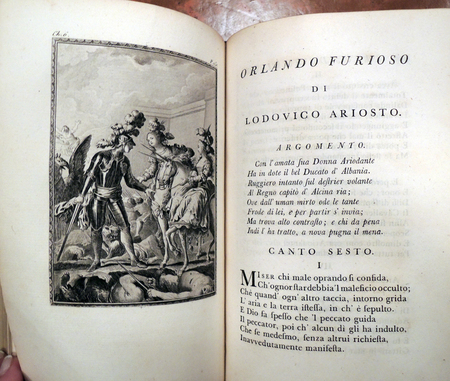
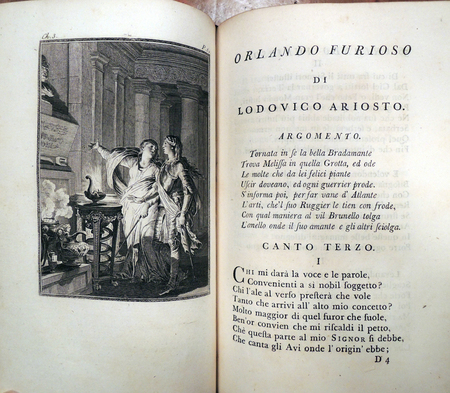
Ariosto began work on his epic poem Orlando Furioso (Mad Orlando) at the age of 32. He continued to expand and polish it over 16 years before it was finally published in 1532, a year before his death.

The plot revolves around the conflict of the Christian versus the Moor, the war between the Holy Roman Emperor, the King of North Africa, and the King of Spain. It is a continuation of Matteo Maria Boiardo’s romance Orlando Innamorato (Orlando in Love), although it can be read on its own.

The poem is divided into forty-six cantos, each containing a variable number of eight-line stanzas. The complete work is 38,736 lines long, making it one of the longest poems in European literature. It was also one of the most celebrated narrative poems of the Italian high Renaissance.

Princeton owns sixteen illustrated editions of Orlando Furioso. One of the most elaborate is this 1584 edition with 64 full-page engravings by the Venetian artist Girolamo Porro (1520-1604). In addition, the argomento or theme that introduces each poem is set inside a classical cartouche.

Also recommended is the 1879 French edition, Roland furieux: poème héroïque, illustrated by Gustave Doré (1832-1883). Rare Books (Ex), Oversize 2004-0064F.

December 10, 2008

Currently most requested item

Clement Clarke Moore (1779-1863), Visit of St. Nicholas; illustrated by Thos. Nast (1840-1902) (New York: McLoughlin Bros., [1869]). Part of: Aunt Louisa’s big picture series. Graphic Arts Collection (GAX), Oversize Hamilton 1142q

December 8, 2008

Juan Pascoe and Taller Martín Pescador

Princeton University library is the fortunate new owner of 84 books, 54 broadsides, and several hundred pieces of printing ephemera handset, hand-printed, and mostly hand-bound by the Mexican master printer Juan Pascoe at the Taller Martín Pescador.


Francisco Segovia, Alquimia de la luz, 1979.

Alfonso D’Aquino, Briznas: poemas;
ilustrados por Dionisio Pascoe, 1997.


Tarjeta para el 20 aniversario del Grupo Mono Blanco (White Monkey, Pascoe’s musical ensemble), 1998.

Born in Chicago in 1946, Pascoe was educated in the United States, while spending vacations at his father’s home in Mixcoac, outside Mexico City. He learned the art of letterpress printing at the age of 25 as an apprentice to Harry Duncan at the Cummington Press in West Branch, Iowa. When Pascoe moved full-time to Mexico in 1973, he set-up a print shop with a renovated nineteenth-century R. Hoe Washington handpress and sets of Spectrum and Garamond type, with Castellar for titling and initials. In 1975, Pascoe established his own imprint, named the Taller Martín Pescador (Kingfisher Workshop) at the suggestion of the writer Roberto Bolaño.

Cartel de El Cuento del Venerable Mono, 2003.

Artemio Rodriguez exhibition poster

From the beginning, Pascoe set all the type by hand, inked and printed each page, and personally sewed each quire into their unpretentious paper covers. As his reputation grew, the projects became more elaborate but the technology remained the same. Authors published at the press include some of the major name in Latin American literature such as Octavio Paz, Gabriel Garciá Márquez, Efraín Huerta, Juan José Arreola, Roberto Bolaño, José Luis Rivas, and Francisco Segovia.

Juan Pascoe, La Mona, 2002

Poemas de Raul Renan: catulinarias & saficas, grabado de Dionisio Pascoe, 1979

Since 1981, Pascoe has worked in a shop outside Tacámbaro, Michoacán. After years researching and published texts on the history of Mexican typography and printing, Taller Martín Pescador has become the foremost source for traditional Mexican graphic arts as well as innovative Latin American literature and poetry.

Cartel de Los signos del zodiaco: doce textos/ escritos por Francisco Hernandez, 1997

Cartel de Dos Villancicos de Sor Juana Ines de la Cruz, 1999


For more information, continue below.

Continue reading "Juan Pascoe and Taller Martín Pescador" »

December 6, 2008

First Japanese Book Printed from Movable Type

Ariwara Narihira (825-880), 伊勢物語 (Ise monogatari or Tales of Ise) [S.l. : s.n., 慶長戊申 i.e. 1608?]. Second edition. Graphic Arts (GAX) 2008- in process.

“In 1593, in the wake of the Japanese invasion of Korea, a printing press with movable type was sent from Korea as a present for Emperor Go-Yōzei. …The printing press may have been offered to the emperor more as a curiosity than as a practical invention, but that same year he commanded that it be used to print an edition of the Confucian Kobun Kokyo (Classic of Filial Piety). Four years later, in 1597, a Japanese version of the Korean printing press was built with wooden instead of metal type, probably because of the difficulties of casting; and in 1599 this press was used to print the first part of the Nihon Shoki (Chronicles of Japan).

By this time printing was developing into the hobby of the rich … and many editions began to appear. These editions, associated with Emperors Go-Yōzei and Go-Mizunoo and with such figures as Toyotomi Hideyoshi and Tokugawa Ieyasu, were intended for presentation and not for sale. The finest printed books of the time were designed by the artist Hon’ami Kōetsu (1558-1637)… [and] the masterpiece of this press was the illustrated edition of Ise Monogatari (Tales of Ise) published in 1608.”

from Donald Keene, World Within Walls: Japanese Literature of the Pre-Modern Era, 1600-1867 (New York: Holt, Rinehart and Winston, c1976) East Asian Library (Gest): Western, PL726.35.K4

Complete digital book: http://digitalgallery.nypl.org/

Complete text, see: http://etext.lib.virginia.edu/japanese/

December 3, 2008

Dürer's marginalia

Albrecht Dürer (1471-1528), Oratio dominica polyglotta singularm linguarum characteribus expressa et delineationibus Albert Dueri (Munich: Stuntz, [1820]). Graphic Arts (GAX) 2008- in process

In 1515, Albrecht Dürer created a series of designs on the margins of a Prayer Book in the Royal Library at Munich, formerly belonging to the Emperor Maximilian I. The book became known as Dürer’s Christlich-Mythologische Handzeichnungen. In 1808, one of the first lithographed publication to use multi-colored inks was a reproduction of Dürer’s border designs by Johann Nepomuk Strixner (1782-1855) published at Aretin-Senefelder Verlag. When Rudolf Ackermann (1764-1834) started his Lithographic Press in London in 1817, a facsimile of the 1808 German edition was its first important production.

The 1820 Munich edition shown here fills the borders with the Lord’s prayer in 43 different languages lithographed in colors by Strixner, published under the new title of Oratio Dominica Polyglotta.

Also available: Albrecht Dürer (1471-1528), Albrecht Dürers christlich-mythologische Handzeichnungen ([Munich: A. Senefelder, 1808]). Graphic Arts Collection (GAX), Oversize 2007-0749Q

December 1, 2008

Die Nibelungen, an ancient tale of knightly honor

Die Nibelungen. Interpreted by Franz Keim (1840-1918) and illustrated by Carl Otto Czeschka (1878-1960) (Wien; Leipzig: Verlag Gerlach u. Wiedling, [1909?]). Graphic Arts Collection (GAX), PT1580 .K44 1909

This unassuming little book gives the reader no indication of the riches it holds inside. The design of the text and eight double page illustrations are the work of Carl Otto Czeschka, a leading member of the Vienna Secession. Czeschka studied at the Vienna School of Arts and Crafts and worked as a designer for the Wiener Werkstätte from 1905 until 1908 when he left for a teaching post at Hamburgs’ Kunstgewerbeschule. Czeschka went on to design for a variety of media including jewelry, metalwork, textiles, furniture and book design.

This copy of Die Nibelungen will be included in an exhibition at the Princeton University Art Museum from March 21 to June 7, 2009. The show, entitled “Myth and Modernity: Ernst Barlach’s Images of The Nibelungen and Faust” will offer the first American showing of the Nibelungen drawing cycle by Barlach.

November 24, 2008

Divine Books

Dante Alighieri (1265-1321), The Divine Comedy; translated by Robert & Jean Hollander; illustrated by Monika Beisner (Verona: Valdonega, 2007). Copy 238 of 500. Graphic Arts Collection (GAX) Oversize 2008-0109Q

Midway in the journey of our life
I came to myself in a dark wood,
for the straight way was lost.
Ah, how hard it is to tell
the nature of that wood, savage, dense and harsh —
the very thought of it renews my fear!


Dante Alighieri (1265-1321), Dante’s Inferno: translations by twenty contemporary poets; frontispiece by Francesco Clemente ([Hopewell, NJ]: Ecco Press, 1993). Copy 21 of 125. Graphic Arts Collection (GAX) Oversize PQ4315.2 .H28 1993q


above:

Dante Alighieri (1265-1321), The Divine Comedy of Dante Alighieri. Inferno / a verse translation by Tom Phillips with images and commentary ([London]: Talfourd Press, 1983). Copy 33 of 185. Graphic Arts Collection (GAX) Oversize 2008-0003E

below:
Dante Alighieri (1265-1321), The Ante-Purgatorio; Cantos I-IX of the Purgatorio, English translations by Henry Wadsworth Longfellow. Original etchings by Jack Zajac (New York: Racolin Press, 1964). Edition of 215 copies. Graphic Arts Collection (GAX) Oversize 2006-0046E


It is so bitter death is hardly more so.
But to set forth the good I found
I will recount the other things I saw.
How I came there I cannot really tell,
I was so full of sleep
when I forsook the one true way.
Dante Alighieri (1265-1321), The Divine Comedy of Dante Alighieri / the prose translation by Charles Eliot Norton ; with illustrations from designs by Botticelli (New York: Bruce Rogers & the Press of A. Colish, 1955). Copy 171 of 300. Graphic Arts Collection (GAX) Oversize 2007-0376Q

The Princeton Dante Project: http://etcweb.princeton.edu/dante/index.html

November 19, 2008

Documents d'Atelier

Victor Champier (1851-1929), Documents d’atelier: art décoratif moderne (Paris: Libraire de la Revue des arts décoratifs, 1898). Graphic Arts Collection (GAX) Oversize 2004-0581Q

Victor Champier founded the Revue des Arts Décoratifs (1887-1902) and established a school of industrial arts in Roubaix. He compiled these plates, printed through the pochoir or hand-stencilling process, to include 60 designs for decorations of textiles, wallpaper, ceramics, furniture, architecture, metalwork, sculpture, and jewelry. The book offers examples of work by Alphonse Mucha, A. Sandier, Francis Jourdain, A. Lalique, L. Bonnier, A. Tourette, C. Boignard, and other artists of the period.

November 13, 2008

The End of the Stock-Market World

Last December 2007, I posted an entry on Het Groote Tafereel der Dwaasheid or The Great Mirror of Folly. Each edition has a slightly different group of prints: Harvard’s copy has 71, Princeton’s 73, and each includes several not in the other volume.

This page, originally engraved by Monogrammist C L, later altered by an anonymous 18th-century Dutch engraver after Pieter Quast (1606-1647) and entitled De Actiewerld op Haar Ende (The End of the Stock-Market World), is included in Harvard’s copy but not Princeton’s. However, we recently acquired an impression to help complete our collection of the prints for in this anonymous 1720 project.

The central figure in this caricature is the philosopher Diogenes (ca. 412-323 BCE). Considered the founder of Cynicism, he eschewed worldly pleasures, wore coarse clothing, and pursued practical good. He is often shown carrying a lantern, searching for an honest person, but in this print his lantern has been given away (presumably having given up finding an honest man). He has lost everything in the stock-market bubble of 1720 from investing in the South Seas Company. As the text beneath the image concludes,

How easily can such a flier be upset by a South Sea blast or a Quinquempoix* bubble! So whoever gives his name and honor for the money, and adores it like an idol, deserves to be scorned in this fashion.

*Quinquempoix was the name of the street where the Parisian money market was located.

This print was first engraved around 1670 by the Monogrammist C L to satirize the tulip mania in the Netherlands. The plate was then altered to satirize the stock-market speculation of 1720.


October 23, 2008

Naesevise bemerkninger

Fabritius reklamebyrå [Norwegian firm], Naesevise bemerkninger (Kristiania [i.e. Oslo]: Fabritius & sønner, [1920?]).Graphic Arts Collection (GAX) 2008- in process

Norwegian advertising humor.

October 21, 2008

Pirates

Posted for Professor Arcadio Díaz-Quiñones, “Topics in Latin American Literature and Ideology: Islands and Literature …”

Alexandre Olivier Exquemelin, De Americaensche zee-roovers: behelsende een pertinente en waerachtige beschrijving van alle de voornaemste roveryen, en onmenschelijcke wreedheden, die de Engelse en Franse rovers, tegens de Spanjaerden in America, gepleeght hebben… First edition (Amsterdam: Jan ten Hoorn, boeckverkoper, over ‘t Oude Heeren Logement, 1678). Rare Books: Kane Collection (ExKa) Americana 1678 Exquemelin

Translated into Spanish in 1681, into English in 1684, and into French in 1686. The work went through numerous editions in its various versions and formed the foundation for many of the histories and romances of the buccaneers published during the seventeenth and eighteenth centuries. Digital copy: http://www.loc.gov/flash/pagebypage/buccaneers/index.html

Alexandre Olivier Exquemelin, Piratas de la America, y luz à la defensa de las costas de Indias Occidentales … / traducido de la lengua flamenca en española, por el Dor. Alonso de Buena-Maison, español, medico practico en la amplissima y magnifica ciudad de Amsterdam (Impresso en Colonia Agrippina [Cologne]: en casa de Lorenzo Struickman, 1681). Rare Books: Kane Collection (ExKa), Americana 1681 Exquemelin

Alexandre Olivier Exquemelin, Bucaniers of America, or, A true account of the most remarkable assaults committed of late years upon the coasts of the West-Indies, by bucaniers of Jamaica and Tortuga, both English and French. Wherein are contained more especially, the unparrallel’d exploits of Sir Henry Morgan, our English Jamaican hero, who sack’d Puerto Velo, burnt Panama, &c. Written originally in Dutch, by John Esquemeling, one of the bucaniers, who was present at those tragedies; and thence translated into Spanish, by Alonso de Bonne-Maison … Now faithfully rendered into English (London: Printed for W. Crooke, at the Green Dragon without Temple-bar, 1684-1685). “This copy consists of the first English edition & the second vol. of the second English edition, the latter containing matter not in the first.” Rare Books: Kane Collection (ExKa) Americana 1684b Exquemelin

Alexandre Olivier Exquemelin, The history of the bucaniers: being an impartial relation of all the battels, sieges, and other most eminent assaults committed for several years upon the coasts of the West-Indies by the pirates of Jamaica and Tortuga… (London: Printed for Tho. Malthus, 1684). Rare Books: Kane Collection (ExKa) Americana 1684 Exquemelin

Alexandre Olivier Exquemelin, Piratas de la América, y luz a la defensa de las costas de Indias Occidentales: en que se tratan las cosas notables de los viages, descripcion de las islas Española, Tortuga, Jamayca, de sus frutos y producciones, política de sus habitantes, guerras y encuentros entre Españoles y Franceses, origen de los piratas, y su modo de vivir, la toma é incendio de la ciudad de Panamá, invasion de varias plazas de la América por los robadores franceses, Lolonois y Morgan (Madrid: Ramón Ruiz, 1793). Rare Books: Kane Collection (ExKa) Americana 1793 Exquemelin

October 15, 2008

Thomas Bewick

At the close of the 18th century, printmaking was revolutionized by the English wood engraver Thomas Bewick (1753-1828), and the German lithographer Aloys Senefelder (1771-1834). The processes developed by these men brought innovation in fine art printing and in commercial book illustration.


Copperplate engraving

copperplate engraving

Wood engraving

Bewick is remembered for his wood engraved masterworks A General History of Quadrupeds (1790), and History of British Birds Vol. I (1797), Vol. II (1804). However, his firm printed work in all media, including engraved wood, glass, silver, and traditional copperplate engraving.


Wood engraving


Wood engraving

Copperplate engraving

When Bewick died in 1828, his son Robert took over the business and published two further editions of the Birds in 1832 and 1847, and a large wood engraved Waiting for Death in 1832. After the death of the rest of the family, Julia Boyd compiled the volume seen here, documenting both copperplate and wood engravings in Bewick Gleanings: Being Impressions from Copperplates and Wood Blocks Engraved in the Bewick Workshop… (Newcastle-upon-Tyne: Andrew Reid, 1886). Graphic Arts: Reference Collection (GARF) Oversize NE1212.B5 xB6q

October 10, 2008

The Largest Book Published in Colonial America

Thieleman Janszoon van Braght (1625-1664), Der Blutige Schau-Platz [The Bloody Theater]: oder Martyrer-Spiegel der Tauffs Gesiñten oder Wehrlosen-Christen, Die um des Zeugnuss Jesu ihres Seligmachers willen gelitten haben, und seynd getödtet worden, von Christi Zeit an bis auf das Jahr 1660 (Ephrata in Pensylvanien: Drucks und Verlags der Brüderschafft, 1748-1749). 2 v. in 1. Graphic Arts Collection (GAX) Oversize Hamilton 26q

Bound in leather over oak boards with brass corner pieces and clasps, Der Blutige Schau-Platz was three years in the making at the Ephrata Press in the Brotherhood’s monastery located in Northern Lancaster County. The Pennsylvania Mennonites commissioned the German translation and a paper mill was built especially for the single publication. Over 1500 folio pages were printed for each volume in an edition of 1300 copies, originally priced at 20 shillings. It is considered the largest book published in Colonial America.

“Fifteen Brethren were detailed, nine of whom had their work assigned in the printing department, namely, one corrector, who was at the same time the translator, four compositors and four pressmen; the rest had their work in the paper-mill. Three years were spent on this book, though not continuously, for there was often a want of paper.”

The text is a record of Mennonite, Anabaptist, and Pietist martyrs between 1524 and 1660. Written in Dutch by Tieleman Jansz van Braght (1625-1664), a Mennonite pastor, the book chronicles the lives of over 4,000 men and women who endured torture and death for their religious beliefs.

The frontispiece scene presents an army of martyrs marching to Heaven. Sinclair Hamilton noted that the engraving, probably made in Holland, “was removed from most copies because it offended the Mennonites.”

To read the text in English, see The Bloody Theatre, or Martyrs’ Mirror, of the Defenseless Christians (Near Lampeter Square, Lancaster Co., Pa.: David Miller, 1837). Annex A 5412.205. Or read it online at http://www.homecomers.org/mirror/contents.htm

October 3, 2008

Japanese Crests

Takejirō Yoshino, 紋之泉 / Mon no izumi (Kyōto: Rakutō Shoin, 1934). Graphic Arts division GAX 2008- in process


October 1, 2008

In memory of Hayden Carruth 1921-2008

Anything ends
In its beginning,
The circles turning
Slowly, so slowly,
Quern of the beat
Of the downrunning heart.
The sunlight fell like diamonds
But did not slacken
Remembrance’s forewarning
Of cold and dark to come,
The journey retaken
Without end,
Without end.
—from IV. “Ignis” in Journey to a Known Place (1961) Graphic Arts division GAX Z232.M54C37 1961. Gift of Daniel and Mary Jane Woodward.

September 27, 2008

Kobayashi Kiyochika

This is a selection of satirical portraits by the Meiji printmaker Kobayashi Kiyochika (1847-1916). Although the complete text has not yet been translated, the work reflects the political cartooning Kiyochika created for the journal Marumaru Chinbun from 1882 to 1883. There is a Western feel to the work, the influence of the English cartoonist Charles Wirgman (1832-1891), with whom he studied. Kiyochika's dependence on commissions for book and magazine illustration ended in 1894 with a spectacular series of 70 triptychs depicting scenes from the Sino-Japanese War, after which he turned to painting as an artistic medium. Graphic Arts division GAX 2008- in process

For information in English, read Henry Smith, Kiyochika: Artist of Meiji Japan (1988). Marquand Library NE1310.K85 S62.

September 21, 2008

The Pantograph

Christoph Scheiner (1575-1650), Christophori Scheiner, e Societate Iesu Germano-Sueui, Pantographice, seu, Ars delineandi res quaslibet per parallelogrammum lineare seu cauum, mechanicum, mobile (Romae: Ex typographia Ludouici Grignani, 1631). Graphic Arts Collection (GAX) 2004-2933N

If you want to enlarge one of these images, you can just click on the thumbnail and a larger image will appear. In the seventeenth century, for the first time, artists had a device, called the pantograph, to help them mechanically copy a design on an enlarged or reduced scale.

Christopher Scheiner, a German Jesuit, was responsible for designing and building the first pantograph in 1603. An illustration of the device can be seen in his 1630 book, Rosa ursina Sive Sol, along with other instruments he invented including a refracting telescope. The following year, Scheiner published a manual on the construction and use of the device, entitled Pantographice, seen here.

There are several types of pantographs, each consisting of parallel and intersecting rods. Scheiner’s frontispiece engraving depicts it being used both horizontal and vertical. To make your own pantograph, see http://users.hubwest.com/hubert/mrscience/pantograph.html

September 16, 2008

Mikhail Magaril

Nikolai Gogol (1809-1852), The Diary of a Madman. Translation of Zapiski sumasshedshego by Constance Garnett (1862-1946); illustrated by Mikhail Magaril (New York: Summer Garden Editions, 1998). Edition of 100 copies. Graphic Arts division, GAX 2008- in process.

This edition of Gogol’s classic was designed, printed, and bound under the direction of the Russian-American artist Mikhail Magaril and published under his own imprint, Summer Garden Editions. The drypoint plates were printed with masterprinter Kathy Caraccio and the letterpress at the Brooklyn studio of Peter Kruty.

“Upon arriving in New York,” wrote Magaril, “I was connected to the Center for Book Arts, where I continued to work as an apprentice for seven years. Though I had a master’s degree from the Moscow Graphic Art School, I realized that I still had a lot to learn, especially in terms of physically making a book, including how to set type, print it, and make a binding. …I believe it is preferable … to make everything by hand. The work of a book artist can be compared to the work of an actor. The actor is constantly haunted by each new role he accepts. The same is true of a book artist.”

Princeton is fortunate to own seven of Magaril’s books, including his first illustrated book: Hindrance by Daniel Kharms. Produced in a limited edition of 20 copies, the printed and collaged pages were hand-sewn by Magaril into a coptic binding with two carved woodblocks for its cover.

Kharms, Daniil (1905-1942), Hindrance. Translated by Julie Magaril; illustrated by Mikhail Magaril (New York: Summer Garden Editions, 1998). Graphic Arts division GAX 2008- in process

August 22, 2008

A Dancing Jaguar and Mayan Spells


Ámbar Past with Sara Miranda and Tom Slingsby [text in English]; Maria Tzu, Rominka Vet and Maruch Méndes Péres [text in Tzotzil, a Mayan dialect still spoken], Bolom Chon / The Dancing Jaguar (San Cristóbal de Las Casas, México: Taller Leñateros, 2007). Copy 42 of 99, signed by the artists. Graphic Arts division GAX 2008- in process

The two books in this posting are both published by Taller Leñateros, an indigenous book and paper cooperative in Chiapas, Mexico that has been creating handcrafted books for over 30 years.

Bolom Chon features the music and art of the Tzotzil Indians. The covers are made from cardboard boxes mixed with coffee and printed on an 1895 letterpress. The endpapers of the book are made from agave fiber and decorated like the tiger costumes of Tzotzil ritual dancers. The center fold features a pop-up jaguar. In addition, “The cover was stepped on by the Bolom Chon [dancing jaguar] so its footprints remained as a testimony of its passing through the world.”

To see the pop-up Jaguar in action and hear the song, go to: http://www.tallerlenateros.com/gaceta_web/eng/gazette.htm

Taller Leñateros is the only publishing house in Mexico run by Mayan artists. Founded in 1975 by poet Ambar Past, the Workshop has produced the first books to be written, illustrated and bound (in paper of their own making) by Mayan people in over 400 years.

Ámbar Past, Portable Mayan Altar: Pocket Books of Mayan Spells / Conjuros y ebriedades (San Cristobal de Las Casas, Mexico: Taller Leñateros, 2007). Graphic Arts GAX 2008- in process

Another item from the Taller Leñateros is a set of miniature books of Mayan spells, including a hex to kill the unfaithful man by Tonik Nibak, Mayan love charms by Petra Hernández, and magic for a long life by Manwela Kokoroch.

These texts, in three hand-sewn volumes, are housed in a hut-shaped cardboard case opens to form an altar with two side panels. Along with the three books the authors provide a pot-shaped incense burner, two animal figure candle holders, and a plastic sleeve with 12 candles.

August 12, 2008

"Prometheus Bound" Illustrated with Fire

Aeschylus. Prometheus Bound. Translated from the Greek by Henry David Thoreau (1817-1862), illustrated by Russell Maret (New York: Russell Maret, 2007). Copy number 5 of 50, signed by the artist. Graphic Arts Collection (GAX) Oversize 2007-0067F

The Greek drama, Prometheus Bound, is thought to have been written by Aeschylus around 430 B.C.E. It is a tragedy, based on the myth of Prometheus, who was punished by Zeus for giving fire to humankind.

Henry David Thoreau was only 25 years old when he undertook a modern translation of the play for the January 1843 issue of the Dial magazine. In preparing a 21st-century edition of Thoreau’s text, Russell Maret experimented with drawings made from smoke rising directly into white paper. Not only did it produce beautiful images but the drawings were emblematic of Prometheus’ dramatic theme.

The result is a book printed letterpress in three colors from photopolymer plates using Fred Smeijers’ Quadraat type for the text and an original “Promethean” alphabet by Maret on the title page. Each copy has one original smoke drawing as a frontispiece. The edition is bound by Judith Ivry in quarter goatskin and paper over boards with a second smoke drawing on each cover.

For the earliest edition in RBSC, see Aeschylus. Aischylou Tragōdiai hex: Promētheus desmōtēs. Hepta epi Thēbais. Persai. Agamemnōn. Eumenides. Hiketides = Aeschyli Tragoediae sex (Venetiis: In aedibus Aldi et Andreae soceri, 1518 mense Februario) (ExKa) Special 1518 Aeschylus

August 11, 2008

Li He, the Poet-Ghost

Tyson, Ian. Ghost. Poetry by Li He, translated by John D. Frodsham (San Diego: Brighton Press, 2005). Copy 26 of 30. Graphic Arts (GAX) Oversize 2007-0701Q

The Chinese writer Li He, nicknamed the poet-ghost, lived during the Tang Dynasty (618-907). He began to write at the age of seven. Each morning Li He would go for a ride on his horse, jotting down thoughts or sentenses as they came to him. These tiny strips of paper would be thrown into a bag and later that night, used as the material for his poetry.

British artist Ian Tyson was inspired by Li He’s method of composition. He created this artist’s book made of unbound printed sheets of poetry, housed in a cloth-covered wrapper. Each volume comes in a tray case with a relief sculpture mounted on top.

August 4, 2008

Typographic design by Karel Teige

Seifert, Jaroslav, (1901-1986) Na vlnách TSF: poesie (Praha-Bubeneč : Nakl. V. Petra, 1925) Typography and cover design by Karel Teige (1900-1951). Graphic Arts Collection (GAX), NC139.T44 N3 1925


Karel Teige was a graphic designer and architectural theorist. His innovative designs during the years before World War II, revolutionized both commercial and artistic book production in Czechoslovakia. Together with the Czech poet Seifert, Teige founded the 1920s Prague-based avant-garde group Devetsil (taken from the word for a tough weed).

Teige began his career as a painter but when he designed the first cover of a Devetsil publication, he gave up painting for graphic design. Influenced by many of the DaDa artists, such as Man Ray, Teige often used photomontage in his covers.

Na vlnách TSF can be translated On the Waves of T(élégraphie) S(ans) F(il), or On the Air. This was the fourth collection of poetry issued by Seifert and one of many project on which he collaborated with Teige.

In 1984, Jaroslav Seifert was the first Czech to win the Nobel Prize for Literature. “Endowed with freshness, sensuality, and rich inventiveness,” the Nobel Committee stated, Seifert’s poetry “provides a liberating image of the indomitable spirit and versatility of man… . He conjures up another world than that of tyranny and desolation — a world that exists both here and now … one that exists in our dreams and our will and our art.”

Listen to one of Seifert’s poems at: http://audiopoetry.wordpress.com/category/poet/jaroslav-seifert/

July 31, 2008

Winslow Homer's Eventful History of Three Little Mice

Author unknown. Eventful History of Three Little Mice and How They Became Blind (Boston: E. O. Libby & Co., [1858]) Graphic Arts Collection (GAX) Hamilton 848(a)

Winslow Homer (1836-1910) was twenty-six before he seriously took up painting and nearly forty before he depended on it for a living. How did he pay the rent before this? His early career was as an illustrator, designing more than 160 illustrations for books and literary journals.

Homer apprenticed with the Boston lithographer, John Henry Bufford, until his twenty-first birthday. For the next two years, working independently, he designed at least forty-two small drawings for thirteen different books, all juveniles. One of these was the Eventful History of Three Little Mice. Homer created seventeen illustrations for the book, which was released in April 1858, priced at 12 ½ cents as printed or double that if the illustrations were hand-colored.This project was something of a rip-off of the Remarkable History of Five Little Pigs, engraved by the Dalziel Brothers.

Homer’s frontispiece shows the climax of the story, the cutting of the mice’s tails—talk about giving away the ending. He did not draw the cover, which may explain the difference in the title.

This is how the production was often handled: For each drawing, a blank wood block was sent to Homer’s studio. The block usually consisted of a number of closely fitted pieces of boxwood bolted together. Homer drew directly on the block’s whitened surface and returned it to the publisher (later he was allowed to submit a drawing on paper). The master wood engraver cut the lines that ran across the joints. Then, the blocks were separated and assistants would engrave the different parts of the design. The blocks were then reassembled and electrotyped, to create a metal plate for printing.

If you are interested in Homer’s career as a book illustrator, take a look at: David Tatham, Winslow Homer and the Illustrated Book (Syracuse, N.Y.: Syracuse University Press, 1992) Graphic Arts NC975.5.H65 T38 1992

July 28, 2008

A Paper Museum

Wenceslaus Hollar (1607-1677), Muscarum scarabeorum, uermiumque uarie figure & formae / omnes primo ad uiuum coloribus depictæ & ex collectione Arundelian a Wenceslao Hollar aqua forti æri insculptæ, Antuerpiæ, anno, 1646. [Antwerp, Belgium: s.n., 1646]. Gift of Elmer Adler. Graphic Arts Collection (GAX) 2004-3713N

Named Václav but called Wenceslaus when living in London, Hollar was a Czech printmaker who published his first book etchings in 1635. He traveled with the renowned art collector Thomas Howard, the Earl of Arundel, who finally settle in London.

Hollar assignment was to etch copies of each individual item in Arundel’s collection, in an attempt to create a visual inventory or a paper museum. He never finished, although Muscarum scarabeorum … includes some of Arundel’s massive collection.

Thomas Sprat (1635-1713), The History of the Royal-Society of London, for the Improving of Natural Knowledge (London: Printed by T. R. for J. Martyn … and J. Allestry … printers to the Royal Society, 1667). Frontispiece etched by Wenceslaus Hollar (1607-1677) after design by John Evelyn (1620-1706). Gift of Elmer Adler, signed by Albert Einstein. Graphic Arts Collection (GAX) 2004-3215N

When Lord Arundel left England in 1642, and Hollar passed into the service of the Duke of York, working alongside other royalist artists, such as Inigo Jones. Over his lifetime, Hollar created nearly 3,000 etchings. He was one of the most skilled printmakers of his time, despite being almost blind in one eye.

The following anecdote is difficult to prove but fun to repeat. Holland struggled all his life to make a living, charging four pence an hour for his work (measuring his time with a sandglass). As he was dying, his last recorded words were a request to the bailiffs that they would not carry away the bed until he was entirely dead.

Wenceslaus Hollar (1607-1677), Le triomphe de la Mort / gravé d’apres les desseins de Holbein par W. Hollar ([London: s.n., 1790]) The 32 plates are interleaved with the text Explication des sujets de triomphe de la Mort de Jean Holbein. Graphic Arts Collection (GAX) 2006-2648N

To see more of Hollar’s work, see http://link.library.utoronto.ca/hollar/

July 23, 2008

How Hot Is It Where You Are?

Francis Frith (1822-1898), Cairo, Sinai, Jerusalem, and the Pyramids of Egypt: a Series of Sixty Photographic Views; with Descriptions by Mrs. Poole and Reginald Stuart Poole (London: J.S. Virtue; New York: Virtue & Co., [1860]). Gift of Hertha Cordis Conway.Graphic Arts Collection (GAX) Oversize 2006-0146F

A successful grocer, Francis Firth took a chance in 1850 when he formed a partnership and opened The Frith and Hayward Photography Studio in Liverpool. In 1856, Frith made an extended trip to Egypt, traveling up the Nile from Cairo to Abu Simbel. He carried with him four cameras and all the equipment necessary to take and develop wet collodion glass-plate negatives. He often complained about the chemicals boiling-over inside the tent he used as a darkroom.

Frith made other trips to the Middle East in 1857 and 1859, then printed and published 1,000s of albumen photographs in a series of deluxe books and albums. The public went crazy for these images and Frith made a small fortune. Although he retired soon after this, his publishing company in Reigate, Surrey, continued to operate until 1970.

July 10, 2008

Family Bible. Superfine Edition.


New Devotional and Practical Pictorial Family Bible, Containing the Old and New Testaments, Apocrypha, Concordance, and Psalms in Metre… . Superfine Edition. (Philadelphia, PA; Chicago, IL; St. Louis, MO; and Atlanta GA: National Publishing Co., 1879). Gift of Rev. Dr. Stephen White, Princeton’s Episcopal chaplain. Graphic Arts GAX 2008- in process

The King James Bible was the Harry Potter of the nineteenth-century. The family bible might have been the only book purchased for an American home and so, publishers crammed them with additions to make their volume more desirable.

This 1879 edition includes pages with pre-printed photograph holders, space for genealogy, maps, charts, chromolitho-graphed prayers, and 2,500 illustrations.

Also: Illustrations of scenes and incidents in the life of Christ; the cities and towns of the bible; scenes in the life of St. Paul; topographical sketch of Jerusalem and the holy land; the wanderings in the wilderness; illustrations of the tabernacle and Solomon’s temple; scenes in the lives of the patriarchs, prophets and kings of the old testament; illustrations of bible scenes and incidents; animals, birds, insects, etc, of the bible; illustrations of the trees, plants, and flowers of the bible; biographies of the reformers and martyrs, etc.

Together with: Dr. William Smith’s Dictionary of the Bible in which every important scriptural word is full explained, and a complete history of each book of the bible, beautifully illustrated, a history of all the religious denominations of the world, illustrations of the parables of Jesus and proverbs of Solomon, history of the translation of the bible, chronological and other useful tables, treatises, maps, etc., designed to promote and facilitate the study of the sacred scriptures.

July 8, 2008

French Advertising Design

Paul Poiret (1879-1944), editor, Pan: annuaire du luxe à Paris, an 1928 (Paris: Devambez …pour Paul Poiret, [1928?]). Graphic Arts Collection (GAX) Oversize NC139.D94 P36 1928q


At the time Poiret was working on Pan, his reputation as a women’s fashion designer was on the decline and by 1929, he was forced to declare bankruptcy. For this 1928 volume, he compiled more than 100 examples of advertisements for luxury goods designed by his friends, including Yan B. Dyl, Edy Legrand (1892-1970), Charles Martin (1848-1934), Tsugouharu Foujita (1886-1968), and others. Products are from a wide range of firms such as Van Cleef & Arpels, Judith Barbier, Mitsubishi, Maigret, Hermes, Lanvin, Callot Soeurs, Maxims, and the Moulin Rouge.

July 3, 2008

Vagabondiana


John Thomas Smith (1766-1833), Vagabondiana; or, Anecdotes of Mendicant Wanderers through the Streets of London; with Portraits of the Most Remarkable, Drawn from the Life (London: Published for the proprietor; and sold by J. and A. Arch [etc.] 1817) Graphic Arts Collection (GA) Oversize Rowlandson 929.3q

In the early years of the nineteenth-century, John Thomas Smith was the Keeper of Prints and Drawings at the British Museum as well as a professional illustrator. He lived on Chandos Street near Covent Garden, a rather seedy part of London, where he liked to sketch portraits of his neighbors.

Smith’s 1833 obituary printed in The Gentleman’s Magazine noted “Mr. Smith had much pleasure in tracing out and examining the peculiar manners and costumes of the inhabitants and visitors of this district of the metropolis. The procuring of information from various sources occupied many years of his life; and he meditated the publication of this interesting mass in two volumes, which we regret he never completed… but in 1817 he published a work on which he had been some time employed, entitled Vagabondiana”. For more information, read Smith’s autobiography: A Book for a Rainy Day (London: Richard Bentley, 1845). Firestone Library (F) 1459.863.1845

June 27, 2008

First Things First

First American Woodcut, ca. 1670

John Foster (1648-1681), Portrait of Richard Mather. Woodcut, first issued ca. 1670. Given in memory of Frank Jewett Mather Jr. by his wife, his son, Frank Jewett Mather III, and his daughter, Mrs. Louis A. Turner. Graphic Arts division, GA 2006.00728

At the age of twenty-two, John Foster had completed his education at Harvard and was teaching English grammar in Dorchester, Massachusetts. When his friend and minister, the influential Richard Mather, passed away, members of the congregation planned a publication in his honor. Foster offered to design and print a woodcut portrait of Mather for a frontispiece to The Life and Death of That Reverend Man of God, Mr. Richard Mather. Only six copies of the print are known. It is considered the first woodcut printed in the United States.


First American metamorphosis book, ca.1775

[Metamorphosis] ([Philadelphia, ca.1775])

Graphic Arts holds three different editions of this ealy American juvenile. This one contains eight woodcuts by James Poupard. The prints are arranged into sections with four of the plates cut through the center so that the top and bottom can be raised. The lion turns into a griffin, the girl into a mermaid, etc. According to Sinclair Hamilton’s Early American Book Illustrators and Wood Engravers, some later 19th-century editions carry the title Metamorphosis; or, a Transformation of Pictures with Poetical Explanations for the Amusement of Young Persons.


First American picture of a baseball game, 1838

The Boy’s Book of Sports: or, Exercises and Pastimes of Youth. New Haven: S. Babcock, 1838. Wood engraving by Alexander Anderson (1775-1870). Graphic Arts Collection. Gift of Sinclair Hamilton, Class of 1906.

In the 1820s, a group of men from Philadelphia, prevented by an obscure ordinance from enjoying their favorite pastime in their own city, began playing an early version of baseball in Camden, New Jersey. By the 1830s, other teams had formed along the East Coast, and rules to the game were published in Robin Carver’s Book of Sports (1834). Carver’s book included this wood engraving depicting a baseball game played on Boston Common. The same block was used to illustrate several publications over the next few years, including the first and second editions of The Boy’s Book of Sports (1835 and 1838).

June 26, 2008

Aesop's Fables

1546

1761

1831

1884

1930

1954

Aisōpou tou Phrygos ho bios kai hoi mythoi: auxēthentes te kai pro sapēkribōmenoi pros antigraphon palaiota ton to ek tēs basilikēs bibliothēkēs = Æsopi Phrygis vita & fabulæ : plures & emendatiores, ex vetustissimo codice bibliothecæ Regiæ (Lutetiæ [Paris]: Ex officina Rob. Stephani typographi Regii, M. D. XLVI. [1546]). Greek title and Greek subtitle in Greek characters; text in Greek. Graphic Arts Collection (GAX) 2004-3189N


Robert Dodsley (1703-1764), Select Fables of Esop and Other Fabulists …(Birmingham [Eng.]: printed by John Baskerville, for R. and J. Dodsley, 1761). Graphic Arts Collection (GAX) Baskerville 1761b


Fables of Aesop and Others, translated into English with instructive applications, and a print before each fable by Samuel Croxall (Philadelphia: S. Probasco, 1831). engravings by James Poupard. Graphic Arts Collection (GAX) 2003-0490N


Selections from Aesop’s Fables, versified by Clara Doty Bates; accompanied by the standard translations from the original Greek; illustrated by E.H. Garrett … [et al.] (Boston: D. Lothrop, c1884). Graphic Arts Collection (GAX) 2003-0369N


The Subtyl Historyes and Fables of Esope, Translated out of Frensshe in to Englysshe by William Caxton at Westmynstre in the yere of oure Lorde. mcccc.lxxxiij ([San Francisco]: The Grabhorn Press at San Francisco, 1930) “Two hundred copies… Initialed and decorations by Valenti Angelo …” Graphic Arts Collection (GAX) 2004-3609N
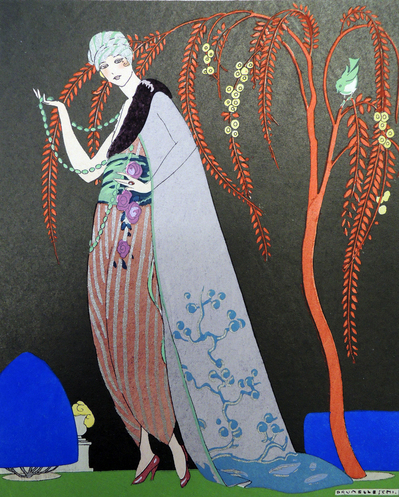

12 Fables of Aesop (New York: Museum of Modern Art, c1954) “Linoleum blocks by Antonio Frasconi to illustrate Twelve fables of Aesop newly narrated by Glenway Wescott, Adapted from a limited edition designed by Joseph Blumenthal.” Graphic Arts Collection (GAX) Z232.B654 A37 1954

June 24, 2008

Literary Squiggles

The first book of literary criticism I’ve ever read with an index to squiggles just arrived: Adam Thirwell (born 1978), The Delighted States: a Book of Novels, Romances, & their Unknown Translators, Containing Ten Languages, Set on Four Continents, & Accompanied by Maps, Portraits, Squiggles, Illustrations, & a Variety of Helpful Indexes (New York: Farrar, Straus and Giroux, c2007). Firestone Library (F) PN3491 .T55 2007

It’s about time.

Professor Michael Wood’s review: http://www.bookforum.com/
inprint/015_02/2467

June 21, 2008

Picturing the Moon

The Inconstant Moon: Poems to the Moon by Mark Jarman … [et al.]; with a Homeric hymn translated by Apostolos N. Athanassakis; lithographs by Enid Mark. (Philadelphia: ELM Press, 2007) Limited edition of 45 signed copies, 8 poets’ copies numbered I-VIII, and 10 artist’s proofs. (GAX) Oversize 2007-0662Q


James Nasmyth (1808-1890) and James Carpenter (1840-1899), The Moon, Considered as a Planet, a World, and a Satellite. 2d edition. (London: J. Murray, 1874). Illustrated with woodburytypes and wood engravings. Graphic Arts Collection (GAX) Oversize 2003-0202Q
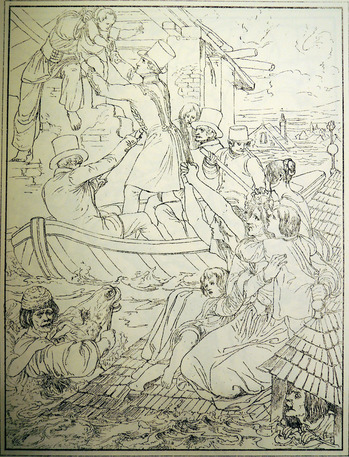
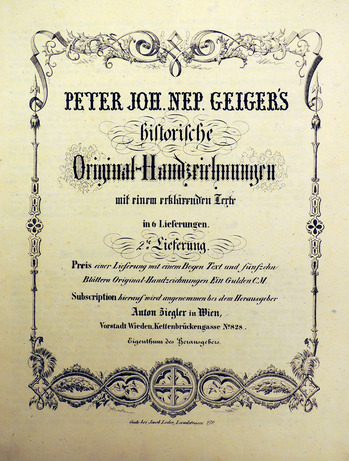
Nasmyth photographed his own hand to demonstrate the similarity between the shrinking of the molten surface of the moon and the wrinkling of his own skin.

June 16, 2008

Twenty Volumes of "Phiz"

David Croal Thomson (1855-1930), Life and Labours of Hablôt Knight Browne “Phiz” (London: Chapman and Hall, 1884). 1 vol. in 20, extra-illustrated with 1250 plates. Graphic Arts (GAX) 2008- in process

Newly acquired by the graphic arts division is this unique twenty-volume extra-illustrated copy of Life and Labours of Hablôt Knight Browne. Browne was the 19th-century illustrator best known for his steel-plate etchings and wood engravings for ten books by Charles Dickens.

Dickens was already a popular author when his illustrator Robert Seymour committed suicide. The practically unknown Browne was selected to complete The Pickwick Papers and went on to collaborate with Dickens until 1859. Browne took the nickname “Phiz” to complement Dickens’ penname “Boz.”

As it was originally published in 1884, Thomson’s single volume biography contained an engraved portrait and 130 illustrations (GA Rowlandson 946). Princeton’s unique copy has been vastly expanded to 20 volumes, extra-illustrated with the insertion of more than 1250 plates, including 11 watercolours, 81 pencil and ink drawings (a few with a touch of colour or double-sided), and 11 autograph manuscript items signed by Browne.

Among the manuscripts are a group of charming illustrated letters to Frederick William Cosens, an avid collector of Dickens. Cosens commissioned Browne to furnish him with watercolor drawings of every image he had created for a Dickens novels (more than 400 in all). It has been speculated that this 20 volume set is the work or commission of Cosens, although the provenance is not certain.

These volumes present to researchers not only a wonderful collection of art by one of the great illustrators of the 19th century, but also a number of variant states of the final plates. The sketches and letters provide documentary information about Browne that cannot be obtained elsewhere.

June 11, 2008

The Kelmscott Chaucer

Geoffrey Chaucer (d. 1400), The Works of Geoffrey Chaucer now newly imprinted (Upper Mall, Hammersmith, in the county of Middlesex, Printed by me William Morris at the Kelmscott Press. Finished on the 8th day of May, 1896). Graphic Arts Collection (GAX) Oversize PR1850 1896f

William Morris (1834-1896) wrote, “Have nothing in your houses which you do not know to be useful or believe to be beautiful.” [Hopes and Fears for Art, Rare Books (EX) 3867.4.345] One of the objects Morris would not have objected to was his own Works of Geoffrey Chaucer, also known as the Kelmscott Chaucer after the press where it was printed.

In 1891, Morris set up three presses in his home, where he could design and print fine press editions. Over 50 books were completed. The Kelmscott Chaucer was one of the last and certainly one of the most successful.

The book was the product of many talented men besides Morris. The text was edited by Frederick Startridge Ellis (1830-1901), ornamented with 87 pictures designed by Edward Burne-Jones (1833-1898), and engraved on wood by William Harcourt Hooper (1834-1912). It is interesting to noted that Burne-Jones’s drawings were photographed and the photographic images printed onto the woodblocks to ensure the fidelity of the engraving. The full-page woodcut title, fourteen large borders, eighteen borders or frames for the pictures, and twenty-six large initial words, along with the ornamental initial letters large and small were designed by Morris. For more on this, see The Life of William Morris by J. W. Mackail, v. 2, p. 326, Graphic Arts collection (GAX) PR5083.M25.

425 copies of the book were completed by a total of 11 master printers. Thanks to Morris’s expert salesmanship and personal magnetism, the entire edition was sold out before the books were finished on May 8 and issued on June 26, 1896.

Princeton University library owns four copies of the Kelmscott Chaucer. One is bound in full white pigskin and signed by T. J. Cobden-Sanderson (1840-1922) at Doves Bindery in 1903. For more about Morris and his circle, the William Morris Society has a new blog at http://morrissociety.blogspot.com/

June 8, 2008

Photographic Pleasures

Cuthbert Bede (pseudonym of Edward Bradley, 1827-1889), Photographic Pleasures: Popularly Portrayed with Pen and Pencil (London: J. C. Hotten, 1859). 24 lithographed cartoons and humorous stories about the new art of photography. Graphic Arts Collection (GAX) 2006-3219N


June 4, 2008

Tree and Serpent Worship

James Fergusson (1808-1886), Tree and Serpent Worship, or, Illustrations of Mythology and Art in India in the First and Fourth Centuries after Christ (London: India Museum … , 1868). Graphic Arts Collection (GAX) Oversize 2004-0934Q

Tree and Serpent Worship was compiled by the self-taught historian James Fergusson (1808-1886), who made his fortune at a young age in Calcutta and then devoted the rest of his life to his passion for Indian architecture. Fergusson befriended a number of the British officers who spent their time in India practicing the new art of wet-plate photography, such as Major Robert Gill (1804-1879) whose albumen prints were used to illustrate Fergusson’s 1864 edition of The Rock-Cut Temples of India (Graphic Arts Collection (GAX), 2007-2590N).

Another of Fergusson’s associates was James S. Waterhouse (1842-1922), who never used a camera before arriving in Calcutta. He became so accomplished that he was ultimately named surveyor-general to the monumental Survey of India. Under the sponsorship of the Indian government, Waterhouse spent eleven years—from 1864 to 1875—documenting the ethnic diversity of the people of India; work later replicated by Edward Curtis and others who joined the international mania for mammoth ethnographic studies.

During that same period, Waterhouse provided Fergusson with a group of images depicting the ancient Buddhist monuments in Sanchi, a small village in the state of Madhya Pradesh. The frontispiece of Tree and Serpent Worship shows Waterhouse’s image of the Northern gateway to the Great Stupa at Sanchi. This is the oldest of the religious stupas, or mounds, constructed in the third century BCE to hold the remains of the Buddha.

Along with 20 photographs by Waterhouse are 36 by W. H. Griggs (1832-1911), depicting Amravati sculptural fragments from the collection we now know as the Victoria & Albert Museum.

June 1, 2008

After the Manner of Rembrandt

Thomas Worlidge (1700-1766), A Select Collection of Drawings from Curious Antique Gems: Most of Them in the Possession of the Nobility and Gentry of this Kingdom: Etched after the Manner of Rembrandt (London: Printed by Dryden Leach, for M. Worlidge … , [between 1768 and 1780]. Graphic Arts Collection (GAX) 2005-2376N

Around 1740, painter and printermaker Thomas Worlidge settled in the Covent Garden section of London. He found success painting portrait miniatures and later, as an etcher working “after the manner of Rembrandt”. This refers to his drypoint technique of drawing with a sharp needle directly into the surface of the copper plate. It also alludes to Worlidge’s admiration for Rembrandt the man, such as in this frontispiece self-portrait, which is a clear imitation of a Rembrandt self-portrait.

When Worlidge died in 1766, he was in the middle of a massive project etching a series of 182 drypoint portraits. Princeton owns several variant editions of the collection. The following is a description of the project taken from the Dictionary of National Biography, vol. 21:

The series was published in parts, some of which seem to have been issued as early as 1754 but Worlidge died before the work was completed. It was finished by his pupils William Grimaldi and George Powle, and was published by his widow in 1768 at the price of eighteen guineas a copy. In its original shape the volume bore the title, A select Collection of Drawings from curious antique Gems … printed by Dryden Leach for M. Worlidge … and M. Wicksteed, Seal-engraver at Bath.
The frontispiece, dated in 1764, shows Worlidge drawing the Pomfret bust of Cicero; behind on an easel is a portrait of his second wife, Mary. No letterpress was included originally in the volume, but between 1768 and 1780 a few copies were issued with letterpress. After 1780 a new edition in quarto, deceptively bearing the original date of 1768, appeared with letterpress in two volumes at five guineas each. The title-page omits mention of M. Wicksteed’s name, but is otherwise a replica of the first.

May 27, 2008

Anopisthographic Biblia Pauperum

leaf 39 “t” Beatitude and leaf 40 “v” Coronation


blank verso of leaf 40 and leaf 38 “s” Hell


Three leaves from a Biblia pauperum, Schreiber edition X (38-40, .s, t, v.), late 1460s. Hand-colored woodblock prints. Sheet size 27 x 41 cm. GC110 Book Leaves Collection.

Princeton’s historical leaf collection holds three leaves from an edition of the Biblia pauperum, one of the best-known of the fifteenth-century blockbooks. According to Nigel Palmer’s article in the current Journal of the Printing Historical Society (no. 11, 2008, Firestone Z119 .P95613), the Biblia pauperum was “an ensemble of texts and images which narrated the history of man’s redemption from the Annunciation through to the Last Judgement and the coronation of the blessed soul in heaven” represented in 40 plates. During the 1460s, the 40 woodblocks for this volume were recut three times, along with seven intermediate issues in which just some of the blocks were replaced.

Mr. Palmer examined the sheets in Princeton’s collection and wrote that he believed they belong to the edition X, “almost certainly printed in Germany”. Of the known copies of this edition, Palmer identified one in Blackburn, England, originally from Gotha, which lacks these numbers and might be a match for our leaves.

The three leaves shown here are anopisthographic (printed on one side). Two of the sheets have been pasted together to form recto and verso of one sheet. Because there are so few Biblia pauperum surviving in their original structures, it is difficult to be certain about their construction but several editions were sewn into single-quire volumes in chancery folio (approximately 310-20 x 440-50 mm., only slightly larger than Princeton’s sheets).

Blockbooks were made from about 1450 to the 1470s, and Palmer cautions us to regard them as intertwined with all experimentation in printing technology of the period, included single-leaf woodcuts, single-leaf metalcuts, single-leaf engravings, books and single leaves with text printed with moveable type, and books with typographic text and woodcut illustrations.

For a complete reading of the iconography in each plate (in English), see Avril Henry’s Biblia Pauperum Marquand Library Oversize Z241.B6B52 1986Q

May 24, 2008

Divine Proportion Illustrated by Leonardo

Luca Pacioli (ca. 1445-1517), De divina proportione. Opera a tutti gli ingegni perspicaci e curiosi necessaria que ciascun studioso di Philosophia, prospectiua, pictura … ([Venice]: A. Paganius Paganinus … imprimebat, [1 June 1509]). Graphic Arts Collection (GAX) Oversize 2004-1250Q

Luca Pacioli, known as Brother Luca, was a Franciscan monk and a mathematician. In 1497, he was invited to the court of Lodovico Sforza in Milan, where Leonardo de Vinci (1452-1519) was also in residence. The two became friends and spoke at length about mathematical theory as it applied to the application of proportion in artistic composition. It was at this time that Luca began his book De divina proportione. Leonardo provided some of the illustrations and the book was dedicated to Lodovico. In 1499, Luca and Leonardo were forced out of Milan and it was not until 1509 that their three volume work was published in Venice (volume three is an Italian translation of Piero della Francesca’s Latin writings On [the] Five Regular Solids). For more information, read Ruth Mortimer’s Harvard College Library Department of Printing and Graphic Arts, catalogue of books and manuscripts, (1964, v.2, part 2, p. 499-502. GA Z881 .H346)

Divine Proportion, or the golden ratio, is the ratio a : b = b : (a + b).

May 17, 2008

Euclid in Color

Oliver Byrne. The First Six Books of the Elements of Euclid, in which Coloured Diagrams and Symbols are Used instead of Letters for the Greater Ease of Learners (London: Printed by Charles Whittingham for William Pickering, 1847). Graphic Arts Collection (GAX) Oversize 2007-0026Q

One of the many remarkable things about this edition of Euclid is the expert printing. Each of the colors were printed from separate plates that had to be expertly registered; that is, positioned so that the geometric angles of the didactics matched exactly.

The printing was done by Charles Whittingham (1795-1876), nephew to Charles Whittingham, founder of the Chiswick Press where elaborately illustrated editions were published. Whittingham the younger joined his uncle’s business and quickly perfected the specialty of overlaying the printed image from several blocks.

The book was exhibited in London at the Great Exhibition of 1851 and both Euclid and Oliver Byrne, an otherwise unknown mathematician, took a backseat. Praise was researved for the beauty of the composition and the artistry of the printing. The book was sold by William Pickering for the extravagant price of 25 shillings, placing it out of reach of the simple educators who were suppose to have benefited from this new system for learning geometry.

May 16, 2008

The History of the Life of the Late T. M. Cleland

Henry Fielding (1707-1754), The History of the Life of the Late Mr. Jonathan Wild the Great. Illustrations by T.M. Cleland (1880-1964) and an introduction by Louis Kronenberger (New York: Limited Editions Club, 1943). Gift of Elmer Adler. Graphic Arts collection (GAX) PR3454.J663 1943


Soon after Thomas Maitland Cleland left school, at the age of 16, he taught himself to set type, bought a small Gally Universal, and began making books in his basement. In 1900, he moved to Boston and published under the imprint Cornhill Press, named after the street where he lived. D. B. Updike of Merrymount Press was an early mentor, who provided commissions and endless criticism, leaving Cleland chronically unsatisfied with anything less than perfection.

Cleland went on to work as art designer for McClure’s Magazine, the Locomobile Company of America, the Westvaco Corporation, the Cadillac Motor Car Company, and Fortune Magazine, although he wrote “I am not, and never have been, particularly interested in advertising and have done much of my work for it only because it was, or seemed to be, necessary in order to make a living.”

In the 1930s, he made a series of calendar illustrations for the Harris, Seybold, Potter Company of Cleveland Ohio, which manufactured high-quality sheet-fed offset lithographic printing presses. The company tried to convince the printing world that sheet fed-offset presses could produce quality 4-color process work and Cleland’s prints were meant to provide the proof. “God Bless America,” seen below, is one of these prints.

In between commercial work, Cleland illustrated fine press editions, often using a series of stencils. Writing to Merle Armitage about his process, Cleland explained “It is made entirely with stencils which I cut myself by hand in thin metal (thirteen of them in all) and which I then printed successively by brushing through them with pure water colours. … so far as I know, no one has attempted before to make a complete picture with them as a medium, and I hope no one will try it again. It was an insane amount of work for such a trifling result, and took about four months work to make a hundred of them—fifty for the special edition of Adler’s book of my work, and fifty for sale.” (GAX Oversize NE539.C57 A3 1929q)

One of his most complex projects was Jonathan Wild, seen above, printed under Cleland’s supervision by the Marchbanks Press and published by the Limited Editions Club. In a letter to editor George Macy in 1942, Cleland wrote, “I am anxious to have this large line drawing photographed for the plate so … I should have proofs of the plate on which I can paint in the color for each stencil … so that they will have only the actual coloring of the edition to do after the book is off the press.” The coloring was accomplished by Charlize Brakely, who charged $10 per thousand pages. The book has 30 pages with color in an edition of 1,500, so that means a total of 45,000 pages to color.

May 2, 2008

Milton's Quatercentenary

2008 is John Milton’s quatercentenary. As one of many events celebrating the author this year, Professor Nigel Smith spoke Thursday at Labyrinth Books on his new book, Is Milton Better than Shakespeare? Professor Smith pointed, in particular, to Milton’s ability to merge poetry with conversation and urged audience members who were not convinced to simply read Paradise Lost.

Firestone Library holds 610 editions of works by Milton including four copies of the first edition of Paradise Lost from 1667. Rare Books and Special Collections boasts 62 illustrated editions of Milton, beginning with the first illustrated Paradise Lost, published in 1688 with engravings by M. Burghers and Peter Paul Bouche after designs John Baptist Medina and Bernard Lens. Rare Books (Ex) Oversize 3859.369.142q

Pictured here is the first edition illustrated in color: Le Paradis perdu (Paris: Chez Defer de Maisonneuve, 1792). Graphic Arts division (GAX) Oversize PR3561.F5 D8 1792q. For this edition, Frédéric-Jean Schall (1752-1825) created a series of paintings specifically to be used as designs for engraved illustrations to this bilingual edition. Twelve stipple engravings were printed à la poupée, that is, with hand-painted application of colored inks to sections of the copper plate before printing. Each sheet had to be inked and printed separately, significantly limiting the edition’s print run, but adding enormous beauty and charm to the volume.

May 1, 2008

Mise En Page

Alfred Tolmer (died 1957), Mise En Page: The Theory and Practice of Lay-Out (London: The Studio, 1931). Princeton copy is part of the Charles Rahn Fry Pochoir Collection. Graphic Arts Collection (GAX), Oversize 2004-0692Q

In the early years of the 20th century, the publishing house known as Tolmer et Cie or Maison Tolmer was located at 15, quai Bourbon in Paris. The editor in chief was Alfred Tolmer, who took over after his father, and who’s son, Claude, was also with the firm. These three generations of Tolmers produced literally hundreds of beautiful volumes with exceptional design, often illustrated with original pochoir or lithographic prints. See Papillons in a previous blog post.

In 1930, Alfred Tolmer began to write his definitive treatise on graphic design, entitled Mise en Page: the Theory and Practice of Layout, which continues to be consulted today, if only for the inspirational layout of this book alone. The volume deals with photography, typography, and illustration, using unusual techniques of collage, pochoir, and coated papers. He published a French language edition himself and an English language edition with The Studio magazine, which was printed in London and includes the French text at the back.

Continue reading "Mise En Page" »

April 26, 2008

Matisse and Joyce

“Cyclops” by Henri Matisse, 1935. Soft-ground etching.
James Joyce (1882-1941), Ulysses (New York: Limited Editions Club, 1935). 6 etchings and 20 photomechanical reproductions by Henri Matisse (1869-1954) Copy no. 700 of 1500, signed by Henri Matisse and James Joyce. Graphic Arts Collection (GAX) Oversize PR6019.O9 U4 1935q

Ever since George Macy, founder and editor of the Limited Editions Club, published an English language edition of Ulysses in 1935, pairing James Joyce’s text with prints by Henri Matisse, there has been a controversy as to whether Matisse ignored Joyce by submitting images based on Homer’s Odyssey. There is no question that the six original soft-ground etchings— “Calypso,” “Aeolus,” “Cyclops,” “Nausicaa,” “Circe,” and “Ithaca”—have a relationship to Homer. The question is whether this was a conscious choice, sanctioned by Joyce, to relate the story and structure of the one book to the other.

In James A. Knapp’s article “Joyce and Matisse Bound” http://muse.jhu.edu/journals/elh/v067/67.4hnapp.html the question is answered yes, with documentation offered from letters between Macy and the artists, and comments from their colleagues, such as Alfred Barr who wrote “Matisse remarked that he had observed how Joyce’s Ulysses was divided into episodes based on Homer’s Odyssey … Macy accepted the suggestion and Matisse went to work.” (Matisse: His Art and His Public, 1951).

Either way, the work of two masters comes together in a powerful way. Macy designed the sequence, including reproductions of the drawings Matisse also sent, which led up to the final etchings. These are bound on top of the final prints in an overlapping fashion that echoes the overlapping stories of the text. Princeton’s copy is one of the 250 (out of the total edition of 1500) signed by Joyce, which originally sold for $15.
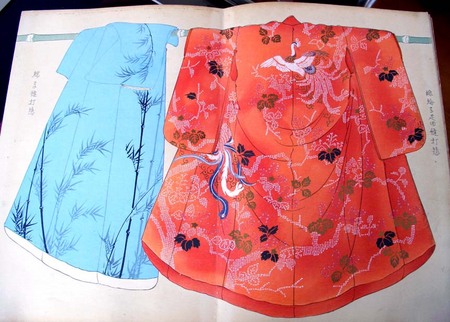
April 22, 2008

The Excellency of the Pen and Pencil

The Excellency of the Pen and Pencil, Exemplifying the Uses of Them in the Most Exquisite and Mysterious Arts of Drawing, Etching, Engraving, Limning. Painting in Oyl, Washing of Maps & Pictures … (London, Printed by T. Ratcliff and T. Daniel, for D. Newman and R. Jones, 1668). Graphic Arts Collection (GAX) 2003-1344N
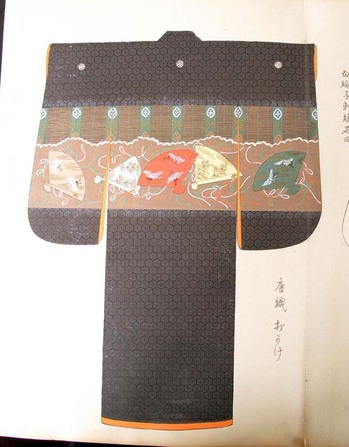
The coming of the seventeenth-century brought a proliferation of drawing manuals, beginning with Henry Peacham (1576?-1643?), The Art of Dravving vvith the Pen and Limning in Water Colours (London: Printed by Richard Braddock, 1606) [available online as an electronic text]. These books were written for an aristocratic audience of men and women who had the time to train their eyes and improve their mind.

The manuals provided instruction with an emphasis on art as an intellectual endeavor. Drawing is always the essential practice, with the arts of printing and painting coming later. Linear or contour models of the body parts are offered for copying, teaching the popular practice of limning.

The Excellency of the Pen and Pencil was published anonymously, printed by Thomas Ratcliff and Thomas Daniel, and sold by them at the Chyrurgeons Arms and at the Golden Lyon. The text is based in part on the writings of Albrecht Dürer and Hans Holbein. The title page introduces it as “A Work very useful for all Gentlemen, and other Ingenious Spirits, either Artificers or others.” A second edition was published in 1688 with the significant edition of a section on the mezzotint, a process that came into use just after the first edition had been released.

Other seventeenth-century drawing manuals available at Princeton include: Sir William Sanderson (1586?-1676), Graphice. The Use of the Pen and Pensil. Or, The Most Excellent Art of Painting (London: Printed for R. Crofts, 1658). Marquand Library (SA) NE910.G7 F17 1658

John Evelyn (1620-1706), Sculptura, or, The History, and Art of Chalcography and Engraving in Copper (London: Printed by J.C., 1662) Graphic Arts Collection (GAX), NE1760 .E94

William Salmon (1644-1713), Polygraphice: or the Arts of Drawing, Engraving, Etching, Limning, Painting, Washing, Varnishing, Gilding, Colouring, Dying, Beautifying and Perfuming (London: Printed by A. Clark, for John Crumpe, 1675). 3rd ed. Marquand Library (SAX): Rare Books, NE910.G7 S45 1675x

April 8, 2008

Mirth Verses Misery

John Britton (1771-1857), The Pleasures of Human Life (London: Printed for Longman, Hurst, Rees, and Orme …, 1807). Graphic Arts Collection (GA) Rowlandson 1807.3

In 1806, Reverend James Beresford (1764-1840) published a series of humorous dialogues entitled, The Miseries of Human Life (Graphic Arts, Rowlandson 1806.3). The book proved so popular that three editions sold out in a matter of weeks.

Several imitations appeared the following year, including Robert Heron’s Comforts of Human Life (Graphic Arts, Rowlandson 1807.4) but the most successful by far was The Pleasures of Human Life published under the name of Hilaris Benevolus and Company, Fellows of the “London Literary Society of Lusorists.” In fact, the book was written by John Britton, a young man whose only other books to date were historical and topographical essays on England.

Britton followed Beresford’s use of dialogues and his use of hand-colored etchings by Thomas Rowlandson (1756-1827), commissioning five prints only loosely connected to the text. The frontispiece literally turns Beresford’s book topsy-turvy, complimented by an illustrated title page, drawn by another popular artist of the time, R. William Satchwell (1732-1811) and engraved by William Bond.

Britton wrote that members of the Society of Lusorists, including Benevolus, Simon Specific, David Demurrer, and others, held meetings to “examine, canvass, and discuss the most noted and popular acts, deeds, and things done, performed, and committed in the British metropolis.” The pleasures are separated between male, female, and neuter, “interspersed with various anecdotes, and expounded by numerous annotations.”

Britton went on to become an celebrated advocate of historic preservation and in 1845, a Britton Club was formed in his honor.

April 2, 2008

Edward Gordon Craig's first publications

Edward Gordon Craig (1872-1966), Gordon Craig’s Book of Penny Toys (Hackbridge, Surrey: Published at the Sign of the Rose; London : Sold by Lamley, 1899). 43 prints.Graphic Arts Collection (GAX) Oversize NE1326.5.T68 C73 1899q


The British actor, director and artist Edward Gordon Craig (1872-1966) was the son of actress Ellen Terry and designer Edwin Godwin. He began his professional career as an actor with Henry Irving’s company at his Lyceum Theatre in London. Craig played Hamlet in 1894 and again in 1896, but gave up acting soon after. His interest in art and design became more important to him and ultimately, occupied all his time and energies.

It was in Uxbridge around 1893 that Craig met the artists James Ferrier Pryde and William Nicholson, from whom he learned to make prints and in particular, fell in love with the woodcut. In 1898, Craig started a magazine, The Page, which he edited, illustrated, and published as an outlet for his own work. In less than two years, he had completed nearly 200 woodblocks and published Gordon Craig’s Book of Penny Toys.

Craig printed 500 copies of Penny Toys and began to hand color them but before long, tired of this work. His solution was to burn 250 copies to reduce the edition size. Craig continued coloring the books and is said to have finished approximately 100 of the remaining 250 before he turned the rest of the coloring over to Jess Dorynne.

Craig moved to Germany in 1904, where he wrote and published On the Art of the Theatre. A few years later, Constantin Stanislavski invited him to direct Hamlet with the Moscow Arts Theatre. Craig also designed the sets, using a series of neutral, movable screens. He later presented a set to William Butler Yeats for use at the Abbey Theatre in Dublin, Ireland.

The Page (Carshalton, Eng.: E.G. Craig, 1898-1901) Graphic Arts Collection (GAX) NE1000 .P333

March 29, 2008

The Medical and Surgical History of the War of the Rebellion. Prepared under the Direction of Surgeon General Joseph K. Barnes


While most publishers content themselves with one form of illustration in any individual book, a few select titles include a variety of illustrative techniques. This account of surgical pratices during the American Civil War includes etchings, wood engravings, lithographs, chromolithographs, albumen photographs, heliotypes, and woodburytypes. In short, almost every reproductive process available at the time can be found somewhere within these six bound volumes. Here are a few samples.


United States. Surgeon-General’s Office. The Medical and Surgical History of the War of the Rebellion (Washington: Government Printing Office, 1870-1888). John Shaw Pierson Civil War Collection W Oversize W53.923q

March 27, 2008

Eugène Grasset, Nouveau Illustrator


Histoire des quatre fils Aymon, très nobles et très vaillans chevaliers [The Story of the Four Sons of Aymon: Noble and Valiant Knights] (Paris: H. Launette, 1883). De luxe edition: 200 copies. Illustrated with watercolor designs by Eugène Grasset (1841-1917) transferred to zinc relief plates and printed in color by Charles Gillot (1853-1903). The binding, by Henri Noulhac (1866-1931), is brown half morocco and marbled boards with gilt filet borders. Grap